


Refine your search for walks in Église Saint-Jacques (Brion)
Église Saint-Jacques (Brion) walks


 On the forgotten paths of Saint-Jacques
 Visorando Member

 56.13 mi
 +6,099 ft
 -6,083 ft
 4 days
 Moderate
 Departure from Chanaleilles (Haute-Loire)
If you have the soul of a pilgrim and wish to discover the hidden sides of Santiago de Compostela, then this route is for you.
This alternative to the famous route to Santiago de Compostela is divided into four stages, each around twenty kilometres long. You’ll enjoy superb scenery in the heart of the Margeride Mountains and the vast plateaus of the Aubrac, and I’m sure you’ll be surprised by the rich, little-known architectural heritage dedicated to this famous saint.
From Termes to Grandvals
 15.30 mi
+1,467 ft
-1,762 ft
8h 20
 Difficult
Departure from Termes (Lozère) (Lozère)
Ethird stage, partly through woodland, taking in little-known villages such as Saint-Juéry, a small village on the border with the Cantal, nestled in a bend of the River Bès, or Brion with its church of exceptional historical significance.
Walks near Église Saint-Jacques (Brion)
From Grandvals to La Dômerie d’Aubrac
 13.92 mi
+2,119 ft
-1,289 ft
8h 15
Difficult
Departure from Grandvals (Lozère)
Efourth and final stage across the vast expanses of the Aubrac. Rugged landscapes, featuring lakes, waterfalls and picturesque villages, will lead you to the village of Aubrac and its remarkable Dômerie, a former refuge hospital founded by the nobles and lords of Rouergue and Gévaudan to protect pilgrims crossing this vast plateau.
From Nasbinals to Quatre Chemins
 11.34 mi
+758 ft
-771 ft
5h 50
Moderate
Departure from Nasbinals (Lozère)
This is the third stage of a four-stage circuit in Aubrac. You will follow most of the GR®65 (Chemin de Compostelle) in the opposite direction. A slight detour from the GR®65 is recommended so that you can admire the Cascade du Déroc waterfall.
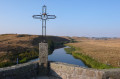
Nasbinals - Aumont-Aubrac
 16.02 mi
+873 ft
-1,296 ft
8h 10
Difficult
Departure from Nasbinals (Lozère)
This last stage of the Tour de l'Aubrac, shared with theGR®®65Chemin de Saint-Jacques de Compostelle à l'envers, once again showcases the vast wilderness of the Aubrac plateau. In the last third of the stage, which is a little more shaded, you can admire the imposing granite bell tower of the Church of La Chaze-de-Peyre and the Chapel of La Bastide.
Nasbinals - Saint-Chély-d'Aubrac
 10.47 mi
+804 ft
-1,969 ft
5h 30
Moderate
Departure from Nasbinals (Lozère)
Twenty-first stage of the Way of St James. For this short, downhill stage, you leave the Aubrac plateau to reach Saint-Chély-d'Aubrac, nestled in the heart of the valley carved out by the Boralde, halfway between the Aubrac plateau and the Lot valley.
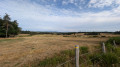
From Quatre Chemins to Buisson
 12.71 mi
+732 ft
-1,024 ft
6h 30
Difficult
Departure from La Chaze-de-Peyre (Lozère)
This is the fourth and final stage of a four-day tour of the Aubrac region. You will follow part of the Compostela Way (GR®65) in the opposite direction and part of the GRP® Tour des Monts d'Aubrac. This stage has the most sections along roads (with little traffic).
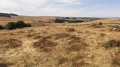
Prinsuéjols - Buron des Rajas
 17.14 mi
+1,985 ft
-1,575 ft
8 hrs
 Very difficult
Departure from Prinsuéjols (Lozère)
This second, long stage, which is partly shaded, ends at Buron des Rajas, at the foot of Signal de Mailhebiau, the highest point in Aveyron, in a vast, wild desert landscape.
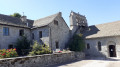
Aumont-Aubrac - Prinsuéjols
 8.86 mi
+764 ft
-282 ft
4h 45
Moderate
Departure from Aumont-Aubrac (Lozère)
The first stage of the 5-day Tour de l'Aubrac, this hike already offers a good glimpse of the magnificent landscapes of the Aubrac: fields, woods, hills, beautiful granite-stone houses, crosses at almost every crossroads, and of course, the proud Aubrac cows.
Aumont Aubrac – Nasbinals
 16.49 mi
+1,302 ft
-922 ft
8 hrs
Very difficult
Departure from Aumont-Aubrac (Lozère)
Twentieth stage of the Camino de Santiago. For this stage, leave the Margeride for the Aubrac. You’ll realise you’re in the Aubrac when the trees disappear – and it’s absolutely stunning! The colours, the landscapes, the cows, the silence, the sky, the rocks. You’ll feel tiny in the face of nature’s immensity.
From Le Buisson to the Refuge des Rajas
 12.26 mi
+1,919 ft
-1,096 ft
7h 20
Difficult
Departure from Le Buisson (Lozère)
First stage of a four-day circuit. Magnificent landscapes of the Aubrac and a route with many shaded sections. Option to climb up to Signal de Mailhebiau once you arrive at the refuge (don't hesitate to ask the owners). This hike mainly follows the GRP® Tour des Monts d'Aubrac (yellow and red markings).
Buron des Rajas - Saint-Chély-d'Aubrac
 11.30 mi
+371 ft
-2,093 ft
5h 30
Moderate
Departure from Les Salces (Lozère)
This third stage of the Tour des Monts d'Aubrac is one of the most varied. It contrasts the crossing of the wild, desert-like expanses of the Monts d'Aubrac in the first half with the coolness of the Aubrac National Forest and the Tourbières Nature Reserve in the second half. From the Buron des Rajas, isolated at an altitude of 1,300 metres, the stage ends in the small village of Saint-Chély-d'Aubrac, at the bottom of the Boralde de Saint-Chély valley, 500 metres lower down.