


Refine your search for walks in Concourson-sur-Layon
Concourson-sur-Layon walks


 Through the vineyards of Concourson-sur-Layon
 Visorando Member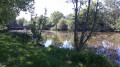
 5.47 mi
 +289 ft
 -279 ft
 2h 45
2h 45
 Easy
Easy
 Departure from Concourson-sur-Layon (Maine-et-Loire)
A lovely, easy walk through the vineyards on the hillsides of Concourson-sur-Layon.
A few windmills and vineyard huts can be seen along the way, and the walk ends at a lovely spot near the river, the Layon, which has given its name to the local sweet wine: Coteaux du Layon.
The Argentay hill
 Tourist office
 5.09 mi
+135 ft
-105 ft
2h 25
Easy
Departure from Les Verchers-sur-Layon (Maine-et-Loire)
5.09 mi
+135 ft
-105 ft
2h 25
Easy
Departure from Les Verchers-sur-Layon (Maine-et-Loire)
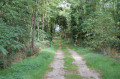
Verchers-sur-Layon has an unusual history, comprising 15 hamlets, some of which are actual villages. It was formed in 1818 by the merger of three parishes: Saint-Just, Saint-Pierre and La Lande. This union was marked by architectural richness, with a rather exceptional heritage (the church of Saint-Just, the châteaux of Échuilly and Bussy-Fontaine, etc.) and renowned wine-growing.
A journey through the heart of the vineyards.
Maligné route
3.65 mi
+102 ft
-102 ft
1h 45
Easy
Departure from Martigné-Briand (Maine-et-Loire)
An easy route combining tarmac and paths. We will pass through the village of Maligné (one of the largest hamlets in Martigné-Briand), then walk alongside the Stade de Girondeau, before returning to the narrow streets of Martigné and its château.
The Puy-Notre-Dame vineyard
 2.87 mi
+92 ft
-92 ft
1h 25
Easy
Departure from Le Puy-Notre-Dame (Maine-et-Loire)
2.87 mi
+92 ft
-92 ft
1h 25
Easy
Departure from Le Puy-Notre-Dame (Maine-et-Loire)
Le Puy-Notre-Dame stands at 106m on a tuffeau hill. The name ‘puy’ derives from the Celtic word ‘peuch’ (small mountain). Centred around an early church and a Cluniac priory founded by William VIII, Duke of Aquitaine, the village grew, welcoming pilgrims on their way to Santiago de Compostela and those who came to venerate a relic brought back from the Crusades: the Holy Belt of the Virgin.
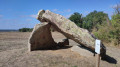
Dolmen Trail starting from Saugré
 4.67 mi
+131 ft
-131 ft
2h 15
Easy
Departure from Dénezé-sous-Doué (Maine-et-Loire)
4.67 mi
+131 ft
-131 ft
2h 15
Easy
Departure from Dénezé-sous-Doué (Maine-et-Loire)
This walk is a revised version of the “Sentier des dolmens”, a 13-kilometre route illustrated on a sign at the Saugré washhouse. The route described here takes you past several dolmens and ends in hamlets where the houses have cave dwellings. The walk regularly offers very unobstructed views where the eye can see for miles.
The Dénézé-sous-Doué Dolmens Trail
 8.04 mi
+187 ft
-171 ft
3h 50
8.04 mi
+187 ft
-171 ft
3h 50
 Moderate
Departure from Dénezé-sous-Doué (Maine-et-Loire)
Moderate
Departure from Dénezé-sous-Doué (Maine-et-Loire)
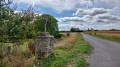
A trail around Dénezé-sous-Doué, taking you past several dolmens, including the imposing Saugré Dolmen, as well as a number of heritage sites in Dénezé and the surrounding area. This trail is described on a sign at the entrance to the washhouse. The yellow signposting is very easy to follow.
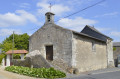
From woods to vineyards and wash houses around Vaudelnay
 13.83 mi
+213 ft
-210 ft
6h 35
13.83 mi
+213 ft
-210 ft
6h 35
 Difficult
Departure from Vaudelnay (Maine-et-Loire)
Difficult
Departure from Vaudelnay (Maine-et-Loire)
Farm tracks, much of which runs through woodland and the Saumur Puy-Notre-Dame appellation vineyards.
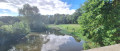
The Puss in Boots Walk around Passavant-sur-Layon
 11.08 mi
+420 ft
-404 ft
5h 25
Moderate
Departure from Cléré-sur-Layon (Maine-et-Loire)
11.08 mi
+420 ft
-404 ft
5h 25
Moderate
Departure from Cléré-sur-Layon (Maine-et-Loire)
The Puss in Boots Walk in Cléré-sur-Layon takes its name from a rather unusual local legend. The route, which stretches for 17 km between Anjou and Poitou, passes through the neighbouring village of Passavant-sur-Layon. It is said that this village inspired Charles Perrault to write his famous tale. The nave of Passavant church houses a tomb bearing the name ofthe Count of Caravas, which is said to have directly inspired the famous title of the cat’s master: the Marquis of Carabas.Cléré-sur-Layon, a small rural village, is situated in the south of the Saumur region, on the border with the Deux-Sèvres. The Layon, a tributary of the Loire which flows through the commune from west to east, has carved out a steep-sided valley here, through which a picturesque footpath winds, offering a perfect vantage point from which to explore the village: its vineyards, its bocage and its quarry (see the ‘Places to Visit’ section for further historical information on the area).
Around Asnières Abbey
6.93 mi
+102 ft
-95 ft
3h 15
Moderate
Departure from Cizay-la-Madeleine (Maine-et-Loire)
This pleasant walk through farmland and the Brossay forest allows you to discover the region's rich architectural heritage.
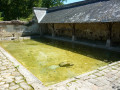
Vineyards and woods around Les Ulmes
 7.14 mi
+164 ft
-138 ft
3h 25
Moderate
Departure from Les Ulmes (Maine-et-Loire)
7.14 mi
+164 ft
-138 ft
3h 25
Moderate
Departure from Les Ulmes (Maine-et-Loire)
The name comes from the Latin word ulmus, meaning elm tree, and was given to the village because of the presence of this tree. The surrounding woods and estates were entrusted to the monks of Saint-Maur Abbey, and the village developed around a priory and its church. The priory, which was remodelled in the 16th and 17th centuries, is still attached to the Church of Saint Vincent of Spain, which features beautiful remains from the 11th and 12th centuries.
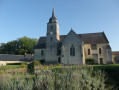
The source of the Aubance
 8.73 mi
+387 ft
-358 ft
4h 20
Moderate
Departure from Louerre (Maine-et-Loire)
8.73 mi
+387 ft
-358 ft
4h 20
Moderate
Departure from Louerre (Maine-et-Loire)
Hiking route in the forest with slight elevation gain.
Between vineyards and forest in Grézillé
 7.69 mi
+223 ft
-203 ft
3h 45
Moderate
Departure from Grézillé (Maine-et-Loire)
7.69 mi
+223 ft
-203 ft
3h 45
Moderate
Departure from Grézillé (Maine-et-Loire)
A region of woods and heathland, sometimes infested with wolves, the commune of Grézillé has a history dating back to Antiquity, with turbulent periods, particularly during the Revolution. Primarily agricultural, the village was home to tuffeau quarries in the 19th century, which a few decades later became mushroom farms and wine cellars. A gently undulating route that winds through vineyards and woods.
The woods around Rou-Marson
 4.27 mi
+135 ft
-135 ft
2h 05
Easy
Departure from Rou-Marson (Maine-et-Loire)
4.27 mi
+135 ft
-135 ft
2h 05
Easy
Departure from Rou-Marson (Maine-et-Loire)
From the Place du Château de Marson, a short walk takes you through the woods, past water features and along the botanical trail, where you can discover the area’s plant biodiversity.
 Route du Coudray-Macouard
14.26 mi
+157 ft
-171 ft
2 hrs
Easy
Departure from Le Coudray-Macouard (Maine-et-Loire)
A shaded route through the forest. Between Saumur and Montreuil-Bellay, this former fortified village is a must-see for heritage enthusiasts. Numerous15th- and16th-century manor houses and18th-century stately homes line the medieval-style narrow streets.
Please note: Be sure to follow the direction of traffic; the route is shared with horse riders.
South of Pompierre via Villemolle and Verrie
6.90 mi
+52 ft
-52 ft
3h 15
Easy
Departure from Chênehutte-Trèves-Cunault (Maine-et-Loire)
An easy walk along paths through meadows and woodland
⚠️ At certain times of the year, hunting may take place along this route, particularly between (5) and (6) in the Verrie area.Hikers are free to abandon or alter their route if they consider the conditions to be unsafe.
From the Loire to Les Roches
 8.88 mi
+174 ft
-187 ft
4h 15
Moderate
Departure from Gennes (Maine-et-Loire) (Maine-et-Loire)
8.88 mi
+174 ft
-187 ft
4h 15
Moderate
Departure from Gennes (Maine-et-Loire) (Maine-et-Loire)
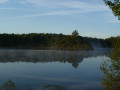
The settlement of Gennes dates back to the Neolithic period (4500 BC). Menhirs and dolmens, inherited from this distant era, stand proudly before the eyes of walkers. Its Gallo-Roman amphitheatre has also stood the test of time, offering a real journey through history. The Étang and the Forest of Joreau are a nature reserve and have been classified as a Natural Area of Ecological, Faunistic and Floristic Interest (Z.N.I.E.F.F.) since 1992.
When the Romans lead us to Marson
 7.09 mi
+194 ft
-197 ft
3h 25
Moderate
Departure from Distré (Maine-et-Loire)
7.09 mi
+194 ft
-197 ft
3h 25
Moderate
Departure from Distré (Maine-et-Loire)
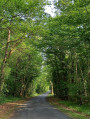
A lovely trip to the countryside through woods and meadows, taking in the Land Art, the castle and Marson Pond along the way.
Through vineyards and picturesque villages around Brissac-Quincé
6.18 mi
+315 ft
-318 ft
1 hr
Easy
Departure from Brissac-Quincé (Maine-et-Loire)
Tour through vineyards and picturesque villages along the Loire River. Between breathtaking panoramas, heritage and the scent of vines, all your senses will be awakened!
Around the Priory of Saint-Georges-des-Sept-Voies
 5.20 mi
+131 ft
-128 ft
2h 30
Easy
Departure from Saint-Georges-des-Sept-Voies (Maine-et-Loire)
5.20 mi
+131 ft
-128 ft
2h 30
Easy
Departure from Saint-Georges-des-Sept-Voies (Maine-et-Loire)
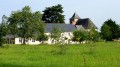
This walk, mainly along small roads, begins at the charming Priory of Saint-Georges-des-Sept-Voies, set in beautiful green surroundings. You will then see a fine example of a Bollée wind turbine and finally be able to visit the Hélice Terrestre de l’Orbière, a monumental sculpture in a troglodytic site.
In the heart of the Gonorderie vineyards
1.28 mi
+10 ft
-10 ft
0h 35
Easy
Departure from Brissac-Quincé (Maine-et-Loire)
In the heart of the Anjou vineyards, this walk invites you to discover the living landscapes of the Domaine de la Gonorderie.Between vineyards, terroirs and expertise, the trail reveals the soul of a committed, family-run estate.Young and old alike will find something to enjoy, thanks to a fun treasure hunt for children.A moment to share, surrounded by nature, heritage and a passion for wine.
Between the Loire and the hillsides between Trèves and Chênehutte
 5.90 mi
+249 ft
-230 ft
2h 55
Easy
Departure from Chênehutte-Trèves-Cunault (Maine-et-Loire)
5.90 mi
+249 ft
-230 ft
2h 55
Easy
Departure from Chênehutte-Trèves-Cunault (Maine-et-Loire)
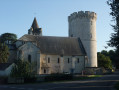
A hilly, wooded route between Trèves and Chênehutte, along the Loire and on the hillside. This route also winds through the historic streets of the village of Trèves.
Views of the Loire at Cunault
 4.89 mi
+203 ft
-184 ft
2h 25
Easy
Departure from Chênehutte-Trèves-Cunault (Maine-et-Loire)
4.89 mi
+203 ft
-184 ft
2h 25
Easy
Departure from Chênehutte-Trèves-Cunault (Maine-et-Loire)
Dominated by its Romanesque church, a former Benedictine priory, the village of Cunault was a place of pilgrimage and renowned fairs in the Middle Ages and until the end of the 19th century, an important port on the Loire specialising, like its neighbouring (and twin) port of Trèves, in the shipment of tuffeau stone.
Steep slope at the start, then flat, shaded paths.
The vineyard huts around Vauchrétien
 3.69 mi
+98 ft
-102 ft
1h 45
Easy
Departure from Vauchrétien (Maine-et-Loire)
3.69 mi
+98 ft
-102 ft
1h 45
Easy
Departure from Vauchrétien (Maine-et-Loire)
There are many vineyard huts in this region. The interiors are simple, with whitewashed walls and earthen floors. The fireplace was used for roasting chestnuts. The huts also housed the winegrowers’ tools, and in summer the winegrowers would take a nap there (known as a ‘marienne’ in Anjou). There are several vineyard huts along the route.
Gennes-Val de Loire Route
18.45 mi
+755 ft
-758 ft
3 hrs
Difficult
Departure from Gennes (Maine-et-Loire) (Maine-et-Loire)
A 30km mountain bike route between Gennes-Val de Loire, Saint-Georges-des-Sept-Voies and Le Thoureil. Dolmens, menhirs, cave dwellings and rural heritage can be explored along this undulating route, which is sure to delight mountain bikers. The route also offers beautiful views of the Loire.
In the footsteps of Robrica in Chênehutte
 5.16 mi
+262 ft
-246 ft
2h 35
Easy
Departure from Chênehutte-Trèves-Cunault (Maine-et-Loire)
5.16 mi
+262 ft
-246 ft
2h 35
Easy
Departure from Chênehutte-Trèves-Cunault (Maine-et-Loire)
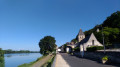
A hilly, wooded route. Situated on the left bank of the Loire, downstream from Saumur, this village in the Loire Valley is a former Gallo-Roman settlement and home to one of the most important archaeological sites in Maine-et-Loire. Finds made on the plateau prove human presence dating back to the Neolithic period (4500 to 4000 BC).
The old stones around La Sansonnière
 9.10 mi
+246 ft
-249 ft
4h 25
Moderate
Departure from Saint-Georges-des-Sept-Voies (Maine-et-Loire)
9.10 mi
+246 ft
-249 ft
4h 25
Moderate
Departure from Saint-Georges-des-Sept-Voies (Maine-et-Loire)
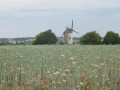
This route allows you to discover the remains of human activity scattered throughout the Anjou countryside (dolmens, menhirs, wash houses, mills, priories), as well as numerous troglodytic constructions of varying sizes.
The hillsides around Coutures
 5.53 mi
+203 ft
-207 ft
2h 45
Easy
Departure from Coutures (Maine-et-Loire) (Maine-et-Loire)
5.53 mi
+203 ft
-207 ft
2h 45
Easy
Departure from Coutures (Maine-et-Loire) (Maine-et-Loire)
Walk around the village of Coutures, passing through farmland and vineyards that change constantly with the seasons. There are numerous views of Montasabert Castle and the agricultural plain, which is dominated – particularly in May and June – by artichoke fields. The route follows almost entirely along dry, stony paths.
From the Loire to the Authion
 8.14 mi
+20 ft
-20 ft
3h 45
Moderate
Departure from Saint-Martin-de-la-Place (Maine-et-Loire)
8.14 mi
+20 ft
-20 ft
3h 45
Moderate
Departure from Saint-Martin-de-la-Place (Maine-et-Loire)
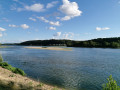
A flat route between the banks of the Loire and the Authion. It allows you to explore the birthplace of Aristide du Petit Thouars and its heritage.
Please note: Paths along the banks of the Loire are impassable during periods of high water
Route de l'Île Ollivier
 3.15 mi
+16 ft
-16 ft
1h 30
Easy
Departure from Les Rosiers-sur-Loire (Maine-et-Loire)
3.15 mi
+16 ft
-16 ft
1h 30
Easy
Departure from Les Rosiers-sur-Loire (Maine-et-Loire)
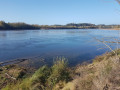
A family-friendly route to explore the banks of the Loire. You can extend your route with a heritage trail that will take you to the village’s most iconic spots.
Please note! The path along the banks of the Loire is impassable during periods of high water.
Brissac circuit
 4.34 mi
+112 ft
-102 ft
2h 05
Easy
Departure from Brissac-Quincé (Maine-et-Loire)
4.34 mi
+112 ft
-102 ft
2h 05
Easy
Departure from Brissac-Quincé (Maine-et-Loire)
A beautiful walk through the vineyards around the Château de Brissac, which appears at numerous points along the route.
From the Loire to the Forest
 4.42 mi
+243 ft
-226 ft
2h 15
Easy
Departure from Le Thoureil (Maine-et-Loire)
4.42 mi
+243 ft
-226 ft
2h 15
Easy
Departure from Le Thoureil (Maine-et-Loire)
Megaliths, priory, chapel, church, sailors' houses; the history of Thoureil can be discovered through its buildings and landscapes, linked in their history by the Loire. Hilly route.
Vallée du Pressoir and Cascade de Pommiers
 5.45 mi
+200 ft
-213 ft
2h 40
Easy
Departure from Mauzé-Thouarsais (Deux-Sèvres)
5.45 mi
+200 ft
-213 ft
2h 40
Easy
Departure from Mauzé-Thouarsais (Deux-Sèvres)
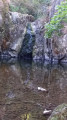
The Ruisseau du Pressoir stream flows through a narrow, deep valley marked by the Cascade de Pommiers waterfall. Some steep slopes overlooking the stream from a height of around 40 metres make this wild and picturesque valley a unique natural environment in the Thouarsais region.
Le Thoureil - Saint-Rémy-la-Varenne
 7.43 mi
+390 ft
-374 ft
3h 45
Moderate
Departure from Le Thoureil (Maine-et-Loire)
7.43 mi
+390 ft
-374 ft
3h 45
Moderate
Departure from Le Thoureil (Maine-et-Loire)
A hike through varied landscapes: overlooking the Loire, vineyards, orchards, fields and forests, all between two villages steeped in history.
Pressoir and Thouet valleys from Sainte-Radegonde
 12.41 mi
+817 ft
-794 ft
6h 25
Difficult
Departure from Sainte-Radegonde (Deux-Sèvres) (Deux-Sèvres)
12.41 mi
+817 ft
-794 ft
6h 25
Difficult
Departure from Sainte-Radegonde (Deux-Sèvres) (Deux-Sèvres)
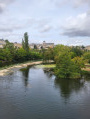
Route passing through the Vallée du Pressoir (classified as a Natura 2000 site since March 2025) then the left bank of the Thouet valley from Pommiers to Sainte-Radegonde. Pass through Saint-Jacques-de-Thouars on the left bank of the Thouet, then Saint-Jean-de-Thouars, the Cirque de Missé and return to Thouars on the right bank of the Thouet via the GR®36. The hike also offers views of the town of Thouars, with its historic monuments and rich heritage.
Left bank of the Thouet from Sainte-Radegonde to Missé
 12.03 mi
+682 ft
-663 ft
6h 10
Difficult
Departure from Sainte-Radegonde (Deux-Sèvres) (Deux-Sèvres)
12.03 mi
+682 ft
-663 ft
6h 10
Difficult
Departure from Sainte-Radegonde (Deux-Sèvres) (Deux-Sèvres)
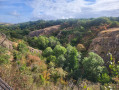
Leaving Sainte-Radegonde, you will discover the Pressoir valley, newly classified as a Natura 2000 nature reserve, then the west and south facades of Thouars, located on the promontory with the Thouet river flowing at its feet. Next, pass through Saint-Jean-de-Thouars, which overlooks the Thouet valley, the fortifications, the castle on its rocky spur, and the three large and remarkable natural meanders: Saint-Jean, Le Châtellier and Missé. Enjoy the superb valley and then enter Thouars at the foot of the castle ramparts.
The Aubance trail between the vineyards and the Beaulieu Forest
12.91 mi
+354 ft
-325 ft
6h 15
Difficult
Departure from Soulaines-sur-Aubance (Maine-et-Loire)
Are you familiar with the hillsides of Aubance, less famous than those of Layon? After this hike, you will definitely want to taste the wines from the vineyards you will be passing through. The Aubance is a small river that flows into the Louet, itself a branch of the Loire. You are in a hilly, partly wooded landscape, often with unobstructed views. The Château de Noizé is exceptional in terms of its setting and aesthetics. The hike is a little long but very varied, with no significant elevation gain.