


Refine your search for walks in Billiers
Billiers walks


 Between the countryside and the sea, leaving from Billiers.
 Visorando Member
 6.58 mi
 +108 ft
 -108 ft
 3h 05
3h 05
 Moderate
 Departure from Billiers (Morbihan)
A pretty walk between the countryside and the seaside. The Pointe de Penn Lann stands guard over the Vilaine Estuary.
Between the countryside and the sea in Billiers (long version)
 10.38 mi
+256 ft
-256 ft
5h 00
Moderate
Departure from Billiers (Morbihan)
10.38 mi
+256 ft
-256 ft
5h 00
Moderate
Departure from Billiers (Morbihan)
A beautiful walk along the banks of the Vilaine and inland.
Walk along the Billiers Megalith Trail
 4.16 mi
+72 ft
-66 ft
2h 00
4.16 mi
+72 ft
-66 ft
2h 00
 Easy
Departure from Billiers (Morbihan)
Easy
Departure from Billiers (Morbihan)
This is a circular route running along one side of the Étier de Billiers, Plage des Barges and Plage des Granges, not forgetting a walk around the Penn Lann Lighthouse.
In a single day, you can combine sightseeing, swimming and a walk, either on your own or with the family.
The trail follows, for the most part, the Chemin des Mégalithes between the marshes and the ocean.
Around the Pen Mur Pond
6.45 mi
+358 ft
-354 ft
3h 15
Moderate
Departure from Muzillac (Morbihan)
Finally! After years of land negotiations, the elected representatives of Muzillac have succeeded in bringing to fruition a project that has been in the works for more than a decade: creating a footpath that goes all the way around the Étang de Pen Mur. This long stretch of water, held back by the Moulin de Pen Mur dam, occupies the bottom of the valley where the Ruisseau de Saint-Éloi stream used to flow. It is now possible to walk along the lake to the Chapelle du Moustéro chapel and return via the other bank. Although the eastern bank is less wooded than its counterpart, the entire route runs under the canopy of trees that line the banks of the lake. And the icing on the cake is that the improvements made, which are fairly minor and will soon be invisible, have preserved natural sections and stairways that prevent motorised vehicles and even mountain bikes from using the path. Walkers, grab your walking sticks!
Tour of Haut Pénestin
 4.94 mi
+98 ft
-105 ft
2h 20
Easy
Departure from Pénestin (Morbihan)
4.94 mi
+98 ft
-105 ft
2h 20
Easy
Departure from Pénestin (Morbihan)
The Pointe du Halguen marks the southern limit of the Vilaine estuary. This promontory overlooking the ocean is also the northern end of the ochre cliffs that line the ocean front of Pénestin. A lovely walk is available around the village of Haut Pénestin, where long stretches of sandy beach precede secluded coves and abandoned salt marshes.
Damgan Circuit
7.79 mi
+16 ft
-16 ft
3h 35
Moderate
Departure from Damgan (Morbihan)
Nestled between the ocean and the River Pénerf, the peninsula on which Damgan stands barely rises above the water. Whether you walk along the beach or the edge of the marshes, nothing rises above the water except the small white church spire and a few pine trees. The walk suggested here takes you all the way round this peninsula.
Countryside and marshland around Ambon
6.11 mi
+105 ft
-115 ft
2h 55
Easy
Departure from Ambon (Morbihan)
Nestled at the head of the Rivière de Pénerf, the village of Ambon sits on the first rise above the marshes. This route allows you to explore the local area along a path that alternates between wooded countryside and marshes. Given the condition of the paths at the time of our visit (May), it seems best to tackle this circular route outside of wet periods.
Three Streams Route in Noyal-Muzillac
7.27 mi
+505 ft
-505 ft
3h 45
Moderate
Departure from Noyal-Muzillac (Morbihan)
As is often the case in Brittany, the Noyal-Muzillac area has a hollow relief, in which streams of varying sizes have carved out their beds. The proposed route plays leapfrog over the Tohon and the Pont Pily and Pont Noyal streams. In between, it climbs back up to the top of the relief to visit a few villages with beautiful architectural heritage.
Pointe de Kervoyal
 4.20 mi
+20 ft
-20 ft
1h 55
Easy
Departure from Damgan (Morbihan)
4.20 mi
+20 ft
-20 ft
1h 55
Easy
Departure from Damgan (Morbihan)
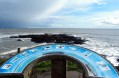
A short, relaxing stroll along the Morbihan coast, returning via the inland route. No difficulty apart from a bit of mud on the northern section in wet weather.
From Maresclé beach to Haut-Pénestin along the coast and other paths
 8.06 mi
+98 ft
-108 ft
3h 45
Moderate
Departure from Pénestin (Morbihan)
8.06 mi
+98 ft
-108 ft
3h 45
Moderate
Departure from Pénestin (Morbihan)
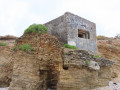
This hike starts at the car park of the Mine d’Or beach, along the coast north to Haut-Pénestin, to return by internal paths to reach the sea at Maresclé beach and then the starting point.
Circular route through coastal and countryside scenery between La Mine d'Or and Loscolo
4.86 mi
+43 ft
-69 ft
2h 15
Easy
Departure from Pénestin (Morbihan)
As well as its magnificent coastal path stretching over 14 km, Pénestin boasts a multitude of trails criss-crossing the local area. The circular route allows you to explore some of these paths as far as the edge of the Pont Mahé Marshes, before returning to the coast via the coastal path. And if the weather and season permit, do make the most of the lovely beaches that line this route.
Pénestin in the countryside
6.52 mi
+151 ft
-154 ft
3h 10
Moderate
Departure from Pénestin (Morbihan)
In Pénestin, far from the hustle and bustle of the coast, you can stroll in complete tranquillity along quiet paths that criss-cross the countryside between the Tréhudal marshes and those of Pont Mahé.
This walk is best enjoyed on sunny days, when it’s pleasant to walk in the shade.
De Lantiern à la Vilaine
 6.94 mi
+285 ft
-285 ft
3h 25
Moderate
Departure from Arzal (Morbihan)
6.94 mi
+285 ft
-285 ft
3h 25
Moderate
Departure from Arzal (Morbihan)
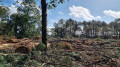
A country walk between Cosca, a stone's throw from the Arzal dam, and the Templar village of Lantiern.This walk along beautiful tree-lined paths and a few small roads connects the banks of the Vilaine estuary to the beautiful Saint-Jean-Baptiste Chapel, through pleasantly rolling countryside.The end of the route follows the botanical trail.The trail has been modified after the point (1), following the clear-cutting of the wooded area it used to cross, which made the trail disappear.
Between bocage and Vilaine in Arzal
7.06 mi
+223 ft
-210 ft
3h 25
Moderate
Departure from Arzal (Morbihan)
The village of Arzal stretches from the foot of the church's pointed bell tower to the edge of the dam. Upstream, the river has become a huge body of water where thousands of boats are moored, while downstream, the maritime character of the estuary remains. The proposed route allows you to discover both aspects of the river and the bocage that overlooks it.
The Vilaine and the countryside around Arzal
10.75 mi
+449 ft
-459 ft
5h 20
Moderate
Departure from Arzal (Morbihan)
During this hike, discover a variety of landscapes: the river, the ocean and the countryside.
From the Arzal dam to La Roche Bernard along the left bank of the Vilaine
9.57 mi
+965 ft
-961 ft
5h 15
Moderate
Departure from Camoël (Morbihan)
Walk starting from the Arzal Dam, following the Vilaine upstream on the left bank, circular route via the two bridges and finishing at the port of La Roche-Bernard. The scenery along the Vilaine is breathtaking.
Circular route between the Arzal Dam and Ferel
8.17 mi
+197 ft
-197 ft
3h 55
Easy
Departure from Camoël (Morbihan)
This circular walk allows you to enjoy the scenery along the River Vilaine, the woodland on the way to Ferel, and finally a return journey through the countryside around Camoël.
From one port to another along the Vilaine
6.34 mi
+420 ft
-436 ft
3h 15
Moderate
Departure from Camoël (Morbihan)
Running along the left bank of the Vilaine, this path follows the riverbank closely, linking the two ports of Arzal and La Roche-Bernard, and offering a multitude of landscapes and views of the Basse-Vilaine. In summer, you can also return by boat or canoe.
Vieille Roche Route
5.78 mi
+112 ft
-128 ft
2h 45
Easy
Departure from Camoël (Morbihan)
In the past, the Vilaine was crossed by ferry downstream of La Roche-Bernard. This was the case between Vieille Roche in Camoël and Arzal. The construction of the dam in the 1970s significantly changed these practices, as a fixed link now allows people to cross from one bank to the other. The suggested route allows you to explore the dam and the paths along the left bank of the Vilaine around Camoël.
Between the Vilaine and the Étang du Pont de Fer
6.27 mi
+249 ft
-243 ft
3h 05
Easy
Departure from Camoël (Morbihan)
To the south of the Vilaine estuary, the gentle terrain encourages the intermingling of wetlands and agricultural land. The village of Camoël is built on a slight rise overlooking both the river and the marshes situated upstream of Pont Mahé Bay.The suggested route allows you to explore the river where its estuary begins and one of the streams that feed the Étang du Pont de Fer, a hidden nature reserve that can be glimpsed when the foliage is not too dense.
Circular Vilaine Route via the Arzal Dam and the Roche-Bernard Bridge
 14.39 mi
+1,083 ft
-1,070 ft
7h 35
14.39 mi
+1,083 ft
-1,070 ft
7h 35
 Difficult
Departure from Arzal (Morbihan)
Difficult
Departure from Arzal (Morbihan)
A pleasant, easy walk along the banks of the Vilaine through wooded countryside, forests and small villages.
The path is fully signposted in white and red by theGR®39(left bank) andGR®349(right bank).
Tour de Larmor in Pénestin
 6.98 mi
+56 ft
-56 ft
3h 15
Easy
Departure from Pénestin (Morbihan)
6.98 mi
+56 ft
-56 ft
3h 15
Easy
Departure from Pénestin (Morbihan)
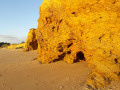
Pénestin is just a stone's throw away from being an island. Although its ocean side faces the Atlantic, it is only connected to the hinterland by a strip of land wedged between two marshes. The suggested route takes you through the southern part of the area, formerly known as Larmor, between the Pont Mahé marshes and the cliffs of Lanchale and Le Bile.
The Pont Mahé Marshes Circuit
6.66 mi
+59 ft
-59 ft
3h 05
Moderate
Departure from Pénestin (Morbihan)
Behind the Pont-Mahé dune ridge lies a large marsh which is still regularly mown during the summer months. Connected to the sea by the channel that flows into Le Palandrin, it is still more or less subject to tidal effects but each summer regains its appearance as a meadow grazed by herds, in the heart of a basin bordered by dense woodland.
It’s up to you to explore it via a few secret paths, when the water level allows.
Pont Mahé Bay and Dunes
4.57 mi
+36 ft
-49 ft
2h 10
Easy
Departure from Pénestin (Morbihan)
Straddling the departments of Morbihan and Loire-Atlantique, Pont Mahé Bay is a vast sandbank at low tide and a renowned spot for board sports once the sea has returned. Connecting the two headlands that mark its boundaries is a pleasant way to cross administrative borders
Sea, marshes and countryside around Caire
8.82 mi
+138 ft
-121 ft
4h 10
Moderate
Departure from Assérac (Loire-Atlantique)
The beach and marshes of Pont Mahé, the Pointe de Pen Bé, the area around the Étang du Pont de Fer and the moors of Monchoix each offer a unique perspective on the landscapes of Asserac. Walking through this agricultural landscape that borders the coast serves as a reminder that the seashore was once a natural environment before urbanisation took over.