


Refine your search for walks in Aimargues
Aimargues walks
 Meadows (les) du Cailar
 Visorando Member
 5.88 mi
 +7 ft
+7 ft
 -7 ft
-7 ft
 2h 40
2h 40
 Easy
Easy
 Departure from Le Cailar (Gard)
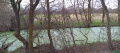
Discover an authentic Camargue village with its customs and the statue of a bull ("Le Sanglier") at the entrance to the village of Le Cailar! A great, very short but very green hike through the meadows, with just a little bit of tarmac. Redone in January 2025, still as enjoyable as ever.
The meadows of Le Cailar
 5.70 mi
+10 ft
-13 ft
2h 40
Easy
Departure from Le Cailar (Gard)
5.70 mi
+10 ft
-13 ft
2h 40
Easy
Departure from Le Cailar (Gard)
A short half-day hike to breathe in and enjoy the Camargue and its treasures: horses, bulls, herons, storks, etc.
As "denisdenim" points out, there is an alternative route to avoid the road at point 1: cross it and take the small road that passes by the Mas du Bourry farmhouse, keeping to the right to rejoin the main road and descend towards point 2.
Two castles in Marsillargues
4.57 mi
+13 ft
-13 ft
2h 05
Easy
Departure from Marsillargues (Hérault)
Hike to discover two castles: the Château de Marsillargues, former castle of Guillaume de Nogaret, in the centre of the town, which houses a museum, and the Château de Teillan, a former fortified castle nestled between the Vidourle river, the Camargue horse pastures and the vineyards of the Marsillargues region.
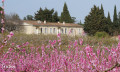
Le Cailar, the banks of the Philippe Lamour Canal and the Gallician fruit trees.
 4.36 mi
+213 ft
-135 ft
2h 10
Easy
Departure from Le Cailar (Gard)
4.36 mi
+213 ft
-135 ft
2h 10
Easy
Departure from Le Cailar (Gard)
A beautiful walk to discover the banks of the Philippe Lamour Canal and the orchards (peach trees, almond trees, vines). Always in the sun, it is the ideal walk for sunny winter days.
Les Costières de Nîmes
 8.90 mi
+568 ft
-538 ft
4h 35
8.90 mi
+568 ft
-538 ft
4h 35
 Moderate
Departure from Vauvert (Gard)
Moderate
Departure from Vauvert (Gard)
A walk winding through the hilly surroundings of the town of Vauvert and the Costières de Nîmes plateau, renowned for its wines.
 Vestric Pond
6.68 mi
+46 ft
-46 ft
1 hr
Easy
Departure from Vergèze (Gard)
A family walk starting from the entrance to Vergèze and heading to the Étang de Vestric. Mixed terrain (paths and roads).
Moulin de Carrière and Chapelle Saint-Nazaire between Villetelle and Aubais
 7.17 mi
+236 ft
-230 ft
3h 30
Moderate
Departure from Aubais (Gard)
7.17 mi
+236 ft
-230 ft
3h 30
Moderate
Departure from Aubais (Gard)
A pleasant and easy hike through scrubland and vines with views of the plain of Congéniès. A remarkable site, the Chapelle Saint-Nazaire enshrined in scrubland.
Œnorando® Between the Costières and the Camargue from Gallician
 Tourist office
 6.51 mi
+112 ft
-98 ft
3h 05
Moderate
Departure from Vauvert (Gard)
6.51 mi
+112 ft
-98 ft
3h 05
Moderate
Departure from Vauvert (Gard)
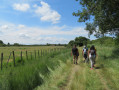
This walk, marked in yellow, invites you to explore the southernmost part of the Costières de Nîmes AOP. On this land of rounded pebbles, the sun, the mistral and the sea breezes combine to create a unique terroir, evident even in the pebble walls of the cellars and estates you’ll come across along the way. Set between the two canals of southern Gard, the vineyard plots of the Costières de Nîmes AOP and a viewpoint overlooking the ponds, this easy walk will transport you through the varied landscapes of the Camargue in the Gard. It’s the perfect opportunity to observe the typical Costières terroir, with its pebbles smoothed over millennia by the Rhône, the wine-growing farmhouses and their imposing gates, whilst keeping an eye out for the Camargue birds that inhabit the banks of the canals.
Between Port de Gallician and the Carbonière Tower
 13.87 mi
+82 ft
-82 ft
2 hrs
Easy
Departure from Vauvert (Gard)
13.87 mi
+82 ft
-82 ft
2 hrs
Easy
Departure from Vauvert (Gard)
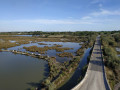
A short, easy route, by hybrid or mountain bike, along the greenway or paths in the Petite Camargue between Gallician and the Tour Carbonière.
You’ll discover the beautiful landscapes of this wetland and come across numerous birds, horses, Camargue bulls and possibly a few flamingos near the Tour Carbonière.
Gallician - Prés du Cailar - Banks of the Vistre
 9.26 mi
+167 ft
-164 ft
4h 25
Easy
Departure from Vauvert (Gard)
9.26 mi
+167 ft
-164 ft
4h 25
Easy
Departure from Vauvert (Gard)
A beautiful outing between the Rhône Canal in Sète, Les Fruitiers and Les Costières, as well as the meadows where Camargue horses and bulls live peacefully.
Gallician and the meadows of Le Cailar
 9.63 mi
+223 ft
-220 ft
4h 35
Moderate
Departure from Vauvert (Gard)
9.63 mi
+223 ft
-220 ft
4h 35
Moderate
Departure from Vauvert (Gard)
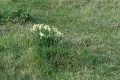
A pleasant walk among the peach trees. A calm and relaxing setting, especially in the meadows of Le Cailar.
From Aubais to Junas, between quarries and mills
 7.94 mi
+594 ft
-577 ft
4h 10
Moderate
Departure from Aubais (Gard)
7.94 mi
+594 ft
-577 ft
4h 10
Moderate
Departure from Aubais (Gard)
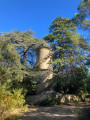
This is a pleasant and easy hike, with no elevation gain, shaded and sheltered from the wind, with many points of interest: flowers in spring, quarries, mills, drystone shelters, as well as donkeys, horses and chickens. Follow the yellow markings, which makes this walk possible even without a GPS, and if you have the map, there are several shortcuts you can take if the children get tired. There are several good spots for a picnic.
The Muscat vineyards around Vérargues
 5.24 mi
+105 ft
-108 ft
2h 30
Easy
Departure from Vérargues (Hérault)
5.24 mi
+105 ft
-108 ft
2h 30
Easy
Departure from Vérargues (Hérault)
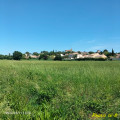
Set off to discover one of the treasures of the Lunel region: the Muscat Petit Grain wine-growing areas!
In the Lunel region, head to Vérargues for a bucolic and gourmet hike.
On the Costière de Nîmes, around Beauvoisin, Vauvert and Générac
11.59 mi
+584 ft
-591 ft
1 hr
Easy
Departure from Beauvoisin (Gard) (Gard)
A fun, quick little hike in the Costière de Nîmes with little elevation gain.
The Carbonnière Tower
1.13 mi
+3 ft
-3 ft
0h 30
Easy
Departure from Saint-Laurent-d'Aigouze (Gard)
Short walk to discover this tower, the outpost guarding the stronghold of Aigues-Mortes, standing on its road in the middle of marshes frequented by many birds.
The Puechs tour
 3.19 mi
+259 ft
-236 ft
1h 40
Easy
Departure from Congénies (Gard)
3.19 mi
+259 ft
-236 ft
1h 40
Easy
Departure from Congénies (Gard)
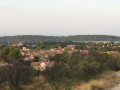
Through the heath and pine forest, a lovely tour of the village to discover different viewpoints.
Circular route around Sommières
 2.97 mi
+128 ft
-128 ft
1h 30
Easy
Departure from Sommières (Gard)
2.97 mi
+128 ft
-128 ft
1h 30
Easy
Departure from Sommières (Gard)
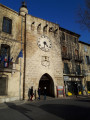
This very easy walk follows part of the old railway line, now converted into a cycle path, which links Sommières to Caveirac and allows you to explore the town of Sommières.
Between the greenway and the Vidourle river in Sommières
 Association / Club / Walk leader
 4.15 mi
+177 ft
-180 ft
2h 05
Easy
Departure from Sommières (Gard)
4.15 mi
+177 ft
-180 ft
2h 05
Easy
Departure from Sommières (Gard)
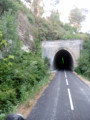
This short hike is accessible to all, with no elevation gain, and will allow you to discover Sommières, a medieval town that is well worth a visit. The first part of the hike takes place on a greenway (a former railway line connecting Sommières to Ganges) that has been remarkably restored with several engineering structures.