


Kyla

 Visorando Member
 Premium user
 Sign up:
Published route(s)
 Bréville-sur-Mer
 7.75 mi
 +171 ft
 -174 ft
 2 hrs
2 hrs
 Moderate
 Departure from Bréhal (Manche)
A hike offering varied scenery, with small country roads and paths winding through hamlets, marshes and pastures. Along the way, you’ll find traces of the past and panoramic views of the coastline.
There are some climbs halfway through the route… followed by some lovely descents!
 Via Saint-Martin le Vieux
 6.45 mi
+98 ft
-108 ft
3h 05
Moderate
Departure from Bréhal (Manche)
6.45 mi
+98 ft
-108 ft
3h 05
Moderate
Departure from Bréhal (Manche)
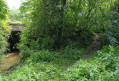
After a short walk along the sea, discover the Normandy countryside, dunes and marshes as you turn off onto small country roads.
Along the way, you will encounter a few reminders of the past, as well as curious donkeys, sheep and even a small stream hidden in the greenery...
Bricqueville-sur-Mer
 8.57 mi
+59 ft
-59 ft
2 hrs
Moderate
Departure from Bréhal (Manche)
8.57 mi
+59 ft
-59 ft
2 hrs
Moderate
Departure from Bréhal (Manche)
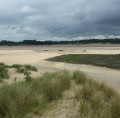
Between the dunes and the marshes, you can explore the surroundings along quiet country lanes and deserted paths: fields and pastures, hamlets where you’ll come across old stone houses adorned with pretty flowers, and abandoned barns where nature is reclaiming its rightful place.The charm is (alas) all too often marred by the recent appearance of large, contemporary houses, some of which are rather pretentious.
Short circular around Coudeville-sur-Mer
 3.70 mi
+171 ft
-174 ft
1h 50
3.70 mi
+171 ft
-174 ft
1h 50
 Easy
Departure from Coudeville-sur-Mer (Manche)
Easy
Departure from Coudeville-sur-Mer (Manche)
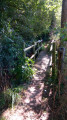
Just 3 km from the coast, this route takes us through the Normandy countryside, mainly along paths and trails.
Architectural walk in Levallois-Perret
7.06 mi
+16 ft
-16 ft
3h 15
Moderate
Departure from Levallois-Perret (Hauts-de-Seine)
The town of Levallois offers a wide variety of styles, materials and standards of living. Elegant Haussmann-style buildings stand alongside former industrial buildings and the first social housing blocks from the 1960s, with brick façades often adorned with ceramic motifs. Today, the town is home to numerous corporate headquarters and office blocks, whilst new, large modern residential developments surrounded by green spaces are springing up.
Between Levallois-Perret and the Batignolles district
5.06 mi
+43 ft
-43 ft
2h 20
Easy
Departure from Levallois-Perret (Hauts-de-Seine)
The Bernard Lafay promenade takes us to Boulevard Pereire, where we join Square des Batignolles and Martin Luther King Park. The return route takes us through squares, passageways and narrow streets. Along the way, we come across some interesting murals and original contemporary architecture.
Green spaces in the 1st and 2nd arrondissements of Paris
 2.54 mi
+157 ft
-115 ft
1h 20
Easy
Departure from Paris
2.54 mi
+157 ft
-115 ft
1h 20
Easy
Departure from Paris
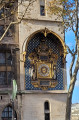
The1st arrondissement, modest in size, represents the historic and geographical heart of Paris; today, it is a district of museums and luxury boutiques. The Tuileries and Louvre Gardens, as well as the Palais Royal, managed by the State, make up for the limited number of municipal squares.
The 2nd arrondissement, the smallest in Paris, is livelier and more commercial. Formerly a financial district, it is now bustling with covered arcades, restaurants and businesses. The atmosphere is dynamic, friendly and very urban. It has only two municipal squares.
Green spaces in Paris’s 9th arrondissement
 3.02 mi
+121 ft
-154 ft
1h 30
Easy
Departure from Paris
3.02 mi
+121 ft
-154 ft
1h 30
Easy
Departure from Paris
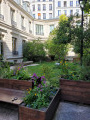
The ninth arrondissement of Paris is distinguished by its lively and central character. It has historical links to the world of entertainment, with numerous theatres, cinemas and concert halls. As a shopping district, it is home to department stores, boutiques and iconic covered arcades. It blends Haussmann-style architecture with more recent buildings, whilst remaining a residential area.After the first two arrondissements, the ninth has the least amount of green space. These are mainly local, much-frequented gardens that play an important social role. The area as a whole reflects an old urban fabric, not particularly conducive to the creation of large natural spaces.
Green spaces in the 10th arrondissement of Paris
 4.49 mi
+75 ft
-33 ft
2h 10
Easy
Departure from Paris
4.49 mi
+75 ft
-33 ft
2h 10
Easy
Departure from Paris
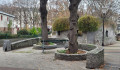
The 10th arrondissement of Paris is characterised by a working-class, cosmopolitan and very lively atmosphere, marked by the presence of the Gare du Nord and Gare de l’Est stations. A densely populated area, it mainly offers small local green spaces. The largest gardens have often been created on former historic, railway or industrial sites, such as the Jardin Villemin or the Square Alban-Satragne. The Canal Saint-Martin, for its part, plays a major role by providing a green promenade and a central hub for socialising. Finally, there are a dozen community gardens and examples of community greening: tree bases and micro-gardens.
Green spaces in Paris’s 5th arrondissement
 4.70 mi
+177 ft
-157 ft
2h 20
Easy
Departure from Paris
4.70 mi
+177 ft
-157 ft
2h 20
Easy
Departure from Paris
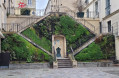
Just like Paris’s oldest arrondissement, the gardens of the fifth evoke the past: the Cluny Medieval Garden, Square Viviani, where the capital’s oldest tree, the famous black locust, has watched Paris transform for over 400 years; the Arènes de Lutèce or the Jardin des Plantes, the Royal Garden of Medicinal Plants. A tour through bustling neighbourhoods, blending bookshops, student cafés and ancient alleyways in an authentic, timeless atmosphere that embodies the intellectual soul of Paris.
Green spaces in Paris’s 6th arrondissement
 5.04 mi
+171 ft
-200 ft
2h 30
Easy
Departure from Paris
5.04 mi
+171 ft
-200 ft
2h 30
Easy
Departure from Paris
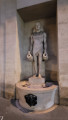
The sixth arrondissement of Paris is emblematic of Parisian elegance. A chic neighbourhood with legendary cafés, it has historical links to writers, philosophers and artists. It is as renowned for its intellectual heritage as it is for its architectural heritage, with its museums, art galleries and prestigious cultural institutions.
It boasts a dozen public squares and municipal gardens, including the famous Jardin du Luxembourg, which is managed by the state and will not be discussed here.
Green spaces in the north of Paris’s 20th arrondissement
 8.55 mi
+325 ft
-433 ft
4h 15
Moderate
Departure from Paris
8.55 mi
+325 ft
-433 ft
4h 15
Moderate
Departure from Paris
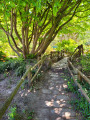
Paris’s 20th arrondissement is a working-class, lively and multicultural area. It is characterised by a high degree of social diversity and a strong artistic identity, with artists’ studios and alternative cultural venues. However, there are notable differences in atmosphere, urban layout and population between the north and south of the arrondissement. The cosmopolitan north of the arrondissement features a dense urban fabric, sloping streets, modest buildings and street art. It includes the Belleville and Ménilmontant neighbourhoods, with their relaxed, bohemian atmosphere. Here you’ll find one of Paris’s major parks, the Parc de Belleville, which offers a panoramic view of the capital, as well as peaceful little gardens.
Green spaces in Paris’s 3rd arrondissement
 3.40 mi
+3 ft
-16 ft
1h 35
Easy
Departure from Paris
3.40 mi
+3 ft
-16 ft
1h 35
Easy
Departure from Paris
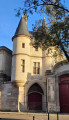
Paris’s 3rd arrondissement offers an elegant, residential atmosphere. An old neighbourhood, with narrow streets and hidden courtyards, it combines craft shops, art galleries and cultural institutions. Many of its green spaces reflect this historic neighbourhood with its majestic mansions: few playgrounds or lawns for sunbathing, but peaceful places to rest, rich in heritage.
Green spaces in the east of Paris’s 17th arrondissement
 4.79 mi
+23 ft
-89 ft
2h 15
Easy
Departure from Paris
4.79 mi
+23 ft
-89 ft
2h 15
Easy
Departure from Paris
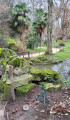
The 17th arrondissement of Paris is distinguished by its great urban and social diversity. The eastern part of the arrondissement combines working-class neighbourhoods with areas undergoing regeneration. Formerly a railway and industrial area, it has undergone significant recent transformation, notably with the Clichy-Batignolles eco-neighbourhood. Martin Luther King Park exemplifies this urban regeneration, designed according to ecological principles. But visitors also appreciate the charm of the Square des Batignolles or the Square des Épinettes, with their typical 19th-century landscape, or the tranquillity of the Square de la Villa Sainte-Croix.
Green spaces in the west of Paris’s 17th arrondissement
 6.52 mi
+49 ft
-36 ft
3h 05
Moderate
Departure from Paris
6.52 mi
+49 ft
-36 ft
3h 05
Moderate
Departure from Paris
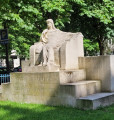
The 17th arrondissement of Paris is distinguished by its great urban and social diversity. The western part of the arrondissement is more residential and middle-class than the east, with the Ternes and Monceau neighbourhoods. It is characterised by varied architecture ranging from Haussmann-style buildings to contemporary blocks. Well-served by public transport, it combines Parisian traditions with modernity. The western part of the arrondissement offers two long walks and around twenty green spaces, including picturesque gardens such as the Square Saint-Odile and the undulating Jardin Claire Motte.