


Refine your search for walks in Tart-le-Haut
Tart-le-Haut walks


 Boucle de Tart-le-haut - Tart l'Abbaye et Tart-le-bas
 Visorando Member
 6.64 mi
 +135 ft
 -135 ft
 3h 10
3h 10
 Moderate
 Departure from Tart-le-Haut (Côte-d'Or)
Randonnée au départ de Tart le haut en passant par plaines et bois afin de rejoindre les communes avoisinantes.
The plain, the Norges and the Longeault-Pluvault pond from Genlis
6.51 mi
+26 ft
-26 ft
3h 00
 Easy
Departure from Genlis (Côte-d'Or)
Easy
Departure from Genlis (Côte-d'Or)
An easy walk along the banks of the River Norges, crossing the plain south of Genlis and passing by the Longeault-Pluvault pond. The route has little shade and is mostly on stony paths.
Between Thorey-en-Plaine and Longecourt-en-Plaine
4.30 mi
+30 ft
-30 ft
2h 00
Easy
Departure from Longecourt-en-Plaine (Côte-d'Or)
A short family walk between woods and the Burgundy Canal.
Longecourt Castle and Burgundy Canal
 5.83 mi
+30 ft
-30 ft
2h 40
Easy
Departure from Longecourt-en-Plaine (Côte-d'Or)
5.83 mi
+30 ft
-30 ft
2h 40
Easy
Departure from Longecourt-en-Plaine (Côte-d'Or)
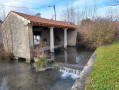
A circular route through the Domaniale d'Izeure forest and along the Burgundy Canal with three locks, which may be in operation when you visit. In Longecourt, you can see the castle, the wash house and the church.
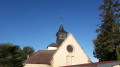
The Soirans wash house
 5.42 mi
+13 ft
-13 ft
2h 30
Easy
Departure from Soirans (Côte-d'Or)
5.42 mi
+13 ft
-13 ft
2h 30
Easy
Departure from Soirans (Côte-d'Or)
This circular loop takes you through two villages in the Côte d'Or: Soirans, with its semi-circular wash house and its12th-century church, and Tréclun, with its highly original town hall, including its decorative features, as well as an unusual bus shelter.
The national forest and the banks of the Cent Fonts in Izeure
 11.58 mi
+46 ft
-46 ft
5h 20
Moderate
Departure from Izeure (Côte-d'Or)
11.58 mi
+46 ft
-46 ft
5h 20
Moderate
Departure from Izeure (Côte-d'Or)
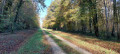
As a resident of Izeure, I had to suggest a hike starting from my town, and now I have. This beautiful walk can be done with the family, is not difficult and has many picnic spots along the Cent Fonts (and not without bottom).
Moderator's warning on 07/04/2021: Caution! Private property issue in (12). See reviews.
The banks of the Oscara from Fauverney
 6.87 mi
+26 ft
-26 ft
3h 10
Moderate
Departure from Fauverney (Côte-d'Or)
6.87 mi
+26 ft
-26 ft
3h 10
Moderate
Departure from Fauverney (Côte-d'Or)
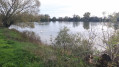
This walk takes place partly along the Ouche river (Oscara in Latin). It has its source in Lusigny-sur-Ouche. This commune is the guardian of the sources of the Ouche. The village is particularly charming with its stone houses.
Marais Trail in Magny-sur-Tille
3.07 mi
+13 ft
-13 ft
1h 25
Easy
Departure from Magny-sur-Tille (Côte-d'Or)
An easy, well-signposted family walk around the ponds of Magny-sur-Tille
Les Six Filles
 4.86 mi
+79 ft
-79 ft
2h 20
Easy
Departure from Cessey-sur-Tille (Côte-d'Or)
4.86 mi
+79 ft
-79 ft
2h 20
Easy
Departure from Cessey-sur-Tille (Côte-d'Or)
A short, easy walk offering the chance to see a remarkable tree, ‘Les Six Filles’, and to pay tribute to the Maquis des Lochères.
Circular walk along the Sans Fond starting from Corcelles-lès-Cîteaux
 5.84 mi
+115 ft
-125 ft
2h 45
Easy
Departure from Corcelles-lès-Cîteaux (Côte-d'Or)
5.84 mi
+115 ft
-125 ft
2h 45
Easy
Departure from Corcelles-lès-Cîteaux (Côte-d'Or)
A short circular loop around the River Sans Fond, which winds through fields and the Izeure State Forest. The Sansfondis 16.3 km long, rising at Perrigny-les-Dijon at an altitude of 230 m and flowing into the Vouge at the Abbey of Cîteaux within the municipality of Saint-Nicolas-lès-Cîteaux at an altitude of 193 m.
A variation on the Corcelles-lès-Cîteaux circular route running alongside the Sansfond
 5.83 mi
+72 ft
-72 ft
2h 45
Easy
Departure from Corcelles-lès-Cîteaux (Côte-d'Or)
5.83 mi
+72 ft
-72 ft
2h 45
Easy
Departure from Corcelles-lès-Cîteaux (Côte-d'Or)
A circular walk around the River Sansfond, this walk takes place in the Izeure National Forest and across fields; it is not technically demanding and the terrain is fairly flat. This alternative route follows the Sansfond for longer towards Noiron-sous-Gevrey, now that a footbridge allows you to cross the river safely to reach Corcelles-lès-Cîteaux. Alovely walk, ideal for everyone.
From one Saulon to another
 5.85 mi
+151 ft
-148 ft
2h 50
Easy
Departure from Saulon-la-Rue (Côte-d'Or)
5.85 mi
+151 ft
-148 ft
2h 50
Easy
Departure from Saulon-la-Rue (Côte-d'Or)
Winter hike with limited risk of mud and hunting, but to be avoided in case of flooding due to the Sans Fond river.
This hike will allow you to see the castle of Saulon-la-Rue, the church of Saulon-la-Chapelle with its two turrets, and to walk along part of the river "La Sans Fond" with the mill of Saulon-la-Chapelle.
Due to private property issues, a change to the route is currently being considered.
Circular along the banks of the Ouche starting from Neuilly-lès-Dijon
 6.81 mi
+33 ft
-43 ft
3h 10
Easy
Departure from Neuilly-lès-Dijon (Côte-d'Or)
6.81 mi
+33 ft
-43 ft
3h 10
Easy
Departure from Neuilly-lès-Dijon (Côte-d'Or)
The Ouche has been redeveloped, making it a great place for a walk in spring or autumn. You can collect walnuts in season. A very pleasant bucolic setting where you can watch the birds. Picnics are possible by the pond.Note:La Gaule de Neuilly is organising its Enduro Carpes from 23 to 25 May (2025) at theNeuilly-Crimoloispond.
Vaux-sur-Crosne circular
 4.99 mi
+95 ft
-95 ft
2h 25
Easy
Departure from Remilly-sur-Tille (Côte-d'Or)
4.99 mi
+95 ft
-95 ft
2h 25
Easy
Departure from Remilly-sur-Tille (Côte-d'Or)
A quiet family route in the heart of the countryside, between woodland and open countryside. 80% shaded Vaux-sur-Crosne has been part of the Norge and Tille Community of Communes since January 2017 and boasts a highly varied water system, partly due to the presence of the rivers Tille and Crosne, and partly due to the presence of a pond, the Lochère, and numerous former gravel pits now reserved for fishing.
Saône ponds route
9.49 mi
+174 ft
-171 ft
4h 30
Moderate
Departure from Magny-Montarlot (Côte-d'Or)
From the vast Longchamp forest to the banks of the Saône, this walk offers an unexpected variety of landscapes on the edge of the Val de Saône: rich flora and fauna, charming villages with their churches, wash houses and the château in Athé. There is also the dam on the Saône and the Plate in Poncey-lès-Athée, the ponds in Magny-Montarlot and the magnificent villages with a rich history. Let's go!
Circular between Magny-Montarlot and Poncey-lès-Athée
6.01 mi
+230 ft
-233 ft
3h 00
Easy
Departure from Magny-Montarlot (Côte-d'Or)
Hike through the Bois des Ratières and Bois des Cognés woods where, depending on the season, you will discover these woods and their colours. Pass through Poncey-lés-Athée (unusual chapel) and walk along the banks of the Saône (dam). Return through the meadows.
Around Cîteaux Abbey
8.36 mi
+138 ft
-131 ft
4h 00
Moderate
Departure from Saint-Nicolas-lès-Cîteaux (Côte-d'Or)
This flat route takes us to discover one of the major structures built in the 13th century by the monks of Cîteaux to ensure their water supply: the Canal de la Cent Fonts.
The Forest of Citeaux
7.72 mi
+135 ft
-135 ft
3h 40
Moderate
Departure from Saint-Nicolas-lès-Cîteaux (Côte-d'Or)
A lovely walk through unspoilt countryside where you can see and hear the wildlife that is always present.The Citeaux State Forest, covering an area of 3,564 hectares, was created during the Revolution through the merger of a royal estate and Cistercian lands. It is a former marshland situated on the lower terraces of the Saône Valley.Perfect for a Sunday family walk. Please note: some paths are no longer accessible; check the notices – changes are currently being considered.
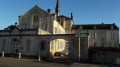
Water catchments and the Poncey dam at the start of the route in Athée
 5.76 mi
+79 ft
-98 ft
2h 45
Easy
Departure from Athée (Côte-d'Or)
5.76 mi
+79 ft
-98 ft
2h 45
Easy
Departure from Athée (Côte-d'Or)
A pleasant, easy walk exploring the two villages of Athée and Poncey-lès-Athée, which also takes in the drinking water treatment plant and its catchments for the Dijon metropolitan area, the Poncey dam, the church and the Athée retirement home.
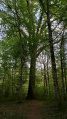
Circular walk in the Forest of Saint-Léger starting from Cirey-lès-Pontailler
 5.64 mi
+203 ft
-184 ft
2h 45
Easy
Departure from Cirey-lès-Pontailler (Côte-d'Or)
5.64 mi
+203 ft
-184 ft
2h 45
Easy
Departure from Cirey-lès-Pontailler (Côte-d'Or)
A family walk through the forest and a protected area, far from the hustle and bustle of the town and with little traffic.
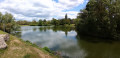
Walk along the banks of the Ouche from Longvic
 7.19 mi
+39 ft
-36 ft
3h 20
Moderate
Departure from Longvic (Côte-d'Or)
7.19 mi
+39 ft
-36 ft
3h 20
Moderate
Departure from Longvic (Côte-d'Or)
Étang Royal, a little corner of paradise.
Walkers, joggers and other nature lovers appreciate this site for its calm, beauty and balance.
An easy walk to enjoy the green charm of the ponds and banks of the Ouche.
Maison Dieu Pochon Forest
 7.03 mi
+10 ft
-7 ft
3h 15
Easy
Departure from Losne (Côte-d'Or)
7.03 mi
+10 ft
-7 ft
3h 15
Easy
Departure from Losne (Côte-d'Or)
This hike is inspired by one suggested by the local tourist office. We wanted to avoid roads, so this is a pleasant hike through the Saône plain along farm tracks.
Circular route through the plains on the outskirts of Dijon
11.73 mi
+79 ft
-79 ft
5h 30
Moderate
Departure from Quetigny (Côte-d'Or)
A circular route with no technical difficulty starting from Quétigny, taking you to the outskirts of the residential areas of Saint-Apollinaire, Varois and Chaignot, Couternon, and Chevigny-Saint-Sauveur. A very pleasant route in fine weather when the path runs alongside the Vieille Tille and then the Norges between Couternon and Chevigny.
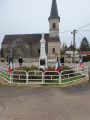
The banks of the Saône at the start of Labergement-lès-Auxonne
 5.53 mi
+13 ft
-13 ft
2h 35
Easy
Departure from Labergement-lès-Auxonne (Côte-d'Or)
5.53 mi
+13 ft
-13 ft
2h 35
Easy
Departure from Labergement-lès-Auxonne (Côte-d'Or)
This circular route allows you to discover the village of Labergement-Lès-Auxonne, its 12th-century Saint-Étienne Church with its 17th-century altarpiece and altar, the banks of the Saône with the Voie Bleue and market gardens.
From Domois to Cîteaux Abbey
 12.14 mi
+33 ft
-131 ft
5h 35
Moderate
Departure from Perrigny-lès-Dijon (Côte-d'Or)
12.14 mi
+33 ft
-131 ft
5h 35
Moderate
Departure from Perrigny-lès-Dijon (Côte-d'Or)
This very pleasant walk will take you to Cîteaux Abbey, following the Cent Fonts river, which will serve as your guide. There are a few picnic areas along this lovely walk.
Around Couternon
 5.84 mi
+39 ft
-39 ft
2h 45
Easy
Departure from Couternon (Côte-d'Or)
5.84 mi
+39 ft
-39 ft
2h 45
Easy
Departure from Couternon (Côte-d'Or)
A leisurely walk around Courternon. This route will take you round the village and allow you to discover it in a different light.
The route is in open countryside with little shade. Make sure you bring suitable gear if the sun is strong.
State-owned forest and ponds from Saint-Nicolas-lès-Cîteaux
8.31 mi
+112 ft
-108 ft
3h 55
Moderate
Departure from Saint-Nicolas-lès-Cîteaux (Côte-d'Or)
Discover the curiosities of the Cîteaux Forest, the large woods, forest roads, ponds and numerous streams that drain it. This hike is almost flat but gives a good idea of the large forest, with its magnificent high forests, drainage ditches and wide open views from some of the forest roads.
Walk in the Saint-Léger State Forest
 7.04 mi
+115 ft
-108 ft
3h 20
Moderate
Departure from Lamarche-sur-Saône (Côte-d'Or)
7.04 mi
+115 ft
-108 ft
3h 20
Moderate
Departure from Lamarche-sur-Saône (Côte-d'Or)
The origins of Lamarche are unknown. Nevertheless, the discovery in 1887 of polished stone axes and flint knives by Viscount Raoul Legouz de Saint-Seine suggests that the area was inhabited as early as the Neolithic period, although it seems that these tools, found at the confluence of the Bèze and the Saône, were carried here by the floods of these rivers.
This peaceful stroll through the national forest is a truly relaxing experience.
The mill at Arc-sur-Tille
 Association / Club / Walk leader1.69 mi
+10 ft
-10 ft
0h 45
Easy
Departure from Arc-sur-Tille (Côte-d'Or)
Association / Club / Walk leader1.69 mi
+10 ft
-10 ft
0h 45
Easy
Departure from Arc-sur-Tille (Côte-d'Or)
A superb walk along the River Tille, during which you’ll discover the watermill and the church at Arc-sur-Tille.
From one mill to another in Arc-sur-Tille
6.65 mi
+66 ft
-79 ft
3h 05
Moderate
Departure from Arc-sur-Tille (Côte-d'Or)
Country walk between Arc-sur-Tille and Remilly-sur-Tille, taking in their mills.
Around the lake and green spaces of Arc-sur-Tille
6.30 mi
+16 ft
-16 ft
2h 55
Easy
Departure from Arc-sur-Tille (Côte-d'Or)
This hike will take you through the town's green spaces, around the lake and along the Tille river.
Between Tille and Gourmerault
9.92 mi
+33 ft
-33 ft
4h 35
Moderate
Departure from Arc-sur-Tille (Côte-d'Or)
This circular walk, between the two rivers that flow through our villages, takes you along these waterways and allows you to explore the church and the old mill at Arc-sur-Tille, Bressey-sur-Tille Castle, and the ponds at Remilly-sur-Tille.Did you know that the bell tower of the church at Arc-sur-Tille owes its flat roof to the Chape telegraph (1841)?
Walk on the hills above Lamarche-sur-Saône
 6.01 mi
+207 ft
-210 ft
2h 55
Easy
Departure from Lamarche-sur-Saône (Côte-d'Or)
6.01 mi
+207 ft
-210 ft
2h 55
Easy
Departure from Lamarche-sur-Saône (Côte-d'Or)
After completing the circuit of the Étang du Milieu, this walk takes you up to the heights of Lamarche-sur-Saône, skirting the Pays Neuf. We’ll take the Voie Verte before walking through the woods known as the Grandes Charrières, then through the Leat aux Renards. We’ll return to the starting point by crossing the Pays Neuf.
Between Sommières and the ponds of the Saint-Léger Forest
 5.90 mi
+66 ft
-66 ft
2h 45
Easy
Departure from Saint-Léger-Triey (Côte-d'Or)
5.90 mi
+66 ft
-66 ft
2h 45
Easy
Departure from Saint-Léger-Triey (Côte-d'Or)
A pleasant forest walk through open clearings and rugged woodland paths, leading to two ponds where you can observe wildlife.
Around Varois-et-Chaignot
5.40 mi
+82 ft
-82 ft
2h 35
Easy
Departure from Varois-et-Chaignot (Côte-d'Or)
An easy walk with no significant elevation gain in the Dijon plain
The Bois du Vieux Dijon in Arçon
 5.86 mi
+98 ft
-98 ft
2h 45
Easy
Departure from Belleneuve (Côte-d'Or)
5.86 mi
+98 ft
-98 ft
2h 45
Easy
Departure from Belleneuve (Côte-d'Or)
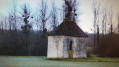
An easy, family-friendly walk across the plain and through the woodland, partly shaded, partly sunny. On your way through Arçon, see the 12th-century Sainte-Anne Chapel, remodelled in the 17th century, located on Grande Rue. On leaving the woods, at a place called La Charme aux Loups, you’ll find the Sainte-Gertrude Chapel, which is not maintained.
A short circular loop around Trochères
 4.58 mi
+36 ft
-36 ft
2h 10
Easy
Departure from Trochères (Côte-d'Or)
4.58 mi
+36 ft
-36 ft
2h 10
Easy
Departure from Trochères (Côte-d'Or)
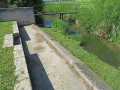
Taking a walk around Trochères isn’t easy; canals block our path in many places, particularly in the Bois de Mordesson, whilst the Albane and Motte streams dictate our route. Not to mention the private woods, where access is prohibited.
So I suggest this family walk, which is still enjoyable and allows us to explore the outskirts of this village.
Places to see:
A 19th-century open-air washhouse at the western exit; the village also boasts the small 13th-century Church of the Nativity, rebuilt in the 18th century and restored with ochre-coloured render.
The two mills, Haut and Bas.
In search of greenery in Dijon
 4.53 mi
+262 ft
-240 ft
2h 20
Easy
Departure from Dijon (Côte-d'Or)
4.53 mi
+262 ft
-240 ft
2h 20
Easy
Departure from Dijon (Côte-d'Or)
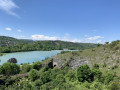
I suggest a short walk that will take you through some of Dijon's parks, passing by a beautiful viewpoint overlooking Lac Kir.
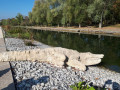
From the Hauts du Suzon to the crocodiles of the Ouche
 10.45 mi
+413 ft
-554 ft
5h 10
Moderate
Departure from Dijon (Côte-d'Or)
10.45 mi
+413 ft
-554 ft
5h 10
Moderate
Departure from Dijon (Côte-d'Or)
The Suzon and the Ouche, two rivers of great importance to Dijon. This route runs from one to the other through a patchwork of gardens, avenues and small paths. Historical and artistic points of interest and viewpoints.
Access by tram; access by car is also possible.