


Refine your search for walks in Seillans
Seillans walks


 Promenade of drystone shelters in Seillans
 Tourist office
 1.88 mi
 +135 ft
 -135 ft
 1h 00
1h 00
 Easy
Easy
 Departure from Seillans (Var)
The shepherds of Provence offer us wonders along this short hike: the drystone shelters and their exceptional architecture. The Seillan drystone shelters were built between the18th and19th centuries, a period when land clearing and cultivation developed. The hills were then all cultivated in terraces, restanques and banquettes where chickpeas, wheat, barley, vines, olive trees and fruit trees grew. These huts provided shelter for farmers and their tools. Shaped like igloos, they maintain the same temperature in summer and winter, providing good protection against the heat or the mistral wind. Why are there so many drystone shelters in Seillans (more than 80!) and so few in neighbouring villages? It remains a mystery!
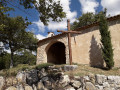
The Pigne lookout
 Visorando Member
 1.97 mi
+410 ft
-410 ft
1h 15
Easy
Departure from Seillans (Var)
1.97 mi
+410 ft
-410 ft
1h 15
Easy
Departure from Seillans (Var)
This is an easy hike offering magnificent panoramic views from the lookout point over Audibergue, Estérel, Fréjus, Colle du Rouet, Maures, Coudon, and more.
Walk to the national forest in Tourrettes
3.97 mi
+597 ft
-600 ft
2h 20
Easy
Departure from Tourrettes (Var)
During this hike, you will discover the restored old Boudoura wash house and the ruins of the Moulin Brûlé mill, now disused. The forest is bordered to the north by the Siagnole, to the south by the Camiole, and to the west by the Chautard: so much water! To the north of the Tuilerie or Tuilière plateau and Lavagne lies the Tourrettes State Forest, criss-crossed by numerous underground and above-ground canals and aqueducts, dotted with manholes and water catchments: the Acates, the Jas Neuf, Fontanouille, and Font-Bouillen.
Circular Riou de Claviers loop and Garron track starting from L’Éouvière
3.23 mi
+361 ft
-361 ft
1h 50
Easy
Departure from Seillans (Var)
A pleasant, shaded walk through the Seillans forest and along the Riou de Claviers. No difficulty, even in summer. You may occasionally spot wild boars, which are numerous in the area. You can cool off on the way back, provided the Riou hasn’t run dry...
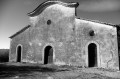
Sainte-Anne Chapel in Claviers
 3.36 mi
+643 ft
-633 ft
2h 05
Easy
Departure from Claviers (Var)
3.36 mi
+643 ft
-633 ft
2h 05
Easy
Departure from Claviers (Var)
Ascent to the Sainte-Anne Chapel, located 624 m above sea level on the western summit of the Plateau du Puy, passing by the ruins of a Ligurian oppidum. Easy hike in the Provence scrubland and forest (thyme, lavender, rock rose...)
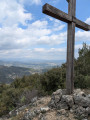
La Pigne, starting from Claviers
 8.26 mi
+1,312 ft
-1,316 ft
4h 55
8.26 mi
+1,312 ft
-1,316 ft
4h 55
 Moderate
Departure from Claviers (Var)
Moderate
Departure from Claviers (Var)
An easy, family-friendly route mostly along forest paths, ending with a magnificent viewpoint.
Sunny all the way; the return route is cooler as it’s on the north-facing slope.
In spring, it’s full of flowers.
In summer, make sure you take plenty of water and set off early.
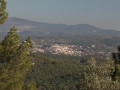
Tour of the Puy Forest starting from Claviers
 4.22 mi
+627 ft
-627 ft
2h 30
Easy
Departure from Claviers (Var)
4.22 mi
+627 ft
-627 ft
2h 30
Easy
Departure from Claviers (Var)
An easy family walk between sun and shade (between the south-facing and north-facing slopes, in fact), with lovely views of the sea on the south-facing slope and the coolness of the forest on the way back.
"Le Lac de Méaulx" walk in Saint-Paul-en-Forêt
4.61 mi
+331 ft
-305 ft
2h 25
Easy
Departure from Saint-Paul-en-Forêt (Var)
Between the Maures mountains and the forests of Fayence, Seillans and Saint-Paul-en-Fôret, this hike takes you to the 11-hectare Lac de Meaulx in a densely wooded and green environment. The Riou de Méaulx hillside reservoir was built by the Syndicat Intercommunal pour l'Aménagement du Cours Supérieur de l'Endre (Intercommunal Association for the Development of the Upper Endre River). Lac de Méaulx, straddling the municipalities of Saint-Paul-en-Forêt, Seillans and Fayence, was filled with water in December 1981. The reservoir has a capacity of 900,000 m3 and a surface area of 16 hectares. Its maximum length is 1 km and the dam is 20 metres high. The lake was used as a support area for forest fire defence. Following damage, it was emptied in October 2006. Currently owned by the Community of Municipalities, it was refilled in early 2017 after renovation work.
Walk through the Royal Forest in Saint-Paul-en-Forêt
4.99 mi
+456 ft
-449 ft
2h 40
Easy
Departure from Saint-Paul-en-Forêt (Var)
A very pleasant walk through the heart of the Royal Forest, with its downy oaks, cork oaks and hornbeams. Several species of birds can be observed, including woodcocks and kingfishers. During the hike, you will enjoy magnificent views of Lake Méaulx. The inhabitants of Saint-Paul, steeped in a strong forestry culture, have always known how to draw resources from this forest: timber for building houses and ships, acorns for feeding pigs, wood for heating and fuelling lime kilns and craft kilns, particularly for firing tiles and glassware. From the16th century onwards, the Royal Navy consumed large quantities of timber for its ships. Today, the Royal Forest is no longer exploited, but with its downy oaks, cork oaks and hornbeams, it is a very pleasant place to walk.
"Le mégalithe de Riens" walk in Mons
2.15 mi
+190 ft
-190 ft
1h 10
Easy
Departure from Mons (Var) (Var)
A family hike to discover Mons, the Oratory of Saint-Pierre and the Riens megalith. The Riens dolmen is located in the centre of a tumulus and housed collective tombs. The commune of Mons has several dolmens from the late Neolithic period, which bear witness to an important social group more than 4,000 years ago. The capstones of the Riens dolmen are missing; it housed collective tombs. One of them probably lies on the ground on the north side, the other has disappeared. The entrance to the chamber is very unusual, with an ogive shape not found anywhere else. Two other dolmens without capstones can be seen on the path leading to Escragnoles: the Colle dolmen and the Brainée dolmen.
Walk from Vallon de Saint-Donat to Callian
2.38 mi
+735 ft
-728 ft
1h 45
Easy
Departure from Callian (Var) (Var)
A hike between two hilltop villages! Set off to explore Montauroux and Callian by taking the GR® de Pays trail in the Chapelle Saint-Donat valley. The hike starts in the village of Callian.
Monsois heritage discovery trail
2.14 mi
+246 ft
-246 ft
1h 10
Easy
Departure from Mons (Var) (Var)
An easy walk that showcases the heritage of Mons (dolmen, old canal, wash house, chapel, etc.). This walk combines culture and family fun, with clear views of Cannes and Saint-Raphaël at the start of the route. At the end of the walk, you will find yourself almost in the heart of the village of Mons, classified as a "village of character". The Écho du Baou association offers guided and commented tours of this walk. It is a hiking route and a digital trail.
Walk around Lake Rioutard in Saint-Paul-en-Forêt
1.72 mi
+184 ft
-180 ft
0h 55
Easy
Departure from Saint-Paul-en-Forêt (Var)
Lac du Rioutard is a hillside reservoir dating back to 1974. During this hike, discover an exceptional natural setting and a botanical trail created in 2007 by the Respire association, where you can learn about Mediterranean plant species. The dam covers an area of 5.8 hectares and has a capacity of 200,000 m³ of water. The dam is 14 metres high. Fishing enthusiasts can try their hand at catching tench, carp or perch. The botanical trail is marked by around thirty botanical panels highlighting Mediterranean plant species: stone pine, maritime pine, cork oak, holm oak, Montpellier rockrose, arbutus, juniper, tree heath, cade, mastic tree, thorny broom, thyme, etc.
Mont Lachens
 8.43 mi
+2,326 ft
-2,306 ft
5h 55
Moderate
Departure from La Bastide (Var) (Var)
8.43 mi
+2,326 ft
-2,306 ft
5h 55
Moderate
Departure from La Bastide (Var) (Var)
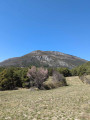
Set off to conquer the roof of the Var and enjoy the magnificent panoramic views from the summit.
Montagne des Louquiers
 4.44 mi
+1,001 ft
-994 ft
2h 55
Easy
Departure from Mons (Var) (Var)
4.44 mi
+1,001 ft
-994 ft
2h 55
Easy
Departure from Mons (Var) (Var)
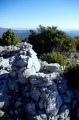
A short, easy climb to a peak in the Haut Var with a 360° view and the chance to see some megalithic ruins. A beautiful walk through the heath.
Walk to the Gourbachin Waterfall in Bagnols-en-Forêt
1.19 mi
+105 ft
-118 ft
0h 40
Easy
Departure from Bagnols-en-Forêt (Var)
Very easy hike suitable for young children. The route runs alongside the Petit Riou (dry in summer) and benefits from the shade of the trees and the coolness of the valley. Magnificent waterfall at the end of the route: the Gourbachin.
"Along the way, the Vauloube rushes from the top of a porphyry bank into a hollow, a veritable green chasm, where its waters, which are often turbulent after the slightest storm, have carved out a magnificent gour." The waterfall is no less than six metres high and, thanks to the overhanging rock, walkers can walk all the way around it, passing under the waterfall. The walk is fun and charming, ending at the Gour Bachin, which is a marvel." This text by L. Henseling, dating from 1934, is still relevant today.
The Bargème Mill and the Artuby
 4.80 mi
+938 ft
-919 ft
3h 00
Moderate
Departure from Bargème (Var)
4.80 mi
+938 ft
-919 ft
3h 00
Moderate
Departure from Bargème (Var)
A lovely walk from Bargème and its castle to the banks of the Artuby with its turquoise waters. You will enjoy splendid views of the surrounding area as far as Mont Coudon. Part of the walk is in the sun (take care in summer) and part is in the woods (very pleasant).
La Montagne de Brouis
 7.76 mi
+1,654 ft
-1,650 ft
5h 00
Moderate
Departure from Bargème (Var)
7.76 mi
+1,654 ft
-1,650 ft
5h 00
Moderate
Departure from Bargème (Var)
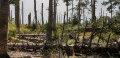
A lovely hike alternating between tracks, rocky paths and magnificent woodland. Panoramic views of the valley, the Lachens, Canjuers and Les Maures.
Vallon de la Clue-Bargème
5.34 mi
+453 ft
-453 ft
2h 50
Easy
Departure from Bargème (Var)
Easy walk around the Vallon de la Cluel, starting from the village of Bargème.
The must-sees of Bagnols-en-Forêt
 10.21 mi
+1,430 ft
-1,437 ft
5h 55
Moderate
Departure from Bagnols-en-Forêt (Var)
10.21 mi
+1,430 ft
-1,437 ft
5h 55
Moderate
Departure from Bagnols-en-Forêt (Var)
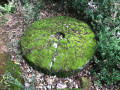
The village of Bagnols-en-Forêt, churches and chapels located at the four cardinal points, a waterfall and an oppidum are all on the agenda for this hike, which is rich in remarkable sites to discover. Beautiful forest of pine and cork oak trees. The latter provide a unique material, bark, which regenerates after each harvest.
Promenade de la Rouvière in Bagnols-en-Forêt
1.85 mi
+98 ft
-98 ft
0h 55
Easy
Departure from Bagnols-en-Forêt (Var)
A pleasant short hike through the woods, with a view of the sea, Saint-Raphaël and the Estérel halfway along the route. Majestic pines, oaks and even olive trees line the trail. In spring, rockroses will brighten up your walk, in summer cicadas and in autumn heather. At the beginning of the last century, the Var was France's largest producer of cork. The actual harvest, known as "levage", depends on the health of the tree, the heat and the rise of the sap from early June to early August. The first harvests are unsuitable for making corks and are used for insulation. After nine years, when the bark is about three centimetres thick, it is harvested to make corks. Cork also protects the tree during fires.