Country:
 City:
City:


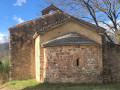
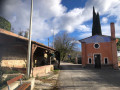
Coming from Fréjus, park on the right at the entrance to the village. The car park is close to Rue du Portail, which is the starting point of our route.
(S/E) From the car park, take Rue du Portail, a cobbled stairway that leads to Rue de l'Ancienne Mairie. Another stairway leads to Grande Rue. Continue almost opposite via the third stairway, which leads to Rue du Mitan.
(1) Turn left and continue straight ahead until you reach the Church of Saint-Antonin, dating from 1805. Continue around the church on the left and take Rue du Bari on the left for about thirty metres.
(2) Turn left at the corner of the cemetery and continue along Chemin des Aires de Sainte-Anne until you reach the chapel of the same name, dating from 1654.
(3) Turn right onto Montée Sainte-Anne. Walk along Place du Rond, continue straight ahead on the steps alongside the Town Hall.
(4) Turn left, walk along the square and continue straight ahead onto Boulevard du Rayol, which continues onto Chemin de Saint-Antoine. Proceed with caution as this road is open to traffic. Continue until you reach the Saint-Antoine Chapel.
(5) Continue straight ahead on Chemin de la Culasse.
(6) Turn left onto a path that has been damaged by various streams. Cross Chemin des Rouvières and continue straight ahead through the forest to reach a three-way junction.
(7) Turn left onto an unmarked path that leads to a field. Walk along the long retaining wall until you reach the large area.
(8) Cross Route de Saint-Paul en Forêt with caution, walk past the shop and then turn left. Walk about 60 metres and then turn left onto the cement path, which immediately leads to a crossroads.
(9) Turn right into the forest onto the flat then descending path that leads to the Vauloube, a shallow, steep-sided river.
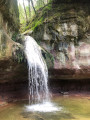
(10) Turn right just before the river to follow the path, which sometimes crosses it. Continue to the right until you reach the Gourbachin waterfall, one of the village's attractions.
(11) Pass behind the curtain of water; this is a magical place and a photo break is a must. Then turn back.
(10) Continue along the Vauloube, following the path towards a stone road bridge.
(12) When you see this stone bridge, turn left at an unmarked crossroads. Pass under the bridge and cross the Valoube. Continue along the path that leads to Chemin de la Salette.
(13) Turn right and cross a bridge. Cross the Route de Muy with caution and continue opposite on the Traverse de Maupas, which is tarmac at the start: there is a dead end sign. Be careful, as the path quickly borders a steep drop on the left for a few metres, then deteriorates, and a wall of reeds seems to block the way. Pass to the right of this vegetation to find the path that leads to Chemin de Maupas at a car park.
(14) Take the road on the left for a few metres, cross it with great cautionand take Chemin du Plan des Granges on the right. At the first crossroads, continue straight on Chemin de la Plaine, which is tarmac, until the next junction.
(15) Turn right onto Traverse de Saint-Denis. At the next crossroads, turn left onto Chemin Saint-Denis and continue to the Romanesque chapel of the same name.
(16) Turn around.
(15) Go straight ahead and continue straight on Traverse de Saint-Denis until you reach the D47.
(17) Turn right and walk carefully along the departmental road: a high-visibility vest is recommended. Some sections allow you to walk safely inside the forest.
(18) Leave the D47 and turn left onto the path. After about 50 metres, you will reach an unmarked V-shaped crossroads. Turn right and continue through the forest, starting by crossing a small river: the rocky path is in poor condition. You will arrive at a crossroads marked by a cairn.
(19) Turn right and follow this forest path. Then continue along the wide track until you reach the next crossroads: marker 49.
(20) Enjoy the view of the Blavet Gorges on your right. At the trail junction, turn left. The red rocks stand out against the steep relief. Follow the well-marked and sometimes steep trail that climbs up to the plateau:use the Visorando app. The unmapped trail winds between rocks and ancient terraces with cairns. At the top,some of the flat millstones are still carved, while others are just the remains of the millstone extracted from the rock. Continue to the ruins of the cistern known as the "Église des Païens" (Church of the Pagans), which is buried but still has a clearly visible vault.
(21) At this point, use the Visorando app, heading north-east, to cross a beautiful chestnut grove made up of terraces. The last hundred metres are cluttered with branches but passable.
(22) Take the path ascending to the right and continue to the carriage track. At this point, walk alongside the small pumping station on the left and continue straight ahead, heading northeast on this track, which joins another track called Piste de Bayonne: caution, the latter is tarmac. Arrive at the "piste de Bayonne" signpost , which marks the crossroads with Route du Muy.
(23) Turn left to find the Notre-Dame de la Pitié Chapel. Continue straight ahead, then turn right, staying on the Route du Muy.
(24) Leave Route du Muy and follow the downhill track on the right until you reach the entrance to the bend. Take the barely visible path on the left below. It is obscured by vegetation but is definitely there: use the app. Follow this path, which branches off to the right and passes through low vegetation and then a wooded area. Cross the stream and continue along the path, which leads to Chemin de la Salette.
(25) Continue left for about a hundred metres and turn right onto the uphill path. Cross Route du Muy with caution. Immediately after the house, take the track on the left which leads to a staircase overlooking the car park (S/E).



 Tourist office
 Easy
Easy 
 Visorando Member