


Refine your search for walks in Saint-Vérain
Saint-Vérain walks


 The Vérinoise Circular
 Tourist office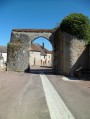
 2.99 mi
 +213 ft
 -184 ft
 1h 35
1h 35
 Easy
Easy
 Departure from Saint-Vérain (Nièvre)
Marked route No. 34.
The village of Saint-Vérain, built on a hillside, was surrounded by fortified walls in the Middle Ages, making it one of the most powerful feudal cities in the region. Numerous remains bear witness to the city's importance, including ramparts, towers, gates, wells, a keep, etc.
Medieval Walk in Saint-Vérain
 0.67 mi
+75 ft
-75 ft
0h 25
Easy
Departure from Saint-Vérain (Nièvre)
0.67 mi
+75 ft
-75 ft
0h 25
Easy
Departure from Saint-Vérain (Nièvre)
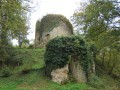
Follow the castle path to discover the keep and the remains of the13th-century feudal town.
Circuit de La Chapelle aux Rois
 8.91 mi
+771 ft
-771 ft
4h 45
8.91 mi
+771 ft
-771 ft
4h 45
 Moderate
Departure from Bitry (Nièvre)
Moderate
Departure from Bitry (Nièvre)
Marked trail No. 35.The commune of Bitry covers 1,746 hectares. The Ramois boundary marker is at an altitude of 326 metres, while the La Maloise river flows at the lowest point, 189 metres above sea level.Between the village and the hamlet of Les Beauchats, you can visit a chapel dedicated to Saint Marc and Saint Roc, which was restored in the 20th century.
La Villéon discovery trail in Puisaye
 Association / Club / Walk leader
 5.35 mi
+299 ft
-308 ft
2h 45
Easy
Departure from Bitry (Nièvre)
5.35 mi
+299 ft
-308 ft
2h 45
Easy
Departure from Bitry (Nièvre)
Marked trail No. 61.Emmanuel de La Villéon (1848-1944) was a painter of Breton origin (Fougères, where he has his museum) who lived from 1900 to 1936 in a mansion in the hamlet of Salvard. An admirer of Monet, he adopted most of the characteristics of Impressionism.This route, now enhanced with panels featuring reproductions and commentary, allows visitors to rediscover some of the places painted by the artist, including certain characteristics of the Poyaudin bocage.
Let's go for a walk in the woods
 4.97 mi
+285 ft
-272 ft
2h 30
Easy
Departure from Saint-Loup (Nièvre) (Nièvre)
4.97 mi
+285 ft
-272 ft
2h 30
Easy
Departure from Saint-Loup (Nièvre) (Nièvre)
Discover the village of Saint-Loup-des-Bois, its inhabitants, the Saints-Lupéens, and the forests that surround it. You will pass by the Museum of Agricultural Machinery and Rural Life, which traces the history of agricultural machinery. In addition to these major collections in Europe, there is an astonishing and impressive collection of irons and a collection dedicated to woodworking trades (clog makers, coopers, wheelwrights, etc.).
Fortified House
 Visorando Member5.54 mi
+223 ft
-210 ft
2h 45
Easy
Departure from Saint-Amand-en-Puisaye (Nièvre)
Visorando Member5.54 mi
+223 ft
-210 ft
2h 45
Easy
Departure from Saint-Amand-en-Puisaye (Nièvre)
Marked walk No. 39From the16th-century castle at the very start of the route to the ruins of Maison Fort Castle, the route takes you past the ponds—the largest of which is the Étang de la Forge—and the Chemin du Tacot.
The Chemin Carriès
5.15 mi
+167 ft
-144 ft
2h 30
Easy
Departure from Saint-Amand-en-Puisaye (Nièvre)
Marked trail No. 40
Taking this path is to step into the life and work of Jean-Joseph Carriès. This trail begins with the history of pottery and ends with a sunken path lined with works by ceramicists and the potters’ quarters in the village of Saint-Amand-en-Puisaye.
Les Méandres de la Vrille
4.35 mi
+308 ft
-282 ft
2h 15
Easy
Departure from Saint-Amand-en-Puisaye (Nièvre)
Waymarked walk N° 38
In the land of the potters, there is first and foremost the clay that serves as the raw material for the craftsmen, then the water that gushes out of the clay-silica or clay-limestone soils, depending on the geology of the subsoil in this area. But there's also the beauty of nature, with its landscapes, paths framed and even marked by these hedges and their sometimes mysterious, sometimes mischievous tadpoles. They are the source of some of the legends that live in the area.
The Chemin des Deux Visages
 8.56 mi
+659 ft
-646 ft
4h 30
Moderate
Departure from Dampierre-sous-Bouhy (Nièvre)
8.56 mi
+659 ft
-646 ft
4h 30
Moderate
Departure from Dampierre-sous-Bouhy (Nièvre)
Marked route No. 101.
The area of Dampierre-sous-Bouhy spans two natural regions: the Forterre and the Puisaye. Numerous flint tools found near the Moulin Bléneau bear witness to the presence of humans during the Neolithic period. In the hamlet of Les Pasquiers, the discovery of the remains of a Gallo-Roman villa also attests to human occupation during this period.
The Path Along the Water
 8.52 mi
+528 ft
-535 ft
4h 25
Moderate
Departure from Dampierre-sous-Bouhy (Nièvre)
8.52 mi
+528 ft
-535 ft
4h 25
Moderate
Departure from Dampierre-sous-Bouhy (Nièvre)
Marked route No. 45.
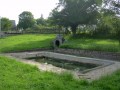
The Year 5 and 6 class from Dampierre-sous-Bouhy has created a walking route for you. This route will allow you to discover the landscapes of Puisaye and its many water sources.
We wish you a lovely walk and hope you enjoy exploring this route as much as they enjoyed creating it.
It can be completed in its entirety or with two alternative routes (see ‘Practical Information’ section).
Panoramic route starting from Bouhy
 7.83 mi
+787 ft
-794 ft
4h 15
Moderate
Departure from Bouhy (Nièvre)
7.83 mi
+787 ft
-794 ft
4h 15
Moderate
Departure from Bouhy (Nièvre)
Marked trail No. 33.
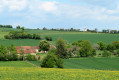
Geologically, the commune of Bouhy belongs to the Forterre, a region neighbouring the Puisaye. Its village is at an altitude of 355 metres. For walkers in search of vast horizons, this dominant position gives this route its panoramic interest, to which is added the architectural interest of the many chapels encountered along the way.
The Château Pond, starting from Boutissaint
 1.11 mi
+46 ft
-46 ft
0h 35
Easy
Departure from Treigny (Yonne)
1.11 mi
+46 ft
-46 ft
0h 35
Easy
Departure from Treigny (Yonne)
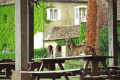
A family outing to Boutissaint Nature Reserve along this short but very rewarding trail. First, the Sainte-Langueur Chapel, then the castle, followed by a chance to immerse yourself in the estate, home to around 400 animals native to our forests.
The Wishing Tree at Boutissaint
 4.54 mi
+207 ft
-217 ft
2h 15
Easy
Departure from Treigny (Yonne)
4.54 mi
+207 ft
-217 ft
2h 15
Easy
Departure from Treigny (Yonne)
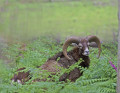
As well as the wild animals roaming freely and exploring the park’s natural environment, this imposing oak tree with its low-hanging branches offers visitors the chance to mark their visit by tying a ribbon bearing a wish. It’s a deeply symbolic gesture that might just open the door to a wonderful legend.
Near the fortified castle of La Motte Josserand
 7.52 mi
+272 ft
-259 ft
3h 40
Moderate
Departure from Perroy (Nièvre)
7.52 mi
+272 ft
-259 ft
3h 40
Moderate
Departure from Perroy (Nièvre)
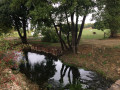
This route takes you back to the time of fortified castles and knights. Built on the marshy lands of Perroy, the Château de la Motte Josserand is one of the most beautiful military constructions of the Middle Ages in the Nièvre region, with its famous adventurer Perrinet Gressard who acquired the seigneury in the 15th century.
La Croix Saint-Jean
 3.05 mi
+223 ft
-223 ft
1h 35
Easy
Departure from Treigny (Yonne)
3.05 mi
+223 ft
-223 ft
1h 35
Easy
Departure from Treigny (Yonne)
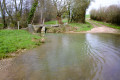
Marked route No. 21.A very pretty route for a short family hike, discovering the Vrille at the very beginning of the route with a ford crossing on the Pont des Canards, then, after the Croix Saint-Jean, another crossing on a stone bridge (the springs are a few hundred metres away). On the way back, you pass in front of the Saint-Symphorien church.
Ratilly Castle and the headwaters of the Vrille
 6.95 mi
+558 ft
-538 ft
3h 40
Moderate
Departure from Treigny (Yonne)
6.95 mi
+558 ft
-538 ft
3h 40
Moderate
Departure from Treigny (Yonne)
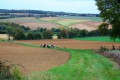
Local heritage and springs make this a delightful route.
The Woods of Legends
 7.14 mi
+417 ft
-436 ft
3h 40
Moderate
Departure from Treigny (Yonne)
7.14 mi
+417 ft
-436 ft
3h 40
Moderate
Departure from Treigny (Yonne)
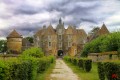
A trail rich in heritage, featuring traditional pottery, Ratilly Castle – a former water tower now converted into an observatory and exhibition centre – and, of course, the sunken paths lined with hedges.
Guédelon’s Path
 6.07 mi
+269 ft
-256 ft
3h 00
Easy
Departure from Treigny (Yonne)
6.07 mi
+269 ft
-256 ft
3h 00
Easy
Departure from Treigny (Yonne)
Market circuit n°23.
In an hour walking, rendezvous in the 13th century, on a legendary path and meet the middle-age castles builders.
View of the Forterre
 5.12 mi
+486 ft
-495 ft
2h 45
Easy
Departure from Treigny (Yonne)
5.12 mi
+486 ft
-495 ft
2h 45
Easy
Departure from Treigny (Yonne)
Marked route No. 22.
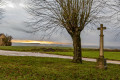
Passing by the cathedral of Puisaye, a tour of the heights to discover vast horizons, alternating landscapes of large-scale farming and forests, dotted with springs. And then, Perreuse, a magnificent village with a rich history.
Water and Woods Hiking Trail
 8.68 mi
+535 ft
-554 ft
4h 25
Moderate
Departure from Treigny (Yonne)
8.68 mi
+535 ft
-554 ft
4h 25
Moderate
Departure from Treigny (Yonne)
Marked hike N°24.
Leaving from the fairground, you will walk along paths that have a mysterious past and are steeped in legends.
Treigny - Druyes-les-Belles-Fontaines
15.94 mi
+869 ft
-1,079 ft
8h 05
 Difficult
Departure from Treigny (Yonne)
Difficult
Departure from Treigny (Yonne)
From castle to castle from the village of Treigny, taking in Ratilly and Guédelon, via Perreuse and its former barony, to reach Druyes-les-Belles-Fontaines and the view of its fortified castle.
The short dog walk in Bannay
 1.16 mi
+16 ft
-30 ft
0h 35
Easy
Departure from Bannay (Cher)
1.16 mi
+16 ft
-30 ft
0h 35
Easy
Departure from Bannay (Cher)
For beginner walkers or those simply accompanied by their four-legged friends, enjoy this unspoilt site, close to the Cosne campsite in Bannay. Follow the Petite Promenade du Chien trail on foot (or by bike).
Walk in Donzy
4.06 mi
+36 ft
-43 ft
1h 55
Easy
Departure from Donzy (Nièvre)
A leisurely walk to discover this pretty village in the Nièvre region, crossed by the River Nohain, which preserves traces of its history, in particular the ruins ofthe Church of Notre-Dame du Pré, as well as old mills, half-timbered houses and wash houses.
La grande escapade de Donzy
6.72 mi
+174 ft
-157 ft
3h 15
Moderate
Departure from Donzy (Nièvre)
From a village dotted along the River Nohain, to the boardwalk through the wetland, a stroll along a shaded fitness trail, the chance to admire the magnificent tympanum of Donzy-le-Pré Priory, the breathtaking view of the Bois de l’Éminence and a well-deserved break at the Cabets water point. The Donzy Grand Tour has everything to charm you!
 Route des Forges
 14.03 mi
+509 ft
-502 ft
2 hrs
Easy
Departure from Donzy (Nièvre)
14.03 mi
+509 ft
-502 ft
2 hrs
Easy
Departure from Donzy (Nièvre)
This route takes you back to the days when the iron and steel industry was flourishing in the Donziais region. Champdoux, a hamlet in the commune of Sainte-Colombe-des-Bois, was then a major centre of the Nièvre iron and steel industry. It was home to one of the department’s largest factories.
La Marlée wash house, orientation board and source of the Loing
5.93 mi
+364 ft
-341 ft
3h 05
Easy
Departure from Treigny (Yonne)
From the hilltop village of Perreuse (in the commune of Treigny), this walk will have you dreaming of the Atlantic or the English Channel. The waters of the two springs on this route, though so close to one another, will only mix once they reach the ocean!
Panoramas and orientation table at Perreuse
4.76 mi
+282 ft
-289 ft
2h 25
Easy
Departure from Treigny (Yonne)
Marked walk No. 25.
A sweeping view of the landscape stretching from Forterre to Puisaye, overlooking the ridges of the Morvan, the Sancerrois and the Loire Valley. This walk, with a slight elevation gain, offers not only this panoramic view but also a chance to delve into the history of this village with its picturesque houses and the Sully lime tree.
Heritage walk in Perreuse
1.68 mi
+171 ft
-171 ft
0h 55
Easy
Departure from Treigny (Yonne)
A short walk to discover a village in the Puisaye region, Perreuse, which boasts a remarkable architectural heritage, including a church with a mural, a few pretty medieval houses, a wash house with a basin, a lovely fountain, and a lime tree known as the ‘Sully lime tree’.
Les Gallons
12.10 mi
+246 ft
-276 ft
5h 45
Moderate
Departure from Lavau (Yonne) (Yonne)
Marked route No. 36.
A route south of Lavau featuring frequent fords, all of which have been improved, and numerous isolated farms or those grouped into small hamlets. The wooded sections are dominated by deciduous trees such as oak, slender hornbeam or pollarded hornbeam, and trees typical of wetland habitats such as birch, aspen, alder and willow...
P'ti Jean
6.96 mi
+174 ft
-180 ft
3h 20
Moderate
Departure from Lavau (Yonne) (Yonne)
Marked route No. 81.Wooded sections, rural and sunken paths, and small roads in the heart of the countryside make up the charm of this walk through the lands of the former Grand Treasurer of the Kingdom of France, Jacques Cœur.
La Coupure du Lac du Bourdon
2.76 mi
+125 ft
-125 ft
1h 25
Easy
Departure from Saint-Fargeau (Yonne)
Marked route No. 86A short route combining part of the lake shore and sunken paths in the undergrowth. Depending on the water level of the lake, the shore may be preferable to the path.
The gardens of the Lac du Bourdon spillways
 6.21 mi
+226 ft
-213 ft
3h 05
Easy
Departure from Saint-Fargeau (Yonne)
6.21 mi
+226 ft
-213 ft
3h 05
Easy
Departure from Saint-Fargeau (Yonne)
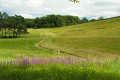
Marked route No. 85After a section through the woods and then in the open, the gardens below Lac du Bourdon offer a superb panorama of rows of spillways channelled by walls built of Puisaye sandstone. Then, following part of the lake, return to the bathing area and the car park.
Grand tour of Lake Bourdon
7.27 mi
+167 ft
-148 ft
2 hrs
Moderate
Departure from Saint-Fargeau (Yonne)
Explore the lake, its ponds and feeding streams. Walk through the woodland along sandy paths or small roads. Beautiful views on both sides of the lake’s dam. This reservoir is the first in a long series upstream that feeds the Briare Canal.
The spillways of Lac du Bourdon
1.10 mi
+79 ft
-82 ft
0h 35
Easy
Departure from Saint-Fargeau (Yonne)
A short walk to explore the spillways of Lac du Bourdon, behind the dam commissioned in 1905. There are two spillways: the Rigole du Bourdon for the cold water at the bottom of the lake, and the Ruisseau du Bourdon for the surface water. The latter is laid out in “terraces”, creating waterfalls when the water is released. You’ll be lucky enough to see them if you visit at the right time. Otherwise, it’s still a very pretty spot! Read the safety information in the Practical Information section.
Along the banks of the Loire between the Port Aubry farm and Villechaud
4.87 mi
+66 ft
-66 ft
2h 20
Easy
Departure from Cosne-Cours-sur-Loire (Nièvre)
Walk along the banks of the Loire from the Ferme de Port-Aubry, passing through the woods of Villechaud.
From the Côte de Labert to the bell tower
 4.14 mi
+312 ft
-240 ft
2h 10
Easy
Departure from Sainte-Colombe-sur-Loing (Yonne)
4.14 mi
+312 ft
-240 ft
2h 10
Easy
Departure from Sainte-Colombe-sur-Loing (Yonne)
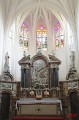
From the village, this path follows part of the ridges of the hill separating the two natural regions of Puisaye to the west and Forterre to the east.
On the Forterre side, the Moulin Buteau and the Source de la Pisserote
 4.20 mi
+210 ft
-190 ft
2h 05
Easy
Departure from Sainte-Colombe-sur-Loing (Yonne)
4.20 mi
+210 ft
-190 ft
2h 05
Easy
Departure from Sainte-Colombe-sur-Loing (Yonne)
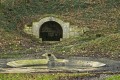
A historical and cultural route on the border between Puisaye and Forterre, with some beautiful views.
The source of the Loing
 5.17 mi
+348 ft
-328 ft
2h 40
Easy
Departure from Sainte-Colombe-sur-Loing (Yonne)
5.17 mi
+348 ft
-328 ft
2h 40
Easy
Departure from Sainte-Colombe-sur-Loing (Yonne)
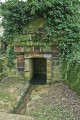
Discover the sources of the Seine catchment area, wash houses and scenic viewpoints.
The pond and heritage of Moutiers-en-Puisaye
 5.71 mi
+217 ft
-233 ft
2h 50
Easy
Departure from Moutiers-en-Puisaye (Yonne)
5.71 mi
+217 ft
-233 ft
2h 50
Easy
Departure from Moutiers-en-Puisaye (Yonne)
Starting from the village of Moutiers-en-Puisaye, cross the Loing, pass through woods, enjoy a beautiful view of the ruins of the old abbey and the pond, whilst discovering the local heritage.
Three Lakes Route
7.45 mi
+338 ft
-344 ft
3h 45
Moderate
Departure from Moutiers-en-Puisaye (Yonne)
Marked trail No. 44.Through woods and farmland, passing by ponds, discover the environments where the earth is shaped into artistic creations and pottery.
Moutiers en Puisaye and its ponds
 6.93 mi
+394 ft
-387 ft
3h 30
Moderate
Departure from Moutiers-en-Puisaye (Yonne)
6.93 mi
+394 ft
-387 ft
3h 30
Moderate
Departure from Moutiers-en-Puisaye (Yonne)
From this old pottery village, discover the ponds and small paths that make Puisaye so charming. If you are keen on wildlife or landscape photography, you will be delighted. If you are discreet, you will be able to see many varieties of ducks on the ponds, as well as herons and egrets. Sometimes you may be surprised by the passage of deer or roe deer and even nutria along the Loing.
 L'Orme du Pont from Moutiers-en-Puisaye
 5.69 mi
+371 ft
-351 ft
1 hr
Easy
Departure from Moutiers-en-Puisaye (Yonne)
5.69 mi
+371 ft
-351 ft
1 hr
Easy
Departure from Moutiers-en-Puisaye (Yonne)
An all-season trail in this region of Puisaye amid hedges (bouchures), heritage, and legends.
The Moutiers pond
 8.43 mi
+423 ft
-413 ft
4h 15
Moderate
Departure from Moutiers-en-Puisaye (Yonne)
8.43 mi
+423 ft
-413 ft
4h 15
Moderate
Departure from Moutiers-en-Puisaye (Yonne)
Marked trail No. 3.From the church with its magnificent murals, pass the Gué Ricart, discover the Moutiers pond via the Marseillaise, then the undergrowth before reaching Saint-Sauveur, Pays de Colette and her birthplace.
Between Puisaye and Forterre: water and woodland
 18.39 mi
+1,273 ft
-1,283 ft
9h 35
Difficult
Departure from Saint-Sauveur-en-Puisaye (Yonne)
18.39 mi
+1,273 ft
-1,283 ft
9h 35
Difficult
Departure from Saint-Sauveur-en-Puisaye (Yonne)
A tour of Puisaye in the land of Colette and the Potiers, through its picturesque villages, heritage and landscapes where land, water and forests meet.
Sentier de la Folie
 7.28 mi
+289 ft
-262 ft
3h 35
Moderate
Departure from Saint-Sauveur-en-Puisaye (Yonne)
7.28 mi
+289 ft
-262 ft
3h 35
Moderate
Departure from Saint-Sauveur-en-Puisaye (Yonne)
Marked hike N°2.
A hike in the heart of the birthplace of Colette. Through woods and passing by ponds, often described in her work.
The small and large ponds of Puisaye
26.28 mi
+988 ft
-991 ft
5 hrs
Difficult
Departure from Saint-Sauveur-en-Puisaye (Yonne)
You’ll discover no fewer than eight ponds, each with a different shape, size and habitat, not to mention the pools and streams you’ll come across in this region where Colette certainly admired them all – and, in some cases, loved them.
The icing on the cake is that you can have a picnic by the banks of one of them and take a dip in the Bourdon reservoir!
L'Orme du Pont by bike from Saint-Sauveur-en-Puisaye
7.73 mi
+381 ft
-364 ft
1.5 hrs
Easy
Departure from Saint-Sauveur-en-Puisaye (Yonne)
After a brief incursion into the grounds of the Colette castle/museum and the passage at the foot of the Saracen tower, this walk continues through the countryside along the lanes of the Puisaye.
Pollarded trees and Puisaye cedars
 6.40 mi
+459 ft
-472 ft
3h 20
Moderate
Departure from Saint-Sauveur-en-Puisaye (Yonne)
6.40 mi
+459 ft
-472 ft
3h 20
Moderate
Departure from Saint-Sauveur-en-Puisaye (Yonne)
Another way to explore Colette’s homeland: follow the paths shaped by agriculture, the work of the hedges (landmarkers) and the local heritage.
Colette Trail
 3.69 mi
+292 ft
-318 ft
1h 55
Easy
Departure from Saint-Sauveur-en-Puisaye (Yonne)
3.69 mi
+292 ft
-318 ft
1h 55
Easy
Departure from Saint-Sauveur-en-Puisaye (Yonne)
Marked Trail No. 1.This trail, dedicated to Colette, was opened in 1993 by pupils from the Collège Colette in Saint-Sauveur-en-Puisaye.All along this path, everything evokes the stories of this writer, who was born in Saint-Sauveur-en-Puisaye in 1873. She described her native region so vividly – even though she used different names for the villages and characters – that every nook and cranny exudes the spirit of her literature.Saint-Sauveur-en-Puisaye is listed among the ‘Cités de caractères de Bourgogne – Franche-Comté’ villages.
L'étang de Moutiers depuis Saint-Sauveur-en-Puisaye
6.01 mi
+253 ft
-269 ft
3h 00
Easy
Departure from Saint-Sauveur-en-Puisaye (Yonne)
From Colette's birthplace, discover the greenways, the village of Moutiers and the Moutiers pond, where a few water chestnuts still float.Saint-Sauveur-en-Puisaye is listed as one of the "Cités de caractères de Bourgogne - Franche-Comté" (villages of character in Burgundy-Franche-Comté).
Towards the bats of Cessy
 4.23 mi
+1,165 ft
-1,145 ft
3h 00
Moderate
Departure from Cessy-les-Bois (Nièvre)
4.23 mi
+1,165 ft
-1,145 ft
3h 00
Moderate
Departure from Cessy-les-Bois (Nièvre)
Nestled at the bottom of the Talvanne valley, Cessy-les-Bois is classified as a Natura 2000 site due to the presence of two large bat colonies on its territory: the Greater Horseshoe Bat and the Geoffroy's Bat.
Along the first two kilometres of the hike, you will find information panels explaining this local feature. In addition, a booklet is available for purchase at the Cosne-Cours-sur-Loire reception point of the Bourgogne Cœur de Loire Tourist Office.