


Refine your search for walks in Saint-Quentin-la-Chabanne
Saint-Quentin-la-Chabanne walks


 Streams, brooks and rivers, south of Felletin
 Visorando Member
 9.56 mi
 +1,289 ft
 -1,286 ft
 5h 30
5h 30
 Moderate
 Departure from Felletin (Creuse)
Starting from Felletin, this short hike will take you along streams, rivers and brooks, wells, wash houses and drinking troughs, crossing footbridges, a typical Limousin plank bridge and even a balancing ford.
Felletin circular route to the Combes dam
 10.44 mi
+1,280 ft
-1,394 ft
5h 55
Moderate
Departure from Felletin (Creuse)
10.44 mi
+1,280 ft
-1,394 ft
5h 55
Moderate
Departure from Felletin (Creuse)
This hike allows you to discover the Creuse in all its forms: a fast-flowing river north of Felletin, which slows down and spreads out before the dam, then drops downstream before resuming its course towards Aubusson.
Left bank, then right bank, the circular route also takes you to the Combes dam.
Walk in Felletin
2.56 mi
+328 ft
-305 ft
1h 30
 Easy
Departure from Felletin (Creuse)
Easy
Departure from Felletin (Creuse)
A walk through a small town in the Creuse,the cradle of tapestry-making, a town of diamond cutters, and the gateway to the Millevaches Regional Nature Park in Limousin. Old houses and numerous wells dot the route, which takes you round the town centre, as well as the diamond-cutting district and the Faubourg de Beaumont.
West of Felletin
 8.39 mi
+981 ft
-978 ft
4h 45
Moderate
Departure from Saint-Quentin-la-Chabanne (Creuse)
8.39 mi
+981 ft
-978 ft
4h 45
Moderate
Departure from Saint-Quentin-la-Chabanne (Creuse)
West of Felletin, starting from the hamlet of Verminier, this route crosses forests, woods, meadows and hamlets. You will cross small streams and walk along ridges that often offer unobstructed views. There are few roads on this walk, but there are a few climbs to warm up your legs.
Montrugeas Chapel and Saint-Roch Fountain
 Local authority
 2.51 mi
+279 ft
-282 ft
1h 25
Easy
Departure from Saint-Marc-à-Frongier (Creuse)
2.51 mi
+279 ft
-282 ft
1h 25
Easy
Departure from Saint-Marc-à-Frongier (Creuse)
A short walk in the hills above Saint-Marc-à-Frongier, taking you from the Chapel of Montrugeas to the Saint-Roch Fountain via the terraced village of Chambroutière. On the way back, you can admire the views of the surrounding countryside and the Auvergne mountains.
Lachaud and La Genête circular loop
6.34 mi
+433 ft
-440 ft
3h 15
Moderate
Departure from Saint-Marc-à-Frongier (Creuse)
A walk mostly along shaded paths around Saint-Marc-à-Frongier. The walk starts at the entrance to the village, next to the bread oven. This route is signposted as Route No. 3. At the start, there is a view of Saint-Marc-à-Frongier Castle.
Montfranc Circular Loop
 4.41 mi
+285 ft
-305 ft
2h 15
Easy
Departure from La Nouaille (Creuse)
4.41 mi
+285 ft
-305 ft
2h 15
Easy
Departure from La Nouaille (Creuse)
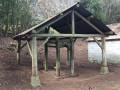
This lovely walk takes you to the southernmost village in the commune of La Nouaille (Creuse).Walkers will discover a ‘travail’ (a workshop used for shoeing cattle) that has been completely cleared. The walk alternates between passages through conifer plantations and beautiful open spaces. You can discover other walks in the commune of La Nouaille
Around Aubusson
3.48 mi
+482 ft
-486 ft
2h 00
Easy
Departure from Aubusson (Creuse)
A short, easy walk to explore Aubusson, the banks of the Creuse, the old mill, the Bois de la Bonne Vierge, and the heights of Saint-Jean with a magnificent view of the chapter house.
Circular loop via the Roman road to Néoux
 4.72 mi
+427 ft
-410 ft
2h 35
Easy
Departure from Néoux (Creuse)
4.72 mi
+427 ft
-410 ft
2h 35
Easy
Departure from Néoux (Creuse)
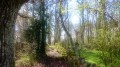
Starting from Néoux, this is a short, easy circular family walk along pleasant paths and part of a Roman road, the Sentier de César, through woods and meadows. The route is designed to avoid roads as far as possible.
Route to discover Aubusson
2.68 mi
+436 ft
-423 ft
1h 35
Easy
Departure from Aubusson (Creuse)
A slightly challenging urban walk (though with easier alternatives) to explore the Creuse region’s tapestry capital, a town with numerous turrets nestled amongst the meandering banks of the Creuse. This route takes you not only through the streets of the historic centre, but also up to the higher parts of the town, which offer stunning views over the rooftops of the old town, the valleys of the Creuse and the Beauze, and the wooded hills that surround it.
Tour of Lake Vaud-Gelade
 Tourist office
 14.66 mi
+1,142 ft
-1,142 ft
7h 45
14.66 mi
+1,142 ft
-1,142 ft
7h 45
 Difficult
Departure from Saint-Marc-à-Loubaud (Creuse)
Difficult
Departure from Saint-Marc-à-Loubaud (Creuse)
Located on the Millevaches plateau, Lac de la Vaud-Gelade is an artificial lake, created between 1940 and 1944, with a surface area of 300 hectares. It is fed by the Thaurion and several streams.
It is used for electricity production. Its earthen dam with a granulite foundation holds 21 million cubic metres of water, which feeds Lac de Vassivière, depending on its water needs, through a 4km-long underground tunnel.
The unmissable little Roman bridge at Senoueix
 10.73 mi
+512 ft
-515 ft
5h 25
Moderate
Departure from Saint-Marc-à-Loubaud (Creuse)
10.73 mi
+512 ft
-515 ft
5h 25
Moderate
Departure from Saint-Marc-à-Loubaud (Creuse)
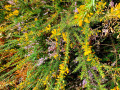
This tiny Roman bridge features on every postcard of the Creuse’s remarkable sites! The circular route therefore takes you there after a detour via Lake Lavaud Gelade, then back through meadows and young woodland. Although the walk begins with a short stretch of road (with little traffic), it then mainly follows paths and tracks lined with heather in bloom in autumn.
Pallier route
 5.89 mi
+525 ft
-499 ft
3h 10
Moderate
Departure from Gentioux-Pigerolles (Creuse)
5.89 mi
+525 ft
-499 ft
3h 10
Moderate
Departure from Gentioux-Pigerolles (Creuse)
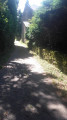
At the foot of the highest peaks of the Plateau de Millevaches, set off to discover the small village
of Pallier.
The Source of the Creuse
0.63 mi
+69 ft
-69 ft
0h 20
Easy
Departure from Le Mas-d'Artige (Creuse)
A pleasant walk along a well-maintained path through a wet meadow, then through the woods. The Source de la Creuse, which has not been specially developed, has retained its natural state. It is an interpretive trail with a few information boards.
the Devil’s Channel
 1.82 mi
+246 ft
-236 ft
1h 05
Easy
Departure from Royère-de-Vassivière (Creuse)
1.82 mi
+246 ft
-236 ft
1h 05
Easy
Departure from Royère-de-Vassivière (Creuse)
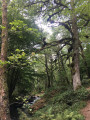
A fairly family-friendly hike. The outward journey is downhill along a bucolic stream, through a lush, almost tropical deciduous forest. The return is more austere, through a mysterious, moss-covered coniferous forest.
Rigole du Diable and the Mazure moors
7.40 mi
+558 ft
-548 ft
3h 55
Moderate
Departure from Royère-de-Vassivière (Creuse)
A very beautiful walk combining three circular loops and offering a wide variety of landscapes: gorges and rocky outcrops along the Rigole du Diable, followed by peat bogs, superb heather moors, wet meadows, and undergrowth of fir or deciduous trees of various species.
Banize and Thaurion, the enchanters
 5.02 mi
+348 ft
-318 ft
2h 35
Easy
Departure from Chavanat (Creuse)
5.02 mi
+348 ft
-318 ft
2h 35
Easy
Departure from Chavanat (Creuse)
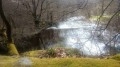
The banks of the Banize and Thaurion are truly enchanting! A visual treat that slows down your average speed: it's impossible not to stop repeatedly to contemplate the course of these two rivers, the balanced granite boulders or the mini waterfall that wants to play the big one.
Around the ponds near Flayat
 4.27 mi
+171 ft
-194 ft
2h 05
Easy
Departure from Flayat (Creuse)
4.27 mi
+171 ft
-194 ft
2h 05
Easy
Departure from Flayat (Creuse)
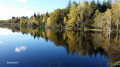
During this walk, you will discover some of the many ponds in the commune of Flayat.
You are in a mushroom-rich area and the landscape is spectacular in autumn when the trees are ablaze with colour and reflected in the ponds.
Mont Audouze, the highest point in Corrèze on the Millevaches Plateau
 6.50 mi
+469 ft
-472 ft
3h 25
Moderate
Departure from Saint-Setiers (Corrèze)
6.50 mi
+469 ft
-472 ft
3h 25
Moderate
Departure from Saint-Setiers (Corrèze)
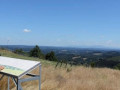
Hike to the highest point in the Corrèze department, on the Haut Plateau de Millevaches.
Champagnat Woods via the Croix du Loup
 4.94 mi
+472 ft
-472 ft
2h 40
Easy
Departure from Champagnat (Creuse)
4.94 mi
+472 ft
-472 ft
2h 40
Easy
Departure from Champagnat (Creuse)
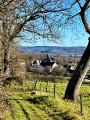
Starting from the village, this circular route will take you to the Croix du Loup and allow you to explore the woods of Champagnat. On a clear day, you can see the Massif du Sancy and the Puy de Dôme.
Please note that this route is not signposted. So make sure you have the description with you.
Around Saint-Georges-la-Pouge
 6.75 mi
+387 ft
-407 ft
3h 25
Easy
Departure from Saint-Georges-la-Pouge (Creuse)
6.75 mi
+387 ft
-407 ft
3h 25
Easy
Departure from Saint-Georges-la-Pouge (Creuse)
A gentle, family-friendly walk through flowering meadows, woods and undergrowth, taking a Roman road on the return journey. You pass through hamlets, admire the gardens, and follow footpaths, tracks or small roads. You’ll encounter cows, horses, chickens, and even a few dwarf goats.
Tournicoti twirled around the hamlet of Masgot
 4.42 mi
+407 ft
-410 ft
2h 25
Easy
Departure from Fransèches (Creuse)
4.42 mi
+407 ft
-410 ft
2h 25
Easy
Departure from Fransèches (Creuse)
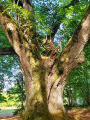
Masgot is a hamlet adorned with original sculptures created in the 19th century by a single man, the stonemason François Michaud, but it is also a hamlet surrounded by footpaths and woodland trails that can be explored even in hot weather. A lovely little walk that also takes you through the hamlet of Montgermain, where you can admire its venerable 400-year-old lime tree. The route is almost entirely off-road, so you can let your dog run free.
The Jean Guitton Trail in Champagnat
6.58 mi
+656 ft
-659 ft
3h 35
Moderate
Departure from Champagnat (Creuse)
This walk follows the paths once taken by Jean Guitton during his holidays in the Creuse at the Château de Fournoux. Hiking map available from the Auzances tourist office (Place du Marché).
Route du Lac de Faux
 3.97 mi
+102 ft
-102 ft
1h 55
Easy
Departure from Faux-la-Montagne (Creuse)
3.97 mi
+102 ft
-102 ft
1h 55
Easy
Departure from Faux-la-Montagne (Creuse)
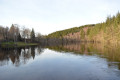
Faux-la-Montagne owes its name to its high altitude (over 700 metres above sea level) on the western edge of the Millevaches plateau. Around Lake Faux, beech and oak trees mingle with conifers, occupying what was still sheep pasture in the 19th century.
Ponsat Dolmen Route
 3.84 mi
+295 ft
-292 ft
2h 00
Easy
Departure from Saint-Georges-la-Pouge (Creuse)
3.84 mi
+295 ft
-292 ft
2h 00
Easy
Departure from Saint-Georges-la-Pouge (Creuse)
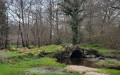
Discover the historic sites and points of interest in the commune of Saint-Georges-la-Pouge on this pleasant walk through forests and wetlands. A tour of some of the wonders that abound in the Creuse.
Sources de la Vienne
2.40 mi
+367 ft
-371 ft
1h 25
Easy
Departure from Saint-Setiers (Corrèze)
A short discovery trail to discover the Sources de la Vienne, the natural peat bogs and those created by shepherds.Please note: this discovery trail appears to be poorly maintained in view of the reviews. The Visorando application is recommended to follow the itinerary.
From the Étang du Moulin to the Champagne wash house via Le Donzeil Sud
 5.08 mi
+230 ft
-223 ft
2h 30
Easy
Departure from Le Donzeil (Creuse)
5.08 mi
+230 ft
-223 ft
2h 30
Easy
Departure from Le Donzeil (Creuse)
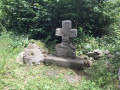
A lovely route allowing you to discover the charming hamlets of Donzeil and the wash house at Champagne, following tracks and paths.
Tour of Donzeil via the Étang du Moulin
 6.96 mi
+489 ft
-495 ft
3h 35
Moderate
Departure from Le Donzeil (Creuse)
6.96 mi
+489 ft
-495 ft
3h 35
Moderate
Departure from Le Donzeil (Creuse)
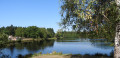
An easy route, following tracks, paths and short stretches of road, often shaded, allowing you to discover various hamlets in the Donzeil area.
Here and there through Sous-Parsat
 6.49 mi
+646 ft
-630 ft
3h 35
Easy
Departure from Sous-Parsat (Creuse)
6.49 mi
+646 ft
-630 ft
3h 35
Easy
Departure from Sous-Parsat (Creuse)
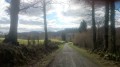
Starting from Sous-Parsat, this hike offers the opportunity to admire the amazing frescoes and stained glass windows of the village's Saint-Thomas Church, to stop at Mareilles in front of the "cylindrical" fountain and its pretty basin, and to walk through the undergrowth or across the bocage.
Tarnac, mills and rocks
 7.57 mi
+860 ft
-856 ft
4h 15
Moderate
Departure from Tarnac (Corrèze)
7.57 mi
+860 ft
-856 ft
4h 15
Moderate
Departure from Tarnac (Corrèze)
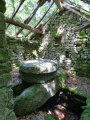
A very beautiful hike that takes you back to the source of the Vienne near the village of Servières and across the Chandouille on wooden bridges and granite stone bridges.
The Vienne and the Servières and Chammet lakes
12.24 mi
+1,050 ft
-1,047 ft
6h 30
Moderate
Departure from Tarnac (Corrèze)
A long walk to discover the hydroelectric schemes on the Vienne that led to the creation of the Servières and Chammet lakes. Tarnac, our starting point, is a beautiful village on the Plateau de Millevaches with a church, a fountain and a remarkable oak tree.
Between Corrèze and Haute-Vienne, starting from Tarnac
9.02 mi
+1,526 ft
-1,509 ft
5h 30
Moderate
Departure from Tarnac (Corrèze)
Hike on the Millevaches Plateau, through moors and forests. The route crosses streams and hamlets, allowing you to discover beautiful sites such as the cup-marked rocks of the Bois de Cholet, the Château de Mazeau and the castrum of Puy Murat. At the end of the hike, take the time to stroll around the pretty village of Tarnac, which has a remarkable church, fountain and Sully oak tree.