


Refine your search for walks in Saint-Père
Saint-Père walks


 Circular around the Fort de Saint-Père-Marc-en-Poulet
 Association / Club / Walk leader
 5.13 mi
 +148 ft
 -174 ft
 2h 30
2h 30
 Easy
Easy
 Departure from Saint-Père (Ille-et-Vilaine)
The main attraction of this hike is the Fort de Saint-Père, built between 1777 and 1785 to protect Saint-Malo from English attacks by land and to complete the defence system designed by the famous Vauban. Part of its enclosure was destroyed in 1944 by the Germans as they fled during the Liberation. Today, the fort has become a cultural and leisure space. Every year, it hosts various trail events, flower markets, festivals and concerts. The fort is open to the public during the events it hosts, but the outer rampart walk is accessible to walkers all year round.
The Fort of Saint-Père-Marc-en-Poulet
 Visorando Member
 4.56 mi
+167 ft
-171 ft
2h 15
Easy
Departure from Saint-Père (Ille-et-Vilaine)
4.56 mi
+167 ft
-171 ft
2h 15
Easy
Departure from Saint-Père (Ille-et-Vilaine)
Built in the 18th century, the fort completes the coastal fortifications designed by Vauban to protect the bay of Saint-Malo from English attacks. With a capacity of 3,000 men, 26 casemates and a 46-metre-long powder magazine, it was delivered too late to play a defensive role. During the 1914-1918 war, it housed German prisoners and, during the last war, it was converted into an ammunition depot by the Germans, who blew up part of the casemates during their evacuation. Decommissioned in 1988, it is now owned by the municipality of Saint-Père-Marc-en-Poulet, which has restored it; shows are organised there.
La Gouesnière circular via Bois Renou
5.04 mi
+164 ft
-174 ft
2h 30
Easy
Departure from La Gouesnière (Ille-et-Vilaine)
This is a short, peaceful walk, partly through built-up areas and partly through what is known locally as the white marsh. In fact, the only remaining evidence of the marsh is the leat Jean. The route follows part of the GRP® Tour du Pays Malouin.
Quinard Mill and the Quelmer Boat Graveyard
 6.85 mi
+259 ft
-266 ft
3h 25
6.85 mi
+259 ft
-266 ft
3h 25
 Moderate
Departure from Saint-Jouan-des-Guérets (Ille-et-Vilaine)
Moderate
Departure from Saint-Jouan-des-Guérets (Ille-et-Vilaine)
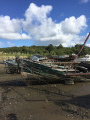
This section ofthe GRP®® Tour du Pays Malouin takes you to two sites emblematic of the historic activities along the banks of the Rance: the Quinard tide mill and the Quelmer boat graveyard.There are beautiful views of the Harteau and Chevet Islands, the anchorages and the left bank of the Rance.
Circular loop of Saint-Jouan and La Chapelle du Val ès Bouillis
 5.56 mi
+400 ft
-390 ft
2h 55
Easy
Departure from Saint-Jouan-des-Guérets (Ille-et-Vilaine)
5.56 mi
+400 ft
-390 ft
2h 55
Easy
Departure from Saint-Jouan-des-Guérets (Ille-et-Vilaine)
This is a gentle hike that forms a double circular route, one around the hamlet of Le Val ès Bouilli and the second around La Livaudais. Much of the route runs alongside the Rance. The rest is divided between sunken paths and small roads. Along the way, you can see the Pointe du Puits and the Pont Chateaubriand to the south.
Around Mont Garrot
 4.77 mi
+299 ft
-312 ft
2h 25
Easy
Departure from Saint-Suliac (Ille-et-Vilaine)
4.77 mi
+299 ft
-312 ft
2h 25
Easy
Departure from Saint-Suliac (Ille-et-Vilaine)
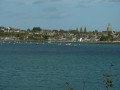
In the midst of this tide-changing natural environment, Mont Garrot, a true promontory above the river Rance maritime estuary, offers a panoramic view of Saint-Suliac to the north and Anse de Vigneux to the south, where the foundations of an ancient Viking camp emerge at low tide.
Mont Gareau massif
 1.65 mi
+223 ft
-230 ft
0h 55
Easy
Departure from Saint-Suliac (Ille-et-Vilaine)
1.65 mi
+223 ft
-230 ft
0h 55
Easy
Departure from Saint-Suliac (Ille-et-Vilaine)
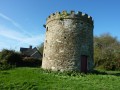
Mont Gareau, tomb of Gargantua. A historic site steeped in legends and mysteries. The highest point in the region, offering a magnificent 360° panorama from its height of 73 metres! It overlooks Saint-Suliac, ranked among the most beautiful villages in France, and in good weather you can see Mont-Saint-Michel, Granville and the Normandy coast.
Circular walk from Saint-Suliac via Pointe du Puits and Mont Gareau
 7.16 mi
+515 ft
-515 ft
3h 45
Moderate
Departure from Saint-Suliac (Ille-et-Vilaine)
7.16 mi
+515 ft
-515 ft
3h 45
Moderate
Departure from Saint-Suliac (Ille-et-Vilaine)
Just ten kilometres or so south of Saint-Malo, Saint-Suliac is a small village situated on the coast of the Rance estuary. It is a former fishing village. The route suggested here allows you to discover the rich variety of landscapes; it passes via Mont Garrot (or Gareau), which, at a height of 73 metres, offers a panoramic view of the Rance valley and the ‘Viking camp’. It runs alongside the river and passes through designated nature reserves. Along the route, you can admire two historic mills: a windmill overlooking the hill (which cannot be visited, as it stands on private land that is not accessible) and the old Boschet tide mill, built inthe 16th century and in operation until the 1940s. A local association has carried out its complete restoration.
Circular route to Saint-Suliac via Mont Gareau and Moulin du Tertre
 5.37 mi
+463 ft
-463 ft
2h 50
Easy
Departure from Saint-Suliac (Ille-et-Vilaine)
5.37 mi
+463 ft
-463 ft
2h 50
Easy
Departure from Saint-Suliac (Ille-et-Vilaine)
Shortly after setting off, you will come to the oratory, dedicated to the safety of sailors setting out to sea for the banks of Newfoundland. There is a magnificent view of the village, the Rance and the opposite bank as far as the Pont Chateaubriand bridge.
The walk continues along the banks of the Rance to the summit of Mont Gareau, where another viewpoint will surprise you.
Along the way, you can admire two old mills: a windmill overlooking the hill (not open to visitors, as it is on private land) and an old tide mill, built inthe 16th century, which was in operation until the 1940s. An association is working to restore it.
Views of the islands of Saint-Jouan-des-Guérets
 5.88 mi
+276 ft
-266 ft
2h 55
Easy
Departure from Saint-Jouan-des-Guérets (Ille-et-Vilaine)
5.88 mi
+276 ft
-266 ft
2h 55
Easy
Departure from Saint-Jouan-des-Guérets (Ille-et-Vilaine)
A walk that allows you to explore the Rance estuary and a few islands. This is a shorter version of walk 88877, ‘Around Saint-Jouan-des-Guérets’.
Saint-Suliac, North point
 3.97 mi
+151 ft
-167 ft
1h 55
Easy
Departure from Saint-Suliac (Ille-et-Vilaine)
3.97 mi
+151 ft
-167 ft
1h 55
Easy
Departure from Saint-Suliac (Ille-et-Vilaine)
A lovely walk around the northern tip of Saint-Suliac. Do it whatever the weather!
Moderator's note as of 06/04/2021: Some modifications on the ground since the creation of this hike: see the comments at the bottom of this page.
Moderator's note a description of June 2022 in reverse order to this one is available here
Circular via Pointe du Puits and Clos de la Croix in Saint-Suliac.
 4.79 mi
+256 ft
-272 ft
2h 25
Easy
Departure from Saint-Suliac (Ille-et-Vilaine)
4.79 mi
+256 ft
-272 ft
2h 25
Easy
Departure from Saint-Suliac (Ille-et-Vilaine)
Saint-Suliac, a former fishing village, is located a stone's throw from Saint-Malo. The landscapes are varied, and this walk will allow you to discover the maritime side of Saint-Suliac and the narrow streets of the old part of the village. The steep side of the shore along the Rance is somewhat reminiscent of the GR®34 between Saint-Malo and Cancale, all things considered. There is a beautiful view of the Rance from the Pointe du Puits.
L’Anse des Bas Champs, the bridges over the Rance from La Ville-ès-Nonais
 4.55 mi
+282 ft
-279 ft
2h 20
Easy
Departure from La Ville-ès-Nonais (Ille-et-Vilaine)
4.55 mi
+282 ft
-279 ft
2h 20
Easy
Departure from La Ville-ès-Nonais (Ille-et-Vilaine)
The Anse des Bas Champs in La Ville-es-Nonais is a coastal marsh whose reed beds are home to numerous species of birds. Nestled at the far end of the cove is the peaceful hamlet of La Chapelle Saint-Magloire.
This section ofthe GR® Tour du Pays Malouin takes you to the foot of the two iconic bridges of the Rance Valley: the Pont Saint-Hubert and its counterpart, the Pont Chateaubriand. Both span the Rance where it narrows, linking Plouër-sur-Rance (Côtes d’Armor department) to La Ville-ès-Nonais (Ille-et-Vilaine department).
The medieval walls from Ville-es-Nonais
 4.11 mi
+171 ft
-177 ft
2h 00
Easy
Departure from La Ville-ès-Nonais (Ille-et-Vilaine)
4.11 mi
+171 ft
-177 ft
2h 00
Easy
Departure from La Ville-ès-Nonais (Ille-et-Vilaine)
Did the Vikings settle in the Rance valley at the foot of Mont Garot? Nothing is less certain, but in any case, this is a theory put forward by the guides. From La Ville-es-Nonais, along the right bank of the Rance, make your way to the site of the supposed Viking camp. At low tide, you can see the site, covered in short vegetation.
Loop between Rance and Terre, from Pont Saint-Jean to Pointe du Puits
 11.39 mi
+518 ft
-541 ft
5h 40
Easy
Departure from La Ville-ès-Nonais (Ille-et-Vilaine)
11.39 mi
+518 ft
-541 ft
5h 40
Easy
Departure from La Ville-ès-Nonais (Ille-et-Vilaine)
Walk in the Pays Malouin between the sea and the Rance around one of the most beautiful villages in France. To be done at low tide, check before you go.
More walks in Saint-Père
Select a point of interest below: