

Refine your search for walks in Quimperlé
Quimperlé walks


 Loc Yvi – Saint-Diboan Chapel and fountain – Ellé Valley
 Visorando Member
 1.97 mi
 +240 ft
 -240 ft
 1h 05
 Easy
 Departure from Tréméven (Finistère) (Finistère)
The walk first takes you from the Chapel of Saint-Diboan (in the hamlet of Loc Yvi) to the consecrated fountain of the same name. The shaded path then winds its way into the unspoilt Ellé valley, the natural boundary between the regions of Cornouaille and Vannes, with its striking rocky outcrops and boulder fields shaped by erosion, and its steep-sided valleys carved out by small rapids (known as ‘froud’ in Breton).
Toulfouen, Château de Carnoët and the Bishop’s Chair
 5.17 mi
+207 ft
-236 ft
2h 35
Easy
Departure from Quimperlé (Finistère)
A circular walk on the northern side of the Forest of Toulfoën, offering views of a chapel, the Chemin du Duc, Carnoët Castle and the Bishop’s Chair.
In the footsteps of the Chouans in Tréméven
 2.61 mi
+305 ft
-305 ft
1h 30
Easy
Departure from Tréméven (Finistère) (Finistère)
The Roscado-Pontégan route, following in the footsteps of the Chouans. Highlights include the parish enclosure at Tréméven, Roscado Manor, the Chouan Cross, Pontégan Bridge spanning the River Isole, a ruined mill, the Poachers’ Rock, and an ancient Roman road.
 In the heart of the Carnoët Forest
 3.68 mi
+220 ft
-226 ft
Duration unknown
Easy
Departure from Quimperlé (Finistère)
Walk through the heart of the Carnoët Forest, taking in the Tailors’ Pond, the Kerguéguen Stele, the Frout and Fontaine au Loup streams, and the Devil’s Bridge.
In the woods around Kernault Manor
 3.06 mi
+72 ft
-98 ft
1h 30
Easy
Departure from Mellac (Finistère)
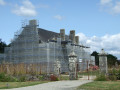
Listed as a historic monument, the manor house was a jewel of its era during the 15th and 16th centuries. Its main building and outbuildings, including a chapel and a half-timbered farm building, bear witness to the power of its owners. The Domaine de Kernault is a 30-hectare park owned by the Finistère Departmental Council. The natural environment is preserved through its woods, ponds and meadows. Near the manor house lies an exceptional collection of cider apple orchards.
Loop in the Carnoët National Forest and along the banks of the Laïta
5.30 mi
+433 ft
-433 ft
2h 50
Easy
Departure from Quimperlé (Finistère)
A peaceful walk, part of which is through the heart of the forest and part along the banks of the beautiful Laïta. There are many places with picturesque names (Fontaine aux Loups, Fontaine des Dimanches, Pont du Diable, Pont de Pierre, Port du Passage, Étang de Tailleurs, etc.), which bear witness to the former life of the "forest people".
Grand Tour of Rédéné via the fountains
 6.27 mi
+299 ft
-315 ft
3h 10
 Moderate
Departure from Rédené (Finistère)
Rédéné is a commune in Finistère. It is situated in the Vannetais region, 8 km from Quimperlé. This grand tour of Rédéné is designed to provide a 10 km route for runners. But it also allows all walkers visiting Rédéné to explore the neighbourhoods of this charming Breton village. Setting out in search of the village’s three fountains adds a little extra interest.
From the Saint-Maurice Bridge via the Saint-Michel Chapel
 8.78 mi
+640 ft
-617 ft
4h 35
Moderate
Departure from Guidel (Morbihan)
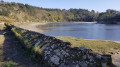
Walk back up along the Laïta, following thePR® trail, and visit the Saint-Michel Chapel.
Land and sea via Le Pouldu, departing from Cohars-Carnoët
 12.55 mi
+305 ft
-315 ft
6h 00
 Difficult
Departure from Clohars-Carnoët (Finistère)
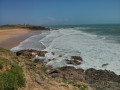
At the end of the 19th century, following Pont-Aven, Le Pouldu in Clohars-Carnoët became a refuge for several painters from the Pont-Aven School, such as Paul Gauguin, Meyer de Haan, Paul Sérusier, Charles Filiger and many others. The seaside and the lush countryside inspired these artists, who captured them in their paintings.The countryside sections have retained many lovely, shaded sunken paths. Three restored chapels and a windmill add a lovely heritage touch to this walk.
From Moëlan to the sea and back, via Chef-du-Bois
9.36 mi
+597 ft
-597 ft
4h 50
Moderate
Departure from Moëlan-sur-Mer (Finistère)
This fairly long walk allows you to discover the different aspects of nature in this pretty corner: cliffs overlooking the ocean, streams and green corridors, diverse forests. It also has the advantage of being able to start directly on foot from the village of Moëlan. Another advantage is that there are many variations that allow you to make the walk shorter or longer.
The Devil’s Rocks on the Ellé
 2.70 mi
+551 ft
-564 ft
1h 45
Moderate
Departure from Querrien (Finistère)
In the heart of Finistère, between Le Faouët and Quimperlé, the River Ellé has carved its way through the Armorican Plateau. Emerging from gorges 80 metres deep, the river rushes for 300 metres between enormous blocks of granite smoothed by millions of years of erosion: this is the Roches du Diable, one of Brittany’s most beautiful rock formations.Its name has ancient origins: the Breton name for the river, Ellez, means ‘hell’. Legend tells of a confrontation between Saint Guénolé, founder of the parish of Locunolé, and the devil, who hurled enormous boulders at him before plunging into a bottomless chasm. The devil’s hand, seat and bed… the rocks still bear the marks.From the footpaths overlooking the valley, a striking panorama opens up onto the rugged landscape and white-water rapids that attract kayakers every winter. The walk follows the river and its mill for nearly 5 km, as far as Locunolé, crosses the Moulin Neuf bridge and reveals some of the many facets of this rural area.
Bois de Kermeur and the banks of the Bélon
 7.46 mi
+266 ft
-295 ft
3h 40
Moderate
Departure from Moëlan-sur-Mer (Finistère)
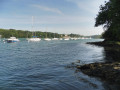
This route combines a countryside section through small villages with the Bois de Kermeur, where you will discover the Fontaine Sainte-Thumette and the long covered walkway of Kermor Bihan.
The return journey follows the left bank of the Bélon, a major oyster farming area.
Tro kreiz ker Gwidel
 3.52 mi
+174 ft
-180 ft
1h 45
Easy
Departure from Guidel (Morbihan)
This route, also known as the “pedestrian ring road”, was initiated by the town of Guidel.
It allows you to walk around the town centre (kreiz ker in Breton) via wooded paths, lovely lanes bordering meadows and routes through residential neighbourhoods.
The pleasant route, mostly through woodland, is clearly signposted with posts bearing a green arrow and the words "périphérique pédestre".
A lovely way to discover another side of Guidel.
Saudraye circular in Guidel
3.05 mi
+43 ft
-49 ft
1h 25
Moderate
Departure from Guidel (Morbihan)
A rolling route suitable for trail running. The series of ascents and descents on technical terrain is a real pleasure in this peaceful valley along the Saudraye, which feeds into the Loch pond. Depending on the season, the terrain can be muddy and slippery.
Kergoulouët and Sainte-Thumette circular loop
 3.90 mi
+135 ft
-135 ft
1h 55
Easy
Departure from Moëlan-sur-Mer (Finistère)
Walk through the fields then return through the undergrowth, along the banks of the Bélon.
Saint-Thurien Circular
6.09 mi
+705 ft
-696 ft
3h 25
Moderate
Departure from Saint-Thurien (Finistère) (Finistère)
A walk through the Thuriennoise countryside.
The ‘Du Lain au Verger’ Route in Gestel
 Local authority
 4.06 mi
+102 ft
-102 ft
1h 55
Easy
Departure from Gestel (Morbihan)
From the Domaine du Lain to the Étang du Verger, along the Scave and the Ruisseau du Moulin de Kerrousseau, wander through the woods and shaded paths. Discover the natural and historical heritage of these protected areas. On your return, take a leisurely stroll through the estate’s park and admire its variety of trees, including remarkable specimens over a century old.
Going up the Laïta from Guidel-Plages
 4.34 mi
+148 ft
-141 ft
2h 05
Easy
Departure from Guidel (Morbihan)
From Guidel-Plages, this route follows the Laïta, a coastal river, up the coastal path to the old Beg Nénez tide mill.
The return journey takes you through the countryside along small roads and wide wooded paths.
At the end of the route, you will pass by the Notre-Dame de la Pitié Chapel and its votive fountain.
Around Saint-Thurien and along the banks of the Isole
 4.31 mi
+459 ft
-479 ft
2h 25
Easy
Departure from Saint-Thurien (Finistère) (Finistère)
A short hike in the countryside of Saint-Thurien and along the banks of the Isole river, starting from the village of Saint-Thurien.
A circular route between Merrien and Saint-Thamec, Portec and Porz Bali
2.77 mi
+108 ft
-115 ft
1h 20
Easy
Departure from Moëlan-sur-Mer (Finistère)
A lovely little route through wild valleys, woods and cliffs.
Walk along the Ria de Merrien in the Pays de Quimperlé
 2.54 mi
+115 ft
-112 ft
1h 15
Easy
Departure from Moëlan-sur-Mer (Finistère)
Set off for the Ria de Merrien, this unassuming gem of southern Finistère where the tides, capricious and bountiful, have danced to the rhythm of the centuries. Its turquoise waters, sheltered by lush green woodland, have been home to oysters farmed by oyster growers for over a century. Between the Bois de Plaçamen and the oyster ports, thisnatural site – protected by the Conservatoire du Littoral – invitesyou to enjoy a fun orienteering walk. The Merrien Lighthouse, one of a string of four lighthouses in the area, which you’ll come across right at the end of the route, watches over this haven where tradition and nature blend together between land and sea.
A loop on the right bank of the River Merrien
 5.87 mi
+203 ft
-217 ft
2h 55
Moderate
Departure from Moëlan-sur-Mer (Finistère)
From Merrien on the right bank to Moulin L'Abbé via Brigneau. You can start this hike at point (3) (Brigneau cove car park)