


Refine your search for walks in Ormea
Ormea walks

 Don Barbera Mountain Hut - Viozene
 Visorando Member
 7.81 mi
 +1,319 ft
 -4,091 ft
 4h 45
4h 45
 Moderate
 Departure from La Brigue (Alpes-Maritimes)
This third and final stage will, of course, take you back to the starting point of this tour in the Marguareis Park.The proposed route will take you to Passo della Croce. You will recognise Passo del Pas, just 900m away. This route is the heart of the park. You will discover Cima Pian Ballaur and Cima Saline. During the day, you will pass through the hamlets of Carnino and cross a Tibetan-style suspension bridge.
A getaway in western Liguria from Verdeggia to Triora
 8.79 mi
+2,785 ft
-3,711 ft
6h 30
Moderate
Departure from Triora (Imperia)
8.79 mi
+2,785 ft
-3,711 ft
6h 30
Moderate
Departure from Triora (Imperia)
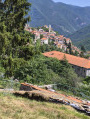
How about a path mostly shaded by the canopy of a chestnut grove? That’s exactly what you’ll find on the walk from the village of Verdeggia to Triora, the famous village of witches!
Morignole – Rifugio Don Barbera
 7.22 mi
+4,774 ft
-1,043 ft
7h 30
7.22 mi
+4,774 ft
-1,043 ft
7h 30
 Difficult
Departure from La Brigue (Alpes-Maritimes)
Difficult
Departure from La Brigue (Alpes-Maritimes)
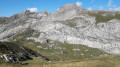
This first stage will take you into the Marguareis Nature Park from France.As soon as you enter the park, the karstic panoramas are enchanting and completely different from the crystalline landscapes of the nearby Mercantour. During the ascent, you’ll be far enough back to admire the Mercantour massif from the Authion to the Argentera.
Route through the Marguareis Nature Park
35.86 mi
+15,581 ft
-15,538 ft
5 days
Difficult
Departure from La Brigue (Alpes-Maritimes)
The two main access points to the Marguareis Nature Park are quite a distance from our French Alpes-Maritimes. The northern entrance is at Chiusa di Pesio (a 2-hour drive), the southern entrance is at Carnino (a 3-hour drive). Choosing Morignole is an alternative way to enter this magnificent park, which is rarely visited by French people despite being on the border. Pointe Marguareis lies on the French-Italian border.Five days to climb Pointe Marguareis and circumnavigate it.
Circular Vallon de Stroup starting from Morignole
 6.10 mi
+2,395 ft
-2,375 ft
4h 55
Moderate
Departure from La Brigue (Alpes-Maritimes)
6.10 mi
+2,395 ft
-2,375 ft
4h 55
Moderate
Departure from La Brigue (Alpes-Maritimes)
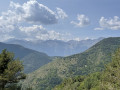
Here is a very pleasant walk offering superb panoramic views of the hills above the village of Morignole, passing by the Stroup Waterfall and ending at the Chambeuil Sheepfold.
Mont Saccarel, Mont Tanarel and Cime Ventose
 11.65 mi
+5,016 ft
-5,013 ft
10 hrs
11.65 mi
+5,016 ft
-5,013 ft
10 hrs
 Very difficult
Departure from La Brigue (Alpes-Maritimes)
Very difficult
Departure from La Brigue (Alpes-Maritimes)
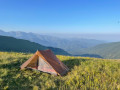
The three easternmost peaks in France.
This hike presents no technical difficulties; the paths are well-marked and there are plenty of signposts.
I classify it as very difficult given its length and elevation gain.
A similar hike was already described in 2019, but I am not including the description of the descent today.
The hamlets of Cetta and Loreto at the start of Triora
 6.39 mi
+2,142 ft
-2,136 ft
4h 50
Moderate
Departure from Triora (Imperia)
6.39 mi
+2,142 ft
-2,136 ft
4h 50
Moderate
Departure from Triora (Imperia)
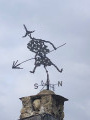
This hike begins and ends with a walk through the village of Triora, ranked among the most beautiful villages in Italy. It is a perfect example of a medieval village, where every alleyway, every small square, every wall and every building bears witness to centuries of history and tradition. The wooded valley, the old bridge overlooking the Argentina valley, and the two other hamlets you pass through will capture your attention.
From Triora to Ventimiglia
 51.05 mi
+14,806 ft
-17,343 ft
5 days
Difficult
Departure from Triora (Imperia)
51.05 mi
+14,806 ft
-17,343 ft
5 days
Difficult
Departure from Triora (Imperia)
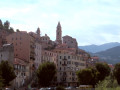
This route passes through numerous medieval villages in five very different valleys: Valle Argentina, Valle Nervia, Valle Barbaira, Valle Bevera and Valle Roja (Roya). You will stop off in typical Ligurian villages, some of which are listed among the “Most Beautiful Villages in Italy”.
Triora - Pigna
 10.74 mi
+2,907 ft
-4,524 ft
7h 30
Difficult
Departure from Triora (Imperia)
10.74 mi
+2,907 ft
-4,524 ft
7h 30
Difficult
Departure from Triora (Imperia)
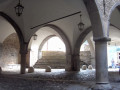
This first stage will take you from Triora to Pigna. Triora is a medieval village known as the “village of witches” (il paese delle streghe). It is the most important village in the Argentina Valley. Triora is one of the most beautiful villages in Italy. After walking along the Nervia, you will arrive in Pigna. The historic centre of the village is distinctive for its narrow streets arranged in concentric rings around the houses. Pigna is also a spa town.
The Baisses de Géréon and Peluna from La Brigue
 10.52 mi
+2,680 ft
-2,667 ft
7h 10
Moderate
Departure from La Brigue (Alpes-Maritimes)
10.52 mi
+2,680 ft
-2,667 ft
7h 10
Moderate
Departure from La Brigue (Alpes-Maritimes)
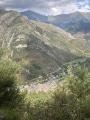
A pleasant, easy forest hike, ideal for getting back into walking in the spring. The descent offers beautiful views of La Brigue, the Chaberta massif and the terraces built over the centuries, evidence of an agricultural past.
Towards Notre-Dame-des-Fontaines and the Pont du Coq
5.41 mi
+817 ft
-814 ft
3h 10
Moderate
Departure from La Brigue (Alpes-Maritimes)
This circular route, starting from La Brigue, allows you to explore the Lévensa Valley via a varied trail combining woodland, footbridges and ancient ruins. The route leads to the Notre-Dame-des-Fontaines Chapel, notable for its frescoes, before a gentler return via the road. Combining nature and heritage, this route offers a gradual immersion in a peaceful environment typical of the hinterland.
Chapel of Saint-Sauveur in Tende
 2.24 mi
+922 ft
-922 ft
1h 50
Moderate
Departure from Tende (Alpes-Maritimes)
2.24 mi
+922 ft
-922 ft
1h 50
Moderate
Departure from Tende (Alpes-Maritimes)
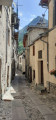
Discover one of the highest points in the village of Tende by climbing up to the Saint-Sauveur Chapel.
This chapel, listed as a historic monument since 26 May 2000, was built on the orders of the first Count of Tende for his wife, who was Orthodox. It features 14th-century murals.
The route is short but the climb is steep (250m elevation gain over less than 1km).
Caution: tricky passage at the end.
Monte Torre from Chiusanico
 4.53 mi
+1,998 ft
-1,998 ft
3h 50
Moderate
Departure from Chiusanico (Imperia)
4.53 mi
+1,998 ft
-1,998 ft
3h 50
Moderate
Departure from Chiusanico (Imperia)
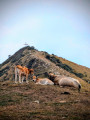
Breathtaking views of the entire bay, ridges, an authentic village and cows in season are what you will discover on this hike. The route is very well marked.
Tête de la Nava, Cime and Balcon de Marta
 10.86 mi
+3,993 ft
-3,993 ft
8h 30
Difficult
Departure from La Brigue (Alpes-Maritimes)
10.86 mi
+3,993 ft
-3,993 ft
8h 30
Difficult
Departure from La Brigue (Alpes-Maritimes)
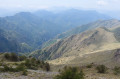
Three peaks near the Italian border, with old military installations.
The walk is long but takes place largely through woodland.
Balcony and Cime de Marta from Colle Melosa
 9.35 mi
+2,490 ft
-2,487 ft
6h 30
Moderate
Departure from Pigna (Imperia)
9.35 mi
+2,490 ft
-2,487 ft
6h 30
Moderate
Departure from Pigna (Imperia)
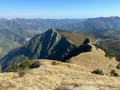
A magnificent, easy hike straddling Italy and France. Superb panoramic views of the Nervia Valley and the Ligurian Alps, then the Roya Valley and the peaks of the Mercantour. On a clear day, you can see Mont Viso and Corsica.
The Saint-Dalmas de Tende, La Brigue, Tende triangle
 9.79 mi
+2,972 ft
-2,966 ft
7h 05
Difficult
Departure from Tende (Alpes-Maritimes)
9.79 mi
+2,972 ft
-2,966 ft
7h 05
Difficult
Departure from Tende (Alpes-Maritimes)
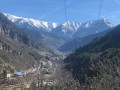
Three villages,names and prestigious locations steeped in history on the natural border of the Mercantour National Park and the Vallée des Merveilles. Numerous sweeping views over these two valleys and the Alpine massif. A magnificent hike that lives up to our expectations.
From Saint-Dalmas de Tende to La Brigue
 5.48 mi
+896 ft
-922 ft
3h 20
5.48 mi
+896 ft
-922 ft
3h 20
 Easy
Departure from Tende (Alpes-Maritimes)
Easy
Departure from Tende (Alpes-Maritimes)
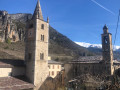
A beautiful walk through the Levensa Valley. Breathtaking views of these two towns. Prestigious sites steeped in history, including a magnificent House of Brigasque Heritage and Traditions to visit – everything you need for a pleasant day combining physical activity with fun and cultural visits.
Pigna - Apricale
 14.45 mi
+4,147 ft
-4,213 ft
10h 15
Very difficult
Departure from Pigna (Imperia)
14.45 mi
+4,147 ft
-4,213 ft
10h 15
Very difficult
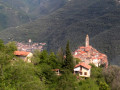
Departure from Pigna (Imperia)
This second stage will take you from Pigna to Apricale. You will pass through the charming villages of Castel Vittorio, Bajardo and Perinaldo. Like Triora, Perinaldo and Apricale are listed among the most beautiful villages in Italy (I Borghi più belli d'Italia).