


Refine your search for walks in Les Lilas
Les Lilas walks


 From Mairie des Lilas to Bagnolet via the parks and forts
 Visorando Member
 11.76 mi
 +633 ft
 -755 ft
 5h 55
5h 55
 Moderate
 Departure from Les Lilas (Seine-Saint-Denis)
An original walk from metro station to metro station, covering 19 or 16 km. It offers a rather surprising exploration of Seine-Saint-Denis, which is green for much of the route as it makes the most of the numerous parks and green spaces, skirting the forts of Romainville, Noisy and Rosny. Discover beautiful monuments, remarkable trees and interesting buildings, with superb views of Paris and its suburbs.
In the footsteps of Georges Brassens: Belleville and Canal Saint-Martin
 4.84 mi
+43 ft
-279 ft
2h 15
4.84 mi
+43 ft
-279 ft
2h 15
 Easy
Departure from Paris
Easy
Departure from Paris
In this first section of our "Brassens" walk, we first pass through the Belleville and Ménilmontant neighbourhoods, with their narrow streets, footpaths and stairways. Then, after crossing the symbol-rich Place de la République, we walk along the charming Canal Saint-Martin.
In the footsteps of Georges Brassens in Paris
 18.86 mi
+463 ft
-705 ft
4 days
Easy
Departure from Paris
18.86 mi
+463 ft
-705 ft
4 days
Easy
Departure from Paris
Originally from Sète, Georges Brassens (1921–1981) lived in Paris for around forty years and frequently referred to the city in his songs. This route takes you through Paris, passing by places where Brassens lived or worked, as well as sites that are directly or indirectly linked to some of his songs. Rich in heritage and passing through a variety of neighbourhoods, this city route is not just for die-hard ‘Brassens fans’.
Green spaces in the north of Paris’s 20th arrondissement
 8.55 mi
+325 ft
-433 ft
4h 15
Moderate
Departure from Paris
8.55 mi
+325 ft
-433 ft
4h 15
Moderate
Departure from Paris
Paris’s 20th arrondissement is a working-class, lively and multicultural area. It is characterised by a high degree of social diversity and a strong artistic identity, with artists’ studios and alternative cultural venues. However, there are notable differences in atmosphere, urban layout and population between the north and south of the arrondissement. The cosmopolitan north of the arrondissement features a dense urban fabric, sloping streets, modest buildings and street art. It includes the Belleville and Ménilmontant neighbourhoods, with their relaxed, bohemian atmosphere. Here you’ll find one of Paris’s major parks, the Parc de Belleville, which offers a panoramic view of the capital, as well as peaceful little gardens.
Alleyways, footpaths and passages in Pantin, Le Pré Saint-Gervais and Les Lilas
 5.83 mi
+210 ft
-210 ft
2h 50
Easy
Departure from Pantin (Seine-Saint-Denis)
5.83 mi
+210 ft
-210 ft
2h 50
Easy
Departure from Pantin (Seine-Saint-Denis)
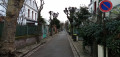
This is an exotic and green route on the outskirts of Paris, in a highly urbanised environment. The first part takes you through small streets, passageways and "villas", with small houses of diverse architecture and some street art. After crossing two wooded parks, the route runs alongside the Canal de l'Ourcq and ends in the Parc de la Villette.
From the Butte du Chapeau Rouge to the Wall of Love
 7.05 mi
+522 ft
-538 ft
3h 40
Moderate
Departure from Paris
7.05 mi
+522 ft
-538 ft
3h 40
Moderate
Departure from Paris
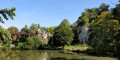
A very pleasant walk through the parks of north-east Paris, ending in Montmartre.
A visit to Belleville Cemetery
 1.13 mi
+23 ft
-43 ft
0h 30
Easy
Departure from Paris
1.13 mi
+23 ft
-43 ft
0h 30
Easy
Departure from Paris
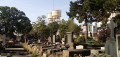
A visit to the highest-altitude cemetery within Paris city limits, which boasts a rich variety of plant life and is home to the graves of several notable figures. A monument within the cemetery and a church outside it evoke a painful episode in the history of the Paris Commune.
The bestiary of Belleville, Père Lachaise and Nation
 4.99 mi
+144 ft
-328 ft
2h 25
Easy
Departure from Paris
4.99 mi
+144 ft
-328 ft
2h 25
Easy
Departure from Paris
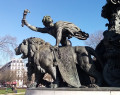
This urban route crosses the 20th arrondissement of Paris from north to south in search of animal representations. From Place des Fêtes to Place de la Nation via the charming Église de Charonne, you will mainly walk along quiet streets and a few pleasant passages and alleys.
In the heights of Paris: Buttes Chaumont, Butte Bergeyre, Belleville
 4.90 mi
+436 ft
-469 ft
2h 40
Easy
Departure from Paris
4.90 mi
+436 ft
-469 ft
2h 40
Easy
Departure from Paris
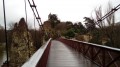
The third stage of this urban journey crosses the north-eastern districts of Paris, including the lively Belleville neighbourhood. We wind our way through the Parc des Buttes Chaumont and then climb the discreet Butte Bergeyre, which offers an original view of Montmartre. We then pass by the Rue Piat viewpoint, which offers a panoramic view. A few touches of urban heritage and street art, as well as a walk along the Canal Saint-Martin, complete the picture.
The urban parks and peach walls of Montreuil
 6.85 mi
+338 ft
-325 ft
3h 25
Moderate
Departure from Montreuil (Seine-Saint-Denis) (Seine-Saint-Denis)
6.85 mi
+338 ft
-325 ft
3h 25
Moderate
Departure from Montreuil (Seine-Saint-Denis) (Seine-Saint-Denis)
This route alternates between urban areas, favouring small streets and paths, and three public gardens, each with its own unique characteristics. It is also an opportunity to discover Montreuil's horticultural and arboricultural past.
The Bestiary of La Villette and Belleville
 4.37 mi
+354 ft
-187 ft
2h 20
Easy
Departure from Paris
4.37 mi
+354 ft
-187 ft
2h 20
Easy
Departure from Paris
A walk through Paris’s19th arrondissement in search of depictions of animals. Along the way, the route takes you through the hills of Paris, past the Butte Bergeyre and to the viewpoint in Belleville Park.
The ‘Promenade du Bœuf Gras’ in Paris
 4.92 mi
+10 ft
-66 ft
2h 15
Easy
Departure from Paris
4.92 mi
+10 ft
-66 ft
2h 15
Easy
Departure from Paris
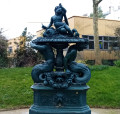
A walk through the north-eastern districts of Paris, from the former abattoirs at La Villette to the former Les Halles market, via the Porte Saint-Denis, following in the footsteps of processions that are no longer held today. It offers the chance to enjoy a pleasant stroll along the canals that characterise this part of the capital and to seek out a few depictions of animals.
The Ourcq Canal and La Villette Park
 6.20 mi
+23 ft
-39 ft
2h 50
Easy
Departure from Paris
6.20 mi
+23 ft
-39 ft
2h 50
Easy
Departure from Paris
During this urban walk, you will discover the extraordinary architecture and gardens of the Parc de la Villette, as well as countless artistic and historical sites that make this stroll along the Canal de l’Ourcq a unique and authentic Parisian cultural itinerary.
The Petite Ceinture in the 20th arrondissement, La Mouzaïa and the Bassin de la Villette
 4.24 mi
+184 ft
-295 ft
2h 05
Easy
Departure from Paris
4.24 mi
+184 ft
-295 ft
2h 05
Easy
Departure from Paris
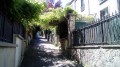
A stroll through the 20th and 19th arrondissements of Paris, taking in their diverse neighbourhoods. We cross Ménilmontant, roughly following the old Petite Ceinture railway line, then take a look at the old Belleville aqueduct. The neighbourhood around Rue de la Mouzaïa reveals its sloping streets lined with small houses decorated with flowers. We finish at the edge of the Bassin de la Villette and the Canal Saint-Denis.
A visit to La Villette Cemetery
 1.09 mi
+13 ft
-13 ft
0h 30
Easy
Departure from Paris
1.09 mi
+13 ft
-13 ft
0h 30
Easy
Departure from Paris
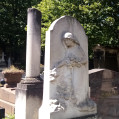
A very short urban route exploring La Villette Cemetery, which bears the marks of its neighbourhood’s history, such as the presence of the abattoirs from 1867 to 1974 or the tragic fire at the Collège Édouard Pailleron in 1973.
From Montreuil to Les Lilas through alleys, paths and gardens
 3.76 mi
+243 ft
-66 ft
1h 55
Easy
Departure from Montreuil (Seine-Saint-Denis) (Seine-Saint-Denis)
3.76 mi
+243 ft
-66 ft
1h 55
Easy
Departure from Montreuil (Seine-Saint-Denis) (Seine-Saint-Denis)
A route that, in a highly urbanised environment, favours alleys and other passageways, as well as public parks, and runs alongside several areas of shared or allotment gardens. It is also an opportunity to pay tribute to the mathematicians and activists Josette and Maurice Audin, victims of the abuses that took place during the Algerian War.
A visit to Charonne Cemetery
 1.42 mi
+102 ft
-16 ft
0h 45
Easy
Departure from Paris
1.42 mi
+102 ft
-16 ft
0h 45
Easy
Departure from Paris
Of all the cemeteries in Paris, Charonne Cemetery is the smallest, but the walk to reach it is the longest. This peaceful, tree-lined cemetery, situated next to the charming church of Charonne, is the final resting place of several notable figures, particularly from the worlds of literature, theatre and cinema. A tribute is paid here to the federates who were shot in 1871.
A tour of the Père Lachaise Cemetery
 2.67 mi
+144 ft
-135 ft
1h 20
Easy
Departure from Paris
2.67 mi
+144 ft
-135 ft
1h 20
Easy
Departure from Paris
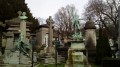
Stroll through the paths of the famous Père Lachaise Cemetery, largely laid out as an English garden, and discover the graves of famous people and monuments that are original to say the least.
La Villette, La Chapelle and the passages of the 18th arrondissement
 4.21 mi
+30 ft
-16 ft
2h 00
Easy
Departure from Paris
4.21 mi
+30 ft
-16 ft
2h 00
Easy
Departure from Paris
A walk through the revitalised neighbourhoods of Paris’s 19th and 18th arrondissements. The Jardins d’Éole and Rosa Luxemburg add a lovely touch of greenery. By the end of the walk, the narrow streets and passageways make you forget the main thoroughfares.
From Porte de la Villette to Gare de Lyon
 10.98 mi
+249 ft
-285 ft
5h 15
Moderate
Departure from Paris
10.98 mi
+249 ft
-285 ft
5h 15
Moderate
Departure from Paris
This urban route allows you to discover a large number of parks situated on the edge of the ring road in eastern Paris. Serving as an introduction tothe GR®75, it runs partly through the Bois de Vincennes and passes close to several other notable sites such as the Philharmonie, the Cité des Sciences and the Père Lachaise Cemetery. As you pass through the many parks, you might feel as though you’re far from the city, even though it’s only a stone’s throw away.
The Paris circuit via the GR®75
 32.61 mi
+614 ft
-636 ft
3 days
Moderate
Departure from Paris
32.61 mi
+614 ft
-636 ft
3 days
Moderate
Departure from Paris
TheGR®75is one of the most accessibleGR® routes in France. It allows anyone to try their hand at hiking whilst passing through dozens of parks, gardens and public green spaces in the capital. These spaces offer a real breath of fresh air, just a stone’s throw from the city centre. At 50 kilometres long, some people complete it in a single day. However, to get the most out of the route, it’s best to spread it over several days
A walk around Parc de la Villette
 1.62 mi
+26 ft
-10 ft
0h 45
Easy
Departure from Paris
1.62 mi
+26 ft
-10 ft
0h 45
Easy
Departure from Paris
Situated alongside the Canal Saint-Denis and the Canal de l’Ourcq, the Parc de la Villette combines old industrial buildings, modern architecture, sites dedicated to science and culture, and a multitude of small themed gardens. This short walk takes you through the park, with plenty of detours, to discover this diverse heritage.
A stroll through Pantin along the Canal de l'Ourcq
 6.23 mi
+279 ft
-279 ft
3h 05
Moderate
Departure from Pantin (Seine-Saint-Denis)
6.23 mi
+279 ft
-279 ft
3h 05
Moderate
Departure from Pantin (Seine-Saint-Denis)
From the Porte de la Villette to the outskirts of Lilas and Romainville, this itinerary follows the southern half of the city and reveals the many faces of Pantin: from the cosmopolitan Quatre-Chemins neighbourhood to the revitalised Canal de l'Ourcq, passing by the houses at the foot of the TDF tower and the craft and industrial areas.
From Bobigny to Le Raincy via the Canal de l’Ourcq
 4.71 mi
+164 ft
-108 ft
2h 20
Easy
Departure from Bobigny (Seine-Saint-Denis)
4.71 mi
+164 ft
-108 ft
2h 20
Easy
Departure from Bobigny (Seine-Saint-Denis)
An urban route that runs alongside the Canal de l’Ourcq for the first half. The route then moves through a residential area, culminating in the Church of Notre-Dame de l’Assomption du Raincy, which was decidedly modern when it was built in the aftermath of the First World War.
The bestiary of Charonne, Ménilmontant and Belleville
 3.76 mi
+285 ft
-16 ft
2h 00
Easy
Departure from Paris
3.76 mi
+285 ft
-16 ft
2h 00
Easy
Departure from Paris
A south-north crossing of the 11th and 20th arrondissements of Paris, in search of animal representations. Several alleys and passageways bear witness to the former presence of numerous workshops in these neighbourhoods.
From Nation to Bastille via Faubourg Saint-Antoine
 3.41 mi
+13 ft
-52 ft
1h 35
Easy
Departure from Paris
3.41 mi
+13 ft
-52 ft
1h 35
Easy
Departure from Paris
An urban route that favours alleys, passageways and public gardens, in search of 19th and 20th century heritage.
The bestiary of Reuilly, Picpus and Porte Dorée
 4.02 mi
+43 ft
-72 ft
1h 55
Easy
Departure from Paris
4.02 mi
+43 ft
-72 ft
1h 55
Easy
Departure from Paris
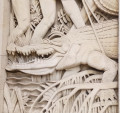
A walk through the 11th and 12th arrondissements of Paris, in search of depictions of animals. These are not distributed evenly along the entire route. The walk ends on a high note with the gigantic bas-relief on the Palais de la Porte Dorée, which depicts, amongst other things, an extremely diverse array of wildlife.
Places of interest in the Bois de Vincennes
6.82 mi
+56 ft
-56 ft
3h 10
Easy
Departure from Vincennes (Val-de-Marne)
An 11 km walk with a shaded route, some unusual discoveries in the Bois de Vincennes and facilities dedicated to culture and sport. At the end of the walk, you can enjoy a drink at the UCPA equestrian centre.
Green spaces in the 10th arrondissement of Paris
 4.49 mi
+75 ft
-33 ft
2h 10
Easy
Departure from Paris
4.49 mi
+75 ft
-33 ft
2h 10
Easy
Departure from Paris
The 10th arrondissement of Paris is characterised by a working-class, cosmopolitan and very lively atmosphere, marked by the presence of the Gare du Nord and Gare de l’Est stations. A densely populated area, it mainly offers small local green spaces. The largest gardens have often been created on former historic, railway or industrial sites, such as the Jardin Villemin or the Square Alban-Satragne. The Canal Saint-Martin, for its part, plays a major role by providing a green promenade and a central hub for socialising. Finally, there are a dozen community gardens and examples of community greening: tree bases and micro-gardens.
République - Nation
 4.71 mi
+59 ft
-10 ft
2h 15
Easy
Departure from Paris
4.71 mi
+59 ft
-10 ft
2h 15
Easy
Departure from Paris
Although the title of this hike evokes a route commonly used by protest marches in Paris, the route itself avoids the main roads and favours the narrow streets and passageways where many workshops were once located.
Walk in the Marais
 3.48 mi
+3 ft
-10 ft
1h 35
Easy
Departure from Paris
3.48 mi
+3 ft
-10 ft
1h 35
Easy
Departure from Paris
This is an immersion in a historic district of Paris that was largely untouched by Haussmann's urban renewal and has retained many narrow streets, with architecture still dominated by 17th-century mansions. The suggested itinerary winds its way through narrow streets and gardens, allowing you to discover a rich heritage, including the Carreau du Temple, the Hôtel du Grand Veneur, the gardens of the National Archives, the Place des Vosges and the Hôtel Sully.
Green spaces in Paris’s 3rd arrondissement
 3.40 mi
+3 ft
-16 ft
1h 35
Easy
Departure from Paris
3.40 mi
+3 ft
-16 ft
1h 35
Easy
Departure from Paris
Paris’s 3rd arrondissement offers an elegant, residential atmosphere. An old neighbourhood, with narrow streets and hidden courtyards, it combines craft shops, art galleries and cultural institutions. Many of its green spaces reflect this historic neighbourhood with its majestic mansions: few playgrounds or lawns for sunbathing, but peaceful places to rest, rich in heritage.
A timeless stroll through the hidden corners of the Marais
 3.05 mi
+13 ft
-20 ft
1h 25
Easy
Departure from Paris
3.05 mi
+13 ft
-20 ft
1h 25
Easy
Departure from Paris
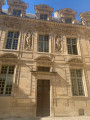
A short walk through the Marais, which may take a little longer for a photographer… A detour via the National Archives (Hôtel de Soubise and its gardens) is possible, and indeed recommended. However, some parts of the gardens will be closed in 2025 due to building works.
The Petite Ceinture in the 12th arrondissement and the village of Charonne
 4.83 mi
+161 ft
-43 ft
2h 20
Easy
Departure from Paris
4.83 mi
+161 ft
-43 ft
2h 20
Easy
Departure from Paris
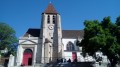
A very pretty urban route in the 12th and 20th arrondissements of Paris. You take the old Petite Ceinture railway line and then wander through passages and numerous flower-filled cul-de-sacs, particularly around Rue des Vignoles. The modern and austere Saint-Esprit church and the oldest and most charming church in Charonne provide two superb and contrasting touches of heritage.
The René Dumont greenway
 3.12 mi
+49 ft
-43 ft
1h 30
Easy
Departure from Paris
3.12 mi
+49 ft
-43 ft
1h 30
Easy
Departure from Paris
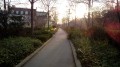
The René Dumont greenway is built on the platform of the former railway line that ran from the Gare de la Bastille. After briefly following the Canal Saint-Martin before it flows into the Seine, you follow this green space through the city, first at a height and then at ground level or through short tunnels. The Jardin de Reuilly, Square Charles Péguy and the Friche Ferroviaire at the junction of the former Petite Ceinture line add to the charm of this route.
The former quarries of Fontenay-sous-Bois
 3.21 mi
+151 ft
-144 ft
1h 35
Easy
Departure from Fontenay-sous-Bois (Val-de-Marne)
3.21 mi
+151 ft
-144 ft
1h 35
Easy
Departure from Fontenay-sous-Bois (Val-de-Marne)
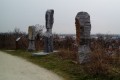
A short walk through the streets, alleys and paths of Fontenay-sous-Bois. Located on the site of former gypsum quarries, the Ecoparc offers a calm and exotic atmosphere as well as a beautiful panorama. The Parc de l'Hôtel de Ville, with its water features and a few paths lined with beautiful pavilions, completes the picture.
Parks and Gardens of Fontenay-sous-Bois, Nogent-sur-Marne and Vincennes
7.67 mi
+249 ft
-266 ft
3h 45
Easy
Departure from Fontenay-sous-Bois (Val-de-Marne)
A lovely little walk taking in three towns, passing through parks and gardens, then along footpaths and narrow streets. The route takes you past the Fort of Nogent-sur-Marne, then through the marina. Discover the Viaduct and Yvette Horner’s ‘Île de Beauté’. And finish with the Tropical Agronomy Garden and Lac des Minimes.
On the French Revolution routes in the heart of Paris
 3.31 mi
+72 ft
-69 ft
1h 35
Easy
Departure from Paris
3.31 mi
+72 ft
-69 ft
1h 35
Easy
Departure from Paris
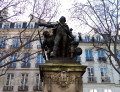
An urban circular walk in search of the French Revolution routes in two Parisian sites: the Bastille, whose capture had a very strong symbolic impact, and the Odéon suburb, where several key figures of the period lived, worked and gathered, including Marat and Danton. It's also an opportunity to discover the signs of other insurrectionary episodes (July 1830, May 1968) and a superb heritage ranging from the Gallo-Roman to the Middle Ages period.
Vincennes Woods and the banks of the Marne
9.05 mi
+89 ft
-92 ft
4h 15
Moderate
Departure from Fontenay-sous-Bois (Val-de-Marne)
A circular route starting from the RER station at Fontenay-sous-Bois.
The route passes through the Bois de Vincennes, then the Pavillon Baltard, the Yvette Horner promenade, the Bry-sur-Marne bridge, and returns along the opposite bank to the Joinville bridge. Return via the Bois de Vincennes, and the circular route ends by passing the Confiserie du Lac.
From the Bois de Vincennes to the banks of the Marne
 5.67 mi
+102 ft
-108 ft
2h 40
Easy
Departure from Paris
5.67 mi
+102 ft
-108 ft
2h 40
Easy
Departure from Paris
On the outskirts of Paris, a walk in three stages. First, a stroll along the banks of Lac Daumesnil and its islands, which are home to many birds. Next, a walk through the Bois de Vincennes along the Ruisseau de la Gravelle to the famous racecourse. Finally, a pleasant walk along the towpath of the Marne.
The Bois de Vincennes from the Porte Dorée
7.89 mi
+240 ft
-200 ft
3h 50
Moderate
Departure from Paris
Explore the Bois de Vincennes, passing by Lac Daumesnil, Lac de Gravelle, Lac des Minimes, the Arboretum, the Vincennes Racecourse, and the Butte aux Canons with its magnificent view over part of the Paris region
From Gare de Lyon to Porte d'Auteuil
 11.35 mi
+259 ft
-249 ft
5h 25
Moderate
Departure from Paris
11.35 mi
+259 ft
-249 ft
5h 25
Moderate
Departure from Paris
This walk, part of the GR® 75, allows you to discover a large number of parks situated on the edge of Paris’s southern ring road. It serves as an intermediate stage and allows you to explore the southernmost section of the GR®. There are many notable spots along theGR® and in the surrounding area, such as the Butte aux Cailles, Montsouris Park and the Jardin des Serres d’Auteuil. As you pass through the many parks, you’ll feel as though you’re far removed from the city.
Urban planning and remembrance trail in Drancy
 4.78 mi
+26 ft
-13 ft
2h 15
Easy
Departure from Le Bourget (Seine-Saint-Denis)
4.78 mi
+26 ft
-13 ft
2h 15
Easy
Departure from Le Bourget (Seine-Saint-Denis)
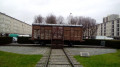
Between Le Bourget and Bobigny, this route offers a glimpse of a variety of housing types in the inner suburbs, ranging from detached houses to blocks of flats. It also provides an opportunity to stop at a number of memorial sites, including the Drancy internment camp.
A visit to Bercy Cemetery
 0.65 mi
+13 ft
-13 ft
0h 20
Easy
Departure from Paris
0.65 mi
+13 ft
-13 ft
0h 20
Easy
Departure from Paris
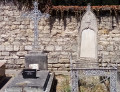
A short urban route to visit Bercy Cemetery, which is the final resting place of several notable figures and bears the mark of the history of the wine warehouses in this municipality, which was independent of Paris until 1860.
Grand tour of Île-de-France in 34 stages on the GR®11
 528.35 mi
+22,037 ft
-22,156 ft
34 days
528.35 mi
+22,037 ft
-22,156 ft
34 days
 Difficult
Departure from Paris
Difficult
Departure from Paris
This marked GR® route around the Île-de-France region (with a few forays into neighbouring departments and regions) complements its "little brother", the GR®1, by forming a circular route around Paris, generally with a slightly larger radius.
It follows the same overall pattern: first, a radial section starting from Paris (more precisely from the Pont d'Austerlitz, near the former confluence of the Bièvre and the Seine), going up the entire Bièvre valley, then continuing to Villiers-Saint-Frédéric, in the Yvelines. From there, it is a circular route that loops around the Île-de-France region, close to its borders with neighbouring regions.
The route passes through beautiful regions, often untouched by intensive urbanisation, regional nature parks and other protected natural areas, and takes in some architectural wonders.
Paris Pont d'Austerlitz - Massy
 14.65 mi
+361 ft
-180 ft
7h 05
Difficult
Departure from Paris
14.65 mi
+361 ft
-180 ft
7h 05
Difficult
Departure from Paris
First stage of the Grand Tour of Île-de-France via the GR® 11, starting from the former confluence of the Bièvre and the Seine at the Pont d'Austerlitz in Paris, to the Massy-Palaiseau station in Essonne. It consists of climbing up the lower part of the Bièvre valley, where the river flows mainly underground but is sometimes exposed to the open air following rehabilitation programmes.
 The banks and quays of the Seine in Paris
 16.83 mi
+66 ft
-69 ft
1.5 hrs
Easy
Departure from Paris
16.83 mi
+66 ft
-69 ft
1.5 hrs
Easy
Departure from Paris
A journey across Paris from east to west and then from west to east along the Seine, almost entirely on cycle paths or lanes. Both banks offer complementary views and numerous vantage points over the capital’s main monuments.
The Bestiary of Bastille, Popincourt and République
 5.64 mi
+43 ft
-39 ft
2h 40
Easy
Departure from Paris
5.64 mi
+43 ft
-39 ft
2h 40
Easy
Departure from Paris
A south-to-north walk through the 12th, 11th and 10th arrondissements of Paris, in search of depictions of animals. The Port de l’Arsenal and several narrow passages add a picturesque touch to this route.
From the Pont d’Austerlitz to the Port de Javel along the banks of the Seine
 5.22 mi
+10 ft
-30 ft
2h 25
Easy
Departure from Paris
5.22 mi
+10 ft
-30 ft
2h 25
Easy
Departure from Paris
An urban route that allows you to enjoy the fully pedestrianised left bank of the Seine in Paris! You walk pleasantly along the river and pass by some of the capital’s most famous landmarks: Île Saint-Louis, Île de la Cité and Notre-Dame Cathedral, Pont Neuf, the Louvre Museum, the Musée d’Orsay, the Grand Palais and the Eiffel Tower.
Adjust your route according to the water levels of the Seine: see the practical information section.
From Nogent-sur-Marne to Noisy-le-Grand
 6.75 mi
+197 ft
-89 ft
3h 15
Moderate
Departure from Nogent-sur-Marne (Val-de-Marne)
6.75 mi
+197 ft
-89 ft
3h 15
Moderate
Departure from Nogent-sur-Marne (Val-de-Marne)
From Nogent-sur-Marne RER station to Noisy-le-Grand Mont-d’Est station (Line A), passing along the banks of the Marne and its bridges. You can reach the start or finish points by taking Bus 120, which runs between the two stations (allow around 45 minutes). You can also break off your route towards Neuilly-Plaisance by heading to the RER station located very close to the route.
The René Dumont Tropical Agronomy Garden
 4.46 mi
+36 ft
-36 ft
2h 05
Easy
Departure from Nogent-sur-Marne (Val-de-Marne)
4.46 mi
+36 ft
-36 ft
2h 05
Easy
Departure from Nogent-sur-Marne (Val-de-Marne)
Discover a green oasis on the edge of Paris's 12th arrondissement and evidence of the French colonial vision that prevailed at the beginning of the 20th century, which we now view very differently. After visiting the garden, the hike offers a circular route in the Bois de Vincennes, around Lac des Minimes.