A tour of the Père Lachaise Cemetery

Stroll through the paths of the famous Père Lachaise Cemetery, largely laid out as an English garden, and discover the graves of famous people and monuments that are original to say the least.

Details

948405
Creation:
Last update:
Last review:
  • Walking
    Activity: Walking
  • ↔
    Distance: 4.30 km
  • ◔
    Average duration: 1h 20 
  • ▲
    Difficulty: Easy

  • ⚐
    Back to start: Yes
  • ↗
    Ascent: + 44 m
  • ↘
    Descent: - 41 m

  • ▲
    Highest point: 95 m
  • ▼
    Lowest point: 59 m
  • ⚐ Country: France
  • ⚐ District: Paris (75000)
  • ⚑
    Start/End: N 48.862664° / E 2.387537°
  • ❏
    IGN map(s): Ref. 2314OT
  • Hour-by-hour weather

Photos

Description of the walk

Start from Père Lachaise metro station (lines 2 and 3). Take exit 1 onto Boulevard de Ménilmontant.

Inside the cemetery, the main paths are paved and signposted. The route also takes in side paths or gravel tracks, which are not signposted and may not appear on the map.

In the description below, the names appearing on the graves may be highlighted for three different reasons:
1) Graves of
notable figures, in which case a lower-case letter in brackets refers to a short entry in the ‘Places to see’ section, where names are listed in the order they appear on the route.
2) Particularly distinctive monuments.
3) Useful landmarks in the area.

(S/E) Upon exiting the metro station, cross Boulevard de Ménilmontant (to the left if you took the stairs, to the right if you took the escalator). Walk along the boulevard for a few metres on the right and you will immediately find the cemetery entrance on the left.

At the top of the stairs, turn left and head uphill along Avenue de l’Ouest. At the junction, turn right onto Avenue Circulaire. After about fifty metres, turn right onto Chemin de Luzarraga. On the right, behind Tang Khanh Nghi’s grave, you will find a grave with a Middle Eastern motif and the grave of Louis Vigneron (a), adorned with a cannon barrel.

Back on Chemin de Luzarraga, take a path running perpendicular to the road, which branches off to the right of the J. Dubois family grave. Note some unusual ornaments on the left (guitar, pseudo-rocks, etc.). At the T-junction, turn left and you will come to a crossroads with several statues, including that of Anatole de la Forge (b).

Then turn right and follow Avenue Circulaire, ignoring the side paths. At the junction with Avenue Latérale du Nord, continue straight ahead and, just before the next junction, you will find Colette’s grave (c) on the left.

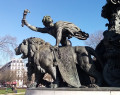
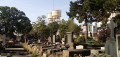
(1) Turn left and walk up the main avenue. Note on the left-hand side the graves of Louis Visconti (d), Gioachino Rossini (e) and Alfred de Musset (f), with his sister’s grave behind. Just before the war memorial, turn right, climb a flight of steps and walk past the grave of Félix Faure (g). Then walk past the foot of the statue of Sergeant Hoff (h). First turn right then left, climb a flight of steps and head towards the monumental chapel (a lovely view if you turn round).

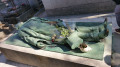
Turn right onto Avenue de la Chapelle and look out for the grave of the painter Géricault (i) on the right-hand side. At the junction with Chemin du Bassin, leave Avenue de la Chapelle and take the path on the right, Chemin de Talma, signposted a few metres further on. Turn right and follow this path down to a moving recumbent statue on the left-hand side (j).

Continue and, at the T-junction, turn left. Note the graves of Mano Solo (k) and Claude Chabrol (l) on the right, side by side. A little further on, on the left, you will find the grave of Michel Petrucciani (m) and, opposite, the very simple grave of Pierre Desproges (n) and his wife.

Ignore a path coming from the left and, at the fork ahead, turn left and follow Chemin Méhal downhill. At the T-junction, turn left and you will immediately reach an intersection with Chemin Serre.

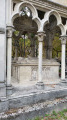
(2) Continue straight ahead and, after a few metres, turn left onto a path that branches off to the right of A. Reicha’s grave. Turn right and head towards the monument housing the remains of Héloïse and Abélard (o). Go round the monument on the right and turn right to rejoin a paved path. Follow it to the right until you reach the previous junction.

(2) Then turn right onto Chemin Serre. Take the first left, onto Chemin Maison. At the T-junction, follow Chemin Lauriston to the left. At the next junction, turn sharply right and you will find Jim Morrison’s grave (p) on the right behind some barriers.

Retrace your steps and continue along Chemin Lauriston. Note, on the right-hand side, the grave of a victim of the Paris attacks of 13 November 2015. At the T-junction, turn left and you will come to a roundabout with a monumental statue of Casimir Périer (q) in the centre.

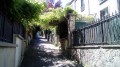
Go round the roundabout and continue along the path opposite. At the grave of Alain Bashung (r), turn right onto a narrow, cobbled uphill path. Ignore the first flight of steps on the left and climb the second, at the corner of the Lehuic family grave.

At the top, turn left between the Bravin family grave on your left and a memorial stone on your right. Continue straight ahead and, just past a grave on the left bearing verses by Catherine of Siena, turn right (bust on the right). At the end of the path, you will immediately find a junction on the left.

(3) Then turn right onto a gravel path that runs alongside the Loyson tomb. Ignore a path coming from the left and, on the left-hand side behind a gate, you will find the side-by-side cenotaphs of La Fontaine (s) and Molière (t). Continue along the path, with the tomb of Alphonse Daudet (u) on your right, until you reach a junction with a sign reading “Chemin de Molière et La Fontaine 25th Division”.

Walk back a few metres to the left to find, before Avenue Transversale No. 1, the grave of Antoine Parmentier (v), whose decoration illustrates his trade.

Back at the sign, continue left along Chemin de Molière et La Fontaine. At the junction, go straight ahead onto Chemin Saint-Louis. At the T-junction, turn left and, at the next junction, you will find Marshal Ney’s grave (w).

Then turn left. At the next junction, keep right onto Chemin Suchet et Masséna. At the next junction, first turn left then right to climb a flight of steps and follow Chemin des Anglais. At the fork, turn right. At the junction immediately ahead, turn right onto Avenue Greffulhe, a cobbled lane that is narrow at first but widens after a few metres.

At the next junction, turn left onto Avenue Transversale No. 2. On the right-hand side, you will find the recumbent statue of Victor Noir (x). Immediately afterwards, turn right into a gravel path and note on the left two surprising female sculptures in such a place (a half-naked woman, a woman breastfeeding a child). You will emerge onto a paved path; follow it to the left.

At the junction, turn right onto Avenue Carette. On the left, you will find Oscar Wilde’s grave (y), topped by a winged figure. Then turn left onto a gravel path that starts to the left of this grave.

(4) At the end, turn left and walk past a monumental Christ statue on the right-hand side. At the junction, continue straight ahead; note the simple grave of Tsilla Chelton (z) on the left and walk alongside the crematorium on your right. At the next junction, with the graves of Yves Montant (aa) and Simone Signoret (ab) opposite on the right, turn right into Allée Transversale No. 2.

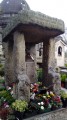
Opposite the entrance to the crematorium, turn left onto a gravel path. Opposite the “Picon-Dublanchy” grave, first turn left then right. Shortly afterwards, with the Priestley family grave opposite on the left, turn right onto a narrow gravel path. Walk past the symbolic grave of Imre Nagy (ac) and, at the end, you will find the dolmen-shaped grave of Allan Kardec (ad).

Then take the paved path on the left, then turn right onto Avenue Transversale No. 1. Next, take the first left onto Avenue Eugène Delacroix (ae), go downhill and ignore a path on the left, and pass the painter’s all-black grave on the right-hand side.

At the next junction, turn right and head uphill. Note Balzac’s grave (af) on the left and, opposite, that of Gérard de Nerval (ag). Continue uphill and pass at the foot of a very tall conical monument. Continue straight on along Chemin Casimir Devigne.

At the junction, turn left onto Avenue Transversale No. 2. At the corner by the Cadou family’s grave, take the gravel path on the right. At a junction, at the corner of the Millet family grave, take the gravel path on the left. Note a sculpture depicting a couple on the right, then, on the left, the grave of Fulgence Bienvenüe (ah) and his family.

At the end of the path, follow a paved path to the right. At the next junction, turn right onto Avenue Transversale No. 3, then left onto Avenue des Thuyas. Turn right onto this path and, after about a hundred metres, take the cemetery exit on the left.

(5) Immediately turn left onto Rue des Rondeaux. At the traffic lights, turn left into the Jardin Samuel de Champlin and follow a concrete path uphill. Keep to the highest point and closest to the cemetery wall, ignoring all paths branching off to the right. The upper path descends, leading to the monument erected in memory of those shot during the Paris Commune.

Continue and leave the garden on the right. Turn left onto Avenue Gambetta, which slopes gently downwards. At the crossroads, turn left to cross Boulevard de Ménilmontant and reach the metro station (lines 2 and 3) (S/E).

Waypoints

  1. S/E : km 0 - alt. 59 m - Père Lachaise metro station
  2. 1 : km 0.48 - alt. 62 m - Main avenue
  3. 2 : km 0.92 - alt. 66 m - Intersection
  4. 3 : km 1.49 - alt. 88 m - Chemin de Molière and La Fontaine
  5. 4 : km 2.45 - alt. 92 m - T-junction
  6. 5 : km 3.43 - alt. 89 m - Out and about - Cimetière du Père Lachaise
  7. S/E : km 4.3 - alt. 59 m - Père Lachaise metro station

Notes

A simple pair of trainers is sufficient for this short urban walk.

Toilets near the main entrance on Boulevard de Ménilmontant (which is not part of the route) and at the Rue des Rondeaux entrance (5). Water points shown on the map. Bars and restaurants around the metro station (S/E).

A detailed map is required (at the very least the one accompanying this description). It is recommended that you obtain the map provided by Paris City Hall. Éditions Métropolitain offers an even more detailed map which proves very handy, generally on sale at the entrance used by the route (€2.50 in January 2018).

Opening hours:
Père Lachaise Cemetery
- Opening: between 8.00 am and 9.00 am depending on the day.
- Closing: from 6 November to 15 March, 5.30 pm; from 16 March to 5 November, 6.00 pm.
See detailed opening times.
Samuel de Champlain Garden
- Opening: weekdays, 8.00 am; Saturdays, Sundays and public holidays, 9.00 am.
- Closing: from 5.00 pm to 8.30 pm depending on the season.
See detailed opening hours.

Need we remind you that a cemetery is a place of contemplation, and that discreet and respectful behaviour is required?...

Alternative route back:
Once you have left the cemetery (5), continue straight ahead along Avenue du Père Lachaise to Gambetta metro station (line 2).

Walk undertaken by the author on 27 January 2018.

Worth a visit

Some facts about the history of Père Lachaise Cemetery:
Père Lachaise Cemetery is situated on a hill that was long used for agriculture. The land was acquired by the Jesuits in the early 17th century. Confiscated during the Revolution, it became the property of the City of Paris in 1803. At the request of First Consul Bonaparte, it was landscaped as a garden with the aim of establishing a cemetery there, which opened in 1804. The cemetery was the scene of bloody fighting in March 1814 when Russian and Prussian troops entered Paris. During the Paris Commune in May 1871, the Federates took refuge in the cemetery, which was besieged by the Versaillais and the Prussians. The 147 survivors were shot on 28 May 1871 in front of the wall, which was subsequently named the Wall of the Federates.

Graves of notable figures:
a - Louis Vigneron (1827–1871) A boxer who performed a fairground act in which a cannon was fired whilst he carried the barrel on his back (which is how he died).
b - Anatole de la Forge (1820–1892) Journalist and politician, who distinguished himself notably in the defence of the town of Saint-Quentin (Aisne) during the 1870 war.
c - Colette (1873–1953) Writer.
d - Louis Tullius Joachim Visconti (1791–1853) French architect of Italian origin.
e - Gioachino Rossini (1792–1868) Italian composer, notably of operas, the most famous of which are undoubtedly The Barber of Seville and The Thieving Magpie.
f - Alfred de Musset (1810–1857) Poet and playwright, best known for works such as *Lorenzaccio* and *On ne badine pas avec l’amour*.
g - Félix Faure (1841–1899) A politician, President of the French Republic from 1895 until his death, which occurred in extraordinary circumstances; his tomb is adorned with a recumbent effigy wrapped in a French flag and a Russian flag, recalling his diplomatic role in the alliance between the two countries at the end of the 19th century.
h - Ignace Hoff (1836–1902) A hero of the 1870 war; the pedestal of his statue bears the motto ‘France, remember’.
i - Théodore Géricault (1791–1824) A painter and sculptor, whose best-known work is *The Raft of the Medusa*, a bas-relief reproduction of which appears on the pedestal of his statue.
j - This is not a famous figure (indeed, no name is inscribed), but this recumbent statue holding his wife’s face in his hands is truly original. The epitaph is particularly moving: “They marvelled at the beautiful journey that led them to the end of their lives.”
k - Mano Solo (1963–2010) Singer and cartoonist, son of the cartoonist Cabu (1938–2015) and the journalist Isabelle Monin (1937–2012).
l - Claude Chabrol (1930–2010) Film director.
m - Michel Petrucciani (1962–1999) Jazz pianist.
n - Pierre Desproges (1939–1988) Comedian; his grave is also the resting place of his wife, Hélène (1947–2012).
o - Héloïse (1092–1164) and Pierre Abélard (1079–1142) Famous lovers whose relationship was thwarted, who subsequently entered monastic life.
p - Jim Morrison (1943–1971) American singer and poet, co-founder of the rock band The Doors.
q - Casimir Perier (1777–1832) Politician and businessman.
r - Alain Bashung (1947–2009) Singer-songwriter.
s - Jean de la Fontaine (1621–1695) Poet, author of the very famous fables in which he describes human foibles through the medium of animals (The Wolf and the Lamb, The Fox and the Crow, The Cicada and the Ant, etc.); he is also the author of risqué tales which, unlike the fables, are not suitable for children...
t - Molière (1622–1673) Playwright and actor, famous for his comedies mocking the foibles of the bourgeoisie; he created a series of characters who have become iconic, such as Monsieur Jourdain (the social climber), Harpagon (the miser), Tartuffe (the hypocrite), etc.
u - Alphonse Daudet (1840-1897) Writer, author of, among other works, Lettres de mon moulin.
v - Antoine Parmentier (1737–1813) An agronomist credited with introducing the potato (a plant of South American origin) into French agriculture and the French diet.
w - Michel Ney (1769–1815) General during the Revolution and Marshal of the Empire; he distinguished himself particularly during the disastrous Russian campaign, at the heart of the forces during the offensive phase and in charge of the rearguard during the retreat; during the Restoration, he sided with the Bourbons but, during the Hundred Days, at the head of an army corps tasked with intercepting Napoleon, he rallied to his side; he took part in the Battle of Waterloo; during the Second Restoration, he was imprisoned, sentenced to death for treason and shot.
x - Victor Noir (1848–1870) A journalist shot dead by Prince Pierre Napoleon Bonaparte; the bronze of his recumbent statue is polished in‘a specific spot which my mother strictly forbade me to name here’(as Georges Brassens put it), due to a superstition popular among childless couples.
y - Oscar Wilde (1854–1900) Irish writer and playwright, author notably of The Picture of Dorian Gray; a brilliant and original figure, he was sentenced to two years’ hard labour for immorality (due to his open homosexuality); he ended his days in Paris, in poverty.
z - Tsilla Chelton (1919–2012) Actress and drama teacher; initially a stage actress, she achieved great fame for her role as Tatie Danielle in the film of the same name; she taught acting to many actors, including those of the Splendid troupe (Michel Blanc, Marie-Anne Chazel, Christian Clavier, Gérard Jugnot, Thierry Lhermitte).
aa - Yves Montand (1921–1991) Singer and actor, husband of Simone Signoret.
ab - Simone Signoret (1921–1985) Actress, wife of Yves Montand.
ac - Imre Nagy (1896–1958) Hungarian agricultural economist and politician; President of the National Assembly of the People’s Republic of Hungary from 1947 to 1949 and Prime Minister from 1953 to 1955; following the 1956 uprising, he became Prime Minister once again; the Soviet army invaded Hungary in November 1956 and Imre Nagy was arrested by the KGB; convicted of “counter-revolutionary conduct”, he was executed on 16 June 1958 in a Budapest prison; he was officially rehabilitated in 1989; his boat-shaped grave at Père Lachaise is symbolic in the sense that it does not contain his remains, which are in Budapest.
ad - Allan Kardec (1804–1869) Founder of Spiritism.
ae - Eugène Delacroix (1798–1863) Painter, a leading figure of French Romanticism in painting; creator, among other works, of very large-scale paintings, he painted the famous Liberty Leading the People in 1830.
af - Honoré de Balzac (1799–1850) Writer; he is believed to have been the first public figure to be buried in Père Lachaise Cemetery.
ag - Gérard de Nerval (1808–1855) Poet.
ah - Fulgence Bienvenüe (1852-1936) Chief Civil Engineer, father of the Paris Metro.

Sources: Paris City Hall and Wikipedia. For further details, maps and lists of notable figures buried at Père Lachaise by category, see the Paris City Hall website. For a targeted search, see the interactive map provided by Paris City Hall.

Wall of the Federates:
In Square Samuel de Champlain, just before the exit, stands the Mur des Fédérés monument, commemorating those shot during the Paris Commune in May 1871.

Reviews and comments

4.5 / 5
Based on 26 reviews

Reliability of the description
4.5 / 5
Ease of following the route
4.4 / 5
Route interest
4.7 / 5
User 26405939

Overall rating : 5 / 5

Date of your route : Jul 07, 2025
Reliability of the description : ★★★★★ Very good
Ease of following the route : ★★★★★ Very good
Route interest : ★★★★★ Very good
Very busy route : No

The hiking map is very interesting. I think I'll use it soon. Thank you for sending me this route.

Machine-translated

RDBNDB
RDBNDB

Overall rating : 5 / 5

Date of your route : Feb 10, 2025
Reliability of the description : ★★★★★ Very good
Ease of following the route : ★★★★★ Very good
Route interest : ★★★★★ Very good
Very busy route : Yes

Very impressive

Machine-translated

OLVD
OLVD

Overall rating : 4.3 / 5

Date of your route : Dec 23, 2024
Reliability of the description : ★★★★☆ Good
Ease of following the route : ★★★★☆ Good
Route interest : ★★★★★ Very good
Very busy route : No

to make this hike even more interesting, a good refresher on our history is essential. This makes it a fascinating
this hike is best done individually or in small groups, as the route winds its way between the tombs

Machine-translated

jujucourbis
jujucourbis

Overall rating : 4.3 / 5

Date of your route : Apr 01, 2024
Reliability of the description : ★★★★★ Very good
Ease of following the route : ★★★★☆ Good
Route interest : ★★★★☆ Good
Very busy route : Yes

An interesting route, especially the first part (1 to 3), which is pleasant with its ups and downs and magnificent scenery.
The rest is more like a traditional cemetery...

Machine-translated

Felu
Felu

Overall rating : 5 / 5

Date of your route : Jan 26, 2024
Reliability of the description : ★★★★★ Very good
Ease of following the route : ★★★★★ Very good
Route interest : ★★★★★ Very good
Very busy route : No

A lovely walk through the Père Lachaise cemetery, with clear and easy-to-follow directions, except for finding Maréchal Ney!

Machine-translated

nadia durocher
nadia durocher

Overall rating : 4.3 / 5

Date of your route : Oct 07, 2023
Reliability of the description : ★★★★★ Very good
Ease of following the route : ★★★★☆ Good
Route interest : ★★★★☆ Good
Very busy route : No

A really nice way to discover the cemetery and its famous residents. We lost our way a little at times, but it didn't matter

Machine-translated

Raph 51
Raph 51

Overall rating : 5 / 5

Date of your route : Oct 03, 2023
Reliability of the description : ★★★★★ Very good
Ease of following the route : ★★★★★ Very good
Route interest : ★★★★★ Very good
Very busy route : Yes

A very beautiful hike on Saturday, 30 September 2023, on a lovely afternoon. Excellent memories!

Machine-translated

Dresden
Dresden

Overall rating : 4.7 / 5

Date of your route : Aug 13, 2023
Reliability of the description : ★★★★★ Very good
Ease of following the route : ★★★★★ Very good
Route interest : ★★★★☆ Good
Very busy route : Yes

Thank you and well done for creating this route, which allows visitors to see the graves of people who have left their mark on history while walking along quieter, less touristy paths.

Would it be possible to update the walk to include the graves of Jacques HIGELIN, Michel LEGRAND, Manu DIBANGO and Gaspard ULLIEL?
They are on the route but they are personalities who died after 2018, the year the walk was created.

Machine-translated

brebac
brebac

Overall rating : 4 / 5

Date of your route : Aug 14, 2023
Reliability of the description : ★★★★☆ Good
Ease of following the route : ★★★★☆ Good
Route interest : ★★★★☆ Good
Very busy route : Yes

A good introduction for a visit.

Machine-translated

Patrick BROUSSIER
Patrick BROUSSIER

Overall rating : 4 / 5

Date of your route : Mar 20, 2023
Reliability of the description : ★★★★☆ Good
Ease of following the route : ★★★☆☆ Average
Route interest : ★★★★★ Very good
Very busy route : Yes

A pleasant stroll through history

Machine-translated

mourguesdid
mourguesdid

Overall rating : 4.3 / 5

Date of your route : Dec 05, 2022
Reliability of the description : ★★★★★ Very good
Ease of following the route : ★★★★☆ Good
Route interest : ★★★★☆ Good
Very busy route : No

Thank you for this very interesting discussion.
Kind regards

Machine-translated

Catherine M
Catherine M

Overall rating : 3.7 / 5

Date of your route : Nov 24, 2021
Reliability of the description : ★★★☆☆ Average
Ease of following the route : ★★★★☆ Good
Route interest : ★★★★☆ Good
Very busy route : Yes

A pleasant but incomplete route, the description bypasses the First World War memorial, which is a shame. The map provided by Paris City Hall may be a useful addition.
Best to do this walk in the morning to avoid the crowds in the afternoon.
A very pleasant and informative walk in the autumn sunshine.

Machine-translated

juliavalentine
juliavalentine

Overall rating : 4.7 / 5

Date of your route : Nov 15, 2021
Reliability of the description : ★★★★☆ Good
Ease of following the route : ★★★★★ Very good
Route interest : ★★★★★ Very good
Very busy route : Yes

A pleasant, informative and moving walk. The park is beautiful in its autumn colours, and the late afternoon sun provides light that highlights the gentleness of the site.

Machine-translated

Sergiusto
Sergiusto

Overall rating : 5 / 5

Date of your route : May 27, 2021
Reliability of the description : ★★★★★ Very good
Ease of following the route : ★★★★★ Very good
Route interest : ★★★★★ Very good
Very busy route : No

I was visiting this cemetery for the first time. It was a dizzying plunge into history, as it is a cultural hotspot. Some of the graves are impressive, with remarkable sculptures. It's a place worth revisiting, which I have done several times since.
Amusing suggestion: anyone wishing to perform the rituals mentioned on Victor Noir's tomb, given the current health crisis, would be well advised to bring some hand sanitiser.
Thank you.

Machine-translated

ldds
ldds

Overall rating : 5 / 5

Date of your route : Apr 25, 2021
Reliability of the description : ★★★★★ Very good
Ease of following the route : ★★★★★ Very good
Route interest : ★★★★★ Very good
Very busy route : Yes

The cemetery entrances and exits indicated were closed due to Covid. The start and finish points were therefore at the main entrance.
Very detailed description.

Machine-translated

Other walks in the area

For more walks, use our search engine .

The GPS track and description are the property of this route's author. Please do not copy them without permission.