Country:

 City:
City:


Starting point: car park at the village hall, 100 metres from the church.
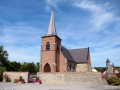
(S/E) Head towards the church, walk past the school and then to the foot of the church. Continue straight on along the
Grand Chemin.
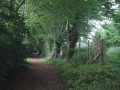
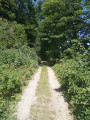
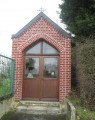
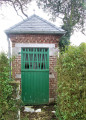
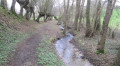
(1) Just after the Oratory of Notre-Dame d’Affleghem (1738), turn right into the narrow lane between the house wall and the hedge. At the bottom, continue to the left, then take another ‘cache’ (narrow lane) down to the right. The path is lined with pollarded hornbeams, characteristic of the Avesnois region. In spring, small yellow flowers (lesser celandines) appear. You’ll cross the Carnoye stream for the first time. Note the many farms in the village of Obrechies, which are still in operation.
Turn left along the road. At No. 197, note the oratory chapel and, further on, a second chapel that has been stripped of its contents.
(2) Turn left onto the Chemin du Gard (a dead-end). The path, cut into the hillside and lined with pollarded hornbeams, descends towards the Carnoye. In spring, the white flowers of the wood anemone accompany the lesser celandines. Note the rocky outcrops. Cross a second bridge over the Carnoye, then turn right onto Rue du Fournil.
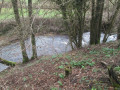
(3) At the next junction, head up the straight road to the right – take care. This road overlooks the valley and offers lovely views of the bocage. At the end, continue to the right towards Quiévelon, then, at the bend, leave the road and take the footpath opposite to reach the Carnoye once again – for the third time. This charming spot is known as the “Trou de l’Enfer”.
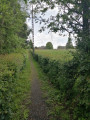
(4) Carry on straight ahead. At the road, take the farm track opposite, then continue along the small tarmac road. The top of the bare, cultivated plateau contrasts with the slopes and valley floor, which are home to wooded meadows and livestock farming. This path was cleared and made accessible as part of the “one path, one school” project.
(5) Follow the small road to the right and head up towards the village of Choisies.
Walk through the village and pass to the right of the church. Note the characteristic brick and blue stone houses and the use of slate for roofing. Leave the village via the Grand Rue, then turn right and walk past the cemetery. Head down towards the Solre.
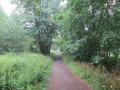
(6) Cross the Solre via the Pont des Bêtes, then turn right onto the Voie Verte de l’Avesnois, a former railway line converted into a non-motorised walking route. Follow this path for 1,500 metres. Follow the meandering course of the Solre. Some sections of the path have been carved out of the rock, creating a ‘mini-canyon’ atmosphere.
(7) At the old Obrechies station, leave the Voie Verte and follow the road to the right. Cross the Solre again and, at the junction, head up the narrow lane opposite between the houses. At the top, go through a passageway under a house, then turn left. At the next junction, you’ll find the village hall on your right (S/E).

 AONB
AONB
 Moderate
 Visorando Member