


Refine your search for walks in La Sommette
La Sommette walks


 La Reverotte
 Visorando Member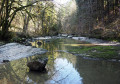
 5.90 mi
 +643 ft
 -646 ft
 3h 15
3h 15
 Easy
Easy
 Departure from La Sommette (Doubs)
The Reverotte, a tributary of the Dessoubre, is full of charm along its twelve kilometres. You will discover some of its features as you descend from La Sommette towards its mossy and rocky banks.
The Pierre Lamadou viewpoint
 6.89 mi
+1,024 ft
-1,030 ft
4h 05
6.89 mi
+1,024 ft
-1,030 ft
4h 05
 Moderate
Departure from Plaimbois-Vennes (Doubs)
Moderate
Departure from Plaimbois-Vennes (Doubs)
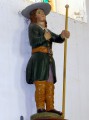
In 1747, Pierre arrived in the village and settled in a nearby cave on the edge of the cliff, where he lived for 45 years, making tinder from oak agaric mushrooms and carving Christs and Virgins from lime wood for the inhabitants. Discover this viewpoint over the wild Reverotte valley and our cool fir forests. An ideal walk for a beautiful summer afternoon.
The Reverotte Valley and its waterfalls
 11.49 mi
+1,535 ft
-1,516 ft
6h 35
Moderate
Departure from Pierrefontaine-les-Varans (Doubs)
11.49 mi
+1,535 ft
-1,516 ft
6h 35
Moderate
Departure from Pierrefontaine-les-Varans (Doubs)
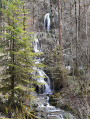
A walk starting from the village of Pierrefontaine-les-Varans towards the Second World War memorial, where sculptures are on display along the route. The walk continues towards the lovely little village of Le Saucet and its beautiful chapel. The route now descends into the Dessoubre and Reverotte valleys, passing through the hamlet of Gigot. Head back up the Reverotte valley, following the river and its waterfalls, to the village where you started.
The Crêtes de Pierrefontaine-les-Varans trail
 7.65 mi
+1,001 ft
-1,017 ft
4h 25
Moderate
Departure from Pierrefontaine-les-Varans (Doubs)
7.65 mi
+1,001 ft
-1,017 ft
4h 25
Moderate
Departure from Pierrefontaine-les-Varans (Doubs)
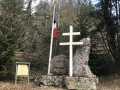
A viewpoint, memorial, waterfalls and wood carvings line this woodland trail, which reaches an altitude of 949 metres.
La Roche Barchey
 5.04 mi
+1,007 ft
-997 ft
3h 10
Easy
Departure from Loray (Doubs)
5.04 mi
+1,007 ft
-997 ft
3h 10
Easy
Departure from Loray (Doubs)
La Roche Barchey, "the pierced rock" in Celtic, where witches of yesteryear celebrated their demonic cult, offers a vast panorama of the Val de Vennes and the Haut-Doubs from its height of 988 metres. You will then descend through the beautiful fir forests of La Joux towards the more Catholic Sainte-Radegonde, who, it is said, fought an evil ghoul, perhaps descended from the rock, on the night of a sabbath, on the site where her chapel was built.
The Belvédère des Genevoix and the Source de la Reverotte
 6.94 mi
+1,007 ft
-1,020 ft
4h 05
Moderate
Departure from Loray (Doubs)
6.94 mi
+1,007 ft
-1,020 ft
4h 05
Moderate
Departure from Loray (Doubs)
From the foot of a medieval calvary, head towards the Belvédère des Genevois in the small, remote valley of Martinvaux, passing through beautiful pine forests with slender trees. Then descend to the Source de la Reverotte and follow it to the Puits de la Doye and the Grotte de la Baume.
The Bougeottes Cave and Peu de Laviron
8.54 mi
+1,155 ft
-1,158 ft
4h 55
Moderate
Departure from Laviron (Doubs)
A moderately difficult hike offering panoramic views of the Doubs countryside.
Le Peu and the Grotte des Bougeottes
 11.09 mi
+1,119 ft
-1,119 ft
6h 05
Moderate
Departure from Laviron (Doubs)
11.09 mi
+1,119 ft
-1,119 ft
6h 05
Moderate
Departure from Laviron (Doubs)
From the 860-metre-high Peu hill, you can enjoy a 270° panorama of the surrounding and distant mountains, and see 27 bell towers in the Doubs department. Nestled in lush greenery, the Grotte des Bougeottes is also steeped in history. It served as a refuge during the troubled times of the Ten Years' War and the Revolution.
From Dessoubre to Roche du Miroir
 6.00 mi
+1,257 ft
-1,247 ft
3h 50
Moderate
Departure from Bretonvillers (Doubs)
6.00 mi
+1,257 ft
-1,247 ft
3h 50
Moderate
Departure from Bretonvillers (Doubs)
With its industrious past forgotten for almost a century, nature has reclaimed this bucolic and almost wild valley, where the few houses are hidden in the greenery, embarrassed to be there. You will walk along the river, passing an old mill, then climb through cool, deep fir forests to the Roche du Miroir, which overlooks the old priory.
The Cirque de Consolation and the springs from Consolation-Maisonnettes
 2.17 mi
+423 ft
-449 ft
1h 20
Easy
Departure from Consolation-Maisonnettes (Doubs)
2.17 mi
+423 ft
-449 ft
1h 20
Easy
Departure from Consolation-Maisonnettes (Doubs)
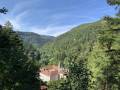
A walk to ‘recharge your batteries’ in the cool air during heatwaves.
Cirque de Consolation, the Roche du Prêtre and the cave
 3.85 mi
+1,444 ft
-1,437 ft
3h 00
Moderate
Departure from Consolation-Maisonnettes (Doubs)
3.85 mi
+1,444 ft
-1,437 ft
3h 00
Moderate
Departure from Consolation-Maisonnettes (Doubs)
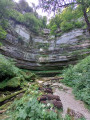
A walk around the Cirque de Consolation with a thrilling variety of views and valleys. Beautiful panoramic views and bodies of water on way.
Cirque de Consolation circular walk, taking in viewpoints and balcony-style paths
9.40 mi
+2,198 ft
-2,178 ft
6h 15
 Difficult
Departure from Consolation-Maisonnettes (Doubs)
Difficult
Departure from Consolation-Maisonnettes (Doubs)
From the car park at the Monastère de Consolation, explore the Cirque and the Val de Consolation, with its many springs (Dessoubre, Lançot, Tabourot and Noire), via the viewpoints at La Roche du Prêtre, Chauve Roche and La Roche Sainte-Catherine, and its balcony-style paths winding through rocky outcrops, offering breathtaking views.
Haut Fourneau cave and waterfall
 6.84 mi
+640 ft
-650 ft
3h 40
Moderate
Departure from Vercel-Villedieu-le-Camp (Doubs)
6.84 mi
+640 ft
-650 ft
3h 40
Moderate
Departure from Vercel-Villedieu-le-Camp (Doubs)
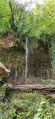
A walk mainly through woodland between the villages of Épenouse and Vercel. On the agenda: cave, waterfall, wash house and church.
Circular route from the Moulin de Creuse to Épenouse
3.69 mi
+377 ft
-348 ft
2h 00
Easy
Departure from Épenouse (Doubs)
An easy walk, ideal for children, starting from the centre of the village of Épenouse.
Circular Landresse loop to the Bougeottes cave
9.37 mi
+676 ft
-656 ft
4h 55
Moderate
Departure from Landresse (Doubs)
This lovely walk will take you around the village of Landresse and its surroundings, visiting the places dear to Louis Pergaud and described in his famous novel *La guerre des boutons*. From the Saute quarry, via the Gros Tilleul and Lebrac’s house, you’ll head towards the Grotte des Bougeottes (and its engraved stone) and the cross at the viewpoint.
From there, you’ll head back down through the Tuchevey woods, the Grand Teurey and the hut from the novel, rebuilt by the village children.
The return journey via the Grande Sommière back to your car will bring this walk—steeped in nostalgia for those who have read the novel—to a close.
Don’t say, like P’tit Gibus, “If I’d known, I wouldn’t have come” – you know the drill, so off you go!
A hiking app or GPS is recommended.
The Cirque de Consolation from the Roche du Prêtre
6.64 mi
+2,159 ft
-2,175 ft
4h 55
Moderate
Departure from Consolation-Maisonnettes (Doubs)
Among the must-see spots in Franche-Comté are the Saut du Doubs, as well as the Cirque de Consolation, a few dozen kilometres away. Numerous waterfalls flow into this funnel-shaped valley, at the bottom of which stands a church. Various hiking trails are also available. This hike allows you to walk around the entire area via a ridge path not shown on IGN maps, discovering all the secrets of the cirque along the way.
Cirque de Consolation from Mont-de-Laval
10.69 mi
+2,333 ft
-2,336 ft
6h 55
Difficult
Departure from Mont-de-Laval (Doubs)
Circular route starting from Mont-de-Laval, passing by the Roche du Prêtre and looping through the Cirque de Consolation.
The Cirque de Consolation
 7.64 mi
+1,713 ft
-1,732 ft
5h 00
Moderate
Departure from Mont-de-Laval (Doubs)
7.64 mi
+1,713 ft
-1,732 ft
5h 00
Moderate
Departure from Mont-de-Laval (Doubs)
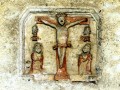
A wild, 350-metre-deep valley, the Cirque de Consolation, framed by magnificent cliffs, is a paradise for hikers and nature lovers. You can discover it from two viewpoints, Chauve Roche at the bottom of the valley and Sainte-Catherine downstream and the old seminary. After a visit to the old priory of Laval, you will climb back up to the plateau, along the aptly named Pissoux, through a superb wild and mossy valley.
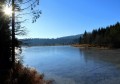
The Barchet Pond
 3.30 mi
+177 ft
-174 ft
1h 40
Easy
Departure from Passonfontaine (Doubs)
3.30 mi
+177 ft
-174 ft
1h 40
Easy
Departure from Passonfontaine (Doubs)
Set off to explore the Barchet Pond and its peat bog. This vast wetland is a remarkable reservoir of biodiversity. Its soil, permanently saturated with stagnant water, deprives the microorganisms responsible for decomposing organic matter of the oxygen they need for their metabolism. The plant litter mineralises slowly and partially. It then accumulates gradually, forming a poorly decomposed or undecomposed deposit: peat.
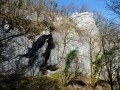
The Dard and Cul de Voye valleys
 6.58 mi
+873 ft
-843 ft
3h 45
Moderate
Departure from Sancey-le-Grand (Doubs)
6.58 mi
+873 ft
-843 ft
3h 45
Moderate
Departure from Sancey-le-Grand (Doubs)
After visiting the source, you will climb to the Dard viewpoint, located at an altitude of 600 metres above Sancey-le-Grand, overlooking the valley with the Château de Belvoir and the Lomont mountain range crowned by fifteen wind turbines in the background. Then, from this magnificent rocky amphitheatre, a sunny valley will lead you to the wild cliffs of the Cul de Voye.