


Refine your search for walks in Étang d'Izourt
Étang d'Izourt walks


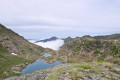
 Pradières d’en haut car park – Étang d’Izourt – Refuge du Fourcat
 Visorando Member
 4.80 mi
 +4,298 ft
 -75 ft
 5h 55
 Difficult
 Departure from Auzat (Ariège)
First stage of the journey through the Haute-Ariège.
A beautiful, steady climb takes you to the Étang d’Izourt, steeped in human history.
This is followed by a gruelling climb up to the Orri de la Caudière.
Once you’ve crossed the rustic footbridge, there’s another very steep climb up to the small Étang du Fourcat.
The rest of the route to the Étang du Fourcat refuge is more gentle.
A very steep climb to the Fourcat refuge with an average gradient of 17 per cent.
Please note: from the Étang d’Izourt to the refuge, the gradient is 24 per cent.
Tour of the Giants of the Three Nations
43.58 mi
+19,429 ft
-19,419 ft
6 days
 Very difficult
Departure from Auzat (Ariège)
A beautiful cross-border high mountain loop between France, Spain and Andorra, which takes you through the highest peaks of Ariège and Andorra, as well as other iconic peaks in the region. It also allows you to discover numerous lakes and ponds, as well as a multitude of different landscapes (forests, summer pastures, scree slopes, etc.) to delight all hikers. This itinerary takes us through three natural parks: the Ariège Pyrenees Regional Nature Park, the Alt Pirineu Natural Park and the Coma Pedrosa Valley Nature Park.
Refuge Fourcat - Marc's lodge
9.76 mi
+1,247 ft
-5,958 ft
5h 35
Difficult
Departure from Auzat (Ariège)
This is the sixth and final stage of the Tour des Géants des Trois Nations, which has a steep descent (1,800 m of elevation loss, which will hurt your joints) to return to the starting point of this journey. This stage passes by the Fourcat Waterfall, the beautiful Izourt Pond and the forests of Goulier-Auzat and Montcalm.
Walks near Étang d'Izourt
Fourcat Mountain Hut – Picot Lakes – Mounicou
 5.90 mi
+1,109 ft
-5,564 ft
3h 40
Difficult
Departure from Auzat (Ariège)
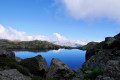
Second stage of the journey through Haute-Ariège.A difficult and long mountain stage (around 7 hours), to be undertaken seriously and by those in good physical condition.Shortly after leaving the mountain hut, there is a very steep climb.After crossing the first pass (2) (altitude 2,574 m), you’ll encounter rocks, snowfields, another climb and then another pass (3) at 2,640 m.From this point: tricky sections with cables and steel rungs fixed to the rock.Then the rest of the very gruelling descent through magnificent scenery.Please note that the Mounicou lodge will be closed in 2026 => accommodation in Marc: see the ‘Places to Visit’ section.
Étang Fourcat - Port de Caraussans
 3.04 mi
+889 ft
-1,411 ft
2h 10
 Moderate
Departure from Auzat (Ariège)
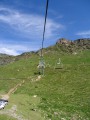
More magnificent lakes are on the agenda, with the added bonus of a short chairlift ride on the Andorran side to rest your legs before the descent to L'Étang de Soulcem, which is very challenging in the last section.
Etang de Soulcem - Etang Fourcat
 5.17 mi
+4,377 ft
-1,621 ft
6 hrs
Very difficult
Departure from Auzat (Ariège)
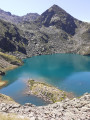
A magnificent hike in the upper Ariège in a spectacular setting. On the agenda for the day are the Etangs du Picot and the two Etangs Fourcat, which quickly make you forget the intense effort required during the climb.
Descent from the Étang du Rouch via the Llassiès and Peyregrand ponds
 8.35 mi
+62 ft
-5,410 ft
7 hrs
Very difficult
Departure from Siguer (Ariège)
A very long descent crossing the delightful Llassiès Ponds and the valley of the Peyregrand Pond. The first section is fairly gentle and idyllic across a plateau, allowing you to explore all the Llassiès Ponds. This is followed by a very beautiful but challenging descent into the valley (Jasse de Bélesta) via a steep section with an exposed grassy chimney, followed by a long, flat stretch to the peaceful Étang de Peyregrand and a more demanding descent to the Jasse des Planes. The final section consists of a flat path to the Pont de la Peyre, followed by a descent lined with waterfalls, which is quite strenuous due to the rocky and stony terrain.
Marc's Lodge - Refuge du Pinet
4.31 mi
+4,012 ft
-36 ft
5h 30
Difficult
Departure from Auzat (Ariège)
The first stage of the journey, the shortest and easiest, to warm up your legs, passing through the Bois de Fontanal and the Étang Sourd to the Refuge du Pinet. The elevation gain is still significant.
From Étang de Soulcem to the Josep M. Monfort Baiau Refuge
 9.00 mi
+4,629 ft
-1,752 ft
8h 10
Difficult
Departure from Auzat (Ariège)
First stage of the 3-day hike that is circular and loops around the Étang de Soulcem. This beautiful, long stage will take us into Catalonia, first passing by small lakes and then through the Port de Bouet, through gentle high-mountain landscapes, over the grassy, undulating slopes of the Ariège and then Catalonia; we finally reach the unmanned Josep M. Monfort Baiau refuge, which is in perfect condition and offers safe shelter (sleeps 9).
Port de Caraussans - Étang de Soulcem
 4.79 mi
+49 ft
-3,596 ft
2h 15
Difficult
Departure from Auzat (Ariège)
After our chairlift ride, we descend towards the Soulcem lake on the Ariège side. We enjoy the beauty of this glacial valley, the Soulcem lake, the Mérens horses grazing freely, not to mention the numerous orris that line the route. It is a wonderful but particularly challenging end to the hike between the Caraussans lake and the Soulcem trail.
Étang du Rouch via Étang de Gnioure
 8.63 mi
+6,322 ft
-1,004 ft
10 hrs
Very difficult
Departure from Siguer (Ariège)
Climb the ridge marking the border with Andorra to the beautiful Étang du Rouch, which seems to sit at the foot of the Pic de Font Blanca, passing by the majestic Étang de Gnioure and its lovely, long valley:
- numerous waterfalls during the fairly steep and very stony climb up to the Peyre bridge;
- a short, slightly vertiginous ledge section to reach the immense Étang de Gnioure;
- a long path running alongside the lake, then the stream, and winding its way into the valley;
- a hillside climb that starts off fairly gentle but ends up quite steep, leading up to the Étang du Rouch.
Refuge du Pinet - Montcalm/Estats/Verdaguer Peaks - Refuge Vallferrera
7.84 mi
+3,786 ft
-4,790 ft
6h 55
Very difficult
Departure from Auzat (Ariège)
The second day is a high-mountain stage passing through the highest point of this itinerary: Pic d'Estats, as well as two other peaks over 3,000 m nearby, Pic du Montcalm and Pic de Verdaguer. The route is largely over scree and rocky terrain, which will greatly appeal to mineral enthusiasts. The trail largely follows the Porta del Cel hike and the GR®T61. Although not particularly technical, this stage should not be taken lightly due to its altitude (three peaks over 3,000 metres), its length, its elevation gain and its trails composed of loose stones that can make progress difficult.
El Serrat - Pic de Tristagne - Refuge de l'Étang Fourcat
6.14 mi
+4,327 ft
-1,476 ft
6h 35
Very difficult
Departure from Ordino (Andorra)
The fifth and final stage of the high-mountain route passes by the iconic Pic de Tristagne, which towers over the many lakes in the surrounding area, and its short, fairly exposed ridge route, before returning to France via the magnificent Étangs Fourcat site.