


Refine your search for walks in Chastre
Chastre walks


 Orne, countryside and castles around a stream in Walloon Brabant
 Visorando Member
 8.25 mi
 +407 ft
 -417 ft
 4h 10
4h 10
 Moderate
 Departure from Chastre (Brabant Wallon)
A rural hike in Walloon Brabant, discovering a few villages crossed by the Orne and its tributaries.
The surroundings of Strichon, a hamlet of Mellery
 3.51 mi
+108 ft
-269 ft
1h 45
3.51 mi
+108 ft
-269 ft
1h 45
 Easy
Departure from Villers-la-Ville (Belgique) (Brabant Wallon)
Easy
Departure from Villers-la-Ville (Belgique) (Brabant Wallon)
A pleasant and varied walk alternating between wooded, agricultural and built-up areas (including 3 farms), starting from the pretty village of Mellery. An easy and very peaceful route. The route corresponds to walk no. 13, suggested by the Villers-la-Ville Tourist Office.
Le Huit de Mellery
 6.46 mi
+364 ft
-348 ft
3h 15
Moderate
Departure from Villers-la-Ville (Belgique) (Brabant Wallon)
6.46 mi
+364 ft
-348 ft
3h 15
Moderate
Departure from Villers-la-Ville (Belgique) (Brabant Wallon)
An easy walk around Mellery on paths and trails away from traffic (with the exception of a very short section) with a passage through the woods of Villers-la-Ville: in short, peace and quiet and green surroundings.
The Bois de Haute Heuval
2.57 mi
+108 ft
-118 ft
1h 15
Easy
Departure from Villers-la-Ville (Belgique) (Brabant Wallon)
A lovely circular route around the Bois de Haute-Heuval. After about 1 km on a quiet concrete road, it takes an old cobbled street (worthy of Paris-Roubaix!) before joining forest paths. It may not be the most beautiful of the (many) possible walks in the area, but it is nonetheless enjoyable, whatever the season.
Short walk in the Bois Grand-Père
 3.40 mi
+226 ft
-226 ft
1h 45
Easy
Departure from Gembloux (Province de Namur)
3.40 mi
+226 ft
-226 ft
1h 45
Easy
Departure from Gembloux (Province de Namur)
This short walk in the Bois Grand-Père takes you on a discovery of the hilly part of the Orneau valley to the south-west of the Grand-Manil district. There are no particular difficulties, except for a little mud on the path in the woods and between the Ferme de Bedauwe and the Orneau.The perfect family walk, alternating between trails, paved paths, countryside and forest.
Circular route around Basse-Heuval in Villers-la-Ville
 3.45 mi
+207 ft
-203 ft
1h 45
Easy
Departure from Villers-la-Ville (Belgique) (Brabant Wallon)
3.45 mi
+207 ft
-203 ft
1h 45
Easy
Departure from Villers-la-Ville (Belgique) (Brabant Wallon)
A 5.5 km circular route through woods and fields around Basse Heuval in the municipality of Villers-la-Ville. A fairly varied and very peaceful route, no road noise – pure bliss! Part of the walk takes place in the woods and the other part in the countryside.
Circular towards Nil-Saint-Vincent.
12.41 mi
+102 ft
-98 ft
5h 50
 Difficult
Departure from Mont-Saint-Guibert (Brabant Wallon)
Difficult
Departure from Mont-Saint-Guibert (Brabant Wallon)
20-kilometre route of the ADEPS 2025 walk. Circular starting from Nil-Saint-Vincent from Place du Tram 1. It passes around Walhain and Walhain Saint-Paul.
Five villages south of Gembloux
 9.03 mi
+436 ft
-436 ft
4h 30
Moderate
Departure from Gembloux (Province de Namur)
9.03 mi
+436 ft
-436 ft
4h 30
Moderate
Departure from Gembloux (Province de Namur)
Without entering them, discover five villages in the Gembloux area. This well-maintained route of around 15 km gives pride of place to paths and trails. In addition, 20% of the route is along roads with often flat and passable verges. In spring, the undergrowth is ablaze with flowers. On the hills, take a look around you: the landscapes will surprise you.
Chapelle Sainte-Anne and Château de Ferooz via the Bois de Haute Bise
 6.70 mi
+354 ft
-361 ft
3h 25
Moderate
Departure from Gembloux (Province de Namur)
6.70 mi
+354 ft
-361 ft
3h 25
Moderate
Departure from Gembloux (Province de Namur)
This walk is located in the south and in the most wooded part of Gembloux. Beautiful scenery.
The Bois de Sainte-Catherine and the Bois de l'Ermitage Saint-Jean Baptiste
 3.16 mi
+489 ft
-344 ft
1h 55
Easy
Departure from Court-Saint-Etienne (Brabant Wallon)
3.16 mi
+489 ft
-344 ft
1h 55
Easy
Departure from Court-Saint-Etienne (Brabant Wallon)
A lovely 5 km circular route through the beautiful woods of Sainte-Catherine and the Ermitage Saint-Jean-Baptiste, where you hear nothing but birdsong and the babbling of the Ry Pirot. No road noise – this is rare enough (especially in the BW) to be worth mentioning. There are several lovely wooden benches along the route. This walk can be completed in about 1½ hours (including a 10–15-minute break) rather than the 2 hours calculated by the programme.
Basse Hollande, Large Eau and old lime kilns
 8.27 mi
+351 ft
-338 ft
4h 05
Moderate
Departure from Gembloux (Province de Namur)
8.27 mi
+351 ft
-338 ft
4h 05
Moderate
Departure from Gembloux (Province de Namur)
When the sun and moon are out, the weather is usually ideal for hiking. This walk takes you on a journey of discovery through the Arton and Orneau valleys, starting from the Basse Hollande ponds in Corroy-le-Château. The route passes successively through Les Trois Ponts, La Large Eau, the hamlet of Ferooz, the village of Bossière, as well as the old lime kilns and the Sainte-Barbe Chapel located along the Orneau north of the village of Mazy. A tip for enthusiasts: in spring, the grassy descent between the plateau and the Orneau (between km 8 and 9) is covered with a magnificent carpet of wild garlic.
The Bois de l'Étoile and the Bois Pinchet
3.34 mi
+292 ft
-285 ft
1h 45
Easy
Departure from Villers-la-Ville (Belgique) (Brabant Wallon)
A circular route through the Bois de l'Étoile and across the very pleasant residential neighbourhood of Bois Pinchet, starting from the car park at Villers-la-Ville Abbey. A peaceful and varied route with few roads.
A short walk in Villers-la-Ville
 5.20 mi
+217 ft
-200 ft
2h 35
Easy
Departure from Villers-la-Ville (Belgique) (Brabant Wallon)
5.20 mi
+217 ft
-200 ft
2h 35
Easy
Departure from Villers-la-Ville (Belgique) (Brabant Wallon)
This short (spring) walk takes you from the centre of Villers-la-Ville towards the Rigenée golf course and the countryside around Sart-Dames-Avelines and Le Châtelet, before climbing up to the Plateau des 4 Chênes.With no other aim than to stretch your legs, this route presents no particular difficulty whilst offering an outing in the fresh air, whether on your own, with family or with friends.
Route du Bois d’Hez: Ry d’Hez and Quatre Chênes
4.60 mi
+266 ft
-266 ft
2h 20
Easy
Departure from Genappe (Brabant Wallon)
A walk through woods and fields around Villers-la-Ville Abbey. This route takes you through the beautiful Bois d’Hez (covered in bluebells in April), as well as the natural habitat of beavers (if you take a short detour to the Ry du Marais des Chiens) and the lovely ‘Plateau des 4 Chênes’, from where you can see Sart-Dames-Avelines and Baisy-Thy in the distance. Towards the end of the route, you’ll also walk alongside the wall of the Abbey Farm.
The Footvillers Eight
 5.85 mi
+240 ft
-210 ft
2h 55
Easy
Departure from Villers-la-Ville (Belgique) (Brabant Wallon)
5.85 mi
+240 ft
-210 ft
2h 55
Easy
Departure from Villers-la-Ville (Belgique) (Brabant Wallon)
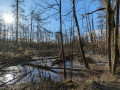
Alternating wooded and rural sections. The route follows paths (sometimes paved) and dirt tracks (so expect muddy conditions in wet weather).
There is one difficult section when you leave the Ry d'Hez river and have to climb perpendicular to it: the slope is very steep and difficult, especially if the ground is wet.
Only three short sections are on tarmac roads, only one of which is on a busy road.
The countryside north-east of Gembloux, starting from Sauvenière
 6.29 mi
+69 ft
-66 ft
2h 55
Moderate
Departure from Gembloux (Province de Namur)
6.29 mi
+69 ft
-66 ft
2h 55
Moderate
Departure from Gembloux (Province de Namur)
Starting from the car park at Sauvenière Church, come and discover some beautiful farms in the Gembloux countryside. Quiet paths and roads. Open countryside. Depending on the season, you will see fields of potatoes, rapeseed, beetroot, maize and cereals. On this route, you will also be walking across the battlefield of the only victory won by French tanks at the start of the Second World War.
Heritage of the lower course of the Orneau River from Bothey
 10.67 mi
+541 ft
-522 ft
5h 25
Moderate
Departure from Gembloux (Province de Namur)
10.67 mi
+541 ft
-522 ft
5h 25
Moderate
Departure from Gembloux (Province de Namur)
Starting from the church on Rue Joseph Draye in Bothey, a village of 300 inhabitants in the municipality of Gembloux, set off to discover the rich heritage of the lower Orneau valley. Landscapes, churches, chapels and castles will delight you along this undulating route. Alternating wooded and rural passages. Along the roads, the grassy verges are generally flat and well maintained. There are numerous facilities where you can take a break during your walk.
Circular around Docq
 9.63 mi
+259 ft
-253 ft
4h 40
Moderate
Departure from Gembloux (Province de Namur)
9.63 mi
+259 ft
-253 ft
4h 40
Moderate
Departure from Gembloux (Province de Namur)
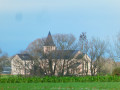
As invigorating as can be in strong winds, this circular walk takes place mainly in the countryside on the agricultural plain between Gembloux, Jemeppe-sur-Sambre, Chastre and Sombreffe, bypassing the Docq crossroads (N29 x N93).In our opinion, it is more interesting on the north side than on the south side.You will discover some beautiful isolated trees, some magnificent rows of trees, a few merry-go-rounds, the strange Donjon de Villeret, the (deconsecrated) Église des Alouettes in the middle of nowhere, the Château d'eau de Sombreffe and a park of modern windmills (= wind turbines).
The Tour de Saint-Croix
 15.07 mi
+410 ft
-427 ft
7h 15
Difficult
Departure from Villers-la-Ville (Belgique) (Brabant Wallon)
15.07 mi
+410 ft
-427 ft
7h 15
Difficult
Departure from Villers-la-Ville (Belgique) (Brabant Wallon)
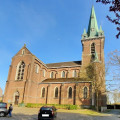
A mainly rural route, linking the villages of Marbais, Villers-la-Ville, Tilly, Marbisoux and Wagnelée, whilst avoiding roads with traffic as far as possible. You’ll see the Rigenée and La Bruyère golf courses, the Châtelet, the old Hollers mill, the Romanesque church at Villers-la-Ville and its altarpieces, the monument to t’Serclaes in Tilly, Chassart, the meadow and the target at the Tir au D’Jirau, and the Monument to the Desecrated Hosts.
Circular du Camp, La Bruyère Golf Course, Château de Cognée in Marbais
 6.06 mi
+82 ft
-82 ft
2h 50
Easy
Departure from Villers-la-Ville (Belgique) (Brabant Wallon)
6.06 mi
+82 ft
-82 ft
2h 50
Easy
Departure from Villers-la-Ville (Belgique) (Brabant Wallon)
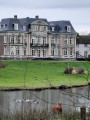
This 9.7 km hike is a combination of the Golf de la Bruyère route starting from Camp and the circular route of the Boucle du Camp starting from Châtelet.
Enjoy the Brabant countryside around Marbais and the passage through the village.
Trails, dirt tracks or paved roads with rural traffic.
Short passage through the Golf de la Bruyère and discovery of the Château de Cognée.
Sculptor's Trail in Céroux-Mousty and Court-Saint-Étienne
 5.76 mi
+354 ft
-354 ft
2h 55
Easy
Departure from Court-Saint-Etienne (Brabant Wallon)
5.76 mi
+354 ft
-354 ft
2h 55
Easy
Departure from Court-Saint-Etienne (Brabant Wallon)
This circular route takes you along interesting paths around the villages of Céroux-Mousty and Court-Saint-Étienne. The highlight of the walk is the Sentier du Sculpteurs (Sculptors' Trail) with its magnificent wooden sculptures. A shortcut can be taken to reduce the walk to around 6 km.
The Sculptor’s Trail in Céroux-Mousty
5.76 mi
+354 ft
-354 ft
2h 55
Easy
Departure from Court-Saint-Etienne (Brabant Wallon)
This circular route takes you along some interesting paths around the villages of Céroux-Mousty and Court-Saint-Étienne. The highlight of the walk is the Sentier du Sculpteurs and its magnificent wooden sculptures. A shortcut is available to reduce the walk to around 6 km.
The Château de Cognée and the Pêcherée at the start of Camp-Marbais
 3.35 mi
+102 ft
-102 ft
1h 40
Easy
Departure from Villers-la-Ville (Belgique) (Brabant Wallon)
3.35 mi
+102 ft
-102 ft
1h 40
Easy
Departure from Villers-la-Ville (Belgique) (Brabant Wallon)
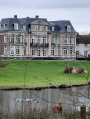
This circular route mainly follows country roads and paths, starting from the Chapelle du Camp chapel. Discover the Château de Cognée, the Ruisseau La Pêcherée stream and its ponds.
From Bousval to the Écurie de la Tourelle
3.27 mi
+180 ft
-171 ft
1h 40
Easy
Departure from Genappe (Brabant Wallon)
The hike starts at Avenue des Habitations Modernes and goes to the stable at the turret, passing through fields, forests, a small village and the Ravel. This hike will allow you to discover peaceful and beautiful spots that are perfect for beginners.
Route through the fields of Sombreffe and past its castle
 6.46 mi
+138 ft
-154 ft
3h 05
Moderate
Departure from Sombreffe (Province de Namur)
6.46 mi
+138 ft
-154 ft
3h 05
Moderate
Departure from Sombreffe (Province de Namur)
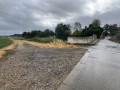
Starting and finishing at the 1815 Museum in Sombreffe, this is a lovely walk through the fields and rural residential areas of Sombreffe. Points of interest: La Goffe and Sombreffe Castle. A few short sections on roads are busier but can be walked safely (pavements).
Louvain-la-Neuve – Braine-l’Alleud
 12.22 mi
+581 ft
-535 ft
6h 10
Moderate
Departure from Ottignies-Louvain-la-Neuve (Brabant Wallon)
12.22 mi
+581 ft
-535 ft
6h 10
Moderate
Departure from Ottignies-Louvain-la-Neuve (Brabant Wallon)
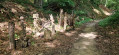
From town to town, this final stage takes us from Louvain-la-Neuve to Braine-l’Alleud, once again favouring country roads and lanes as well as the little-known paths of Walloon Brabant. A thoroughly enjoyable and surprising final stage that is an absolute must-see.
Circular country loop around Marbais
 8.26 mi
+207 ft
-194 ft
4h 00
Moderate
Departure from Villers-la-Ville (Belgique) (Brabant Wallon)
8.26 mi
+207 ft
-194 ft
4h 00
Moderate
Departure from Villers-la-Ville (Belgique) (Brabant Wallon)
The walk starts at the site of the former Chassart factories, on the edge of the Marbais wind farm, and begins its rural tour with a short detour into Hainaut territory before heading north towards Marbisoux and Marbais. Admire the two bell towers in the distance: Marbisoux with its small bulbous spire and Marbais with its four pinnacles. After Marbais, the route crosses the magnificent rolling lawns and wooded grounds of the Rigenée and La Bruyère golf courses. A gently undulating countryside where a wind farm has been built generally means that the area is well ventilated. Be careful: the wind can be biting and/or blow your hair around, depending on the season! Also take care when crossing the N93 twice.
The Chassart Plain
 8.91 mi
+131 ft
-108 ft
4h 15
Moderate
Departure from Fleurus (Hainaut)
8.91 mi
+131 ft
-108 ft
4h 15
Moderate
Departure from Fleurus (Hainaut)
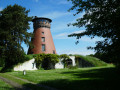
Inthe 19th century, the Dumont family founded the Établissements de Chassart, modernised agriculture and livestock farming, and set up a sugar factory following the development of beet cultivation in the region. This was followed by the creation of a distillery and the production of the famous Chassart Vieille Cuvée genever. In 1906, the family name was ennobled to Dumont de Chassart.
The Bois de Lauzelle in all its variety and charm
 3.04 mi
+315 ft
-338 ft
1h 40
Easy
Departure from Ottignies-Louvain-la-Neuve (Brabant Wallon)
3.04 mi
+315 ft
-338 ft
1h 40
Easy
Departure from Ottignies-Louvain-la-Neuve (Brabant Wallon)
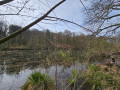
A circular route that is as pleasant as it is varied in the superb Bois de Lauzelle, right next to the university town of Louvain-la-Neuve. An absolute must for nature lovers. The ‘wetland’ section along the Blanc-Ry is particularly charming thanks to the very successful landscaping.
Walk in the Bois de Lauzelle
3.86 mi
+315 ft
-302 ft
2h 05
Easy
Departure from Ottignies-Louvain-la-Neuve (Brabant Wallon)
This 'short' family walk allows you to discover the Lauzelle woods and the Louvain-la-Neuve golf course.
Discovering Chaumont-Gistoux
 11.99 mi
+843 ft
-856 ft
6h 15
Moderate
Departure from Chaumont-Gistoux (Brabant Wallon)
11.99 mi
+843 ft
-856 ft
6h 15
Moderate
Departure from Chaumont-Gistoux (Brabant Wallon)
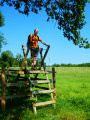
Chaumont-Gistoux, like many places in Walloon Brabant, is full of small paths and trails connecting the villages, hamlets and neighbourhoods of the area. This is one of the highlights of the walk.
Moriensart – Pinchart – Le Puits
5.63 mi
+266 ft
-266 ft
2h 50
Moderate
Departure from Ottignies-Louvain-la-Neuve (Brabant Wallon)
A walk through the rolling Brabant countryside on the border between Lasne and Ottignies. The route mainly follows paths and tracks away from built-up areas, offering sweeping views from the plateaus. The route passes by the Moriensart Tower, a key feature of the local heritage.
Moriensart, Pinchart and Le Puits
5.52 mi
+154 ft
-144 ft
2h 40
Moderate
Departure from Ottignies-Louvain-la-Neuve (Brabant Wallon)
A picturesque walk on the outskirts of Lasne, Ottignies and Céroux-Mousty, taking you across the plateaus with sweeping views of the Pinchart and Puits districts. Among the points of interest is the site of the Moriensart Tower.
The Repjou valley at the start of Les Isnes
 4.57 mi
+184 ft
-187 ft
2h 15
Easy
Departure from Gembloux (Province de Namur)
4.57 mi
+184 ft
-187 ft
2h 15
Easy
Departure from Gembloux (Province de Namur)
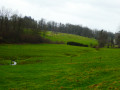
A short family walk with little traffic, allowing children of all ages to learn to walk while discovering a quiet, green corner of Gembloux. Isnes is the southernmost village in the area.
Forest walk at Fort des Voiles
 8.96 mi
+682 ft
-696 ft
4h 45
Moderate
Departure from Chaumont-Gistoux (Brabant Wallon)
8.96 mi
+682 ft
-696 ft
4h 45
Moderate
Departure from Chaumont-Gistoux (Brabant Wallon)
The Fort des Voiles, also known as Ferme Rose for obvious reasons, was successively used as a glass furnace, a flour mill and a fish farm (trout).The name Fort des Voiles is thought to come from a distortion of "for à voires", which in Walloon means "glass furnace".In the 17th century, the glass industry required a lot of wood, which would explain its geographical location.The fish farm was created a little further down, along the Ruisseau du Glabais stream, and operated from 1950 until around 2000, when the presence of beavers and a sewage treatment plant, located upstream of the stream and inadequately protected against flooding, forced the owners to cease operations for health reasons.The current buildings date from the 1920s.