


Refine your search for walks in Candillargues
Candillargues walks


 Candillargues, Étang de l'Or
 Association / Club / Walk leader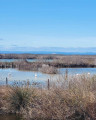
 7.58 mi
 +7 ft
+7 ft
 -7 ft
-7 ft
 3h 30
3h 30
 Moderate
 Departure from Candillargues (Hérault)
Natura 2000 site closed from 1 April to 30 June 2024
At the eastern end of the Étang de Mauguio, a multitude of marshes separated by canals are home to all kinds of birds from the Petite Camargue, a protected site of the Étang de l'Or.
Please note: access to the marshes is closed from 1 April to 30 June so that the birds can lay and hatch their eggs in peace.
Discover La Grande-Motte
 Visorando Member8.00 mi
+13 ft
-13 ft
3h 40
Moderate
Departure from La Grande-Motte (Hérault)
Visorando Member8.00 mi
+13 ft
-13 ft
3h 40
Moderate
Departure from La Grande-Motte (Hérault)
A walk in white, green and blue: the white of the beautiful buildings designed by architect Jean Balladur, the green of the small but numerous parks criss-crossed by a multitude of pedestrian walkways, and, of course, the blue of the sea.If I were God, I would be wary of architects! They are the subversive instruments of the human race's secret project: to rebuild Paradise Lost.Jean Balladur
Bois du Boucanet, lake and Ponant district
8.30 mi
+16 ft
-13 ft
3h 50
Moderate
Departure from La Grande-Motte (Hérault)
This hike offers two different atmospheres. The first part is a circular route along the edge of the Bois du Boucanet and then through the marshes bordering the Étang du Ponant, where you can encounter birds and horses. The second part, on the other side of the Vidourle, is an urban walk in the Ponant district of La Grande Motte, where you may encounter sea turtles, then through the town centre and back via the beach.This circular route can easily be split into two shorter walks.
Explore the Bois du Boucanet and the old hospital, which has been returned to nature
 5.69 mi
+10 ft
-10 ft
2h 35
5.69 mi
+10 ft
-10 ft
2h 35
 Easy
Departure from Le Grau-du-Roi (Gard)
Easy
Departure from Le Grau-du-Roi (Gard)
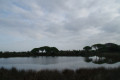
This route will allow you to discover the Bois du Boucanet with its typical Mediterranean habitats (pine forest, salt meadows, etc.). Depending on the season, you may see birds landing or flying around the Étang du Ponant.
Important: the Bois du Boucanet is owned by the Conservatoire du Littoral. You must follow the marked trail (do not walk along the edge of the lake) to avoid damaging the natural habitats and flora and to avoid disturbing the horses that graze there.
Tour du Ponant
 7.82 mi
+16 ft
-13 ft
3h 35
Moderate
Departure from Le Grau-du-Roi (Gard)
7.82 mi
+16 ft
-13 ft
3h 35
Moderate
Departure from Le Grau-du-Roi (Gard)
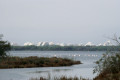
This hike takes place partly along the water's edge and partly on trails near wooded areas. It allows you to discover the habitats of the Mediterranean coast. The northern part is a lovely place to watch the sunrise or sunset. The Bois du Boucanet is owned by the Conservatoire du Littoral. It is important to follow the marked trails (yellow markings) in this area so as not to impact the natural habitats and flora of these environments.
The village of Castries, its castle, aqueduct and varied forests
 4.98 mi
+112 ft
-131 ft
2h 25
Easy
Departure from Castries (Hérault)
4.98 mi
+112 ft
-131 ft
2h 25
Easy
Departure from Castries (Hérault)
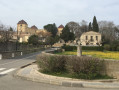
The first third of the hike will take you to the castle, its large park and a small part of the old village. The rest of the hike will take you through various forests, a mixture of heath, pine forests, olive groves, etc. Along the way, you will cross the famous aqueduct several times, as well as some lesser-known places such as La Capelette and the old quarries.
Walk along the Castries aqueduct and through the heath
 3.58 mi
+164 ft
-164 ft
1h 45
Easy
Departure from Castries (Hérault)
3.58 mi
+164 ft
-164 ft
1h 45
Easy
Departure from Castries (Hérault)
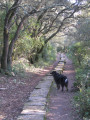
This walk will allow you to discover the Castries aqueduct in the section where its arches are highest, but also its path along the bottom of the hill at the end of the route before returning to the large arches of the aqueduct bridge.
You can also observe the diversity of the heath in Castries via wide paths and a few more discreet trails. The vegetation is a beautiful mix of heath and pine forest.
Two castles in Marsillargues
4.57 mi
+13 ft
-13 ft
2h 05
Easy
Departure from Marsillargues (Hérault)
Hike to discover two castles: the Château de Marsillargues, former castle of Guillaume de Nogaret, in the centre of the town, which houses a museum, and the Château de Teillan, a former fortified castle nestled between the Vidourle river, the Camargue horse pastures and the vineyards of the Marsillargues region.
 Between the canals and the Camargue, starting from Aigues-Mortes
 22.88 mi
+26 ft
-26 ft
2.5 hrs
Easy
Departure from Aigues-Mortes (Gard)
22.88 mi
+26 ft
-26 ft
2.5 hrs
Easy
Departure from Aigues-Mortes (Gard)
A leisurely mountain bike ride along wide paths with a short stretch on the road.
The route follows the Rhône Canal at Sète, then the Lunel Canal with its picturesque huts, before returning via various mas (old farmhouses) to reach Saint-Laurent-d’Aigouze and follow the Vidourle river to Aigues-Mortes.
A circular route through the heath starting from Castries
 2.67 mi
+98 ft
-98 ft
1h 20
Easy
Departure from Castries (Hérault)
2.67 mi
+98 ft
-98 ft
1h 20
Easy
Departure from Castries (Hérault)
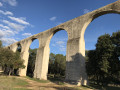
This one-hour walk takes you past the Castries Aqueduct, the vineyards and the olive groves.
Castries Aqueduct Supply Canal
 3.74 mi
+69 ft
-69 ft
1h 45
Easy
Departure from Castries (Hérault)
3.74 mi
+69 ft
-69 ft
1h 45
Easy
Departure from Castries (Hérault)
This walk allows you to discover the canal that fed the Castries aqueduct. For several years, the Friends of Castries Castle have been clearing and restoring this remarkable heritage site. This aqueduct captures water from the Fontgrand Spring, located 6 km from the village. Marquis René Gaspard de la Croix called on Pierre Paul Riquet, who also built the Canal du Midi, to construct this hydraulic structure.
Heath and the historic centre of Castries
 7.04 mi
+200 ft
-207 ft
3h 25
Moderate
Departure from Castries (Hérault)
7.04 mi
+200 ft
-207 ft
3h 25
Moderate
Departure from Castries (Hérault)
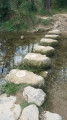
A walk through the Castries scrubland, where you can admire the aqueduct, the Château de Castries and its distinctive water tower, visible for miles around, as well as the historic centre of this pretty village in the Hérault.
The tour of Bannières via the small paths
 5.81 mi
+203 ft
-210 ft
2h 50
Easy
Departure from Castries (Hérault)
5.81 mi
+203 ft
-210 ft
2h 50
Easy
Departure from Castries (Hérault)
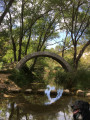
This hike takes you on a grand tour of the Bannières plain. The old Pont des Tourilles bridge, the Source du Boulidou spring, the ruins of the Templar farm and, above all, varied forests and flora will be along the way.
This route deliberately takes small, unmarked and little-used paths.
Therefore, although the description may be sufficient, it is advisable to use the GPS function of the Visorando app to monitor your progress during the hike.
The Muscat vineyards around Vérargues
 5.24 mi
+105 ft
-108 ft
2h 30
Easy
Departure from Vérargues (Hérault)
5.24 mi
+105 ft
-108 ft
2h 30
Easy
Departure from Vérargues (Hérault)
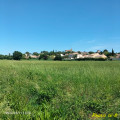
Set off to discover one of the treasures of the Lunel region: the Muscat Petit Grain wine-growing areas!
In the Lunel region, head to Vérargues for a bucolic and gourmet hike.
Discover Aigues-Mortes from the Maison de la Camargue Gardoise
5.97 mi
+7 ft
-7 ft
2h 45
Easy
Departure from Aigues-Mortes (Gard)
Take a walk through the marshes and along the edge of the Étang de la Marette (free visit but subject to timetables) before setting off to explore the streets and ramparts of Aigues-Mortes. This itinerary includes a visit to the Tour de Constance and the ramparts, which is subject to a fee but optional.
Beaches and port of Le Grau-du-Roi
7.87 mi
+7 ft
-7 ft
3h 40
Moderate
Departure from Le Grau-du-Roi (Gard)
Round trip hike on the beaches of Le Grau-du-Roi, passing through the port and a few streets in the village.
Walk in Port Camargue
1.56 mi
+7 ft
-7 ft
0h 45
Easy
Departure from Le Grau-du-Roi (Gard)
A short walk along the harbour and then the beach, passing by a few sculptures by Albert Marchais and the harbour master's office, with its beautiful architecture.
The Quarry Trail
 5.90 mi
+233 ft
-236 ft
2h 55
Easy
Departure from Sussargues (Hérault)
5.90 mi
+233 ft
-236 ft
2h 55
Easy
Departure from Sussargues (Hérault)
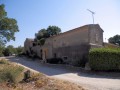
A walk through the wild countryside around Castries, not far from Montpellier. You will discover quarries and some particularly interesting sculptures. You will walk through the undergrowth. An amazing route with many surprises in store.
Castries - aqueduct 1
 4.96 mi
+135 ft
-138 ft
2h 25
Easy
Departure from Castries (Hérault)
4.96 mi
+135 ft
-138 ft
2h 25
Easy
Departure from Castries (Hérault)
This peaceful walk partly follows the Castries Aqueduct, built by Paul Riquet (architect of the Canal du Midi) and completed in 1676. This structure supplied water to the Château de Castries via 7 km of tunnels, trenches and aqueducts.
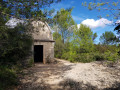
This hike also allows you to discover the ruins of the Pont des Tourilles bridge over the Cadoule, a remarkable little chapel, the Fondespierre departmental estate and a small drystone shelter nestled in a dry stone wall.
More walks in Candillargues
Select a point of interest below: