


Refine your search for walks in Camélas
Camélas walks
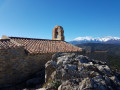
 From Castelnou to Camélas
 Visorando Member
 5.92 mi
 +1,004 ft
 -1,004 ft
 3h 35
 Moderate
 Departure from Pyrénées-Orientales
A beautiful heritage getaway in the heart of the Aspres. However, pay attention to strategic points as this is an unmarked hike.
The starting point is at the car park (unfortunately subject to a charge) of the Sainte-Marie du Mercadal Church (listed as a Historic Monument).
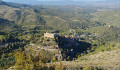
Roc de Majorque in Castelnou
 2.98 mi
+738 ft
-741 ft
2h 00
 Easy
Departure from Pyrénées-Orientales
This loop offers breathtaking views of the castle and village of Castelnou from Roc de Majorque. It was from this highest point that several destructive attacks were launched on the castle.
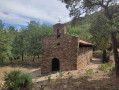
Discovering the two Corbères
 7.27 mi
+994 ft
-984 ft
4h 15
Moderate
Departure from Corbère-les-Cabanes (Pyrénées-Orientales)
A superb getaway in the heart of Catalan heritage, punctuated by chapels, panoramic views and history.
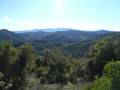
Mount Helena
 6.09 mi
+1,355 ft
-1,355 ft
4h 00
Moderate
Departure from Caixas (Pyrénées-Orientales)
Starting from the town hall in Caixas, the ascent of Mont Helena, the highest point in the area, offers a few surprises in terms of heritage and botany. And above all, an extraordinary panorama of the Roussillon.
Roc Majorque from Sainte-Colombe-de-la-Commanderie
7.81 mi
+1,309 ft
-1,283 ft
4h 45
Moderate
Departure from Sainte-Colombe-de-la-Commanderie (Pyrénées-Orientales)
Starting from the village of Sainte-Colombe-de-la-Commanderie, we will take paths through the heath to Castenou, one of the most beautiful villages in France, then on to Roc Majorque with a 360° view of the Roussillon plain.
 Route in the Aspres
9.66 mi
+902 ft
-889 ft
3 hrs
Moderate
Departure from Terrats (Pyrénées-Orientales)
Here is a lovely walk that takes place in the foothills of the Aspres, at the foot of Mont Canigou.
Chapels of Sant Amanç and Vallpuig from Montauriol
 6.50 mi
+715 ft
-719 ft
3h 35
Moderate
Departure from Montauriol (Pyrénées-Orientales) (Pyrénées-Orientales)
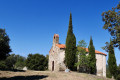
The hike is mainly on beautiful trails, mostly wooded and dotted with various information panels. There are many beautiful landscapes. Unfortunately, two chapels are closed along the route (20 April 2023), but there is an old well and an information panel explaining how the forest landscape is maintained through traditional pastoral farming.This hike is called the Iron Trail, used by the Romans to transport iron from the Batère mines. It passes through the pretty hamlet of Els Hostalets.This hike can be done by mountain bike.
Néfiach circular loop
 4.91 mi
+738 ft
-741 ft
2h 55
Easy
Departure from Néfiach (Pyrénées-Orientales)
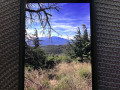
This circular route in the hills above Néfiach takes you on a route through the heath along various paths and tracks. Starting from the ford, it climbs towards Caladroy without actually reaching it, as it descends back into the valley below Caladroy, passing close to Pic Haut, which can be visited as an optional detour.
Ille-sur-Têt - Montalba-le-Château - Rodès via old paths and canals
 12.77 mi
+1,660 ft
-1,670 ft
7h 20
 Difficult
Departure from Ille-sur-Têt (Pyrénées-Orientales)
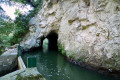
A hike to explore this low-lying mountain range, which was once farmed by humans. Numerous terraces bear witness to this past. Vines were once cultivated here. Mechanisation brought an end to farming in these wild and hard-to-reach areas.Yellow markings are virtually non-existent, and recent directional posts have been installed (as observed at the end of January 2024). These are not particularly relevant to the route. A GPX track is essential for this route, which features numerous paths.
Author’s note: The main sites of the fires in early July 2026 in the Pyrénées-Orientales were Ille-sur-Têt and Rodès. This walk has been affected by them. Much of the vegetation has been destroyed.
Snow wells – Coll de les Arques, de Saleig, de l'Aspic from Serrabona
 6.90 mi
+2,001 ft
-1,975 ft
4h 55
Difficult
Departure from Boule-d'Amont (Pyrénées-Orientales)
A beautiful hike, with a significant section along the ridge, which requires the use of a GPS or the Visorando app.
Take care on the steep descent between (6) and (7). Hike classified as difficult (no signposting, sense of direction).
Early January 2024: path blocked from the Coll de les Arques. Then, after the Coll de Saleig, tree felling, pasture clearing and track widening have removed all the markings and directional signs! At Coll de l’Aspic: a large area has been cleared and widened! So no more markings; the only landmark is the old blue van at this pass.
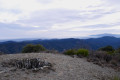
The landscape, stretching as far as the eye can see, remains as beautiful as ever.
You should allow around 5 hours to complete this circular route, including breaks and trips to the viewpoints.
The .gpx track may prove useful at the start of the route from (2) to (6), and from (13) to (14).
Serrabonne ridge circular walk
5.50 mi
+1,765 ft
-1,749 ft
4h 05
Moderate
Departure from Boule-d'Amont (Pyrénées-Orientales)
This circular route goes around the ridges of the Serrabone priory in the Eastern Pyrenees. Starting from the priory, the trail climbs to the right towards the ridges, then follows them before descending back to the priory. Landscape of moorland and heath in the mid-mountains. The hike can be continued with a visit to the Serrabone priory in the commune of Boule d'Amont.
Boule d'Amont - Coll de Seleig - Coll de Les Arques - Serrabona
 8.41 mi
+2,480 ft
-2,454 ft
6h 00
Moderate
Departure from Boule-d'Amont (Pyrénées-Orientales)
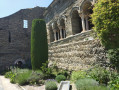
The suggested walk takes you up to the ridge, where you can enjoy a superb panoramic view.Serrabona Abbey, on the route described, is well worth a visit. This site, which is in excellent condition, is currently being refurbished.An additional route starting from Serrabona can be added to this hike. *The walk will be moderately difficult (sense of direction required) and will take an extra hour and a half.Please note. Observed on 14 January 2024: after the (6), the track has been widened, the pastures cleared, and trees felled. The original path is very difficult to follow: the markings and posts have disappeared! The GPX track is very useful from this point onwards.
Força Réal Hermitage from Corneilla-la-Rivière
 10.71 mi
+1,545 ft
-1,545 ft
6h 15
Moderate
Departure from Corneilla-la-Rivière (Pyrénées-Orientales)
You will cross dirt tracks and a few tarmaced sections, through vineyards, heath and olive groves... which will take you to Castell de Força Réal, at an altitude of 507 m...
No particular difficulty apart from the climb up the north face to the observation post.
Once at the top, enjoy a picnic and discover the breathtaking view of the Canigou massif and the Têt valley...
You can even see the sea on a clear day.
Return via some very pleasant paths...
The Coll de Formenta from Saint-Marsal via Taulis
 8.84 mi
+2,270 ft
-2,267 ft
6h 00
Moderate
Departure from Saint-Marsal (Pyrénées-Orientales)
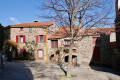
A discovery walk in the Aspres.
From Saint-Marsal, a descent through the forest along a path to the ruins of the Molí d’en Just (watermill) and an ascent to Taulis.
The rest of the route to Coll de Formenta is based on the ‘Coll de Formentera’ walk starting from Taulis, by Hubert Gites-Vallespir.
From the Coll de Formenta, a picturesque return route along the old railway line (tunnel). A descent to the Pla de l’Abbella, then a walk along an ancient Roman road to the Collada del Pou (small pass of the snow well). The route then follows a firebreak track to Saint-Marsal. The scenery, the passage through Santa Creu (Holy Cross) and the Rochers de la Fustera (carpenter’s forest) add charm to the otherwise monotonous track.
The route description, map and GPX track are essential.
In search of the boundary markers of 1258
 6.90 mi
+938 ft
-945 ft
4h 00
Moderate
Departure from Bélesta (Pyrénées-Orientales) (Pyrénées-Orientales)
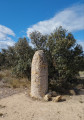
Before the current border was established, Roussillon was officially part of Spain between 1258 and 1659.
Very few boundary markers from this original border remain.
The trail allows you to discover three of them, as well as a cave and an ice well; it also offers superb views of the Pyrenees and the Corbières.
The mining history of Les Aspres
 10.82 mi
+2,566 ft
-2,575 ft
7h 15
Difficult
Departure from Saint-Marsal (Pyrénées-Orientales)
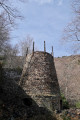
Mountain passes, the Els Menerots open-cast mines, old miners’ buildings, a roasting furnace, hoppers, a former mining railway line, mine trolleys, a tunnel, and finally, a Roman road and a snow pit.All these points of interest punctuate this beautiful and unusual route through this Catalan mountain range, which was long exploited for its iron ore.The route consists of a mix of road and track.The signposting is in good condition, but the GPX track will be a real help in some places, despite the accurate IGN base map.
Pic Aubeill
 4.90 mi
+755 ft
-719 ft
2h 55
Easy
Departure from Bélesta (Pyrénées-Orientales) (Pyrénées-Orientales)
This circular route, marked in yellow, starts from the village of Belesta and climbs up to Pic d'Aubeil, then descends towards the sheepfold, the dolmen and finally the village.
Coll Palomeres - Creu d'en Turon - Santa Anna from La Bastide
 6.91 mi
+2,070 ft
-2,064 ft
5h 00
Moderate
Departure from La Bastide (Pyrénées-Orientales)
A beautiful hike in the open air with the aim of climbing Santa Anna dels Quatre Termes. First, a climb to Coll Palomeres, then a very beautiful ridge path to reach Creu del Turon (crossroads on the hill). Then a steep climb to reach the ruins of the chapel located on the cadastral boundary of four municipalities (hence its name). The return via the Chemin Rural from Creu d'en Turon is very interesting. Marked path on private property: please respect the areas you pass through and close gates and fences behind you.
Coll Palomeres to Puig de l’Estella via Menerots, Torre and Batera Mountain Hut
 10.06 mi
+2,707 ft
-2,684 ft
7h 00
Difficult
Departure from La Bastide (Pyrénées-Orientales)
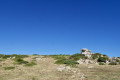
The route consists of two circular loops. This hike can therefore be adapted as desired. However, it would be a shame not to complete the whole route. Discover an old railway line used for iron ore extraction at an altitude of 1,200 metres, former stations on this line, old iron mines, tunnels, a signal tower, a superb ridge, a summit, a mountain hut, and much more.
A good sense of direction and following the GPX track will be very useful.
The Iron Trail – Pinosa and Batera Mines from Coll Palomeres
 10.24 mi
+2,507 ft
-2,546 ft
6h 55
Difficult
Departure from La Bastide (Pyrénées-Orientales)
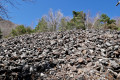
A lovely walk exploring the mining history of the Vallespir. A long railway line once ran here at an altitude of 1,200 metres.A good sense of direction and the GPX track may prove useful in some places: there are many crossroads and junctions. Allow around 7 hours to enjoy these surroundings.Please stay on the marked and safe paths.It’s easy to imagine what working conditions must have been like; winters weren’t always as mild as they are today.Some truly beautiful scenery.
Pic de l'Estelle from Coll Palomeres via the Pinosa mining site
 8.90 mi
+2,802 ft
-2,799 ft
6h 30
Moderate
Departure from La Bastide (Pyrénées-Orientales)
A very beautiful hike with views of the eastern slope of the Canigou Massif and a visit to the Pinosa mining site (a listed historic monument) which bears witness to the work and living conditions of miners in the 19th and 20th centuries. A beautiful 360° panorama at the summit of Pic de l'Estelle over the Corbières to the north, the sea and the Albères to the east, Spain to the south and the slopes of Canigou to the west. The Batère Tower on the descent from the peak is reminiscent of the system of signal towers erected in the Middle Ages, which formed a communication network: at night using fires and during the day using smoke.
The Mines de la Pinouse
6.76 mi
+1,066 ft
-1,066 ft
4h 00
Moderate
Departure from La Bastide (Pyrénées-Orientales)
An exceptional heritage walk at one of the major sites of the Canigou iron mines, which is also a key site commemorating the Resistance. Once at the site, heritage signage provides an insight into the area’s rich history.
The Batère Tower
5.66 mi
+1,631 ft
-1,644 ft
4h 00
Moderate
Departure from La Bastide (Pyrénées-Orientales)
A superb heritage trail starting from Coll Palomeres, plunging into the heart of the industrial golden age of the Pyrénées-Orientales. The route passes through ancient mining ruins, evidence of a rich past, before reaching the imposing Tour de Batère, offering spectacular views of the surrounding mountains.