Refine your search for walks in Bouteville
Bouteville walks


 The Bouteville Mill Route
 Local authority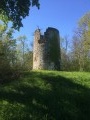
 5.24 mi
 +354 ft
 -354 ft
 2h 45
2h 45
 Easy
Easy
 Departure from Bouteville (Charente)
This route takes you uphill to the old mill before winding your way through the surrounding vineyards.
Bouteville Vineyard Route
 4.88 mi
+194 ft
-194 ft
2h 25
Easy
Departure from Bouteville (Charente)
4.88 mi
+194 ft
-194 ft
2h 25
Easy
Departure from Bouteville (Charente)
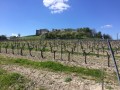
A route that runs mostly through the vineyards, which are ubiquitous in the commune of Bouteville, situated in the prestigious Grande Champagne region of the Cognac region. Almost all the winegrowers in Bouteville are also ‘distillers’.
Circuit of Open-air Wash Houses and Water Sources
 12.11 mi
+840 ft
-843 ft
6h 20
12.11 mi
+840 ft
-843 ft
6h 20
 Moderate
Departure from Saint-Preuil (Charente)
Moderate
Departure from Saint-Preuil (Charente)
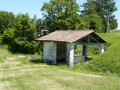
This circuit gives you the chance to discover rural heritage (springs, water sources, open air wash houses); and at each place, a description of its history is displayed. The route also highlights the architectural and historical heritage of the 13th century (Eglise Saint-Prohet, the Place Jacquaire, the protestant stele, the Chateau de Segeville) plus the various hamlets in the locality, flora and fauna.
Route of Fountains and Washhouses – Purple-marked variant
 7.95 mi
+482 ft
-512 ft
4h 05
Moderate
Departure from Saint-Preuil (Charente)
7.95 mi
+482 ft
-512 ft
4h 05
Moderate
Departure from Saint-Preuil (Charente)
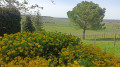
This route allows you to discover the area’s small-scale rural heritage (fountains, wash houses). Each water point features a historical and/or anecdotal description. The route also incorporates architectural and historical heritage (the 13th-century Saint-Projet Church, Place Jacquaire, Ségeville Castle and the scattered hamlets of the commune).
Exploring this route also allows you to appreciate the area’s scenic, floral and wildlife attractions.
Route of Fountains and Washhouses – Orange-marked variant
3.31 mi
+190 ft
-190 ft
1h 40
Easy
Departure from Saint-Preuil (Charente)
This route offers the chance to discover small-scale rural heritage (fountains, wash houses). Exploring this route also allows you to appreciate the area’s scenic, floral and wildlife features.
The Cuckoo Trail
 3.19 mi
+230 ft
-223 ft
1h 40
Easy
Departure from Bonneuil (Charente)
3.19 mi
+230 ft
-223 ft
1h 40
Easy
Departure from Bonneuil (Charente)
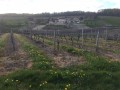
A route alternating between open landscapes and woodland. Very pleasant to walk.
The Chemin du Champ de Mars in Bonneuil
 5.40 mi
+348 ft
-348 ft
2h 45
Easy
Departure from Bonneuil (Charente)
5.40 mi
+348 ft
-348 ft
2h 45
Easy
Departure from Bonneuil (Charente)
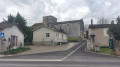
Much of this walk takes place in the forest, which is pleasant in summer. The rest of the route is through the vineyards, offering something for everyone.
Route de la Tonnelle in Saint-Même-les-Carrières
 Visorando Member2.91 mi
+115 ft
-115 ft
1h 25
Easy
Departure from Saint-Même-les-Carrières (Charente)
Visorando Member2.91 mi
+115 ft
-115 ft
1h 25
Easy
Departure from Saint-Même-les-Carrières (Charente)
A pleasant walk through the vineyards with a gentle gradient.
The Gallo-Roman tracks of Éraville
5.31 mi
+207 ft
-203 ft
2h 35
Easy
Departure from Éraville (Charente)
Path, marked in red, following ancient Roman roads.
Le Grand Fé
5.64 mi
+390 ft
-397 ft
2h 55
Easy
Departure from Touzac (Charente)
A blue-marked route through the heart of the Grande Champagne vineyards, offering a rolling landscape.
Route between Lin and Vigne
 12.70 mi
+843 ft
-820 ft
6h 35
12.70 mi
+843 ft
-820 ft
6h 35
 Difficult
Departure from Lignières-Sonneville (Charente)
Difficult
Departure from Lignières-Sonneville (Charente)
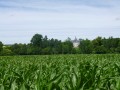
Lignière-Sonneville is a village with the rolling hills typical of the Grande Champagne region, formed by the merger of Lignières and Sonneville in 1845. Nestled in the heart of the Grande Champagne, it has a population of 613.
Route between flax and vineyards (short circular route)
5.55 mi
+256 ft
-246 ft
2h 45
Easy
Departure from Lignières-Sonneville (Charente)
Lignière-Sonneville is a village with the rolling hills typical of the Grande Champagne region, formed by the merger of Lignières and Sonneville in 1845. Nestled in the heart of the Grande Champagne, it has a population of 613.
Malaville Fountains Trail
6.56 mi
+364 ft
-371 ft
3h 20
Moderate
Departure from Malaville (Charente)
A route that follows the old railway line for part of the way and, for the rest, offers a walk through the vineyards with some very beautiful views.
Amidst the Cognac vineyards and the beautiful mansions of Mainxe
 6.38 mi
+79 ft
-79 ft
3h 00
Moderate
Departure from Mainxe (Charente)
6.38 mi
+79 ft
-79 ft
3h 00
Moderate
Departure from Mainxe (Charente)
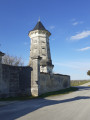
A walk through the vineyards, featuring beautiful houses and a stunning dovecote.