


Refine your search for walks in Assérac
Assérac walks


 La Cour aux Loups
 Visorando Member
 9.07 mi
 +72 ft
 -102 ft
 4h 15
4h 15
 Moderate
 Departure from Herbignac (Loire-Atlantique)
Although Herbignac is not the commune in Brière with the most thatched cottages, the villages along this route offer some fine examples.
The Herbignac Potters’ Trail
8.17 mi
+79 ft
-79 ft
3h 50
Moderate
Departure from Herbignac (Loire-Atlantique)
Passing through clay extraction sites and former pottery villages, this route pays tribute to one of Herbignac’s traditional trades, which continued until the mid-20th century.
Le Rostu in the heart of the Mès salt marshes
 4.43 mi
+33 ft
-33 ft
2h 05
4.43 mi
+33 ft
-33 ft
2h 05
 Easy
Departure from Mesquer (Loire-Atlantique)
Easy
Departure from Mesquer (Loire-Atlantique)
This hike is located in Mesquer, in the hamlet of Rostu.
The Bassin du Mès is an area where salt marshes have been created for centuries and were once highly developed. They are fed with seawater by channels leading from the "Merquel - Rostu - Pen-Bé" traicts, which are an enclave of the sea between the Pointe de Pen-Bé and the Pointe de Merquel. Oyster and mussel farming have also developed in this area. There are some beautiful views to be discovered.
Les Faillies Brières and Les Crolières de Gras
 5.96 mi
+33 ft
-33 ft
2h 45
Easy
Departure from Herbignac (Loire-Atlantique)
5.96 mi
+33 ft
-33 ft
2h 45
Easy
Departure from Herbignac (Loire-Atlantique)
The Mès, a small coastal river in the north of the Guérande peninsula, flows through a low, wide valley consisting mainly of marshes, draining the water into the ocean.
The proposed route allows you to discover the upper part of these marshes and cross them via the Gras bridge, an ancient stone footbridge.
This route should only be attempted when the water level in the marshes allows the paths surrounding them to be used.
From the Pont Mahé marshes to those of Le Mès
8.05 mi
+125 ft
-118 ft
3h 50
Moderate
Departure from Assérac (Loire-Atlantique)
The Pointe de Pen Bé juts out with its ochre cliffs between the Traict de Rostu and Pont Mahé Bay. These two stretches of sea, which are revealed at low tide, form the foreground to the marshes – one a salt marsh, the other a freshwater marsh – which extend behind the coastal sandbars.
The circular walk that links them offers a lovely glimpse of this coastal countryside.
Pen Bé Tower
 4.30 mi
+43 ft
-43 ft
2h 00
Easy
Departure from Assérac (Loire-Atlantique)
4.30 mi
+43 ft
-43 ft
2h 00
Easy
Departure from Assérac (Loire-Atlantique)
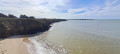
The Pointe de Pen Bé juts out like a ship between Pont Mahé Bay and the Pen Bé and Rostu straits. While its maritime location is undeniable at high tide, it changes completely at low tide, as the sea then deserted the coastal areas. Whether at high or low tide, this is a route that is worth exploring at any time, as the landscape is so changeable.
Sea, marshes and countryside around Caire
8.82 mi
+138 ft
-121 ft
4h 10
Moderate
Departure from Assérac (Loire-Atlantique)
The beach and marshes of Pont Mahé, the Pointe de Pen Bé, the area around the Étang du Pont de Fer and the moors of Monchoix each offer a unique perspective on the landscapes of Asserac. Walking through this agricultural landscape that borders the coast serves as a reminder that the seashore was once a natural environment before urbanisation took over.
Between land and sea at Pont Mahé
7.00 mi
+66 ft
-72 ft
3h 15
Moderate
Departure from Assérac (Loire-Atlantique)
This route forms a circular loop between Pont Mahé Bay and Pen Bé Bay.
La Brière océane
11.68 mi
+98 ft
-98 ft
5h 25
Moderate
Departure from Assérac (Loire-Atlantique)
To the west of the Brière Regional Nature Park, the Brière coast stretches from Pont Mahé beach to the Pen Bé strait. It offers a varied landscape of beaches, shorelines, wild coastlines, moors and salt marshes. A return trip connects to this route for a foray into Morbihan to Pointe du Bile.
Between the Vilaine and the Étang du Pont de Fer
6.27 mi
+249 ft
-243 ft
3h 05
Easy
Departure from Camoël (Morbihan)
To the south of the Vilaine estuary, the gentle terrain encourages the intermingling of wetlands and agricultural land. The village of Camoël is built on a slight rise overlooking both the river and the marshes situated upstream of Pont Mahé Bay.The suggested route allows you to explore the river where its estuary begins and one of the streams that feed the Étang du Pont de Fer, a hidden nature reserve that can be glimpsed when the foliage is not too dense.
Tour de Larmor in Pénestin
 6.98 mi
+56 ft
-56 ft
3h 15
Easy
Departure from Pénestin (Morbihan)
6.98 mi
+56 ft
-56 ft
3h 15
Easy
Departure from Pénestin (Morbihan)
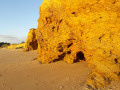
Pénestin is just a stone's throw away from being an island. Although its ocean side faces the Atlantic, it is only connected to the hinterland by a strip of land wedged between two marshes. The suggested route takes you through the southern part of the area, formerly known as Larmor, between the Pont Mahé marshes and the cliffs of Lanchale and Le Bile.
A walk around the Férel bell tower
 5.67 mi
+69 ft
-72 ft
2h 40
Easy
Departure from Férel (Morbihan)
5.67 mi
+69 ft
-72 ft
2h 40
Easy
Departure from Férel (Morbihan)
Situated about ten kilometres inland from the coast, on a plateau sloping down from the banks of the Vilaine to the first marshes of Briéron, the commune of Férel has managed to preserve its bocage landscape and a network of paths offering a wide range of walking options. This route offers an almost constant view of the bell tower, which, being tall and sharply pointed, is one of the area’s main landmarks.
Route des Coulées
7.52 mi
+138 ft
-138 ft
3h 35
Moderate
Departure from Férel (Morbihan)
The plateau on which the village of Férel lies is situated at an altitude of 30 to 50 metres above sea level. It overlooks the southern bank of the Vilaine, sometimes quite steeply, and the streams flow along the bottoms of wooded valleys (the Coulées), which are ideal for walks in all seasons.
The paths of Saint-Dys
7.32 mi
+112 ft
-92 ft
3h 30
Moderate
Departure from Férel (Morbihan)
The commune of Férel comprised five ‘frairies’ (sub-parishes), including that of Saint-Dys (or Teiz), which covers the wooded south-western part of the commune’s territory. The suggested route follows country lanes and forest tracks around Coët Castel and Ally.
The Pont Mahé Marshes Circuit
6.66 mi
+59 ft
-59 ft
3h 05
Moderate
Departure from Pénestin (Morbihan)
Behind the Pont-Mahé dune ridge lies a large marsh which is still regularly mown during the summer months. Connected to the sea by the channel that flows into Le Palandrin, it is still more or less subject to tidal effects but each summer regains its appearance as a meadow grazed by herds, in the heart of a basin bordered by dense woodland.
It’s up to you to explore it via a few secret paths, when the water level allows.
Walk in the marshes around Kercabellec
8.17 mi
+36 ft
-36 ft
3h 45
Moderate
Departure from Mesquer (Loire-Atlantique)
Mesquer has a coastline opening onto the Bay of Vilaine and the open sea, but around Kercabellec, a small port between the village and Quimiac, there is a much more secret route between the marshes and the Merquel and Rostu tidal flats. Immerse yourself in this unique landscape where salt and shellfish farming are closely intertwined.
Circular route through the marshes: Étier de Boulay, Île de Rostu, Kercabellec
 6.55 mi
+66 ft
-66 ft
3h 05
Moderate
Departure from Mesquer (Loire-Atlantique)
6.55 mi
+66 ft
-66 ft
3h 05
Moderate
Departure from Mesquer (Loire-Atlantique)
A walk through a varied landscape where the marshes tell the story of their distant origins, shaped by the earth and the ocean, with low, undulating vegetation carved out by small streams, and their domestication by man, with salt marshes and oyster beds, not to mention the iconic cabanes à carrelet (fishing huts).
Mesquer - Quimiac
 13.66 mi
+69 ft
-66 ft
6h 20
Easy
Departure from Mesquer (Loire-Atlantique)
13.66 mi
+69 ft
-66 ft
6h 20
Easy
Departure from Mesquer (Loire-Atlantique)
This route connects the three main areas of the municipality: Mesquer, Quimiac and Kercabellec. It allows you to discover the diversity of the area, first the marshes, then the countryside and the sea, which is particularly present around the Pointe de Mesquer.
 Circular cycling route: Férel – Pénestin – Assérac
33.38 mi
+486 ft
-459 ft
4 hrs
Moderate
Departure from Férel (Morbihan)
Between Mès and Vilaine lies a little-known corner where the landscapes change constantly, from the banks of the Vilaine to the Atlantic coast at Pénestin, via the salt marshes of Mès and the wooded areas of Monchoix and Coët Castel. So hop on your bike and explore it along roads and paths away from heavy traffic.
From Ranrouët Castle to La Brière
7.49 mi
+26 ft
-26 ft
3h 30
Moderate
Departure from Herbignac (Loire-Atlantique)
The Château de Ranrouët is a medieval gem nestled on the edge of the marshes. Here, there is no fortified rock, but a slight elevation in the greenery. The marshes that surround it provided protection, and the proposed route winds through the surrounding countryside where land and water constantly mix.
Pénestin in the countryside
6.52 mi
+151 ft
-154 ft
3h 10
Moderate
Departure from Pénestin (Morbihan)
In Pénestin, far from the hustle and bustle of the coast, you can stroll in complete tranquillity along quiet paths that criss-cross the countryside between the Tréhudal marshes and those of Pont Mahé.
This walk is best enjoyed on sunny days, when it’s pleasant to walk in the shade.
Birdwatching walk around the Lesté marsh
2.20 mi
+36 ft
-36 ft
1h 05
Easy
Departure from Pénestin (Morbihan)
Sheltered behind the sea wall and the dunes of L’Espernel, the Lesté marsh is a true wildlife reserve. Its network of canals and old sea walls suggests that it was once developed as a salt pan. But nature has reclaimed the area, and the site is now home to hundreds of birds seeking tranquillity, as well as a few cows, which help to maintain it.
The banks of the Brière at Marlais
8.21 mi
+39 ft
-39 ft
3h 50
Moderate
Departure from Herbignac (Loire-Atlantique)
This route runs between the Brière and Mès marshes. These two protected wetlands are home to numerous birds, which you may spot along the way.
Tour of the thatched-roof villages of Saint-Lyphard
18.20 mi
+138 ft
-148 ft
2 hrs
Easy
Departure from Saint-Lyphard (Loire-Atlantique)
Remnants of a time when much of what enabled the people of Bréca to make a living was extracted from the marsh, thatched cottages are still very much in evidence around Saint-Lyphard. There are said to be no fewer than 500 of them.
To discover this exceptional heritage, why not hop on your bike and explore the narrow roads and farm tracks that criss-cross the Saint-Lyphard area? A complete change of scenery is guaranteed!
Pont Mahé Bay and Dunes
4.57 mi
+36 ft
-49 ft
2h 10
Easy
Departure from Pénestin (Morbihan)
Straddling the departments of Morbihan and Loire-Atlantique, Pont Mahé Bay is a vast sandbank at low tide and a renowned spot for board sports once the sea has returned. Connecting the two headlands that mark its boundaries is a pleasant way to cross administrative borders
From one port to another along the Vilaine
6.34 mi
+420 ft
-436 ft
3h 15
Moderate
Departure from Camoël (Morbihan)
Running along the left bank of the Vilaine, this path follows the riverbank closely, linking the two ports of Arzal and La Roche-Bernard, and offering a multitude of landscapes and views of the Basse-Vilaine. In summer, you can also return by boat or canoe.
Vieille Roche Route
5.78 mi
+112 ft
-128 ft
2h 45
Easy
Departure from Camoël (Morbihan)
In the past, the Vilaine was crossed by ferry downstream of La Roche-Bernard. This was the case between Vieille Roche in Camoël and Arzal. The construction of the dam in the 1970s significantly changed these practices, as a fixed link now allows people to cross from one bank to the other. The suggested route allows you to explore the dam and the paths along the left bank of the Vilaine around Camoël.
Circular route between the Arzal Dam and Ferel
8.17 mi
+197 ft
-197 ft
3h 55
Easy
Departure from Camoël (Morbihan)
This circular walk allows you to enjoy the scenery along the River Vilaine, the woodland on the way to Ferel, and finally a return journey through the countryside around Camoël.
Quimiac, between sea and marsh (2)
 5.49 mi
+66 ft
-66 ft
2h 35
Easy
Departure from Mesquer (Loire-Atlantique)
5.49 mi
+66 ft
-66 ft
2h 35
Easy
Departure from Mesquer (Loire-Atlantique)
One-third salt marsh, one-third countryside and one-third sea: a superb recipe for a salty cocktail!
Pointe de Merquel
5.31 mi
+23 ft
-23 ft
2h 30
Easy
Departure from Mesquer (Loire-Atlantique)
This is a hike to undertake when other trails are impassable in winter.
Quimiac, between sea and marsh
 9.98 mi
+30 ft
-30 ft
4h 35
Moderate
Departure from Mesquer (Loire-Atlantique)
9.98 mi
+30 ft
-30 ft
4h 35
Moderate
Departure from Mesquer (Loire-Atlantique)
The hike begins with three beaches and ends at Pointe de Merquel, which marks the entrance to the Bassin du Mès, famous for its salt marshes, mussels and oysters. The landscapes are magical, whether on the sea or marsh side.
From the Arzal dam to La Roche Bernard along the left bank of the Vilaine
9.57 mi
+965 ft
-961 ft
5h 15
Moderate
Departure from Camoël (Morbihan)
Walk starting from the Arzal Dam, following the Vilaine upstream on the left bank, circular route via the two bridges and finishing at the port of La Roche-Bernard. The scenery along the Vilaine is breathtaking.
From Tréambert to Sorloc via the marshes and coastline
4.66 mi
+23 ft
-23 ft
2h 10
Easy
Departure from Mesquer (Loire-Atlantique)
Between Mesquer and Quimiac, the marsh cuts deep between two rocky mounds. The slopes here form a grid-like pattern in which the old shellfish beds are set, and, further back, salt pans that are still in use.This bird paradise has benefited from extensive restoration work, the results of which are maintained by sheep as they graze on the vegetation.A stroll through the streets of Quimiac takes you to the coast, opening up the view onto the Bay of Vilaine.
Circular Vilaine Route via the Arzal Dam and the Roche-Bernard Bridge
 14.39 mi
+1,083 ft
-1,070 ft
7h 35
14.39 mi
+1,083 ft
-1,070 ft
7h 35
 Difficult
Departure from Arzal (Morbihan)
Difficult
Departure from Arzal (Morbihan)
A pleasant, easy walk along the banks of the Vilaine through wooded countryside, forests and small villages.
The path is fully signposted in white and red by theGR®39(left bank) andGR®349(right bank).
Between thatched cottages and marshes in Saint-Lyphard
 7.45 mi
+26 ft
-26 ft
3h 25
Moderate
Departure from Saint-Lyphard (Loire-Atlantique)
7.45 mi
+26 ft
-26 ft
3h 25
Moderate
Departure from Saint-Lyphard (Loire-Atlantique)
This hike allows you to discover the different faces of Brière: its marshes, its thatched cottages, its flora and fauna. Lots of paths, a few roads, all lined with oak trees, pines, gorse, willows and chestnut trees. Superb!
Chemin du Bocage in Kerhinet
 Tourist office0.54 mi
+10 ft
-10 ft
0h 15
Easy
Departure from Saint-Lyphard (Loire-Atlantique)
Tourist office0.54 mi
+10 ft
-10 ft
0h 15
Easy
Departure from Saint-Lyphard (Loire-Atlantique)
This small village of 18 thatched-roof houses was acquired in the 1970s by the Brière Regional Nature Park with the intention of renovating it and turning it into a showcase of traditional Brière housing. Kerhinet is a village situated to the south-west of the municipality of Saint-Lyphard, on the western side of the marshes. The village is open to visitors free of charge. You can enjoy a drink or an ice cream on site. There is a picnic area as well as free, designated parking.
The Vilaine and the countryside around Arzal
10.75 mi
+449 ft
-459 ft
5h 20
Moderate
Departure from Arzal (Morbihan)
During this hike, discover a variety of landscapes: the river, the ocean and the countryside.
Tour of the wind turbines at Lande Verrien
 8.02 mi
+262 ft
-259 ft
3h 55
Moderate
Departure from Arzal (Morbihan)
8.02 mi
+262 ft
-259 ft
3h 55
Moderate
Departure from Arzal (Morbihan)
La Lande Verrien is a narrow strip of land within the municipality of Muzillac, overlooking the Vilaine estuary. For the past ten years or so, six wind turbines have been turning there, harnessing the wind blowing straight in from the ocean.
The suggested route follows the various paths and small roads that wind first through wooded heathland, then through beautiful hedgerow countryside, as well as part of the coastal path between Billiers and Arzal.
Circular route through coastal and countryside scenery between La Mine d'Or and Loscolo
4.86 mi
+43 ft
-69 ft
2h 15
Easy
Departure from Pénestin (Morbihan)
As well as its magnificent coastal path stretching over 14 km, Pénestin boasts a multitude of trails criss-crossing the local area. The circular route allows you to explore some of these paths as far as the edge of the Pont Mahé Marshes, before returning to the coast via the coastal path. And if the weather and season permit, do make the most of the lovely beaches that line this route.
From Maresclé beach to Haut-Pénestin along the coast and other paths
 8.06 mi
+98 ft
-108 ft
3h 45
Moderate
Departure from Pénestin (Morbihan)
8.06 mi
+98 ft
-108 ft
3h 45
Moderate
Departure from Pénestin (Morbihan)
This hike starts at the car park of the Mine d’Or beach, along the coast north to Haut-Pénestin, to return by internal paths to reach the sea at Maresclé beach and then the starting point.
De Lantiern à la Vilaine
 6.94 mi
+285 ft
-285 ft
3h 25
Moderate
Departure from Arzal (Morbihan)
6.94 mi
+285 ft
-285 ft
3h 25
Moderate
Departure from Arzal (Morbihan)
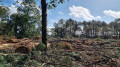
A country walk between Cosca, a stone's throw from the Arzal dam, and the Templar village of Lantiern.This walk along beautiful tree-lined paths and a few small roads connects the banks of the Vilaine estuary to the beautiful Saint-Jean-Baptiste Chapel, through pleasantly rolling countryside.The end of the route follows the botanical trail.The trail has been modified after the point (1), following the clear-cutting of the wooded area it used to cross, which made the trail disappear.
Between bocage and Vilaine in Arzal
7.06 mi
+223 ft
-210 ft
3h 25
Moderate
Departure from Arzal (Morbihan)
The village of Arzal stretches from the foot of the church's pointed bell tower to the edge of the dam. Upstream, the river has become a huge body of water where thousands of boats are moored, while downstream, the maritime character of the estuary remains. The proposed route allows you to discover both aspects of the river and the bocage that overlooks it.
La Brière between Sandun and Saint-André-des-Eaux
 8.21 mi
+59 ft
-62 ft
3h 50
Moderate
Departure from Guérande (Loire-Atlantique)
8.21 mi
+59 ft
-62 ft
3h 50
Moderate
Departure from Guérande (Loire-Atlantique)
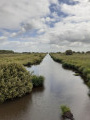
La Brière, France's second largest freshwater marsh, is a secret land hidden behind the surrounding hedgerows. The suggested route allows you to explore it from the land bordering it to the west and even catch a glimpse of it from the Sandun hill, which rises to a height of 28 metres. A real mountain in this flat country!But be careful, marshes are best explored when the water level allows it.Circuit temporarily closed
A walk through wooded countryside and forests south-west of Marzan
4.69 mi
+381 ft
-377 ft
2h 30
Easy
Departure from Marzan (Morbihan)
As is often the case in Brittany, the landscape is not the result of tectonic forces, which would have created a few sharp-peaked mountains, but rather the result of numerous watercourses that have carved their way through the plateaus. The proximity of the Vilaine, which flows here through a narrow, steep-sided valley, has led secondary watercourses to cut through the moorland to join the river. Starting on the wooded plateau, the proposed route soon winds its way through these valleys, which, due to the decline of agriculture or the low value of this poor soil, have been left to more or less spontaneous woodland growth. The result is a undulating route that runs mostly in the shade of tall, beautiful trees, whilst connecting the countless hamlets that dot this lovely countryside.
Tour of Haut Pénestin
 4.94 mi
+98 ft
-105 ft
2h 20
Easy
Departure from Pénestin (Morbihan)
4.94 mi
+98 ft
-105 ft
2h 20
Easy
Departure from Pénestin (Morbihan)
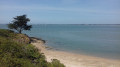
The Pointe du Halguen marks the southern limit of the Vilaine estuary. This promontory overlooking the ocean is also the northern end of the ochre cliffs that line the ocean front of Pénestin. A lovely walk is available around the village of Haut Pénestin, where long stretches of sandy beach precede secluded coves and abandoned salt marshes.
From Guérande to La Baule and back via the salt marshes
21.23 mi
+180 ft
-174 ft
2.5 hrs
Moderate
Departure from Guérande (Loire-Atlantique)
Guérande overlooks the Pays Blanc from its hillside. A cycle path allows you to reach La Baule beach in peace and quiet, before following the coastline past Le Pouliguen. From Kervalet, the scenery changes: the vastness of the marshes, criss-crossed by numerous embankments, invites you to take one of the small, winding roads that run through them. Finally, it will take a fair bit of effort to climb back up and reach the outskirts of the medieval town.
Around La Roche-Bernard
5.30 mi
+272 ft
-266 ft
2h 40
Easy
Departure from La Roche-Bernard (Morbihan)
Although La Roche-Bernard is an urban centre that locals refer to as a ‘town’, its area (40 ha) and population (approx. 700 inhabitants) make it one of the smallest county towns in France. It is surrounded by the communes of Nivillac, Herbignac and Férel, across which the majority of the urban area is spread. The proposed route takes you around the area.
The banks of the Vilaine
 11.32 mi
+614 ft
-614 ft
5h 45
Moderate
Departure from La Roche-Bernard (Morbihan)
11.32 mi
+614 ft
-614 ft
5h 45
Moderate
Departure from La Roche-Bernard (Morbihan)
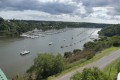
A very pretty route which starts in the countryside and forest and then follows the course of the Vilaine river.
The start and finish are at the very pretty port of La Roche-Bernard.
La Roche-Bernard bridge loop
 3.07 mi
+518 ft
-499 ft
1h 50
Moderate
Departure from La Roche-Bernard (Morbihan)
3.07 mi
+518 ft
-499 ft
1h 50
Moderate
Departure from La Roche-Bernard (Morbihan)
An hour-and-a-half circuit with a few tricky sections. This pleasant walk alternates seamlessly between passages at water's edge and ridge-climbing, and also spans two bridges some 50 m above the Vilaine. The bridge circuit allows you to discover a small section of the river as it crosses the Sillon de Bretagne. Get your calves ready!
Walk along the Billiers Megalith Trail
 4.16 mi
+72 ft
-66 ft
2h 00
Easy
Departure from Billiers (Morbihan)
4.16 mi
+72 ft
-66 ft
2h 00
Easy
Departure from Billiers (Morbihan)
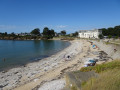
This is a circular route running along one side of the Étier de Billiers, Plage des Barges and Plage des Granges, not forgetting a walk around the Penn Lann Lighthouse.
In a single day, you can combine sightseeing, swimming and a walk, either on your own or with the family.
The trail follows, for the most part, the Chemin des Mégalithes between the marshes and the ocean.
The Vilaine river, right bank and left bank at La Roche-Bernard
 5.96 mi
+522 ft
-518 ft
3h 10
Moderate
Departure from Nivillac (Morbihan)
5.96 mi
+522 ft
-518 ft
3h 10
Moderate
Departure from Nivillac (Morbihan)
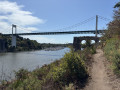
As you approach La Roche-Bernard, the Vilaine river winds its way through the geological folds of southern Armorica. The result is a rugged, wooded landscape that is very pleasant to walk through.