


Refine your search for walks in Tréméoc
Tréméoc walks


 Route via the Saint-Sébastien Chapel in Tréméoc
 Visorando Member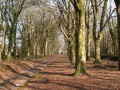
 5.77 mi
 +98 ft
 -82 ft
 2h 45
2h 45
 Easy
Easy
 Departure from Tréméoc (Finistère)
This countryside route alternates between sections on the old Quimper-Pont l'Abbé railway line, now converted for pedestrians and cyclists, small country roads and a long stretch through the woods.Along the way, discover the ruins of the Saint-Vital Chapel, lost in the middle of nature, as well as the better-known Saint-Sébastien Chapel.
In the Tréméoc countryside
 6.75 mi
+135 ft
-144 ft
3h 15
6.75 mi
+135 ft
-144 ft
3h 15
 Moderate
Departure from Combrit (Finistère)
Moderate
Departure from Combrit (Finistère)
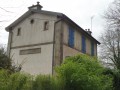
From the old Tréméoc railway station, once served by the Transbigouden line, we head to the Moulin Neuf reservoir, which supplies water to around ten towns in the Pont-l’Abbé area.
This is a chance to spot some birds on this 65ha reservoir. This countryside route alternates between small roads and sunken lanes.
The return journey follows the Voie Verte, which, in places, overlooks a wild and silent marshy area.
The Moulin Neuf lake walk
 4.57 mi
+23 ft
-26 ft
2h 05
Easy
Departure from Plonéour-Lanvern (Finistère)
4.57 mi
+23 ft
-26 ft
2h 05
Easy
Departure from Plonéour-Lanvern (Finistère)
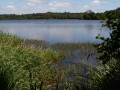
This is an easy walk around the reservoir, which supplies drinking water to eleven municipalities in the Pont-l'Abbé region. You can enjoy the peaceful, shaded surroundings and take the time to watch the birds that frequent this stretch of water: coots, gulls, grebes and a small colony of swans.
Combrit Cove and the Lestremeur site
 5.19 mi
+213 ft
-184 ft
2h 35
Easy
Departure from Plomelin (Finistère)
5.19 mi
+213 ft
-184 ft
2h 35
Easy
Departure from Plomelin (Finistère)
A route through the woods along the Anse de Combrit and the banks of the Odet, passing through the Lestremeur site: manor house, dovecote, fountain and bread oven.
Return via small roads lined with majestic beech trees.
Discover the Roman baths at Pérennou
 6.46 mi
+325 ft
-308 ft
3h 15
Moderate
Departure from Plomelin (Finistère)
6.46 mi
+325 ft
-308 ft
3h 15
Moderate
Departure from Plomelin (Finistère)
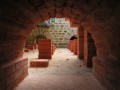
After walking through the countryside and along the Odet, visit the Roman baths at Le Perennou, which were restored in 2011, then return via the Lestremeur site and along Anse de Combrit.
Étang du Corroac'h circuit
 6.86 mi
+279 ft
-285 ft
3h 25
Moderate
Departure from Plomelin (Finistère)
6.86 mi
+279 ft
-285 ft
3h 25
Moderate
Departure from Plomelin (Finistère)
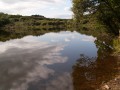
After passing the Lestremeur site, with its manor house and dovecote, continue through wooded areas to reach the Étang du Corroac'h. The return journey is via the greenway and then country lanes.
Manor of Lestremec and Etang du Moulin Neuf
 6.15 mi
+171 ft
-164 ft
3h 00
Easy
Departure from Pont-l'Abbé (Finistère)
6.15 mi
+171 ft
-164 ft
3h 00
Easy
Departure from Pont-l'Abbé (Finistère)
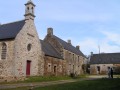
After walking along woodland paths to admire the manor "Manoir de Lestremec", we skirt the pond "Etang du Moulin Neuf".A short detour to enjoy the peace and quiet of the chapel "Chapelle de Kelou Mad" before returning along the greenway.
The Pont-L'Abbé water tower as a landmark.
Moulin Neuf Pond from Bonne Nouvelle Chapel
 6.35 mi
+157 ft
-157 ft
3h 05
Easy
Departure from Plonéour-Lanvern (Finistère)
6.35 mi
+157 ft
-157 ft
3h 05
Easy
Departure from Plonéour-Lanvern (Finistère)
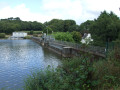
From the Bonne-Nouvelle Chapel, Kelou Mad in Breton, a route along a sunken lane and path bordering a wetland area where the Pont-l'Abbé River flows after passing through the Moulin Neuf reservoir leads to the edge of this body of water. The route continues around this reserve, created in 1977 to supply drinking water to eleven municipalities in the Pont-l'Abbé region. Visitors can enjoy the peaceful, shaded surroundings and take the time to observe the birds that frequent this stretch of water.
The Moulin Neuf lake, starting from the Languivoa Chapel
 7.50 mi
+236 ft
-243 ft
3h 40
Moderate
Departure from Plonéour-Lanvern (Finistère)
7.50 mi
+236 ft
-243 ft
3h 40
Moderate
Departure from Plonéour-Lanvern (Finistère)
From the 13th-century Notre-Dame de Languivoa Chapel – whose troubled history led to it being abandoned for a very long time, and whose restoration was completed in 2017 – this route leads to the Moulin Neuf lake, created as a drinking water reservoir for much of the region.
Along the countryside route, you’ll pass the Manoir de Lestremec (1643), which has been beautifully restored by its new owners, and come close to a solitary menhir.
Between the north and south of Pont-l'Abbé
 7.09 mi
+108 ft
-108 ft
3h 20
Moderate
Departure from Pont-l'Abbé (Finistère)
7.09 mi
+108 ft
-108 ft
3h 20
Moderate
Departure from Pont-l'Abbé (Finistère)
This route from north to south of Pont-l'Abbé allows you to discover pieces of the town's history. The Saint-Jacques de Lambour Chapel with its decapitated bell tower is a reminder of the Red Cap Revolt of 1675. The greenway follows a section of the old Transbigouden railway line that linked Pont-L'Abbé to Quimper and operated until 1963 the Château des Barons, built in the 13th and 14th centuries by the Barons of Pont, who became powerful lords, the inhabited bridge and, finally, the 19th-century towpath , built to cope with an increase in traffic and tonnage in the port.
Route of the towpath and tour of the lake
 6.07 mi
+39 ft
-39 ft
2h 50
Easy
Departure from Pont-l'Abbé (Finistère)
6.07 mi
+39 ft
-39 ft
2h 50
Easy
Departure from Pont-l'Abbé (Finistère)
After following the Pont-l'Abbé river, return to discover the lake and some of Pont-l'Abbé's historic sites, such as the Notre-Dame de Carmes Chapel and the old Lambour district with its partly ruined church.
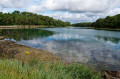
Towpath and undergrowth along the Pont-l'Abbé River
 4.09 mi
+36 ft
-36 ft
1h 55
Easy
Departure from Pont-l'Abbé (Finistère)
4.09 mi
+36 ft
-36 ft
1h 55
Easy
Departure from Pont-l'Abbé (Finistère)
This short walk from Pont-l'Abbé offers a wealth of heritage. It starts on the towpath along the river and continues through the woods past the Manoir de Trévannec before returning to the starting point.
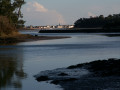
Pont-l'Abbé towpath and Rosquerno Wood
 3.46 mi
+39 ft
-39 ft
1h 40
Easy
Departure from Pont-l'Abbé (Finistère)
3.46 mi
+39 ft
-39 ft
1h 40
Easy
Departure from Pont-l'Abbé (Finistère)
This easy route begins on the towpath of the Rivière de Pont-l'Abbé, where the landscape changes with the tide, then continues through the protected natural area of the Bois de Rosquerno. After passing near the Rosquerno equestrian centre, the route continues past the Manoir de Trévanec, a little gem of Pont-l'Abbé’s heritage dating back to the 15th century, before rejoining the towpath.
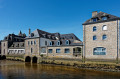
Gardens, heritage, greenway and river around Pont-l'Abbé
 5.25 mi
+95 ft
-95 ft
2h 30
Easy
Departure from Pont-l'Abbé (Finistère)
5.25 mi
+95 ft
-95 ft
2h 30
Easy
Departure from Pont-l'Abbé (Finistère)
This semi-urban route begins with a visit to the Jardin des Camélias, which has been recently renovated but is little known despite its location in the heart of the town. It continues with a tour of the main monuments of Pont-l'Abbé before heading out into the countryside on the outskirts of Tréméoc and returning to the starting point via a greenway and the banks of the Pont-l'Abbé river.
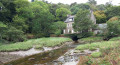
Combrit between two coves
 10.14 mi
+240 ft
-253 ft
4h 50
Moderate
Departure from Combrit (Finistère)
10.14 mi
+240 ft
-253 ft
4h 50
Moderate
Departure from Combrit (Finistère)
This varied route, which is not difficult, starts in the village of Combrit and winds its way along the banks of the Anse de Combrit (which flows into the Odet), those of the Anse du Pouldon (with a view of Île Chevalier at Pont-l’Abbé), small woods and the countryside. Here you will find peace and quiet, a variety of flora and wading birds.
The tour of the Bois de Roscouré from Combrit
 6.80 mi
+118 ft
-138 ft
3h 15
Moderate
Departure from Combrit (Finistère)
6.80 mi
+118 ft
-138 ft
3h 15
Moderate
Departure from Combrit (Finistère)
From the village of Combrit, whose church in 1675 was the starting point of the Revolt of the Stamped Paper, known as the “Red Caps” revolt, against the new taxes levied by King Louis XIV, follow the wide path along the western edge of the Bois de Roscouré, part of the Conservatoire du littoral. After passing under the Cornouaille bridge, continue a little further to discover the mouth of the Odet.The return journey follows the eastern edge, bordered by the river and its various inlets.
Around the village of Combrit through small woods and along the riverbank
 3.21 mi
+112 ft
-131 ft
1h 35
Easy
Departure from Combrit (Finistère)
3.21 mi
+112 ft
-131 ft
1h 35
Easy
Departure from Combrit (Finistère)
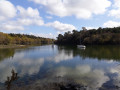
This short 5 km route (which flies by) around the village of Combrit can be completed by keen walkers in under an hour. However, thesecond half of the route encourages you to take your time, thanks to the varied landscape (wooded paths, the banks of Combrit Cove, wash houses, etc.). This route is not difficult and is suitable for both casual walkers and hikers.
The grand tour of Plomelin
 12.46 mi
+420 ft
-436 ft
6h 05
Moderate
Departure from Plomelin (Finistère)
12.46 mi
+420 ft
-436 ft
6h 05
Moderate
Departure from Plomelin (Finistère)
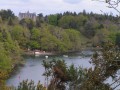
Plomelin offers many possible routes starting from the village. Several have already been suggested on Visorando
This longer route aims to give a more comprehensive view of this wooded commune, bordered by the River Odet and rich in heritage.
South-east of Plomelin via Anse de Combrit
 7.83 mi
+302 ft
-302 ft
3h 50
Moderate
Departure from Plomelin (Finistère)
7.83 mi
+302 ft
-302 ft
3h 50
Moderate
Departure from Plomelin (Finistère)
After some lovely stretches through the woods, we follow the Anse de Combrit, one of the Odet’s many coves.
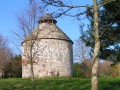
We reach the site of Lestremeur with its pond, fountain, wash house, bread oven and majestic dovecote. We pass the old manor house and follow a small road lined with imposing beech trees.
We’ll walk through the pastures where the horses and ponies from the riding centre graze, before returning to the banks of the Odet.
There is an option to take a detour leading to the Roman baths at Perennou, with a view of the castle.
Surroundings of the village of Plomelin
 4.16 mi
+108 ft
-115 ft
2h 00
Easy
Departure from Plomelin (Finistère)
4.16 mi
+108 ft
-115 ft
2h 00
Easy
Departure from Plomelin (Finistère)
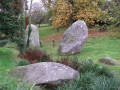
A walk along the western and then north-eastern edges of the village of Plomelin, through a mix of built-up areas and countryside. Several tree-lined paths enhance this route, which is particularly recommended in autumn. Three heritage sites: menhirs, the chapel and the fountain.
Banks of the Odet and countryside in Plomelin
 7.38 mi
+384 ft
-381 ft
3h 45
Moderate
Departure from Plomelin (Finistère)
7.38 mi
+384 ft
-381 ft
3h 45
Moderate
Departure from Plomelin (Finistère)
The route alternates between countryside, the Odet river and wooded areas around Plomelin on the outskirts of Quimper.
Around Plomelin
 6.21 mi
+335 ft
-341 ft
3h 10
Easy
Departure from Plomelin (Finistère)
6.21 mi
+335 ft
-341 ft
3h 10
Easy
Departure from Plomelin (Finistère)
Route along the banks of the Odet, then around Plomelin: passing the newly renovated Rossulien Mill, with a fine view of Kerambleiz Castle, one of the many castles overlooking this small coastal river.
L'Anse de Kerdour and L'Étang de Kerbernez via the Plomelin countryside
 7.69 mi
+302 ft
-312 ft
3h 50
Moderate
Departure from Plomelin (Finistère)
7.69 mi
+302 ft
-312 ft
3h 50
Moderate
Departure from Plomelin (Finistère)
Discover the soothing natural landscapes along the banks of a bend in the Odet.
L’Étang de Kerbernez, on a tributary of the river, offers a peaceful stroll through wooded surroundings.
Paths through the woods enhance this route.
Around the Chapel of La Tréminou
 6.52 mi
+66 ft
-75 ft
3h 05
Moderate
Departure from Plomeur (Finistère)
6.52 mi
+66 ft
-75 ft
3h 05
Moderate
Departure from Plomeur (Finistère)
An easy route through the countryside along small roads and shaded country lanes.
This magnificent chapel also played an important role in the Bonnets Rouges revolt in 1675. This revolt was a violent protest against the new taxes imposed by King Louis XIV: the creation of a tax on stamped paper and a tax on the possession of pewter objects, but also a protest against the harshness and increase in seigneurial taxes.