Refine your search for walks in Treigny
Treigny walks
Water and Woods Hiking Trail
Marked hike N°24.
Leaving from the fairground, you will walk along paths that have a mysterious past and are steeped in legends.
Treigny - Druyes-les-Belles-Fontaines
From castle to castle from the village of Treigny, taking in Ratilly and Guédelon, via Perreuse and its former barony, to reach Druyes-les-Belles-Fontaines and the view of its fortified castle.
Guédelon’s Path
Market circuit n°23.
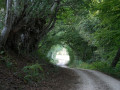
In an hour walking, rendezvous in the 13th century, on a legendary path and meet the middle-age castles builders.
View of the Forterre

Marked route No. 22.
Passing by the cathedral of Puisaye, a tour of the heights to discover vast horizons, alternating landscapes of large-scale farming and forests, dotted with springs. And then, Perreuse, a magnificent village with a rich history.
La Croix Saint-Jean
Marked route No. 21.A very pretty route for a short family hike, discovering the Vrille at the very beginning of the route with a ford crossing on the Pont des Canards, then, after the Croix Saint-Jean, another crossing on a stone bridge (the springs are a few hundred metres away). On the way back, you pass in front of the Saint-Symphorien church.
La Marlée wash house, orientation board and source of the Loing
From the hilltop village of Perreuse (in the commune of Treigny), this walk will have you dreaming of the Atlantic or the English Channel. The waters of the two springs on this route, though so close to one another, will only mix once they reach the ocean!
Panoramas and orientation table at Perreuse
Marked walk No. 25.
A sweeping view of the landscape stretching from Forterre to Puisaye, overlooking the ridges of the Morvan, the Sancerrois and the Loire Valley. This walk, with a slight elevation gain, offers not only this panoramic view but also a chance to delve into the history of this village with its picturesque houses and the Sully lime tree.
Heritage walk in Perreuse
A short walk to discover a village in the Puisaye region, Perreuse, which boasts a remarkable architectural heritage, including a church with a mural, a few pretty medieval houses, a wash house with a basin, a lovely fountain, and a lime tree known as the ‘Sully lime tree’.
From the Côte de Labert to the bell tower
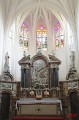
From the village, this path follows part of the ridges of the hill separating the two natural regions of Puisaye to the west and Forterre to the east.
On the Forterre side, the Moulin Buteau and the Source de la Pisserote
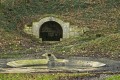
A historical and cultural route on the border between Puisaye and Forterre, with some beautiful views.
The source of the Loing
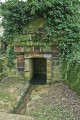
Discover the sources of the Seine catchment area, wash houses and scenic viewpoints.
Springs, fountains and wash houses
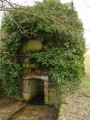
Marked trail No. 7.A hike focusing on springs and wash houses. All these springs feed the Paris Basin via the water table and the Seine via the Loing. Superbly well-marked route (No. 7) with no damage to the natural environment (no more paint on trees, monuments or houses). This route can be done on horseback or by mountain bike (in the opposite direction if possible).
Walk in Sainpuits in the Forterre valleys towards the Roman road
Marked trail No. 5.
At the crossroads of Puisaye, Forterre and the banks of the Nohain, this village invites you to discover its heritage and landscapes.
The pond and heritage of Moutiers-en-Puisaye
Starting from the village of Moutiers-en-Puisaye, cross the Loing, pass through woods, enjoy a beautiful view of the ruins of the old abbey and the pond, whilst discovering the local heritage.
Three Lakes Route
Marked trail No. 44.Through woods and farmland, passing by ponds, discover the environments where the earth is shaped into artistic creations and pottery.
Moutiers en Puisaye and its ponds
From this old pottery village, discover the ponds and small paths that make Puisaye so charming. If you are keen on wildlife or landscape photography, you will be delighted. If you are discreet, you will be able to see many varieties of ducks on the ponds, as well as herons and egrets. Sometimes you may be surprised by the passage of deer or roe deer and even nutria along the Loing.
The Moutiers pond
Marked trail No. 3.From the church with its magnificent murals, pass the Gué Ricart, discover the Moutiers pond via the Marseillaise, then the undergrowth before reaching Saint-Sauveur, Pays de Colette and her birthplace.
L'Orme du Pont from Moutiers-en-Puisaye
An all-season trail in this region of Puisaye amid hedges (bouchures), heritage, and legends.
Les sources - The springs
Marked hike N°8.
You will see no less than 8 fountains and 6 wash-houses on this rather easy hike, ideal for family walks. A few picnics spots are available here and there, to take a break and enjoy a relaxing moment (Fountain of the Moon, of the Pisserotte .....) Even though there are some hills along the way, it is a very pleasant walk with a lot of historical heritage spots to be discovered.
Also good for mountain biking.
The Path Along the Water
Marked route No. 45.
The Year 5 and 6 class from Dampierre-sous-Bouhy has created a walking route for you. This route will allow you to discover the landscapes of Puisaye and its many water sources.
We wish you a lovely walk and hope you enjoy exploring this route as much as they enjoyed creating it.
It can be completed in its entirety or with two alternative routes (see ‘Practical Information’ section).
Sentier de la Folie
Marked hike N°2.
A hike in the heart of the birthplace of Colette. Through woods and passing by ponds, often described in her work.
Between Puisaye and Forterre: water and woodland
A tour of Puisaye in the land of Colette and the Potiers, through its picturesque villages, heritage and landscapes where land, water and forests meet.
L'Orme du Pont by bike from Saint-Sauveur-en-Puisaye
After a brief incursion into the grounds of the Colette castle/museum and the passage at the foot of the Saracen tower, this walk continues through the countryside along the lanes of the Puisaye.
Sentier Colette - Walking with Colette
Marked hike N°1.
This trail, dedicated to Colette, was opened in 1993 by the pupils of the Colette college of Saint-Sauveur en Puisaye. Along this trail, everything recalls the works of this author, born in Saint-Sauveur en Puisaye in 1873. The author has described her birthplace so well - that even though she has given other names to the villages and characters, you can sense her literature at every corner.
L'étang de Moutiers depuis Saint-Sauveur-en-Puisaye
From Colette's birthplace, discover the greenways, the village of Moutiers and the Moutiers pond, where a few water chestnuts still float.Saint-Sauveur-en-Puisaye is listed as one of the "Cités de caractères de Bourgogne - Franche-Comté" (villages of character in Burgundy-Franche-Comté).
Panoramic route starting from Bouhy
Marked trail No. 33.
Geologically, the commune of Bouhy belongs to the Forterre, a region neighbouring the Puisaye. Its village is at an altitude of 355 metres. For walkers in search of vast horizons, this dominant position gives this route its panoramic interest, to which is added the architectural interest of the many chapels encountered along the way.
La Coupure du Lac du Bourdon
Marked route No. 86A short route combining part of the lake shore and sunken paths in the undergrowth. Depending on the water level of the lake, the shore may be preferable to the path.
Grand tour of Lake Bourdon
Explore the lake, its ponds and feeding streams. Walk through the woodland along sandy paths or small roads. Beautiful views on both sides of the lake’s dam. This reservoir is the first in a long series upstream that feeds the Briare Canal.
The gardens of the Lac du Bourdon spillways
Marked route No. 85After a section through the woods and then in the open, the gardens below Lac du Bourdon offer a superb panorama of rows of spillways channelled by walls built of Puisaye sandstone. Then, following part of the lake, return to the bathing area and the car park.
The Chemin Carriès
Marked trail No. 40
Taking this path is to step into the life and work of Jean-Joseph Carriès. This trail begins with the history of pottery and ends with a sunken path lined with works by ceramicists and the potters’ quarters in the village of Saint-Amand-en-Puisaye.
Les Méandres de la Vrille
Waymarked walk N° 38
In the land of the potters, there is first and foremost the clay that serves as the raw material for the craftsmen, then the water that gushes out of the clay-silica or clay-limestone soils, depending on the geology of the subsoil in this area. But there's also the beauty of nature, with its landscapes, paths framed and even marked by these hedges and their sometimes mysterious, sometimes mischievous tadpoles. They are the source of some of the legends that live in the area.
Fortified House
Marked walk No. 39From the16th-century castle at the very start of the route to the ruins of Maison Fort Castle, the route takes you past the ponds—the largest of which is the Étang de la Forge—and the Chemin du Tacot.
The wash houses
Please note: The official route for this trail has been modified for the period from 18 March 2026 to 30 April 2026. Directional signposts have been installed during this period between (10) and (11).
Marked route No. 9.From wash house to wash house, passing through old underground limestone quarries and ancient Neolithic and Palaeolithic sites, this route circles the village. At every crossroads, you can head into the village centre. Beautiful views along much of the route.Please note: this route is reserved for walkers. For mountain bikers, hybrid cyclists or horse riders, this route is designed for you.
The wash houses and thatched roofs of Thury by mountain bike
A mountain bike route for hiking enthusiasts, featuring natural and built heritage. A real treat! But do stay safe!
From Thury to Lainsecq via the Montagne des Alouettes
Pass by the Moulery wash house and the Roman road with panoramic views of Puisaye, Forterre, Frétoy Forest and Druyes Castle.
Between the Fossés Noirs and the Pierre Noire
Starting from St Julien church, follow the paths to reach the Moulin de Hausse Côte.
The Marquise du Deffand Trail
Marked walk No. 20.A historic route featuring, close to the start, the Cross of Saint-Prix (martyred in 274), the village of Le Deffand where the Marquise du Deffand stayed inthe 18th century, and the monument to Alfred Saison – a republican activist – who fought in 1852 against Louis Napoleon Bonaparte’s coup d’état of 2 December 1851.
Vanneau Mill Trail
Marked walk No. 18.
Set off along the paths to discover a farm of yesteryear. Explore a botanical trail, a heritage orchard and a museum of agricultural tools.
The Moulin de Hausse Côte Trail
Marked walk No. 19.
Winding through the lush green landscapes of the woods and meadows of Puisaye and the cultivated fields of Forterre, this trail passes from one natural region to another and offers beautiful panoramic views from the Hausse Côte hill.
The spillways of Lac du Bourdon
A short walk to explore the spillways of Lac du Bourdon, behind the dam commissioned in 1905. There are two spillways: the Rigole du Bourdon for the cold water at the bottom of the lake, and the Ruisseau du Bourdon for the surface water. The latter is laid out in “terraces”, creating waterfalls when the water is released. You’ll be lucky enough to see them if you visit at the right time. Otherwise, it’s still a very pretty spot! Read the safety information in the Practical Information section.
Circuit de La Chapelle aux Rois
Marked trail No. 35.The commune of Bitry covers 1,746 hectares. The Ramois boundary marker is at an altitude of 326 metres, while the La Maloise river flows at the lowest point, 189 metres above sea level.Between the village and the hamlet of Les Beauchats, you can visit a chapel dedicated to Saint Marc and Saint Roc, which was restored in the 20th century.
La Villéon discovery trail in Puisaye
Marked trail No. 61.Emmanuel de La Villéon (1848-1944) was a painter of Breton origin (Fougères, where he has his museum) who lived from 1900 to 1936 in a mansion in the hamlet of Salvard. An admirer of Monet, he adopted most of the characteristics of Impressionism.This route, now enhanced with panels featuring reproductions and commentary, allows visitors to rediscover some of the places painted by the artist, including certain characteristics of the Poyaudin bocage.
Entrains - Ouanne via the Roman road
Route along part of the Roman road linking Bourges to Auxerre, starting from Entrains-sur-Nohain (formerly Intaranum in Gallo-Roman times) in the Nièvre department to Ouanne (Odoana) in the Yonne department.From the vast expanses of woods and forests and the large plains of cultivated land, passing through two of the highest points in this region (367m and 368m), discover new spaces, views, fauna and flora on these limestone plateaus and hills.
Walk in Saint-Fargeau
A walk to perhaps round off the day with a visit to the castle and/or the museum. As you wander through the streets, you’ll see medieval houses, wash houses, the old market hall, and you’ll often cross the Ruisseau du Bourdon.
Murals in Puisaye – Sainte-Anne, Saint-Pierre and Saint-Fiacre
La Puisaye: not just blue and green in the landscape, but also ochre in the subsoil. It is from this natural pigment that artists since the 12th century have adorned many of the region’s religious buildings. This walk allows you to discover three of the fifteen or so listed to date.A route along charming country lanes...
Le Moulin Fleury
Marked route No. 113.The historic centre of Saint-Fargeau and a nature walk are the main attractions of this outing.From the red-brick castle to the murals of the Sainte-Anne Chapel, via the Loing river, this is a bucolic walk.
More walks in Treigny
Select a point of interest below: