


Refine your search for walks in Saint-André-des-Eaux
Saint-André-des-Eaux walks

 The Faluns Route around Le Quiou
 Visorando Member
 2.72 mi
 +30 ft
 -30 ft
 1h 15
1h 15
 Easy
Easy
 Departure from Le Quiou (Côtes-d'Armor)
This easy route takes you on a journey of discovery through the Pays des Faluns, combining the Greenway, local heritage and landscapes shaped by the ancient Faluns Sea. The route offers a pleasant and accessible walk, ideal for a family outing.
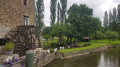
Tour of the Évran Locks
 4.41 mi
+135 ft
-125 ft
2h 10
Easy
Departure from Évran (Côtes-d'Armor)
4.41 mi
+135 ft
-125 ft
2h 10
Easy
Departure from Évran (Côtes-d'Armor)
A lovely walk starting and ending in Évran (22), taking in the landscapes of romantic Brittany with its valleys, winding canal and locks.
Exploring the Calorguen countryside
9.15 mi
+328 ft
-302 ft
4h 30
 Moderate
Departure from Calorguen (Côtes-d'Armor)
Moderate
Departure from Calorguen (Côtes-d'Armor)
This walk allows you to explore the typical villages of the Pays des Faluns along stony paths. The towpath of the Ille and Rance Canal will take you past its lock-keeper’s houses and lead you to the old watermills on the River Rance.
Tour of Saint-Judoce
 8.03 mi
+62 ft
-72 ft
3h 45
Moderate
Departure from Trévérien (Ille-et-Vilaine)
8.03 mi
+62 ft
-72 ft
3h 45
Moderate
Departure from Trévérien (Ille-et-Vilaine)
Discover romantic Brittany, between the two departments of Ille-et-Vilaine and Côtes d’Armor, as you travel along part of the Ille and Rance Canal!
From Le Diable to the Rance Valley via Guenroc
 5.62 mi
+505 ft
-502 ft
3h 00
Moderate
Departure from Guenroc (Côtes-d'Armor)
5.62 mi
+505 ft
-502 ft
3h 00
Moderate
Departure from Guenroc (Côtes-d'Armor)
A small village with unexpected treasures, perched high above the Rance Valley. Don’t miss a visit to the church with its devil, its Christ the King, and the view over the Rophemel Dam, which marks the end of the Rance Valley.
From Lehon Abbey to Saint-Pern
 15.55 mi
+587 ft
-322 ft
7h 40
Moderate
Departure from Léhon (Côtes-d'Armor)
15.55 mi
+587 ft
-322 ft
7h 40
Moderate
Departure from Léhon (Côtes-d'Armor)
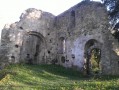
A long hike for experienced walkers, from Lehon (Côtes-d'Armor), starting at the old Saint-Magloire Abbey (founded in the 9th century) to Saint-Pern (Ille-et-Vilaine), the mother house of the Little Sisters of the Poor. A page of history and religious life waiting to be discovered.
Route du patrimoine et de la nature de Dinan
 Association / Club / Walk leader5.03 mi
+269 ft
-253 ft
2h 35
Moderate
Departure from Dinan (Côtes-d'Armor)
Association / Club / Walk leader5.03 mi
+269 ft
-253 ft
2h 35
Moderate
Departure from Dinan (Côtes-d'Armor)
The route takes you through the old town of Dinan and past several points of interest, then down into the Rance valley. It passes through Léhon, a picturesque little village, and ends along the Rance and the port of Dinan. For the tour of the walls, see the map on the Dinan Agglo website (see practical information). The journey time does not include breaks and stops for visits or sightseeing!
The Green Belt of Dinan and the Rance Valley
 6.14 mi
+449 ft
-472 ft
3h 15
Moderate
Departure from Dinan (Côtes-d'Armor)
6.14 mi
+449 ft
-472 ft
3h 15
Moderate
Departure from Dinan (Côtes-d'Armor)
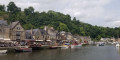
A town of art and history, Dinan is a place of great beauty. Its historic centre takes us back to the Middle Ages and from the top of its ramparts, visitors can look out over the Rance valley and the road viaduct which, with its 10 arches and 50-metre height, spans the Rance.
To this, we must add a stroll through the magnificent town centre of Léhon and finally a romantic walk along the Rance.
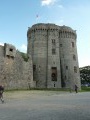
Estuary Left bank of the Rance - Loop starting from Dinan
 15.83 mi
+725 ft
-702 ft
7h 55
15.83 mi
+725 ft
-702 ft
7h 55
 Difficult
Departure from Dinan (Côtes-d'Armor)
Difficult
Departure from Dinan (Côtes-d'Armor)
Loop around Dinan between Rance and Pays du Poudouvre via the Écluse du Châtelier to La Moinerie in the commune of Plouër-sur-Rance.
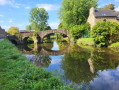
Tressaint on the banks of the Rance
 6.59 mi
+558 ft
-564 ft
3h 30
Moderate
Departure from Lanvallay (Côtes-d'Armor)
6.59 mi
+558 ft
-564 ft
3h 30
Moderate
Departure from Lanvallay (Côtes-d'Armor)
First, enjoy a breathtaking view of the Dinan viaduct with two passages under the arches, then stroll along the canalised Rance to reach the village of Tressaint and its woods. This route offers peace and serenity, even though it is very close to a popular tourist destination.
The Rance and the historic heart of Dinan
3.95 mi
+292 ft
-292 ft
2h 05
Easy
Departure from Lanvallay (Côtes-d'Armor)
Wind your way along the banks of the Rance, stopping off at the Abbaye Sainte-Magloire-de-Léhon to visit the fortified heights and historic heart of Dinan.
Tour of Bécherel
 3.47 mi
+387 ft
-381 ft
1h 55
Moderate
Departure from Bécherel (Ille-et-Vilaine)
3.47 mi
+387 ft
-381 ft
1h 55
Moderate
Departure from Bécherel (Ille-et-Vilaine)
Stroll through and around Bécherel.
A few tricky ascents and descents, but a very pleasant route for exploring this charming town!
Enjoy the walk, everyone!
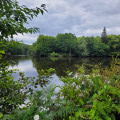
The Étang du Val as seen from Trélivan
 7.46 mi
+200 ft
-207 ft
3h 35
Moderate
Departure from Trélivan (Côtes-d'Armor)
7.46 mi
+200 ft
-207 ft
3h 35
Moderate
Departure from Trélivan (Côtes-d'Armor)
This route will take you through the countryside along lovely paths and tracks with very little tarmac. The stretch through the hamlet of Le Férulais is sure to make an impression. After skirting the Étang du Val and following some very pretty little paths through the woods, you’ll reach the village of Trélivan at the Val Drouet park, where old houses and a small pond lend it an undeniable charm.
Route de Tertre Guy in Mesnil-Roc'h and Saint-Pierre-de-Plesguen
 8.37 mi
+138 ft
-144 ft
4h 00
Moderate
Departure from Saint-Pierre-de-Plesguen (Ille-et-Vilaine)
8.37 mi
+138 ft
-144 ft
4h 00
Moderate
Departure from Saint-Pierre-de-Plesguen (Ille-et-Vilaine)
Saint-Pierre-de-Plesguen borders the Mesnil forest to the south-east. The route is very wooded and lined with a few picturesque hamlets where you can see some old stone houses weathered by time, in varying states of repair.
A magnificent bread oven can be seen just off the route at a place called La Planche, at the first house on the right.
Route des Molives in Miniac-sous-Bécherel
6.02 mi
+213 ft
-207 ft
2h 55
Easy
Departure from Miniac-sous-Bécherel (Ille-et-Vilaine)
Quite a few quiet roads and sunken lanes (best used in dry weather). Lovely views of the surrounding countryside. Signposting (blue square on a yellow background) is a bit dated, and there are a few signs still indicating the route. I have also included various possible alternatives in the description to avoid unmaintained sunken lanes.
More walks in Saint-André-des-Eaux
Select a point of interest below: