


Refine your search for walks in Orbaizeta
Orbaizeta walks


 Arlekia Lauzaran
 Association / Club / Walk leader
 6.92 mi
 +1,289 ft
 -1,289 ft
 4h 20
4h 20
 Moderate
 Departure from Orbaizeta (Navarre)
This route starts at the Royal Arms and Munitions Factory in Orbaizeta and takes a lovely circular route through the forest, following much of the local path known as SL-NA-59B.It is enhanced here by a visit to the ruins of Arlekia Castle, which gave its name to the walk.
The Urkulu Tower
 Tourist office
 2.14 mi
+702 ft
-699 ft
1h 35
2.14 mi
+702 ft
-699 ft
1h 35
 Easy
Departure from Saint-Michel (Pyrénées-Atlantiques) (Pyrénées-Atlantiques)
Easy
Departure from Saint-Michel (Pyrénées-Atlantiques) (Pyrénées-Atlantiques)
The Urkulu Trophy: this imposing stone tower is thought to have been built in Roman times to intimidate invaders of the powerful Roman army... even though it is located off the route from Bordeaux to Astorga via Pamplona.
Urkulu from the Organbide Pass
 Visorando Member
 7.38 mi
+1,798 ft
-1,827 ft
4h 55
Moderate
Departure from Estérençuby (Pyrénées-Atlantiques)
7.38 mi
+1,798 ft
-1,827 ft
4h 55
Moderate
Departure from Estérençuby (Pyrénées-Atlantiques)
A beautiful circular route on grassy slopes between 1,000 and 1,400 m takes you to an exceptional panorama, the ruins and the Roman tower, which rises to 1,423 m. A great moment and a great memory.
GPS essential.
Urkulu circular loop from the Col d'Orgambidé
 6.82 mi
+1,821 ft
-1,818 ft
4h 45
Moderate
Departure from Saint-Michel (Pyrénées-Atlantiques) (Pyrénées-Atlantiques)
6.82 mi
+1,821 ft
-1,818 ft
4h 45
Moderate
Departure from Saint-Michel (Pyrénées-Atlantiques) (Pyrénées-Atlantiques)
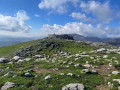
We thoroughly enjoyed this route, which I "invented" to change my usual habit of climbing almost straight up through the forest and descending almost the same way. A variety of landscapes and atmospheres are on the menu during this fairly leisurely 3½-hour walk. I have fond memories of passing by the stream and its blue-green pools, surrounded by meadows covered with spring flowers. It's as romantic as you could wish for. In short, you want to take your time here, so those who are keen on sporting achievements should refrain!
The Urculu circular loop from Croix Thibault
 6.40 mi
+1,739 ft
-1,716 ft
4h 30
Moderate
Departure from Arnéguy (Pyrénées-Atlantiques)
6.40 mi
+1,739 ft
-1,716 ft
4h 30
Moderate
Departure from Arnéguy (Pyrénées-Atlantiques)
The D428 alone offers wonderful scenery. Unless you make frequent stops, you won't be able to enjoy it much as it's best to keep your eyes on the road. The Urculu offers different scenery along this route as you pass through plateaus with magnificent views of the surrounding area and the Basque and Béarn mountains.
Mendizar from the Nive springs
12.16 mi
+3,465 ft
-3,468 ft
8h 35
 Very difficult
Departure from Estérençuby (Pyrénées-Atlantiques)
Very difficult
Departure from Estérençuby (Pyrénées-Atlantiques)
Mendizar is a remote and little-visited peak in Navarre. Offering beautiful panoramic views, it lies on the Atlantic–Mediterranean watershed. A long and beautiful circular walk, passing through the Col d’Organbide on the way out, to reach this magnificent viewpoint.
Roncesvalles loop via Burguete
 7.06 mi
+778 ft
-784 ft
3h 55
Moderate
Departure from Orreaga/Roncesvalles (Navarre)
7.06 mi
+778 ft
-784 ft
3h 55
Moderate
Departure from Orreaga/Roncesvalles (Navarre)
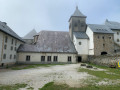
A beautiful loop around the hospitable center of Roncesvalles, an important stage in the pilgrimage to Santiago de Compostela.Roncesvalles is called Roncesvalles in Castilian, or Orreaga in Basque.
The route passes through the village of Auritz (in Basque) or Burguete (in Castilian).
Mendixuri and Lindus near Roncesvalles
9.42 mi
+1,627 ft
-1,644 ft
5h 45
 Difficult
Departure from Orreaga/Roncesvalles (Navarre)
Difficult
Departure from Orreaga/Roncesvalles (Navarre)
A very beautiful circular route offering a fairly easy climb up the magnificent Mendixuri. The ascent is mainly along marked tracks or a few clearly visible paths to the foot of the Mendixuri rock. The final 100 metres are along a fairly obvious path leading to the summit. You’ll then be treated to stunning views as you follow a level track to the foot of Lindus. From there, you’ll need to climb a path on the Spanish side to a barbed-wire fence, which you follow to the summit. Alternatively, carry on along the track for a short while until you come across a gap to cross the fence and climb up on the French side via a more visible mountain-bike track that also follows the barbed wire to the summit. The Lindus is of interest mainly for its historical significance. It was the site of a fortification during a Napoleonic battle. Descend on the French side to the road (or on the Spanish side, but you’ll need to cross the barrier at the bottom). Then follow the track to the Ibañeta Pass. From there, follow the Way of St James.
Roncesvalles - Esteribar
 20.74 mi
+1,480 ft
-3,114 ft
10h 50
Difficult
Departure from Orreaga/Roncesvalles (Navarre)
20.74 mi
+1,480 ft
-3,114 ft
10h 50
Difficult
Departure from Orreaga/Roncesvalles (Navarre)
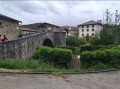
The forty-seventh stage of the Camino de Santiago. A long stage but less gruelling than the previous day’s, despite a somewhat arduous descent towards Zubiri. Along this route, you’ll alternate between landscapes of beech and pine forests and charming little villages with typical Navarran architecture. From this stage onwards, the signposting on the Camino de Santiago in Spain consists of yellow arrows—either painted on the ground, on building facades, on rocks or on trees—or specific European signage featuring a stylised yellow scallop shell on a blue background. This logo may also take the form of bronze scallop shells nailed to walls or set into the ground in the major towns along the route, indicating the direction towards Santiago de Compostela.
L'Iramendy from Estérençuby
 7.98 mi
+2,290 ft
-2,287 ft
5h 40
Difficult
Departure from Estérençuby (Pyrénées-Atlantiques)
7.98 mi
+2,290 ft
-2,287 ft
5h 40
Difficult
Departure from Estérençuby (Pyrénées-Atlantiques)
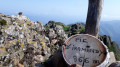
The Iramendy ridge is bristling with poudingue peaks (conglomerate of round pebbles). From Saint-Jean-Pied-de-Port, this gives it the appearance of a dinosaur. Climbing to the summit via this ridge from north to south requires a bit of scrambling (level 2 lower). The proposed hike climbs to the summit via the other ridge. No difficulties other than the total elevation gain and a few steep sections. Magnificent 360° view of the surrounding mountains.
The Azketa huts
9.85 mi
+2,631 ft
-2,631 ft
6h 50
Moderate
Departure from Estérençuby (Pyrénées-Atlantiques)
From the Nive de Béhérobie in Estérençuby, head up one of its tributaries, the Bihurriko Erreka, to discover the peaceful heights where shepherds and their sheep reign supreme. The Azketa huts are inhabited during the summer grazing season. They shelter beautiful Basque-Béarnaise horned sheep. These pastures are also popular with pottoks, the small Basque horses.
Iraukotuturu and return from the Errekaxaro pass via the Malbei ridges
 8.01 mi
+2,976 ft
-2,959 ft
6h 15
Difficult
Departure from Lecumberry (Pyrénées-Atlantiques)
8.01 mi
+2,976 ft
-2,959 ft
6h 15
Difficult
Departure from Lecumberry (Pyrénées-Atlantiques)
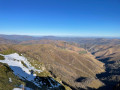
The D'esternguibel valley is a wild site in Lower Navarre. Its steep sides are bristling with ridges and peaks. Iraukotuturu is the highest peak. To reach it, head for the Errékaxaro pass and from there follow a path carved into the rock in places, which was once used for transhumance of sheep.
Occabé loop and cromlechs via Chalet Pedro
 6.59 mi
+1,657 ft
-1,673 ft
4h 30
Moderate
Departure from Lecumberry (Pyrénées-Atlantiques)
6.59 mi
+1,657 ft
-1,673 ft
4h 30
Moderate
Departure from Lecumberry (Pyrénées-Atlantiques)
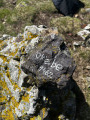
Occabé is the highest point on the Iraty plateau. It offers a 360° view of the Pyrenees mountain range. The Occabé plateau is home to the most extraordinary megalithic site in the Basque Country. The ascent and descent take you through the largest beech forest in Europe. It's beautiful everywhere.
The Occabé circular
 7.19 mi
+1,942 ft
-1,936 ft
5h 00
Moderate
Departure from Mendive (Pyrénées-Atlantiques)
7.19 mi
+1,942 ft
-1,936 ft
5h 00
Moderate
Departure from Mendive (Pyrénées-Atlantiques)
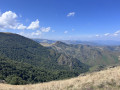
This is a beautiful walk. It crosses the largest beech forest in Europe. From the summit of Occabé, the highest point in the Iraty Forest, the view is magnificent. Below, there is a large necropolis of Neolithic shepherds.
It has around twenty well-preserved cromlechs. They date back to 1000 BC and are a kind of circle in the middle of which the ashes of the dead were placed.
Discover the mysterious Occabé Cromlechs
 8.18 mi
+1,772 ft
-1,755 ft
5h 20
Moderate
Departure from Mendive (Pyrénées-Atlantiques)
8.18 mi
+1,772 ft
-1,755 ft
5h 20
Moderate
Departure from Mendive (Pyrénées-Atlantiques)
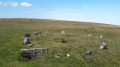
A magnificent and varied hike that allows you to discover the mysterious Occabé cromlechs. After a climb in the shade of a beautiful beech forest, you arrive at the beautiful Occabé plateau with its horses, cows, sheep and famous cromlechs. The view across the plateau is magnificent, especially from the summit of Occabé, which rises to an altitude of 1,456 metres. Descend through the woods and return via a beautiful little path that runs alongside a river to the car park.
Pic des Escaliers from the Iraty campsite
5.68 mi
+1,903 ft
-1,352 ft
4h 15
Moderate
Departure from Larrau (Pyrénées-Atlantiques)
Variation of the GR®10 starting from the Iraty Campsite. Start in the undergrowth in a magnificent Basque beech forest, then walk through the mountain pastures with griffon vultures circling above. A peaceful short hike with magnificent views of the Pyrenees and the Basque Country.
Please note that there are many animals roaming freely, so it is best not to bring your dog.
As this hike does not return to the starting point, leave another vehicle at the Col de Bagargi.
Saint-Michel-Vierge d'Orisson circular on the old Saint-Jacques route
 13.39 mi
+3,018 ft
-3,018 ft
7 hrs
Very difficult
Departure from Saint-Michel (Pyrénées-Atlantiques) (Pyrénées-Atlantiques)
13.39 mi
+3,018 ft
-3,018 ft
7 hrs
Very difficult
Departure from Saint-Michel (Pyrénées-Atlantiques) (Pyrénées-Atlantiques)
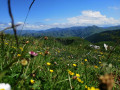
A sublime hike along part of the historic Way of St James. The weight of history is on your shoulders, but it feels light as the arrival at the Virgin of Orisson is so beautiful. A long climb on unpaved ground with a steady slope through the summer pastures of the Basque Country does not spoil the pleasure, especially as the path is shaded.
The Béhorléguy loop via the Col d'Aphanize
 4.98 mi
+1,772 ft
-1,749 ft
3h 50
Moderate
Departure from Mendive (Pyrénées-Atlantiques)
4.98 mi
+1,772 ft
-1,749 ft
3h 50
Moderate
Departure from Mendive (Pyrénées-Atlantiques)
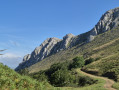
Seen from a distance, the silhouette of Behorleguy gives the impression of an enormous peak and of being difficult. In fact, this is misleading and when you arrive on its southern face, it has a rather rounded shape. It is an enormous limestone fold that heralds the Arbailles massif. Magnificent view from the summit with the Pic des Escaliers to the south and the Arbailles massif to the north..
At the Col d'Aphanize, you can see a vertical chasm 500 m deep, one of the deepest chimneys in the world.
The Col d'Urzategiak
4.63 mi
+1,066 ft
-889 ft
3h 05
Moderate
Departure from Béhorléguy (Pyrénées-Atlantiques)
Every autumn, the Col d'Urtzategiak is gripped by ‘blue fever’. It affects a large part of the local population. The hunters are all perched on the ridges, in the trees, watching for the migration of the wood pigeon.