


Refine your search for walks in Marigné-Laillé
Marigné-Laillé walks
 Segrais Castle route
 Visorando Member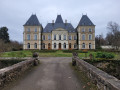
 5.31 mi
 +207 ft
 -210 ft
 2h 35
2h 35
 Easy
Easy
 Departure from Saint-Mars-d'Outillé (Sarthe)
The route runs across agricultural land south of the Rhonne valley and ends by crossing an area of moorland adjacent to the Bercé Forest.
Meet the woodland elves of the Bercé State Forest
3.70 mi
+194 ft
-194 ft
1h 50
Easy
Departure from Saint-Vincent-du-Lorouër (Sarthe)
Legend has it that the wood elves like to sleep at the bottom of the valleys and dance around the magnificent oak trees. Perhaps you’ll come across them?
The Holly Route in Mulsanne
4.09 mi
+39 ft
-39 ft
1h 55
Easy
Departure from Mulsanne (Sarthe)
At the foot of the famous 24 Hours of Le Mans route, a pleasant stroll beneath Scots pines and maritime pines where the squirrel reigns supreme.
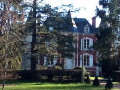
The Orée de Bercé-Belinois Route
 6.22 mi
+66 ft
-66 ft
2h 55
Easy
Departure from Moncé-en-Belin (Sarthe)
6.22 mi
+66 ft
-66 ft
2h 55
Easy
Departure from Moncé-en-Belin (Sarthe)
During this walk, you will encounter different periods of history, from the 12th century right up to the Second World War.
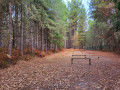
Around Boulevard Nature: Ruaudin, amidst the pine trees
 Tourism professional
 4.86 mi
+16 ft
-13 ft
2h 15
Easy
Departure from Ruaudin (Sarthe)
4.86 mi
+16 ft
-13 ft
2h 15
Easy
Departure from Ruaudin (Sarthe)
Set off on a walk through the heart of Ruaudin’s countryside! From the town centre, discover the area’s heritage through the church, the wash house and the old tram bridge. You’ll then follow the course of the ‘Le Roule-Crottes’ stream to the beautiful pine forest that gives the town its charm. Along the way, make the most of the facilities: picnic areas, a playground, a fitness trail and benches.
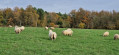
On the edge of the woods from Volnay
 13.34 mi
+502 ft
-492 ft
6h 35
13.34 mi
+502 ft
-492 ft
6h 35
 Difficult
Departure from Volnay (Sarthe) (Sarthe)
Difficult
Departure from Volnay (Sarthe) (Sarthe)
The name Val-de-la-Hune, adopted at the time of the merger, refers to the location of the two villages situated in the valley at the confluence of the Ruisseau de l’Arche and the Hune. The area has been inhabited since ancient times, as evidenced by the dolmen on the border with Tresson, dating from the Neolithic period, and the ancient road, the Via Turniacensis, linking Le Mans to Blois; passing through Volnay and Saint-Mars-de-Locquenay before heading towards the Loir Valley. This facilitated the development of large agricultural estates, explaining the presence of numerous fiefdoms in medieval times, of which few remains are left (Champion, Pois, Le Grand Yvay, Mélève, Sargilet), with the exception of La Chesnaye, which incorporated most of them during the Modern Era (16th–18th centuries).
Les Sapins des Pauvres
 11.37 mi
+302 ft
-289 ft
5h 30
11.37 mi
+302 ft
-289 ft
5h 30
 Moderate
Departure from Saint-Mars-de-Locquenay (Sarthe)
Moderate
Departure from Saint-Mars-de-Locquenay (Sarthe)
The name adopted at the time of the merger refers to the location of the two villages situated in the valley at the confluence of the Arche and Hune streams. The area has been inhabited since ancient times, as evidenced by the dolmen on the border with Tresson, dating from the Neolithic period, and the ancient road – the Via Turniacensis – linking Le Mans to Blois; passing through Volnay and Saint-Mars-de-Locquenay before heading towards the Loir Valley. This facilitated the development of large agricultural estates, explaining the presence of numerous fiefdoms in medieval times, of which few traces remain (Champion, Pois, Le Grand Yvay, Mèleve, Sargilet), with the exception of La Chesnaye, which incorporated most of them during the Modern Era (16th–18th centuries).
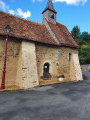
Courdemanche and its Saint-Fraimbault Chapel
 8.88 mi
+554 ft
-584 ft
4h 35
Moderate
Departure from Courdemanche (Sarthe) (Sarthe)
8.88 mi
+554 ft
-584 ft
4h 35
Moderate
Departure from Courdemanche (Sarthe) (Sarthe)
A hike through two valleys. It passes through the hamlet of Saint-Fraimbault and its restored chapel.
Around the Boulevard Nature: Arnage, the witch’s curse
 3.79 mi
+10 ft
-10 ft
1h 45
Easy
Departure from Arnage (Sarthe)
3.79 mi
+10 ft
-10 ft
1h 45
Easy
Departure from Arnage (Sarthe)
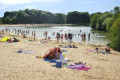
This walk, along the banks of the Sarthe, follows a section of the Boulevard Nature. It starts at Arnage harbour, goes to the Gémerie lake and circles it before returning to Arnage harbour. If you wish to extend your walk, you can continue past Arnage harbour by following the signs for the Boulevard Nature.It is accessible to people with reduced mobility as well as to three-wheeled pushchairs (also suitable for three-wheeled wheelchairs).
Loudon Ponds and Wood
2.56 mi
+177 ft
-171 ft
1h 20
Easy
Departure from Parigné-l'Évêque (Sarthe)
This circular walk allows you to discover a site not far from Le Mans that is rich in natural beauty. Ponds, peat bogs, wet and dry heathland, and marshy woods... all form a mosaic of landscapes that are home to species rare in the region: harriers, hobby falcons, goshawks, purple herons (among the birds); and royal ferns, marsh marigolds and sundews (among the plants).
Discovering the woods and ponds of Loudon
 4.85 mi
+36 ft
-36 ft
2h 15
Easy
Departure from Saint-Mars-la-Brière (Sarthe)
4.85 mi
+36 ft
-36 ft
2h 15
Easy
Departure from Saint-Mars-la-Brière (Sarthe)
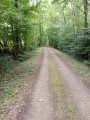
Parigné-Lévêque is a very large and heavily wooded commune: northern pines with sand dunes, and southern chestnut and birch trees. The route allows you to discover the charm of numerous woodlands, vast moors and ponds. The Loudon Stream is crossed in several places.
The Sourice Valley
 6.31 mi
+203 ft
-190 ft
3h 05
Moderate
Departure from Surfonds (Sarthe)
6.31 mi
+203 ft
-190 ft
3h 05
Moderate
Departure from Surfonds (Sarthe)
The parish underwent a re-demarcation in 1836: certain farms such as La Bardouillère and houses in the village were part of Volnay. Since then, the south-eastern boundary has been formed by the Ruisseau la Sourice. Under the Ancien Régime, the parish seigneury was annexed to the Château du Coudray, which you will see to the right of the hill as you head towards La Bardouillère. The village still has traditional houses near the church; it has gradually expanded towards the crossing point over the Sourice, where the roads from Surfonds to Bouloire and from Le Breil to Volnay used to meet, later transformed inthe 19th century into the main road from Tuffé to Le Grand-Lucé.
The Étangsort Valley towards Tresson
 8.68 mi
+348 ft
-351 ft
4h 20
Moderate
Departure from Tresson (Sarthe)
8.68 mi
+348 ft
-351 ft
4h 20
Moderate
Departure from Tresson (Sarthe)
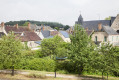
The origins of the settlement of Tresson are very ancient, as evidenced by a dolmen situated not far from Les Basses Poches. Furthermore, the territory of Tresson is crossed by the Via Turniacensis, near which a large agricultural estate is recorded in 572. This villa was donated by Bishop Domnole to Saint-Vincent Abbey, which established a priory in Tresson. This combination of factors led to the development of the present-day village in the Étangsort valley.
Around the Boulevard Nature: Arche de la Nature, amidst heathland and chestnut trees
 7.72 mi
+138 ft
-138 ft
3h 40
Moderate
Departure from Yvré-l'Évêque (Sarthe)
7.72 mi
+138 ft
-138 ft
3h 40
Moderate
Departure from Yvré-l'Évêque (Sarthe)
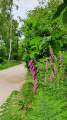
This forest walk from the Arche de la Nature takes you past a variety of tree species.It allows you to explore much of the site, walking along both wide paths and narrow tracks.
The green lung of the Arch
 6.63 mi
+98 ft
-98 ft
3h 10
Easy
Departure from Yvré-l'Évêque (Sarthe)
6.63 mi
+98 ft
-98 ft
3h 10
Easy
Departure from Yvré-l'Évêque (Sarthe)
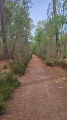
With 350 hectares of forest, 60% of which is made up of conifers such as maritime pines and Scots pines, this trail located at the Arche de la Nature offers hikers a breath of fresh air.
The Tour aux Fées and the Château de la Forêterie
6.23 mi
+138 ft
-138 ft
3h 00
Moderate
Departure from Allonnes (Sarthe) (Sarthe)
I suggest a walk starting from Allonnes, the route of which can be seen on the IGN map. Follow thePR®® (yellow markings).
Around Boulevard Nature and the Château de la Forêterie
 6.59 mi
+253 ft
-230 ft
3h 15
Moderate
Departure from Allonnes (Sarthe) (Sarthe)
6.59 mi
+253 ft
-230 ft
3h 15
Moderate
Departure from Allonnes (Sarthe) (Sarthe)
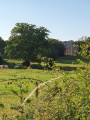
Along this walking route, discover the Mars Mullo sanctuary and the Château de la Forêterie thanks to the information panels installed along the way. You’ll wind your way through the fields whilst following the River Sarthe, enjoying beautiful views of the countryside and the water. Why not take the opportunity to stop for a break in the heart of the Chaoué woods, which feature picnic tables, benches and a fitness trail?
The loop around the Gèmerie leisure centre starting from Chaoué
5.89 mi
+72 ft
-72 ft
2h 45
Easy
Departure from Le Mans (Sarthe)
A short walk along the Sarthe, returning after skirting the Gèmerie lake (leisure centre).
On the Via Turniacensis in Maisoncelles
 5.48 mi
+82 ft
-82 ft
2h 35
Easy
Departure from Maisoncelles (Sarthe) (Sarthe)
5.48 mi
+82 ft
-82 ft
2h 35
Easy
Departure from Maisoncelles (Sarthe) (Sarthe)
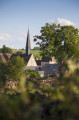
The village of Maisoncelles, described as a ‘street village’, has developed linearly along the road linking Bouloire to Tresson and Écorpain, running perpendicular to the Ruisseau de l’Étangsort. Although difficult to date precisely, the imposing Church of Notre-Dame, possibly dating back to the Romanesque period, is undoubtedly the oldest building in the village. You can, however, see typical rural features from theThird Republic, such as the public pump at the foot of the church. Heading towards the cemetery, you will see on the right the old communal washhouse, recently converted to welcome walkers, and further up, a former school recognisable by its two-storey structure and brick window frames.
A route through a town steeped in history: Allonnes
6.12 mi
+190 ft
-174 ft
3h 00
Easy
Departure from Allonnes (Sarthe) (Sarthe)
La Tour aux Fées / the Gallo-Roman temple, the rainbow bridge, the Tour Etoile, the social housing blocks, the houseboat… are often mentioned when people talk about the town of Allonnes. But that’s only the tip of the iceberg, as the town and its history have so much more to tell, so come and discover more about this former commuter town in the Sarthe.
Yvré-l'Évêque route and its "Nature Boulevard"
 7.00 mi
+269 ft
-246 ft
3h 25
Moderate
Departure from Yvré-l'Évêque (Sarthe)
7.00 mi
+269 ft
-246 ft
3h 25
Moderate
Departure from Yvré-l'Évêque (Sarthe)
During this hike, you will have the opportunity to admire the Yvré countryside, its Roman bridge, the Gérence fountain and catch a glimpse of the beautiful Château de Vaux as you walk along the trails and part of the "Boulevard Nature".
Around the Boulevard Nature: from Île aux Planches to Gué-de-Maulny
 3.84 mi
+23 ft
-23 ft
1h 45
Easy
Departure from Le Mans (Sarthe)
3.84 mi
+23 ft
-23 ft
1h 45
Easy
Departure from Le Mans (Sarthe)
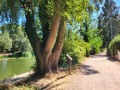
This walk, along the banks of the Sarthe, features information boards about the local flora and fauna.Starting from Le Mans harbour, passing through the Gué de Maulny park with its many street art murals and continuing via Île aux Planches, this family-friendly walk is suitable for wheelchair users (three-wheeled) and pushchairs (also three-wheeled).
Lutin route
6.33 mi
+331 ft
-331 ft
3h 10
Moderate
Departure from Soulitré (Sarthe)
This route owes its name to the shape of its route, which evokes the silhouette of a leprechaun for dreamers. It offers a path between Jalais, a bocage plain on the Soulitré side, and the Huisne valley.
Around the Boulevard Nature: from Gazonfier to the Jardin des Plantes
 4.69 mi
+338 ft
-325 ft
2h 25
Easy
Departure from Le Mans (Sarthe)
4.69 mi
+338 ft
-325 ft
2h 25
Easy
Departure from Le Mans (Sarthe)
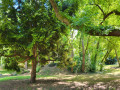
This city walk takes you from park to park. From Parc de Gazonfier via the Jardin des Plantes and Parc Banjan, discover or rediscover the streets of Le Mans with its houses steeped in history and its breathtaking views.
 Around Boulevard Nature: from Le Mans harbour to Moulin aux Moines
 9.24 mi
+144 ft
-144 ft
2 hrs
Moderate
Departure from Le Mans (Sarthe)
9.24 mi
+144 ft
-144 ft
2 hrs
Moderate
Departure from Le Mans (Sarthe)
This walk, combining town and countryside, takes you along the banks of the Sarthe, passing through the village of Coulaines and past Le Mans’s Saint-Julien Cathedral.It follows cycle paths and trails along the banks of the Sarthe.
The Pescheray Estate
 7.19 mi
+174 ft
-174 ft
3h 25
Moderate
Departure from Le Breil-sur-Mérize (Sarthe)
7.19 mi
+174 ft
-174 ft
3h 25
Moderate
Departure from Le Breil-sur-Mérize (Sarthe)
Le Breil and Nuillé are two villages of ancient origin. In the Middle Ages, Le Breil, or Breuil, was a seigneurial hunting ground. Nuillé, first mentioned in the9th century, still has a small Romanesque church.
In the footsteps of Gohan in Bouloire
 10.05 mi
+486 ft
-509 ft
5h 05
Moderate
Departure from Bouloire (Sarthe)
10.05 mi
+486 ft
-509 ft
5h 05
Moderate
Departure from Bouloire (Sarthe)
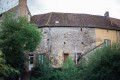
Bouloire is nestled in the heart of a vast, hilly agricultural region crossed by the Dué and Tortue rivers. Human presence along the ancient road between Le Mans and Orléans is attested to by a coin dating back to the Merovingian period. Its name comes either from a Celtic place name meaning "fortification" or from an etymology meaning "between two coasts ". The town centre is rich in ancient architectural heritage. The Church of Saint-Georges, destroyed by a fire that ravaged the village in 1680, bears the coat of arms of Marshal Guillaume Testu de Balincourt, who enabled its reconstruction. The town's coat of arms is also linked to this figure.
Within the Cité Plantagenêt, protected by its walls
1.81 mi
+138 ft
-112 ft
0h 55
Easy
Departure from Le Mans (Sarthe)
Since 2003, the "Old Mans" has been called "Cité Plantagenêt" after the Plantagenêt dynasty, the English royal family originally from Le Mans. The former provincial capital of Maine and Perche (from the 16th century to the Revolution), this stroll through the streets and alleys of Le Mans' historic district offers a pleasant walk in the natural setting of famous swashbuckling films (Cyrano de Bergerac, Le Bossu, The Man in the Iron Mask, Nicolas Le Floch, etc.).
Around the Boulevard Nature: Le Mans, the City of the Plantagenets
 1.15 mi
+82 ft
-82 ft
0h 35
Easy
Departure from Le Mans (Sarthe)
1.15 mi
+82 ft
-82 ft
0h 35
Easy
Departure from Le Mans (Sarthe)
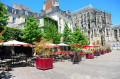
A circular walk along the ramparts of Le Mans, taking in some of the most iconic sites of the city of the Plantagenet kings.
Route des Croisettes starting from Coulaines
 6.36 mi
+338 ft
-358 ft
3h 15
Moderate
Departure from Le Mans (Sarthe)
6.36 mi
+338 ft
-358 ft
3h 15
Moderate
Departure from Le Mans (Sarthe)
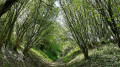
Located in the municipalities of Sargé, Coulaines and Le Mans, this route runs largely along dirt tracks, sometimes tarmac, lined with hedges, trees and shrubs offering generous shade.
Exploring the city of Le Mans
 6.07 mi
+230 ft
-217 ft
3h 00
Easy
Departure from Le Mans (Sarthe)
6.07 mi
+230 ft
-217 ft
3h 00
Easy
Departure from Le Mans (Sarthe)
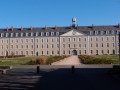
Via the side streets off Rue Nationale, you’ll enjoy making your way to the barracks district before climbing Sainte-Croix Hill, a former village surrounded by vineyards. Hidden lanes, the national monument to the Battle of Le Mans and the legendary Gazonfier climb, famous amongst cyclists.
Around Boulevard Nature: Between Monod and l’Épine
 5.13 mi
+82 ft
-69 ft
2h 25
Easy
Departure from Le Mans (Sarthe)
5.13 mi
+82 ft
-69 ft
2h 25
Easy
Departure from Le Mans (Sarthe)
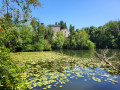
This urban walk, taking you from park to park, allows you to discover or rediscover the city of Le Mans.This route follows part of the Boulevard Nature, along the River Sarthe, and passes through Théodore Monod Park, Épine Park and Martin Luther King Park with its Lebanese cedar.
The Chemin du Buisson in Rouillon
 5.82 mi
+240 ft
-240 ft
2h 55
Easy
Departure from Rouillon (Sarthe)
5.82 mi
+240 ft
-240 ft
2h 55
Easy
Departure from Rouillon (Sarthe)
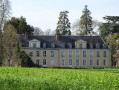
A family walk that allows you to explore the countryside, the Rouillon business park and the Ardriers neighbourhood of Le Mans. Along the way, you’ll also come across the Rouillon Cultural Centre (Domaine de Vaujoubert), the Saint-Pavin Chapel, the Domaine de la Futaie, the Épine Farm (a council-run lodge) and the house of the Penitent Sisters of the Carmelite Convent of Vaujoubert.
The Parc de la Cigogne and the University of Maine from Rouillon
5.00 mi
+164 ft
-164 ft
2h 25
Easy
Departure from Rouillon (Sarthe)
This unmarked route, along roads and footpaths, will take you through the countryside near the town as well as the Cité Universitaire du Maine.
The vineyard route on the outskirts of Le Mans
 5.40 mi
+240 ft
-246 ft
2h 40
Easy
Departure from Rouillon (Sarthe)
5.40 mi
+240 ft
-246 ft
2h 40
Easy
Departure from Rouillon (Sarthe)
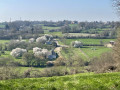
Immerse yourself in picturesque countryside just a stone's throw from Le Mans. A varied route, almost entirely off-road (95% of the route), through rolling countryside dotted with hedgerows and beautiful views.
Blue markings.
Around Pruillé-le-Chétif, Yellow route
6.82 mi
+184 ft
-177 ft
3h 20
Moderate
Departure from Pruillé-le-Chétif (Sarthe)
Located 8 km west of Le Mans, this walk through lush greenery, nestled between woods and marl pits, will allow you to discover a bocage landscape criss-crossed by sunken lanes. This yellow-marked trail is the longest of the marked trails in the municipality; it follows the unmissable fuchsia-marked botanical trail (3.5 km), as well as sections of another blue-marked trail.
Exploring the trails of Pruillé-le-Chétif
 4.86 mi
+200 ft
-197 ft
2h 25
Easy
Departure from Pruillé-le-Chétif (Sarthe)
4.86 mi
+200 ft
-197 ft
2h 25
Easy
Departure from Pruillé-le-Chétif (Sarthe)
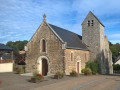
Set in lush green surroundings, 8 km north-west of Le Mans, the village of Pruillé-le-Chétif is particularly popular for its wooded countryside. This circular route will allow you to explore the village centre (12th-century church), the famous Botanical Trail, complemented by other sections of remarkable footpaths within the commune: sunken lanes, old marl pits, protected hedgerows, pollarded trees, etc.
Around Pruillé-le-Chétif
 2.29 mi
+108 ft
-108 ft
1h 10
Easy
Departure from Pruillé-le-Chétif (Sarthe)
2.29 mi
+108 ft
-108 ft
1h 10
Easy
Departure from Pruillé-le-Chétif (Sarthe)
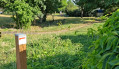
This path, marked in Red, uses paths for around 70% of its length. It takes in the eastern part of the village, passing through the green space of the Ruisseau de la Bujerie, the Chemin des Hauts Bois, which leads to one of the highest points in the village (112 m), the place known as Les Basses Epines, as well as stretches of wooded paths and field margins.
More walks in Marigné-Laillé
Select a point of interest below: