


Refine your search for walks in L'Hermitage-Lorge
L'Hermitage-Lorge walks
 Tour of Lake Bosmeleac
 Visorando Member
 2.40 mi
 +26 ft
 -26 ft
 1h 05
1h 05
 Easy
Easy
 Departure from Merléac (Côtes-d'Armor)
A relaxing walk around the dam lake. The path along the banks is beautifully maintained.
The artificial reservoir was created by building a dam at the end of the 19th century to supply the Canal de Nantes à Brest during periods of water shortage. A gauge shows that the water level at the dam can reach 14 metres.
Bois des Mauriers towards the Chaos du Gouët from Plaintel
13.68 mi
+968 ft
-958 ft
7h 10
 Difficult
Departure from Plaintel (Côtes-d'Armor)
Difficult
Departure from Plaintel (Côtes-d'Armor)
One of the most beautiful walks in the department, passing through the Bois des Mauriers and the Chaos du Gouët. A mixed walk, a third on roads, the rest on paths and trails. The route is well signposted in yellow on posts. The route can be tricky after heavy rain. Firstly, there is the charm of the names of the paths and trails indicated on the signs. Then there is the vegetation and its variety, as you cross the departmental forest: the Bois des Mauriers. Finally, there are the Chaos du Gouët, a spectacular pile of rocks on the Rivière du Gouët, which you skirt around.
Route through the ages in Plémy
7.86 mi
+328 ft
-348 ft
3h 55
 Moderate
Departure from Plémy (Côtes-d'Armor)
Moderate
Departure from Plémy (Côtes-d'Armor)
The route follows small, undulating roads, passing a few crosses, chapels and very old houses. After the hamlet of Carfort, the landscape changes, featuring woodland, moorland and a consistently undulating terrain.
Route des moulins autour de Plouguenast-Langast
 9.82 mi
+574 ft
-577 ft
5h 00
Moderate
Departure from Plouguenast (Côtes-d'Armor)
9.82 mi
+574 ft
-577 ft
5h 00
Moderate
Departure from Plouguenast (Côtes-d'Armor)
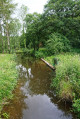
The commune of Plouguenast-Langast offers numerous walking, horse-riding and cycling routes. This walk avoids tarmac roads as much as possible, favouring footpaths and sunken lanes through the countryside, woodland and valley floors. It passes close to numerous watermills which, until the mid-20th century, were an essential part of rural life.
The Fountain and Cromlec'h of Lorette and the Rigole d'Hilvern
 6.56 mi
+636 ft
-636 ft
3h 35
Easy
Departure from Le Quillio (Côtes-d'Armor)
6.56 mi
+636 ft
-636 ft
3h 35
Easy
Departure from Le Quillio (Côtes-d'Armor)
In the footsteps of the Toileux: 19th-century linen manufacturers; a journey back in time with the Cromlec'h de Lorette (an ancient covered burial passage) ending with the Rigole d'Hilvern: a man-made stream dug to feed the Nantes-Brest Canal - a little-known aspect of Brittany.
La Roche au Cerf circular starting from Langast
 7.24 mi
+394 ft
-377 ft
3h 40
Moderate
Departure from Langast (Côtes-d'Armor)
7.24 mi
+394 ft
-377 ft
3h 40
Moderate
Departure from Langast (Côtes-d'Armor)
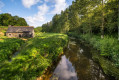
A circular route, mainly on footpaths and sunken lanes, takes you from the village of Langast, with its very old church, to the thousand-year-old site of the Roche au Cerf ford and along streams and then the Lié valley.
The Chaos du Gouët
 6.47 mi
+561 ft
-561 ft
3h 30
Moderate
Departure from Plaine-Haute (Côtes-d'Armor)
6.47 mi
+561 ft
-561 ft
3h 30
Moderate
Departure from Plaine-Haute (Côtes-d'Armor)
Historically dedicated to Marc Faucon (a pioneer of hiking in the Côtes d'Armor), this hike will allow nature lovers to explore the foothills of the Gouët and the wooded hills of the surrounding countryside.
Discover Moncontour and its surroundings
 6.64 mi
+449 ft
-479 ft
3h 25
Moderate
Departure from Moncontour (Côtes-d'Armor)
6.64 mi
+449 ft
-479 ft
3h 25
Moderate
Departure from Moncontour (Côtes-d'Armor)
This circular route allows you to discover the small medieval town by strolling through its narrow streets, then walking along the leat and through sunken paths to the Notre-Dame-du-Haut Chapel. The last part of the walk offers beautiful views of the town and its ramparts.
Moncontour et ses châteaux
 5.19 mi
+469 ft
-469 ft
2h 50
Easy
Departure from Hénon (Côtes-d'Armor)
5.19 mi
+469 ft
-469 ft
2h 50
Easy
Departure from Hénon (Côtes-d'Armor)
The area around Moncontour, an ancient fortified town, is home to several châteaux and manor houses. This circular route through the countryside and woods takes in three of them: Château Bellevue, Château des Granges and Manoir du Vauclair. The last part of the route also offers lovely views of the town of Moncontour.
The Ascent of Mont Bel Air
8.74 mi
+784 ft
-784 ft
4h 40
Moderate
Departure from Trédaniel (Côtes-d'Armor)
Admittedly, this isn’t the Alps, but this circular route still takes you up to the highest point in the Côtes d’Armor (339 m above sea level). The walk starts at the very pretty Notre-Dame du Haut chapel and climbs via sunken paths, farm tracks and small roads to the Notre-Dame du Mont-Carmel chapel. These two places of worship were once popular pilgrimage destinations and sites of indulgences. The route offers some beautiful views of the countryside stretching as far as the shores of Saint-Brieuc Bay.
The Ecce Homo route in Trédaniel
2.98 mi
+371 ft
-351 ft
1h 40
Easy
Departure from Trédaniel (Côtes-d'Armor)
This route takes you up the Chemin de Justice (the Ecce Homo), the path along which those condemned to death were dragged by cart from the castle to be hanged. You also pass close to chapels and ponds, through woodland and a beautiful green valley.
Hilvern stream from Saint-Caradec
 Association / Club / Walk leader
 4.34 mi
+269 ft
-279 ft
2h 15
Easy
Departure from Saint-Caradec (Côtes-d'Armor)
4.34 mi
+269 ft
-279 ft
2h 15
Easy
Departure from Saint-Caradec (Côtes-d'Armor)
This hike will take you through the Rigole d'Hilvern on good paths.
In the Middle Ages, according to legend, Saint-Caradec belonged to the Viscounty of Rohan.
A smallpox epidemic occurred between 1865 and 1870, claiming 45 lives. Then, in 1902, a typhoid fever epidemic broke out in the region.
A short walk around the Roche-au-Cerf site
 2.13 mi
+154 ft
-141 ft
1h 05
Easy
Departure from Plessala (Côtes-d'Armor)
2.13 mi
+154 ft
-141 ft
1h 05
Easy
Departure from Plessala (Côtes-d'Armor)
A very pretty little walk that takes you along almost no tarmac roads and follows the Lié valley, on the edge of the Loudéac forest. It takes you to some very interesting sites: La Roche-au-Cerf and its thousand-year-old ford, the castle and the Essarts mill.
Short circular ‘Deer Loop’ walk in Tréby
 6.23 mi
+545 ft
-574 ft
3h 20
Moderate
Departure from Trébry (Côtes-d'Armor)
6.23 mi
+545 ft
-574 ft
3h 20
Moderate
Departure from Trébry (Côtes-d'Armor)
This route is part of the Circuit des Chevreuils,a PR® trail marked in yellow and 18 km long. The 10 km section described here focuses on the upper part of the commune of Trébry and starts at Bel Air which, at an altitude of 339 m, is the highest point in the Côtes d’Armor.
Boishardy’s Hideout in Bréhand
 3.42 mi
+62 ft
-66 ft
1h 40
Easy
Departure from Bréhand (Côtes-d'Armor)
3.42 mi
+62 ft
-66 ft
1h 40
Easy
Departure from Bréhand (Côtes-d'Armor)
This easy route will immerse you in the place where General Boishardy hid during the Chouannerie in the 1790s.
Route from the dam to Lake Saint-Barthélémy from Ploufragan
 Tourist office
 4.32 mi
+308 ft
-331 ft
2h 15
Moderate
Departure from Ploufragan (Côtes-d'Armor)
4.32 mi
+308 ft
-331 ft
2h 15
Moderate
Departure from Ploufragan (Côtes-d'Armor)
Stretching across 81 hectares, Lake Saint-Barthélémy is flanked by a path that winds through woodland and along the edges of fields. As you wander through this beautiful countryside, imposing structures come into view: the 45-metre-high Gouët Dam and the majestic viaduct of the Paris-Brest railway line.
The older village of La Méaugon boasts a wealth of picturesque architecture. The lake also conceals treasures from days gone by. Today, it is a delight for anglers and recreational boaters alike.
Launay Cross Circular in Bréhand
 2.27 mi
+26 ft
-26 ft
1h 05
Easy
Departure from Bréhand (Côtes-d'Armor)
2.27 mi
+26 ft
-26 ft
1h 05
Easy
Departure from Bréhand (Côtes-d'Armor)
A relaxing, peaceful walk through the woodland, ideal for enjoying the cool air in summer.
Circular route around the hamlets of Bréhand from the Écuries d’Ydill
 6.02 mi
+69 ft
-66 ft
2h 50
Easy
Departure from Bréhand (Côtes-d'Armor)
6.02 mi
+69 ft
-66 ft
2h 50
Easy
Departure from Bréhand (Côtes-d'Armor)
This walk starts at the Écuries d’Ydill equestrian centre. It will immerse you in an area frequented only by farmers. The area is rich in wildlife, including deer, hares and other animals. The route has been mapped out by Bréhand council with the help of local volunteers and in agreement with the landowners. You can park your car near the stables; sometimes the dogs (Raven and Ydill), who are extremely friendly, will come over to beg for a stroke. We ask that you treat the areas you pass through with the utmost respect.
The Méaugon circular around Lac du Gouet
 4.44 mi
+364 ft
-387 ft
2h 20
Easy
Departure from La Méaugon (Côtes-d'Armor)
4.44 mi
+364 ft
-387 ft
2h 20
Easy
Departure from La Méaugon (Côtes-d'Armor)
A walk starting from the small and charming village of La Méaugon, through the woods on wide paths accessible all year round. You will have a constant view of the Gouet reservoir with viewpoints offering multiple photo opportunities.
In the Loudéac Forest
4.54 mi
+184 ft
-197 ft
2h 15
Easy
Departure from Loudéac (Côtes-d'Armor)
A short walk to explore the Loudéac State Forest, which covers 2,500 hectares. The southern part is state-owned and the rest is private. Do take a moment to smell the scents of the trees and listen to nature, all whilst walking along well-maintained paths.
A visit to Mûr-de-Bretagne
3.03 mi
+184 ft
-177 ft
1h 35
Easy
Departure from Mûr-de-Bretagne (Côtes-d'Armor)
This walk is designed to help you discover Mûr-de-Bretagne and its famous hill climb featured in the Tour de France (with gradients of up to 13%), not to mention Sainte-Suzanne Church and many other sights to see as you stroll through the streets.
Walk... on iron from the start at Vaublanc
 5.11 mi
+558 ft
-561 ft
2h 50
Easy
Departure from Plémet (Côtes-d'Armor)
5.11 mi
+558 ft
-561 ft
2h 50
Easy
Departure from Plémet (Côtes-d'Armor)
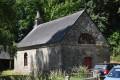
Set off to explore the surroundings of the Forges du Vaublanc, which was an important iron foundry fromthe 17th tothe 19th century. The ore came from the region. The route follows the Lié, which provided hydraulic power to the factory, then crosses the Loudéac forest where dozens of charcoal burners produced the charcoal needed to fuel the blast furnaces.
Guerlédan Lake and Dam
 3.17 mi
+433 ft
-420 ft
1h 50
Moderate
Departure from Mûr-de-Bretagne (Côtes-d'Armor)
3.17 mi
+433 ft
-420 ft
1h 50
Moderate
Departure from Mûr-de-Bretagne (Côtes-d'Armor)
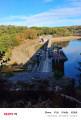
Starting from the Mileade centre, this hike will take you along Lake Guerlédan to the dam. On the way back, you can take a break at the leisure centre before crossing the Bois Cornec.
Lake Guerlédan and Caurel Woods
 5.60 mi
+253 ft
-262 ft
2h 50
Moderate
Departure from Mûr-de-Bretagne (Côtes-d'Armor)
5.60 mi
+253 ft
-262 ft
2h 50
Moderate
Departure from Mûr-de-Bretagne (Côtes-d'Armor)
This hike will take you to Porz Braz along the Anse de Landroanec, then the Bois de Caurel. You will pass the prehistoric camp of Castel Finans before going back up through the woods and returning to Porz Braz.
The Fromené Valley
3.76 mi
+276 ft
-262 ft
2h 00
Easy
Departure from Plessala (Côtes-d'Armor)
A circular route with the first section along the hillside and at the bottom of the valley, followed by a return via the Mené ridges.
Caurel Woods and Lake Guerlédan
 9.81 mi
+748 ft
-771 ft
5h 10
Moderate
Departure from Caurel (Côtes-d'Armor)
9.81 mi
+748 ft
-771 ft
5h 10
Moderate
Departure from Caurel (Côtes-d'Armor)
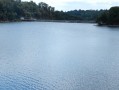
This hike was completed and written during the summer of 2015, an exceptional period when the lake was drained for dam maintenance.We invite hikers to do this walk in spring, when the colours and scents are at their best, with the clear waters of the lake as a backdrop.
Since 2024, major work has been underway between points 3 and 4 with a view to building a free Himalayan footbridge for crossing the Blavet, which cuts the complete tour of the lake in two. This will still be possible for the most experienced walkers. (See note in "Practical information".
The Nantes–Brest Canal between the Guerlédan Dam and Saint-Aignan
 4.58 mi
+344 ft
-344 ft
2h 25
Easy
Departure from Mûr-de-Bretagne (Côtes-d'Armor)
4.58 mi
+344 ft
-344 ft
2h 25
Easy
Departure from Mûr-de-Bretagne (Côtes-d'Armor)
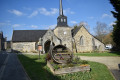
Between the Côtes-d'Armor and Morbihan. Following the Guerlédan trail, you climb up to overlook the dam built around 1930 to supply the region with electricity, then through heathland and woods, you descend to the Nantes–Brest Canal.
As you pass through the village of Saint-Aignan, you’ll come past an interesting little church and the electricity museum. Also worth seeing on the way out of the village is the small Saint-Aignan dam.
Le Mané - Anse de Sordan
 11.43 mi
+702 ft
-712 ft
5h 50
Moderate
Departure from Caurel (Côtes-d'Armor)
11.43 mi
+702 ft
-712 ft
5h 50
Moderate
Departure from Caurel (Côtes-d'Armor)
The second part of the tour of Lake Guerlédan, the most physically demanding, particularly at the start. Departure from Le Manet towards Anse de Sordan, passing by the former Abbey of Notre-Dame de Bon Repos. Return route via the western side of the lake.
Lake Guerlédan via the Guerlédan Dam and the Trou à Cochons
 9.42 mi
+1,237 ft
-1,220 ft
5h 25
Moderate
Departure from Morbihan
9.42 mi
+1,237 ft
-1,220 ft
5h 25
Moderate
Departure from Morbihan
Hike on the south side of Lake Guerlédan, starting from the church of Saint-Aignan in the commune of the same name. A rather bucolic route dotted with a few farms. The route runs along the shores of the lake and through the forest surrounding it. The landscapes are therefore very varied. Numerous paths allow you to diversify the route.
Saint-Brieuc: between the town and the valleys
 5.65 mi
+522 ft
-545 ft
3h 05
Easy
Departure from Saint-Brieuc (Côtes-d'Armor)
5.65 mi
+522 ft
-545 ft
3h 05
Easy
Departure from Saint-Brieuc (Côtes-d'Armor)
Set off to explore Saint-Brieuc, where nature and heritage intertwine to offer an unusual tour of the town.
This walk invites you to explore different facets of the town – its harbour and its upmarket neighbourhoods – before immersing yourself in its lush green valleys. Combining a rich heritage with the tranquillity of the natural landscape, this route reveals all the diversity and beauty of Saint-Brieuc!
Alternative route via Villa Rohannec’h Park.
The Lié valley upstream from La Chèze
 13.92 mi
+607 ft
-600 ft
6h 55
Difficult
Departure from La Prénessaye (Côtes-d'Armor)
13.92 mi
+607 ft
-600 ft
6h 55
Difficult
Departure from La Prénessaye (Côtes-d'Armor)
This walk follows the River Lié, a tributary of the River Oust, itself a tributary of the River Vilaine. It follows the Voie Verte, a former railway line linking Saint-Méen-le-Grand and Carhaix-Plouguer. It offers the chance to explore La Chèze, a small village in the shadow of its castle ruins, the former stronghold of the Lords of Rohan. The circular route ends with paths and small roads through the hills of the Saint-Barnabé and La Prénessaye countryside.
Panoramic views of the nature reserve from Hillion
 5.50 mi
+230 ft
-233 ft
2h 45
Easy
Departure from Hillion (Côtes-d'Armor)
5.50 mi
+230 ft
-233 ft
2h 45
Easy
Departure from Hillion (Côtes-d'Armor)
A walk around the Hillion peninsula along the coastal path: a breath of fresh air in the heart of Brittany’s largest National Nature Reserve! 8.9 km of exploring an unspoilt coastal landscape, teeming with exceptional flora and fauna. With good walking shoes and a pair of binoculars, you’ll have a front-row seat for nature’s fabulous spectacle! To round off your experience, a visit to the Maison de la Baie will enrich your walk!
Avoid this walk from May to September! See practical information
Around Hillion
 14.66 mi
+768 ft
-751 ft
7h 25
Difficult
Departure from Hillion (Côtes-d'Armor)
14.66 mi
+768 ft
-751 ft
7h 25
Difficult
Departure from Hillion (Côtes-d'Armor)
A protected site, the Bay of Saint-Brieuc can be explored via a coastal path, theGR®34, which offers opportunities to observe a wide variety of birds and discover the Gouessant Valley (very steep-sided) and a large number of beautiful cuts in the loess and silt from the Quaternary period. The route can only be done on foot.
Hiking is not recommended from May to September! See practical information.
Pont Rolland Dam and Grandville Beach in Hillion
4.72 mi
+545 ft
-525 ft
2h 40
Easy
Departure from Hillion (Côtes-d'Armor)
The walk starts at Bon Abri Beach and continues to the Pont Rolland dam. You’ll discover Hillion via theGR® trail and its little side routes.
This walk is not recommended from May to September! See practical information.