


Refine your search for walks in Ibach (ruisseau) - Affluent du Strengbach
Ibach (ruisseau) - Affluent du Strengbach walks


 The Taennchel, starting from the Grande Verrerie
 Visorando Member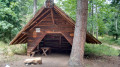
 11.23 mi
 +2,205 ft
 -2,201 ft
 7h 05
7h 05
 Difficult
 Departure from Ribeauvillé (Haut-Rhin) (Haut-Rhin)
A walk starting from the hamlet of La Grande Verrerie, allowing you to explore almost the entire Taennchel massif. Allow a full day for the best experience. There is a wealth of literature on the Taennchel, and the information boards along the route help you gain a better understanding of the area.
Walks near Ibach (ruisseau) - Affluent du Strengbach
Schelmenkopf – Col des Bagenelles
 10.60 mi
+1,818 ft
-1,289 ft
6h 25
10.60 mi
+1,818 ft
-1,289 ft
6h 25
 Moderate
Departure from Ribeauvillé (Haut-Rhin) (Haut-Rhin)
Moderate
Departure from Ribeauvillé (Haut-Rhin) (Haut-Rhin)
A leisurely second stage, apart perhaps from the total distance. It takes place mainly in the shade on mostly flat paths. You’ll pass beneath the Petit Brézouard and give the Grand Brézouard a wide berth – as it is a wildlife sanctuary – before heading directly to Le Haïcot and then on to the Col des Bagenelles.
Ribeauvillé–Hunawihr via the vineyards
1.75 mi
+299 ft
-220 ft
1h 05
 Easy
Departure from Ribeauvillé (Haut-Rhin) (Haut-Rhin)
Easy
Departure from Ribeauvillé (Haut-Rhin) (Haut-Rhin)
A lovely little walk that follows the edge of the woodland alongside the vineyards. Superb views of the surrounding villages.
Ribeauvillé - Le Bonhomme
 Tourism professional
 17.75 mi
+3,858 ft
-2,444 ft
11h 30
17.75 mi
+3,858 ft
-2,444 ft
11h 30
 Very difficult
Departure from Ribeauvillé (Haut-Rhin) (Haut-Rhin)
Very difficult
Departure from Ribeauvillé (Haut-Rhin) (Haut-Rhin)
Stage thirteen, from Ribeauvillé to Le Bonhomme, is very long and involves a significant climb. It marks the hiker’s entry into the Hautes-Vosges and its first major peaks: Hirzberg and Brézouard, via the Lapoutroie valley. With a mountain atmosphere and superb views in store.
Crossing the Southern Vosges from Kintzheim to Willer-sur-Thur
 56.12 mi
+10,161 ft
-9,600 ft
5 days
Difficult
Departure from Kintzheim (Bas-Rhin)
56.12 mi
+10,161 ft
-9,600 ft
5 days
Difficult
Departure from Kintzheim (Bas-Rhin)
This route takes you across the Vosges in the Haut-Rhin, with moderate daily stages ranging from 15 to 20 km and an elevation gain generally between 800 and 900 m. These stages take between 6 and 7 hours, always ending near a mountain refuge, which must be booked in advance. The route follows paths marked by the Club Vosgien and passes through a wide variety of landscapes.
Kintzheim – Schelmenkopf
 9.38 mi
+2,949 ft
-1,188 ft
6h 55
Moderate
Departure from Kintzheim (Bas-Rhin)
9.38 mi
+2,949 ft
-1,188 ft
6h 55
Moderate
Departure from Kintzheim (Bas-Rhin)
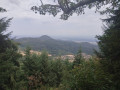
This first stage starts in Kintzheim, passes by Haut-Koenigsbourg Castle, then crosses the pretty village of Thanenkirch before heading up alongside the ‘pagan wall’ with its beautiful rock formations to the Schelmenkopf mountain hut. It is not particularly difficult and is a good way to warm up for the rest of the journey.
 Vosges Mountain Biking Day 5: Chatenois – Aubure (Part 1)
9.60 mi
+2,021 ft
-436 ft
4 hrs
Difficult
Departure from Châtenois (Bas-Rhin) (Bas-Rhin)
This route forms the first part of the fifth stage of a 7-day tour on the Alsatian side of the Vosges. The route follows mainly forest tracks in good condition. The signposting, which is excellent, consists of signs bearing an orange or red mountain bike logo accompanied by the letters TMV (Traversée du Massif Vosgien).
Châtenois - Ribeauvillé
 12.79 mi
+2,238 ft
-2,028 ft
7h 50
Difficult
Departure from Châtenois (Bas-Rhin) (Bas-Rhin)
12.79 mi
+2,238 ft
-2,028 ft
7h 50
Difficult
Departure from Châtenois (Bas-Rhin) (Bas-Rhin)
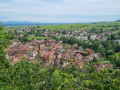
With this superb twelfth stage of the Vosges crossing proposed by Passion Vosges magazine, published by Les Dernières Nouvelles d’Alsace and L’Alsace, the hiker visits a series of castles, starting with the iconic Haut-Koenigsbourg. After a lovely detour into the valley of the mountain village of Thannenkirch, a final climb leads to the steep and spectacular site of the three castles overlooking the charming wine-growing town of Ribeauvillé, the end point of this 20-kilometre route.
Col de Bagenelles – Schupferen
 10.77 mi
+2,694 ft
-1,847 ft
7h 20
Moderate
Departure from Le Bonhomme (Haut-Rhin)
10.77 mi
+2,694 ft
-1,847 ft
7h 20
Moderate
Departure from Le Bonhomme (Haut-Rhin)
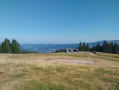
This third day follows the Sentier des Crêtes for the most part, passing through the burnt-out fields with beautiful panoramic views. A walk of moderate difficulty with several opportunities to stop and enjoy a blueberry tart
From Sélestat to Ribeauvillé via Haut-Koenigsbourg
 13.49 mi
+1,946 ft
-1,713 ft
7h 55
Difficult
Departure from Sélestat (Bas-Rhin)
13.49 mi
+1,946 ft
-1,713 ft
7h 55
Difficult
Departure from Sélestat (Bas-Rhin)
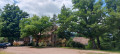
Hiking trail from Sélestat station, easily accessible from many towns in Alsace, to Ribeauvillé, from where you can return to Sélestat station by bus.
The route offers magnificent views of the Vosges mountains from the outskirts of Sélestat, with Kintzheim Castle and Haut-Koenigsbourg Castle on your left, the village of Châtenois opposite you, and Ramstein and Ortenbourg castles above Scherwiller on your right.
You will pass through part of Châtenois before tackling the climb to Haut-Koenigsbourg Castle, a major tourist attraction in Alsace. You will finally end your journey in the middle of the vineyards, between Bergheim, a charming fortified village in the foothills of the Vosges, and Ribeauvillé, your destination.
Dambach-la-Ville – Obernai
18.18 mi
+1,450 ft
-1,450 ft
9h 35
Very difficult
Departure from Dambach-la-Ville (Bas-Rhin)
Vine growing is an integral part of the Alsatian landscape. There is also a route named after it. This route is the fifth stage of the vineyard walk and connects Dambach-la-Ville to Obernai. There are numerous vantage points, indeed they are almost everywhere outside the villages. The villages themselves are very typical, with pretty half-timbered houses and undeniable charm. The region’s heritage is equally well represented.