Explore the Exmoor Cliffs: The Best Walks in Exmoor
Rolling moorland, ancient woodlands, deep river valleys, and rugged coastal cliffs create a landscape that feels almost untouched by time. This is the striking beauty of Exmoor National Park, one of the most remarkable destinations for walking.
Exmoor is a place where sea cliffs drop dramatically into the Atlantic, where open moorland stretches for miles without interruption, and where ancient trails connect villages, valleys, and historic landmarks. For anyone searching for the best walks, this National Park offers an incredible variety of terrain and experiences suitable for families, casual walkers, and seasoned walkers alike.
So lace up your boots and discover some of the most scenic and memorable Exmoor walks you can experience.
Easy Family Walks and Popular Walks in Exmoor
One of the most accessible and enjoyable walks in Exmoor for families is the Watersmeet by Ash Bridge and South Hill Common. This gentle circular Exmoor walk is located in a stunning wooded river gorge where the East Lyn and Hoar Oak Water rivers meet. The sound of flowing water, combined with shaded woodland paths, makes it one of the most peaceful places for a relaxed walk. Starting from the Watersmeet car park, the route is approximately 5 km and takes around 2 hours. The terrain is generally well-maintained, although there are some gentle inclines and uneven woodland sections. What makes this Exmoor walk particularly special is the contrast between calm riverside scenery and dense ancient woodland.
Another excellent introduction is the Tall Trees Trail at Nutcombe Bottom. This short and accessible route is ideal for families with younger children or those looking for a very light Exmoor walk. At under one kilometre in length, it can be completed in around 20 minutes, and offers a fascinating glimpse into some of England’s tallest and oldest trees. The trail winds through ancient woodland, where towering Douglas firs and other conifers create a peaceful, almost cathedral-like atmosphere.
For those who want a slightly more adventurous family-friendly option, Countisbury and Watersmeet from Lynmouth offer a more varied Exmoor walk. Starting from the coastal village of Lynmouth, this route quickly rises into cliff paths before easing into wooded valleys. Although still considered an easy walk, parts of the trail can feel challenging due to steep gradients and loose stone underfoot. At around 7 km and taking 2–3 hours, this route is ideal for walkers wanting to experience a slightly more demanding introduction to walking in Exmoor. The reward is outstanding coastal views, dramatic cliffside scenery, and a strong sense of elevation above the sea. It is one of the most visually impressive, easy-access walks, especially in clear weather.
Moderate Walks to Explore in Exmoor Created By Visorando Users
For those ready to explore more demanding terrain, Exmoor offers a wide range of moderate walks that showcase the true diversity of the landscape.
One of the most scenic is the Cow Castle from Simonsbath. This circular Exmoor walk begins near Ashcombe car park and travels across open moorland and rolling hills with expansive views in every direction. The highlight of the walk is Cow Castle itself, an ancient Iron Age hillfort. The site is steeped in mystery, with historians still debating its original purpose. Local folklore adds another layer of intrigue, with some legends suggesting it was built by fairies. Whether or not you believe the myths, seeing Cow Castle is a rewarding experience. At approximately 13 km and taking just over 4 hours, this route offers a true taste of Exmoor walking across open, exposed moorland where weather conditions can change quickly.
Another popular Exmoor walk is the Doone Valley from Malmsmead. This trail is particularly famous due to its connection with R. D. Blackmore’s novel Lorna Doone, which immortalised the area’s romantic and dramatic landscape. The valley remains largely unchanged since the novel was written in 1869, making it one of the most atmospheric walks in Exmoor. The route passes through farmland, wooded river valleys, parts of Devon, Somerset, and open moorland, offering a constantly changing environment. Depending on the season, the terrain can shift from dry and firm to soft and muddy, adding to the sense of adventure. At around 12 km and taking approximately 4 hours, it is a well-balanced Exmoor walk suitable for those wanting variety without extreme difficulty.
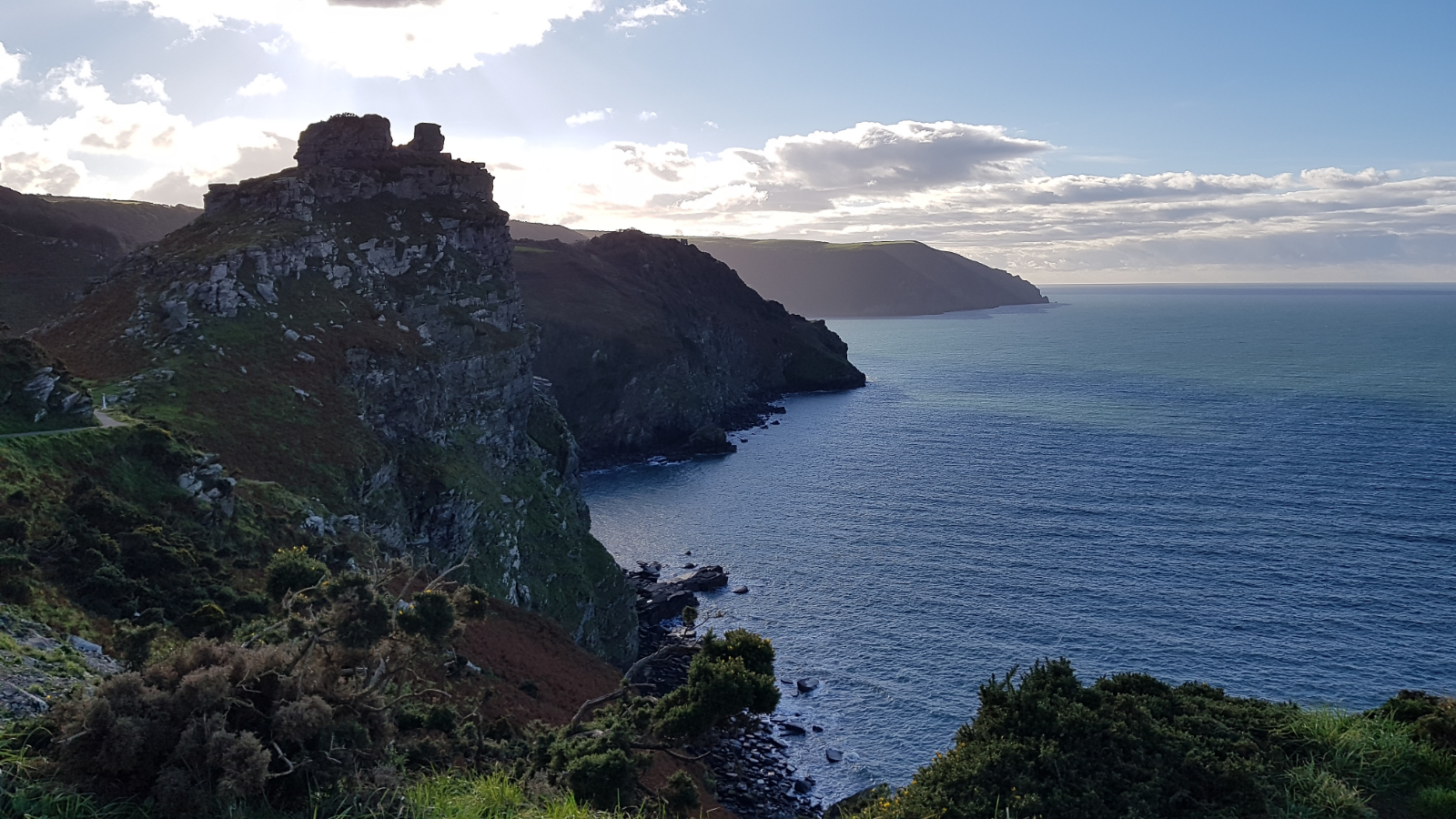
Another standout Exmoor walk is Hollerday Hill, The Valley of Rocks and South Cleave from Lynton. This circular walk explores some of the most dramatic coastal scenery in Exmoor, including the famous Valley of Rocks and panoramic cliff viewpoints. This natural formation is known for its striking granite cliffs and free-roaming goats, which add to the wild, untamed atmosphere of the area. The route also passes Hollerday Hill, offering panoramic coastal views, as well as remnants of historical structures that hint at Exmoor’s long human history. Covering just over 6 km and taking 2–3 hours, this route includes steep ascents, uneven terrain, and exposed cliff edges, meaning care is needed, particularly in wet or windy conditions.
Walking The Hilly Open Moorland of Exmoor
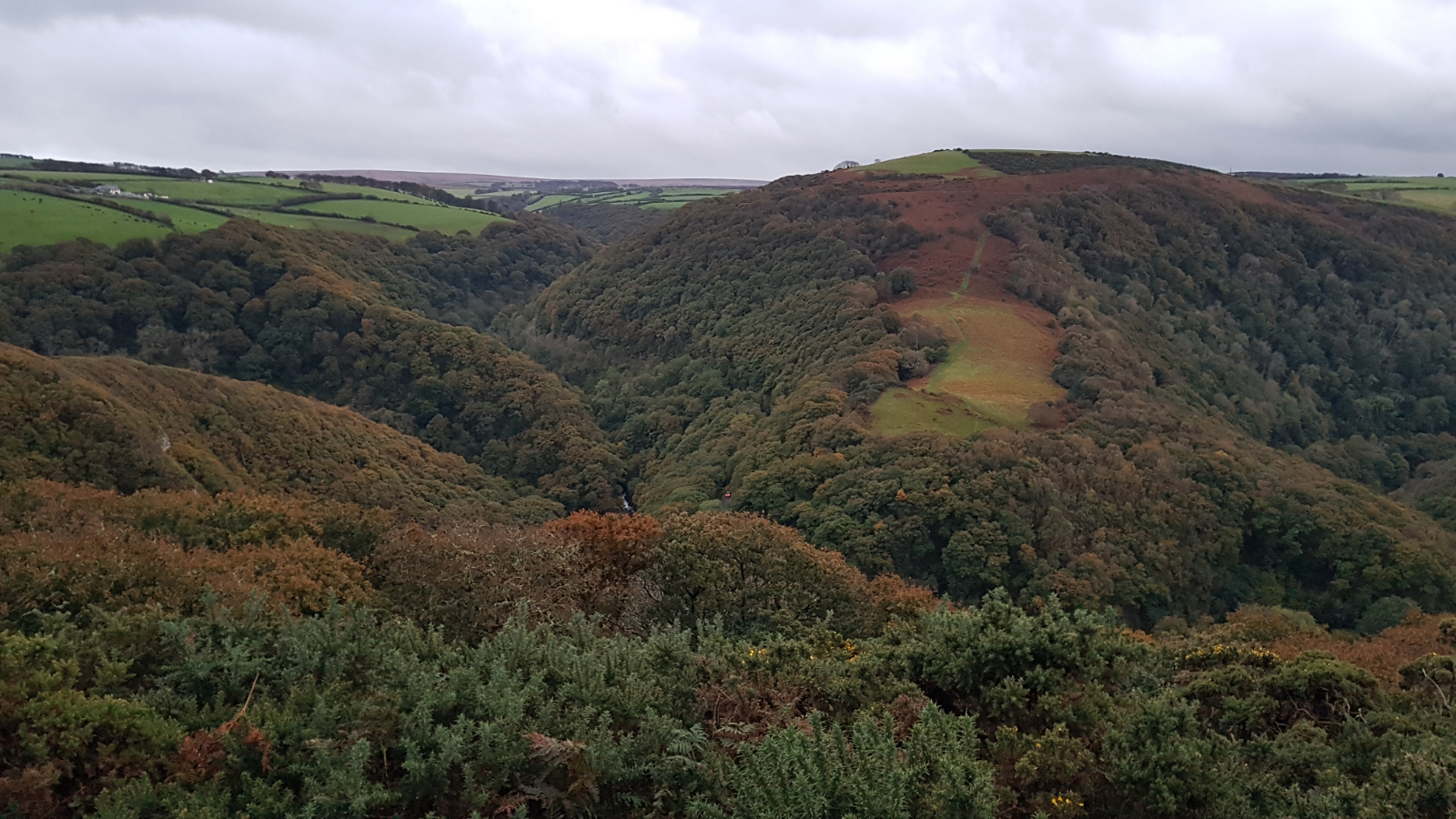
The open moorland is one of the defining features of Exmoor National Park and plays a central role in shaping the experience of walks in Exmoor. This vast, elevated landscape is made up of rolling hills, deep river valleys known as combes, and wide expanses of heather and grassland.
Formed over millions of years through erosion and geological uplift, the moorland presents a raw and elemental environment that feels far removed from urban life. Strong winds, shifting cloud cover, and open horizons give the landscape a constantly changing character.
Tree growth is limited due to exposure and soil conditions, which is why much of the moor remains open. This has created the distinctive scenery that defines many walks in Exmoor, where visibility stretches for miles, and the sense of space is immense.
Human activity has also played a major role in preserving this landscape. For centuries, sheep and cattle grazing, along with the presence of the native Exmoor pony, have helped maintain the balance between open moorland and encroaching woodland. As a result, the landscape today remains remarkably close to its natural state.
For walkers, this environment offers a sense of freedom and isolation that is increasingly rare. Every Exmoor walk across the moor feels different depending on the weather, light, and season.
Walking During the Seasons of Exmoor
One of the most fascinating aspects of walking in Exmoor is how dramatically the experience changes throughout the year.
In spring, the moor begins to awaken after winter. Fresh green shoots emerge across the hills, rivers run full from seasonal rainfall, and wildlife becomes increasingly active. Lambs can often be seen in nearby fields, and wildflowers begin to appear along footpaths and woodland edges. Although some trails may still be muddy, spring offers some of the most peaceful walks, with fewer visitors and a sense of renewal in the air.
Summer is the most popular season for Exmoor walking. Longer daylight hours allow for extended hikes, and clearer weather conditions provide sweeping views across the coastline and moorland. Coastal Exmoor walks are especially popular during this time, as sea breezes and bright conditions make for ideal walking weather. However, popular routes can become busier, particularly near villages and scenic viewpoints.
Autumn is often considered the most beautiful time for walks in Exmoor. The landscape transforms into deep shades of gold, orange, and red as the heather fades and woodland areas change colour. Cooler temperatures make longer hikes more comfortable, and reduced visitor numbers allow for a more tranquil experience. The crisp air and soft lighting also make this season particularly popular with photographers.
Winter brings a completely different character to Exmoor. The landscape becomes quieter, more dramatic, and often more challenging. Strong winds, rain, and occasional frost or snow can make conditions difficult, but the reward is a raw and atmospheric version of the National Park. On clear winter days, visibility can be exceptional, offering some of the most striking views of the year. Exmoor is also renowned for its exceptionally dark skies, making winter evenings ideal for stargazing after a day of walking.
Final Thoughts on the Beauty of Exmoor Walks
Exmoor offers one of the most diverse and rewarding collections of walking routes in the United Kingdom. From gentle riverside paths and shaded woodland trails to dramatic coastal cliffs and vast open moorland, the variety of walks ensures there is something for every type of walker.
Whether you are discovering your first Exmoor walk or returning to explore more challenging routes, the experience of walking in Exmoor is always shaped by the land itself, wild, ever-changing, and deeply atmospheric. It is this combination of natural beauty, history, and openness that makes Exmoor one of the most unforgettable destinations for walkers in the UK.
 Cow Castle by Pickedstones Farm from Simonsbath
  Visorando Member


 Moderate
 Association / Club / Walk leader
 Easy
Easy 

 Difficult