


Refine your search for walks in Combreux
Combreux walks


 From Sury to Vitry via the canal and its ponds
 Visorando Member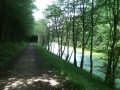
 12.14 mi
 +39 ft
 -39 ft
 5h 35
5h 35
 Difficult
 Departure from Combreux (Loiret)
From the Combreux lock, discover the Canal d'Orléans and its ponds in a forest where a rich and varied fauna will accompany you and allow you to observe them as you walk along the path.
Be early, discreet and attentive to enjoy it.
Don't rely on the photos showing the towpath. It has been replaced by a cycle path. The walk loses some of its charm but is still very pleasant.
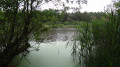
From the Étang de la Vallée to the Fontaine Longue in the Forest of Orléans
 9.76 mi
+236 ft
-233 ft
4h 40
9.76 mi
+236 ft
-233 ft
4h 40
 Moderate
Departure from Combreux (Loiret)
Moderate
Departure from Combreux (Loiret)
A must-see route in the Forest of Orléans due to the diversity of its landscapes, ranging from ponds to dense or sparse forests, which are prime habitats for wildlife. The vast Vallée pond, which was originally created to feed the Orléans Canal, has become a leisure destination with its water sports centre, banks ideal for fishing, and paths perfect for a stroll.
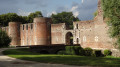
Passing by the Fontaine de Sainte-Radegonde and the Château du Hallier
 7.75 mi
+82 ft
-82 ft
3h 40
Moderate
Departure from Nibelle (Loiret)
7.75 mi
+82 ft
-82 ft
3h 40
Moderate
Departure from Nibelle (Loiret)
A hike between the Nibelloise countryside and the Forest of Orléans, passing by the 16th-century Château du Hallier and the Fontaine de Sainte Radegonde. According to legend, the Queen of the Franks struck the ground with her heel and caused a spring with miraculous properties to gush forth.
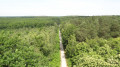
The Belvédère des Caillettes from Nibelle
 7.68 mi
+141 ft
-141 ft
3h 40
Moderate
Departure from Nibelle (Loiret)
7.68 mi
+141 ft
-141 ft
3h 40
Moderate
Departure from Nibelle (Loiret)
In the heart of the Orléans Forest, the route will take you near the 16th-century Château du Hallier, then to the viewpoint on the Caillettes hill at the highest point of the Orléans Forest: an opportunity to admire the surrounding mountains as far as the eye can see.
Grandes Bruyères Arboretum Route
 3.50 mi
+23 ft
-23 ft
1h 40
3.50 mi
+23 ft
-23 ft
1h 40
 Easy
Departure from Ingrannes (Loiret)
Easy
Departure from Ingrannes (Loiret)
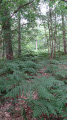
In the heart of the Forest of Orléans, with its fern-filled undergrowth ideal for spotting wildlife, this short, shaded walk passes numerous ponds.
Circular walk in the Orléans Forest from Chambon-la-Forêt
 6.08 mi
+75 ft
-75 ft
2h 50
Easy
Departure from Chambon-la-Forêt (Loiret)
6.08 mi
+75 ft
-75 ft
2h 50
Easy
Departure from Chambon-la-Forêt (Loiret)
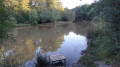
Starting from the village of Chambon-la-Forêt, known for Château de la Luzerne, the route will take you deep into the vast Orléans Forest. The undergrowth, filled with ferns and heather, is home to large wild animals in the tranquillity of the state-owned forest.
The Canal d'Orléans starting from Fay-aux-Loges
 7.51 mi
+49 ft
-49 ft
3h 30
Moderate
Departure from Fay-aux-Loges (Loiret)
7.51 mi
+49 ft
-49 ft
3h 30
Moderate
Departure from Fay-aux-Loges (Loiret)
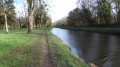
The hike first follows the towpath of the Canal d'Orléans and then returns to Fay-aux-Loges via the Orléans National Forest. You will enjoy the still waters of the canal and its many reflections, its locks, its wildlife, then the wide forest paths, and finally the stone bell tower of the church as you approach the village.
Please note that on 19 February 2023, I was informed that part of the route along the canal is closed for works for an indefinite period (no end date displayed).
Watercourses, ponds and woodland around Vieilles-Maisons-sur-Joudry
 15.38 mi
+85 ft
-82 ft
7h 10
Difficult
Departure from Vieilles-Maisons-sur-Joudry (Loiret)
15.38 mi
+85 ft
-82 ft
7h 10
Difficult
Departure from Vieilles-Maisons-sur-Joudry (Loiret)
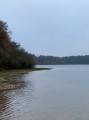
Discover how the Canal d’Orléans draws its water supply from the forest. From forest ditches to channels and from channels to ponds, the water flows imperceptibly through the hydrographic network skilfully created by human hands to ensure its proper functioning.
Walk from Grignon via Vieilles-Maisons-sur-Joudry
 8.39 mi
+36 ft
-36 ft
3h 55
Moderate
Departure from Vieilles-Maisons-sur-Joudry (Loiret)
8.39 mi
+36 ft
-36 ft
3h 55
Moderate
Departure from Vieilles-Maisons-sur-Joudry (Loiret)
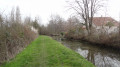
The route follows the course of the waterways of Vieilles-Maisons-sur-Joudry near the Forest of Orléans, running sometimes alongside the Orléans Canal and sometimes alongside the ‘rigoles’, tributaries of the Orléans Canal which they feed. These still waters are a source of coolness and tranquillity.
From Traînou to the Orléans Forest
 8.36 mi
+98 ft
-98 ft
3h 55
Moderate
Departure from Traînou (Loiret)
8.36 mi
+98 ft
-98 ft
3h 55
Moderate
Departure from Traînou (Loiret)
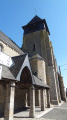
Starting from Traînou, with its distinctive bell tower, this idyllic walk through countryside and woodland is home to a particularly rich variety of flora and fauna.
The banks of the Loire and Chenailles Castle
 4.17 mi
+46 ft
-46 ft
1h 55
Easy
Departure from Saint-Denis-de-l'Hôtel (Loiret)
4.17 mi
+46 ft
-46 ft
1h 55
Easy
Departure from Saint-Denis-de-l'Hôtel (Loiret)
A pleasant and easy hike offering varied landscapes. We walk along the Loire for over a kilometre before turning away from it to enter the forest, admire the beautiful Château de Chenailles, then return to Saint-Denis-de-l'Hôtel via the ponds.
Jargeau Châteauneuf-sur-Loire circular via the Temple of Love
 12.07 mi
+66 ft
-79 ft
5h 35
Moderate
Departure from Jargeau (Loiret)
12.07 mi
+66 ft
-79 ft
5h 35
Moderate
Departure from Jargeau (Loiret)
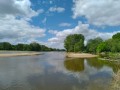
This circular will take you along the left bank of the Loire to Châteauneuf-sur-Loire. You will cross the castle grounds and its arboretum. The return to Jargeau is via the right bank. This circular route is known as thePR® des deux ponts (Two BridgesPR® ), modified to include access to the Loire Marine Museum and a stroll through the arboretum and the pretty Rhododendron Avenue.
The Canal d’Orléans and a few ponds starting from Chailly
 9.04 mi
+72 ft
-72 ft
4h 15
Moderate
Departure from Chailly-en-Gâtinais (Loiret)
9.04 mi
+72 ft
-72 ft
4h 15
Moderate
Departure from Chailly-en-Gâtinais (Loiret)
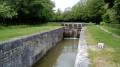
A walk that follows the towpath of the Canal d’Orléans for a third of its route. The remaining two-thirds alternate between stretches through fields or meadows and through woodland, passing a few ponds hidden in the shade.
West of Chilleurs-aux-Bois
 Local authority6.32 mi
+23 ft
-23 ft
2h 55
Easy
Departure from Chilleurs-aux-Bois (Loiret)
Local authority6.32 mi
+23 ft
-23 ft
2h 55
Easy
Departure from Chilleurs-aux-Bois (Loiret)
This route is called "West of Chilleurs-aux-Bois - Route No. 5".
This circuit takes you on a tour of the western part of the commune and its main hamlets, starting from the centre of the village and the Lavau district: La Noue Glaçon, Le Coudray, Le Charme, L'Etang, Marcilly, Olivet, Ronville, Le Moulin de Pierre, La Fosse Aux Morts and Les Sapins. Return to the centre of the village via La Grande Gervaise.
You will pass close to the sites of two of the five grain mills that once stood in Chilleur-aux-Bois.
In Ronville, you will pass the boundary of the commune of Neuville-aux-Bois.
You will walk along the "fosse aux morts" (dead man's ditch), which reminds us that the 1870 war was very deadly in our region.
You will then reach the village and Saint-Pierre Church, a historic monument built between the13th and14th centuries.
The route is not particularly difficult and is mainly on roads.
Route du Gilloy
 6.12 mi
+856 ft
-1,020 ft
3h 35
Easy
Departure from Neuvy-en-Sullias (Loiret)
6.12 mi
+856 ft
-1,020 ft
3h 35
Easy
Departure from Neuvy-en-Sullias (Loiret)
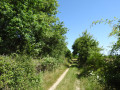
Close to the Loire, this fairly easy route runs alongside the Sologne region with its landscapes of woodland and farmland. Several points of interest (a pond, hedgerows, livestock farms) add a touch of variety to a route largely characterised by its woodland atmosphere. Best avoided during the hunting season from late September to February.
Petit Leu Walk
 2.90 mi
+20 ft
-20 ft
1h 20
Easy
Departure from Neuvy-en-Sullias (Loiret)
2.90 mi
+20 ft
-20 ft
1h 20
Easy
Departure from Neuvy-en-Sullias (Loiret)
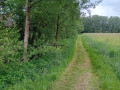
Quite close to the Loire between Sully and Châteauneuf, on the edge of the Sologne region, a family walk in the countryside. Starting from a charming village where a Gallo-Roman treasure was found in the 19th century.
La route du Jongleur
 9.45 mi
+105 ft
-105 ft
4h 25
Moderate
Departure from Neuvy-en-Sullias (Loiret)
9.45 mi
+105 ft
-105 ft
4h 25
Moderate
Departure from Neuvy-en-Sullias (Loiret)
The juggler is one of the figures from the Gallo-Roman treasure found at Neuvy-en-Sulias in 1861 and displayed in the permanent exhibition in the garden adjoining the town hall.
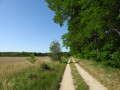
This very pleasant route offers a fine variety of landscapes typical of the Loire and Sologne regions, comprising three interwoven features: the wooded bocage and its meadows, the mixed deciduous and coniferous forest with few straight lines, and the open agricultural plain. The River Loire and the Leu stream provide a refreshing finale to the walk. A wealth of points of interest punctuate and enliven this route: a 16th-century château, the former port of Bouteille, a tile works listed as a historic monument, a windmill…
The route is marked in yellow by the FFR and featured in the guidebook ‘La Sologne à pied’.
Sentier des Sources trail in the Orléans Forest
 4.77 mi
+131 ft
-131 ft
2h 20
Easy
Departure from Ouzouer-sur-Loire (Loiret)
4.77 mi
+131 ft
-131 ft
2h 20
Easy
Departure from Ouzouer-sur-Loire (Loiret)
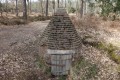
A circular in the Orléans Forest along a pretty path that winds between the trees. You will discover a series of springs converted into fountains and end this walk at the Résistance crossroads, a place steeped in Second World War history. A monument has been erected there in memory of the resistance fighters who died for France.
Courpalet ditch, Gué l’Évêque circular loop
 9.31 mi
+33 ft
-33 ft
4h 20
Moderate
Departure from Montereau (Loiret)
9.31 mi
+33 ft
-33 ft
4h 20
Moderate
Departure from Montereau (Loiret)
A largely shaded circular walk along the water’s edge. This walk follows the Rigole de Courpalet for nearly 5km before entering the Forest of Orléans and skirting the Étang du Gué l’Évêque.
The Rigole de Courpalet, 32.8 km long, was dug to feed the Canal d’Orléans.
From Chemin de la Plaine to the banks of the Loire: Between the levees
 6.17 mi
+13 ft
-13 ft
2h 50
Easy
Departure from Saint-Père-sur-Loire (Loiret)
6.17 mi
+13 ft
-13 ft
2h 50
Easy
Departure from Saint-Père-sur-Loire (Loiret)
A hike offering great contrasts between the open fields of the first part and the wild banks of the Loire in the second part, with its unspoilt natural site known as "Entre les levées". Proposed by the tourist office as part of the Randonnée des Châtaignes (Chestnut Hike), this route was very popular with hikers.
Chemin des Rauches along the Loire
6.82 mi
+13 ft
-13 ft
3h 10
Moderate
Departure from Saint-Père-sur-Loire (Loiret)
Alternating between meadows, forests, ponds and farmland, this route presents no difficulties. It begins and ends majestically on the banks of the Loire. This is a shortened version of the former "PR® des Rauches" with 76% of the route on unpaved paths.
Sully-sur-Loire and the banks of the Loire
11.41 mi
+30 ft
-30 ft
5h 15
Moderate
Departure from Sully-sur-Loire (Loiret)
A very pleasant route, mostly along the banks of the Loire. Good view of the Château de Sully and the Basilica of Saint-Benoit-sur-Loire.
Sully-sur-Loire Castle and its surroundings
 3.90 mi
+13 ft
-13 ft
1h 50
Easy
Departure from Sully-sur-Loire (Loiret)
3.90 mi
+13 ft
-13 ft
1h 50
Easy
Departure from Sully-sur-Loire (Loiret)
This short walk allows you to admire the medieval fortress in all its glory and stroll through the castle grounds and along the dykes that protect the town from the river. Many migratory birds take refuge on the castle's magnificent lake.
Dampierre-en-Burly and its ponds
 8.46 mi
+102 ft
-102 ft
4h 00
Moderate
Departure from Dampierre-en-Burly (Loiret)
8.46 mi
+102 ft
-102 ft
4h 00
Moderate
Departure from Dampierre-en-Burly (Loiret)
In the Orléans Forest, the route runs alongside the vast Étang de Corcambon, ending around the Étang du Bourg which borders the flower-filled village of Dampierre-en-Burly, at the foot of its fortifications.