


Refine your search for walks in Vaire-Arcier
Vaire-Arcier walks


 La Roche Blanche
 Visorando Member
 9.37 mi
 +1,138 ft
 -1,142 ft
 5h 20
5h 20
 Moderate
 Departure from Vaire-Arcier (Doubs)
From the sumptuous Château de Vaire-le-Grand, the whim and ruin of Jean-Antoine Boisot, son of a close friend of King Louis XIV, you will climb towards La Roche Blanche. This is an unsecured viewpoint (caution!) over the Doubs valley. You will be taken by surprise by the rustic fountain of Les Tilleuls and descend via the beautiful sunken path lined with wild garlic at La Vacherie. You will then return along the riverbank, in the shade of the Rochers du Château Loriot, to discover the old paper mill.
The Chapel of Montoille and the Rocks of Château-Loriot
 7.20 mi
+1,512 ft
-1,486 ft
4h 40
Moderate
Departure from Vaire-le-Petit (Doubs)
7.20 mi
+1,512 ft
-1,486 ft
4h 40
Moderate
Departure from Vaire-le-Petit (Doubs)
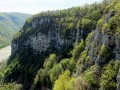
A gentle forest walk to the Montoille viewpoint overlooking Deluz and its old paper mill. You'll no doubt find yourself whistling as you climb the beautifully named Impasse de Chantemerle, but you'll soon need to catch your breath for the strenuous climb to the Grotte de sous Roche and the Château-Loriot viewpoint over the Doubs valley and the Vosges mountains, which will reward you for your efforts. A peaceful, wooded return journey, framed by the mossy rocks of a superb sinkhole.
Arcier Springs Circular Trail
 1.49 mi
+558 ft
-535 ft
1h 10
1.49 mi
+558 ft
-535 ft
1h 10
 Easy
Departure from Vaire-Arcier (Doubs)
Easy
Departure from Vaire-Arcier (Doubs)
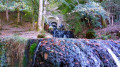
A short but challenging walk to discover the Arcier springs that have supplied the city of Besançon since the distant Gallo-Roman era. A gentle warm-up, accompanied by the music of gushing water. Then a lovely climb up the slopes of the Grand Bois, still accompanied by the murmur of the water.
The Arcier Springs
 5.41 mi
+1,234 ft
-1,240 ft
3h 35
Moderate
Departure from Vaire-Arcier (Doubs)
5.41 mi
+1,234 ft
-1,240 ft
3h 35
Moderate
Departure from Vaire-Arcier (Doubs)
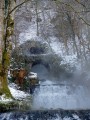
At the gates of Besançon, the waters of the Arcier springs, naturally filtered by the Saône marshes, have supplied the city since the distant Gallo-Roman era. From their green and rocky settings, the babbling waters, gushing from all sides, will restore your bucolic spirit. You will then climb, at a more military pace, to the ruins of the Épesses battery, built in 1878.
The Bois de la Cototte in Roche-lez-Beaupré
 5.55 mi
+725 ft
-705 ft
3h 10
Moderate
Departure from Roche-lez-Beaupré (Doubs)
5.55 mi
+725 ft
-705 ft
3h 10
Moderate
Departure from Roche-lez-Beaupré (Doubs)
A short walk, almost entirely through the forest, very pleasant, very close to Besançon but offering a complete change of scenery and plenty of variety.
The Arcier springs with return via the heights of Chalèze
4.32 mi
+768 ft
-748 ft
2h 40
Moderate
Departure from Vaire-Arcier (Doubs)
Near Besançon, discover the beautiful hamlet of Arcier and its water sources, which contribute significantly to the water supply of Besançon and the valley overlooking them, and return via the heights of Chalèze and La Canaie via the Côte de Joux.
Aigremont Mountain
 7.06 mi
+1,867 ft
-1,867 ft
4h 50
Moderate
Departure from Deluz (Doubs)
7.06 mi
+1,867 ft
-1,867 ft
4h 50
Moderate
Departure from Deluz (Doubs)
Aigremont overlooks the Doubs valley. Once crowned by a small fortified castle, legend has it that on these ruins, a shepherd intrigued by the behaviour of his flock—which was drawn to a patch of evergreen grass—discovered a statue of the Virgin Mary. Carried down to the village, it mysteriously returned to its rock, where a chapel was built. You will reach it by following magnificent jagged ledges, discovering from these heights the Jura mountains and, on a clear day, Mont Blanc.
The Sous Roche Cave
 4.63 mi
+1,181 ft
-1,165 ft
3h 10
Moderate
Departure from Deluz (Doubs)
4.63 mi
+1,181 ft
-1,165 ft
3h 10
Moderate
Departure from Deluz (Doubs)
Forest walk to the viewpoint of the Chapelle de Montoille sur Deluz and the Doubs valley, peaceful today but still echoing with the industrious sounds of the old mines and paper mills of yesteryear, to the Rochers du Château Loriot viewpoint, and finally down to the Grotte de sous Roche and the village.
The Rocks of Château Loriot, the Chapel of Aigremont
 8.20 mi
+1,955 ft
-1,955 ft
5h 30
Moderate
Departure from Deluz (Doubs)
8.20 mi
+1,955 ft
-1,955 ft
5h 30
Moderate
Departure from Deluz (Doubs)
This is a challenging hike offering three viewpoints over the Doubs valley and its meanders, the Val de Roulans, the Jura mountains and, on a clear day, Mont Blanc. You will visit the two villages in the valley, Laissey and Deluz, which are peaceful today but still echo with the industrious sounds of the old mines and paper mills, and enjoy their genuine and simple riches: here a naive war memorial, there an ancient forgotten cul-de-four oven or an old wash house.
Circular Thise through the Coutelot and Ban woods
7.61 mi
+597 ft
-594 ft
4h 00
Moderate
Departure from Thise (Doubs)
On the outskirts of Besançon, this entirely woodland hike will take you from the outskirts of Thise to the summit of the Côte de Marchaux via the aptly named Sentier des Dolines, then along various roads and tracks to reach the highest point of the route. The return journey along the ridge line and then along some lovely paths presents no difficulty.
The Arcier Springs via the Grand Bois, starting from Gennes
 5.16 mi
+1,283 ft
-1,270 ft
3h 30
Moderate
Departure from Gennes (Doubs)
5.16 mi
+1,283 ft
-1,270 ft
3h 30
Moderate
Departure from Gennes (Doubs)
Follow the water’s path as it disappears into the underground channels (see ‘During’ section below) at Saône, Gennes and Nancray, only to reappear near Arcier. The footpath and small roads through the woodland will take you from one hillside to the other, offering alternating views of the plateau and the Doubs valley, before you reach the water again at the Arcier springs.
Circular route from Gennes to Nancray via the woods of Faule and La Côte
7.75 mi
+466 ft
-479 ft
4h 00
Moderate
Departure from Gennes (Doubs)
A walk through the forest along dirt tracks and local roads. Passing by the Moulin Neuf and the Source du Fontenis.
The Batterie des Rattes and the Fort d’Épesses
 4.82 mi
+656 ft
-640 ft
2h 45
Easy
Departure from Gennes (Doubs)
4.82 mi
+656 ft
-640 ft
2h 45
Easy
Departure from Gennes (Doubs)
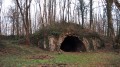
A short walk through the woods to discover these two batteries, which complemented the Fort de Montfaucon completed in 1878. They form part of the first phase of construction of the Besançon fortified camp and are named after the wooded localities in the midst of which they are situated.
Route des Trois Portes in Chaleze
5.86 mi
+840 ft
-823 ft
3h 25
Moderate
Departure from Chalèze (Doubs)
Hike in the peaceful woods on the outskirts of Besançon.
The Landes Circular Walk in Gennes
 5.20 mi
+525 ft
-502 ft
2h 50
Easy
Departure from Gennes (Doubs)
5.20 mi
+525 ft
-502 ft
2h 50
Easy
Departure from Gennes (Doubs)
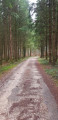
A hillside walk through the forest between Gennes and Nancray. Explore the old village of Gennes, then take in the scents of the fir forest, and finally the field of wild blackberries, which are a delight to pick from September to October.
Circular route around Braillans-Est
 3.31 mi
+125 ft
-125 ft
1h 40
Easy
Departure from Braillans (Doubs)
3.31 mi
+125 ft
-125 ft
1h 40
Easy
Departure from Braillans (Doubs)
A short walk east of Braillans, through its game-rich woods and past the memorial stone honouring the memory of Honoré Gressenbucher, known as Nono, who died for France at Les Combottes in 1944.
Nancray Mill Route
 6.06 mi
+538 ft
-554 ft
3h 15
Moderate
Departure from Nancray (Doubs)
6.06 mi
+538 ft
-554 ft
3h 15
Moderate
Departure from Nancray (Doubs)
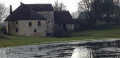
Explore Nancray, its water springs, its old mill, the Bois de la Côte, and finally return via the Forêt des Landes. And of course, take the opportunity to visit the Nancray Open-Air Ecomuseum of Comtois Houses, featuring around thirty typical rural houses from Franche-Comté.
The water cycle and natural environments of the Saône marshlands
 4.08 mi
+115 ft
-115 ft
2h 00
Easy
Departure from Montfaucon (Doubs) (Doubs)
4.08 mi
+115 ft
-115 ft
2h 00
Easy
Departure from Montfaucon (Doubs) (Doubs)
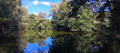
This easy loop takes hikers on a journey of discovery through forests, pastures and preserved wetlands. You will pass through the typical hamlet of La Couvre, peaceful woods and pretty wooden pontoons will lead you to the ponds of Prés Neufs, La Vaivre, and Creux sous Roche, which drains water from the Bisontins to the source of Arcier. The route offers a variety of settings: old farms, romantic ruins, streams and clearings. Between the reflections on the water, the croaking of frogs and the rural landscapes, the walk charms visitors with its diversity and tranquillity. Accessible to all, it is an ideal nature walk for families.