Refine your search for walks in Trépot
Trépot walks
The Belvédère du Gratteris and the Saint-Maximin Chapel
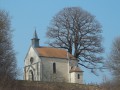
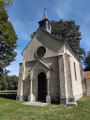
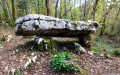
A short walk through the forest takes you from the very Catholic hermitage of Saint-Maximin to the prehistoric pagan dolmens. You will end up at the viewpoint overlooking Le Gratteris, whose name comes from the Celtic word kratt, meaning a stony field where you had to scratch hard to earn your livelihood.
The Tourbillon Rock
You will walk along an old railway line that has been converted into a footpath to reach the Rocher du Tourbillon viewpoint overlooking the charming little valley of La Brême. Return via the plateau with views of the Comté hills and the Hautepierre rock.
The Plaisir Fontaine Cave
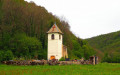
It is difficult to walk through our Loue valley without mentioning Gustave Courbet, who made this stream famous with his painting The Deer Slaughter at the Plaisir Fontaine Stream. He is also said to have painted his Self-Portrait with Black Dog here. Once again, you will follow in his footsteps to climb the Rocher du Tourbillon for superb views of the steep-sided Brême valley and finally return via the Ancien Prieuré de Bonnevaux, of which only the 12th-century bell tower remains.
Le Saut du Chevalier
Starting from the bell tower of the former medieval priory, you will cross the cool Brème valley, so often painted by Courbet. Then, climbing back up to the Saut du Chevalier viewpoint, you will descend into the valley via a picturesque mule track.
From Brême to Loue
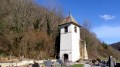
Starting from the bell tower of the old medieval priory, you will cross the cool Brême valley, so often painted by Courbet. You will climb up to the Saut du Chevalier viewpoint to reach the Vierge de la Roche du Mont, continuing along the cornices towards the Roche des Pins and its views over the Loue valley. You will climb up to the Septfontaine plateau and its views of the Jura mountains, before finally descending towards the Brême via a picturesque mule track.
The Brême Valley: The priory, the Roche du Grand and the castle
Starting from the bell tower of the old medieval priory, you will cross the cool Brême valley so often painted by Courbet. Then you will climb through a beautiful fir forest sheltered by stunning rocks, passing large boulders detached from the cliffs, towards the Grand viewpoint overlooking the upper Loue valley, Ornans and the Val de Scey. Continuing towards the Fontaine aux Vipères and then the castle overlooking the town, you will descend into the valley via a picturesque mule track.
The Brême Well
Walking along the banks of the emerald-green Brême, you will enter a dense forest until you reach the Ravin du Puits Noir, a dark, hidden, impenetrable and wild place where Gustave Courbet set up his easel more than fifty times. You will emerge at La Gouille, where goats once drank, and return peacefully via the old Tacot road and its viaduct, passing by the Puits de la Brême, the entrance to the underworld or the crystal palace of the fairies.
The Belvédère du Grand and the Château
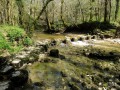
From a beautiful pine forest, sheltered by beautiful rocks and crossing large boulders detached from the cliffs, you will arrive at the Belvédère de la Roche du Grand viewpoint at the head of the valley, overlooking Ornans and the Val de Scey. Continuing towards the Fontaine aux Vipères, where Courbet's cancan dancers once performed, then to the castle overlooking the town, you will return through meadows overlooking the upper Loue valley, finally descending into the Brême valley through a beautiful, light-filled rocky forest.
The Ravin du Puits Noir and the Belvédère du Tourbillon
Following in the footsteps of Gustave Courbet, the Ravin du Puits Noir was one of the painter's favourite places. You will follow the course of the Brême, walk peacefully along the old Tacot road, climb the Roche du Tourbillon for superb views of the picturesque and steep-sided Brême valley, and finally end at the Prieuré de Bonnevaux, of which only a charming chapel and its 12th-century bell tower remain.
The Ornans corniches from the Château to Notre-Dame du Mont
Starting from Ornans Castle overlooking the old town, after a detour to the Fontaine des Vipères, a meeting place for gossips in Courbet's time, you will walk along the superb line of cornices indented with small recesses and dotted with numerous viewpoints overlooking the upper and lower Loue valley. A round trip that will not exhaust all the attractions of this walk.
La Roche du Grand
From the site of the former castle of Ornans, which overlooks the old town, the route climbs towards the pastures offering beautiful views of the upper Loue valley and Mont Poupet. The return journey takes you along cool, pleasant forest paths to La Roche du Grand, a viewpoint overlooking the lower Loue valley, then to the Fontaine aux Vipères, where you can still hear the gossip of our Franche-Comté "cancouaines" (local women).
Circular La Roche Bottine from Saules
A lovely walk in the forest with beautiful views of the Loue valley from Ornans to Montgesoye from Roche Lahier and Roche Bottine.
The Viper Fountain
This circuit will allow you to discover the setting of our small Franche-Comté town from three viewpoints: the Belvédère de Notre Dame du Mont, the Château d'Ornans and the Château du Grand, offering sweeping views of the Loue valley. This is a major site on the Courbet Trail, thanks to the famous 1855 painting Le Château d'Ornans, an oil on canvas kept at the Minneapolis Museum. You will discover the Fontaine aux Vipères (Viper Fountain), which still echoes with the gossip of our cancouaines (local women).
The Corniches de Narpent and the Hermitage of Notre-Dame-du-Chêne
Crossing the Brême via its old bridge, you will descend to its mysterious well, gateway to the underworld or the fairy kingdom, and climb back up more prosaically to the industrious tile factory. The cornices of Narpent offer another kind of magic, with their rocky crevices silhouetted against the sky and the outline of Castel Saint-Denis, ending at the sanctuary where, long ago, a little girl discovered a small statue of the Virgin Mary, placed there and forgotten, in the hollow of an oak tree.
La Roche des Pins
You will climb from the small Franche-Comté town to the Fontaine aux Vipères, a major site on the Courbet Trail thanks to the famous 1855 painting "Le Château d'Ornans", where the gossips of Courbet's time used to gather. Then, from the castle overlooking Ornans, you will return along the cornices with their many viewpoints, via the charming little valley of La Roche des Pins.
From Ravin du Pré Noir to Saut du Chevalier from Ornans
Hike north of Ornans with many points of interest and viewpoints. On the programme: the Château viewpoint, the Puits de la Brême, the Gouille aux Chèvres, the Grotte du Plaisir Fontaine, the Rocher du Tourbillon, the Saut du Chevalier, Notre-Dame du Mont. The hike can end with a visit to the town centre (§ Practical information). This is a very difficult hike due to its length and elevation gain. You need to be in good physical condition, as some sections are reserved for experienced hikers (ladders, passages requiring the use of your hands, etc.) with areas that are more or less wet and rocky. However, the route is varied and the views are magnificent. In autumn, this route offers a festival of colours.
La Roche Lahier
There is a short climb to the Roche Bottine, immortalised by Courbet in his painting "La Vallée de la Loue par temps d'orage" (The Loue Valley in Stormy Weather). Its unusual shape, reminiscent of an old boot standing on the edge of a precipice, gave it its name. This viewpoint offers a 180° panorama of Ornans, the Vierge de la Roche du Mont, and the upper and lower reaches of the Loue Valley. Along the way, you will discover the Roche Lahier viewpoint, a natural viewpoint overlooking the upper reaches of the Loue Valley towards Montgesoye.
The Belvédère de Gougnot, the Roche Bottine and the Saut du Chevalier
The Loue Valley, an inexhaustible source of hiking opportunities, offers the rugged, wild charm of its rocks, ending more peacefully at the Saut du Chevalier waterfall in the cool Brême Valley, so often painted by Courbet.
The Vineyards of Loray
You will climb a picturesque path overlooking the Loue to the Roche Lahier viewpoint above the Upper Loue Valley. Then on to the vineyards of Loray and its remains of terraced crops, before descending through the fir forests of Onchaud to the Roche Bottine viewpoint on the cliffs of Ornans.
The Peusse and Baume Bourla waterfalls
Set off to explore the mountains of Franche-Comté, accompanied by the murmur of our cool streams which, if you know how to listen, will tell you many forgotten stories. Discover the vegetation petrified by our limestone waters and the coolness of secret caves nestled in the wild greenery.
Mont d'Ully
Discover Ornans, a small town in Franche-Comté with plenty of character, via three viewpoints (Roche Fournièche, Rocher d'Ully and Rocher du Châtelet). Nicknamed "the little Venice of Franche-Comté", it will charm you with its houses on the Loue river and its bridges, which were a source of inspiration for the great Gustave Courbet.
Les Roches Fournièche, d'Ully and du Châtelet
This route will allow you to discover the setting of our small Franche-Comté town from three viewpoints: Roche Fournièche, Rocher d'Ully and Châtelet.
The Saône Marsh
Hike in the Saône Marshes, following the water loop and the natural environment loop.
Varied terrain with ponds, dry pastures and wetlands.
The Hill of the Virgin Mary
This is a country walk whose great merit is that it is... in the countryside. However, it will take you along beautiful forest paths to the Virgin of Malbrans, offering a magnificent 360° panorama: to the south over the Loue Valley, from Roche de Hautepierre to Mont Poupet, and, lost in the greenery, Castel Saint-Denis and perhaps the summit of Mont Blanc on a clear day. After this short walk, tables await you for a picnic while you enjoy the breathtaking view.
The Chemin de Bellevue and the Belvédère de la Vierge
Descend towards the corniches of Scey-en-Varais via the aptly named Chemin de Bellevue, a pretty balcony overlooking the Loue Valley. Then climb back up to the Vierge de Malbrans, which offers a magnificent panorama of the Roche de Hautepierre and Mont Poupet and, lost in the greenery, the Castel Saint-Denis and perhaps the summit of Mont Blanc on a clear day. There are tables where you can picnic while enjoying the breathtaking view. Return through a cool and peaceful forest.
La Roche Thiébaut, La Facle and Les Blocs Erratiques
Three viewpoints allow you to discover the Ornans mountains from the left bank of the Loue, Mont d'Ornans, Roche Thiébaut and Grand Barmaud, before returning to the valley by winding your way through La Facle, a narrow and picturesque fault that cuts into the cliff, and ending at the erratic boulders, geological curiosities, masses of stone weighing over 130 tonnes, transported by glaciers 600,000 years ago.
The Saut de Bonneille
At the end of a wild valley, you will discover the Saut de Bonneille, located less than a kilometre from Courbet's father's farm in Flagey. This exceptional site caught the painter's eye in 1875. The tufa, a deposit of limestone, forms a conical mass surrounded by a plume of foam during periods of high water. Return via the Chassagne plateau and the Monts d'Ornans viewpoint.
La Facle, Le Barmaud, La Reculée de Valbois and Castel Saint-Denis
You will discover the superb white rock cornices at the start of the upper Loue Valley, balconies overlooking the wild nature of the Valbois ravine, climbing boldly at the foot of the cliffs and crossing them via a narrow rocky pass, La Facle, which will lead you to the Barmaud viewpoint over the Brème valley and Notre-Dame du Chêne and the thousand-year-old keep of Castel Saint-Denis, still proudly perched on its rocky spur.
Castle, viewpoint and chasms at Montrond
A varied hike with flat sections, a passage through woods, and two climbs up the Montrond hill. At the top, you can enjoy the vast panorama. At the bottom, you will discover two wells that have been cleared quite recently. Given the size of the cavities visible from the platforms, they can be considered chasms, with a vast underground network that you can learn about on the explanatory panels. You will take part of the Sentier du Triton trail, which will offer you a few riddles. In short, a hike for young and old alike.
The water cycle and natural environments of the Saône marshlands
This easy loop takes hikers on a journey of discovery through forests, pastures and preserved wetlands. You will pass through the typical hamlet of La Couvre, peaceful woods and pretty wooden pontoons will lead you to the ponds of Prés Neufs, La Vaivre, and Creux sous Roche, which drains water from the Bisontins to the source of Arcier. The route offers a variety of settings: old farms, romantic ruins, streams and clearings. Between the reflections on the water, the croaking of frogs and the rural landscapes, the walk charms visitors with its diversity and tranquillity. Accessible to all, it is an ideal nature walk for families.
The ridge line, Notre-Dame des Buis and La Libération
Head towards the Chapelle des Buis and Notre-Dame de la Libération viewpoints overlooking the city of Besançon and its citadel via a ridge path scented with boxwood, running alongside the walls of an old abandoned fort and the charming little Mercureaux valley.
Peusse waterfalls in Ornans
Hike in the woods with a visit to the Peusse waterfalls in Ornans.
The Rocher de Colonne
Dominating Cléron with its massive limestone cliffs, the Rocher de Colonne is a beautiful landscape, characteristic of the upper Loue valley. From its summit, you can see the Château de Cléron, the Castel Saint-Denis, the Ravin de Valbois valley and the start of the upper Loue valley lined with its corniches.
The Feudal Castle of Montfaucon
During this walk, you will pass through almost 1,000 years of military history, from the ruins of the old medieval castle to the Woirol military fort, built at the end of the 19th century, enjoying numerous views of the Bisontine valley and, on a clear day in the early morning or evening, the Bernese Oberland Alps and Mont Blanc.
Montfaucon: Dhuit Fountain
Peaceful downhill hike through the Montfaucon valley to the feudal castle perched on its rocky outcrop. Then from a lost fountain to a forgotten fountain, you will go through and, no doubt, appreciate the wild freshness of the Nacra steephead valley.
The Nacra valley, the Dhuit fountain and the castle ruins
The Montfaucon valley, watched over by its thousand-year-old keep, is undoubtedly one of the most charming places near Besançon, with its ruins reminiscent of "German Romanticism". You can explore it via the cool, wild and remote Nacra and the sylvan fountain of La Dhuit, where you can imagine the Vouivre dragon reflecting in its green waters.
The feudal castle of Montfaucon, Fort Woirol and the Fontaine de la Dhuit
Between forest paths and old walls covered in ivy, this hike immerses you in nature and heritage: from the Vue des Alpes viewpoint to the cliffs overlooking the Doubs valley, the route offers panoramic views of the Citadel, the Jura Mountains and the Saône plain. Along the way, history unfolds: Fort Woirol, marked by a tragic explosion, the optical post and its anti-aircraft batteries, as well as the imposing remains of the feudal castle, testimony to a rich medieval past.
La voie romaine de Trois Châtels
Du splendide belvédère de Notre-Dame de la Libération, sur la boucle surmontée de sa Citadelle et sur les monts jurassiens, vous poursuivrez par la voie romaine vers la Grotte-Ermitage de Saint-Léonard et reviendrez à la chapelle par les Monts des Buis.
Le Trou au Loup
From the Liberation Monument, built in 1945, and its crypt dedicated to the memory of war victims, you can enjoy beautiful views of the city topped by its Citadel on one side and, on a clear day, the Vosges mountains on the other and the Jura ridges. Then, as you walk along the beautiful ridgelines, you will discover views of the valley below and above, with the pretty line of the Besançon mountains: Bregille, Mont Saint-Étienne and its Citadel, Chaudanne and Rosemont.
Notre-Dame de la Libération and the Caves of Saint-Léonard
In 1940, the Archbishop of Besançon, Mgr Dubourg, vowed to erect a statue to the Virgin Mary if the city was not destroyed. From this splendid viewpoint overlooking the loop topped by its Citadel, you can continue on your pilgrimage to the Grotte-Ermitage de Saint-Léonard and Notre-Dame-des-Buis, before returning with a spring in your step via the foothills of the Citadel and the Forts des Buis, stopping off at the many viewpoints over the city and other more rugged spots overlooking the Doubs and Mercureaux valleys.
The boxwood trail
This hike starts at Notre-Dame de la Libération, built in 1945, and offers a varied route combining heritage, panoramic views and forest trails. From the very first steps, you can see the old town of Besançon dominated by its citadel, before opening up to the countryside and the Jura mountains. With its steep paths, rocky ridges and wilder sections, this short circuit is no Sunday stroll, but a real hike just a stone's throw from the city centre.
Around the Grand Barmaud
There are four viewpoints on this woodland hike. The first is in the Ravin de Valbois Nature Reserve, a typical Jura wilderness area, under the protection of the proud thousand-year-old keep of Castel Saint-Denis. Then you will return, overlooking the peaceful Loue valley, discovering the heights, Notre-Dame du Chêne and the old town of Ornans.
The Belvédères de la Thuyère and La Verdotte
You will discover the Church of Saint-Gengoult and its old tombs, then climb to two viewpoints over Montgesoye, Ornans and the Loue Valley as you walk through a charming little valley.
The Corniches and the Belvédère du Tangelet
From the church in Montgesoye and its ancient tombs, you will climb up to a steep rocky ledge offering numerous viewpoints over the Loue Valley. From Vuillafans, a small, characterful Comtois town with old houses leaning over the river, crowned by the jagged walls of its old castle, you will return along the riverbanks, accompanied by the beauty of the rocks that frame the emerald green river.
The Thuyère, Verdotte and Val de Cornebouche viewpoints
From Saint-Gengoult Church and its ancient tombs, you will climb to two viewpoints over Montgesoye, Ornans and the Loue Valley, passing through a charming little remote area, and return via the wild Cornebouche valley.
Reculée and Cascade de Vau waterfalls and the Belvédère de la Thuyère viewpoint
From the church of Saint-Gengoult, patron saint of cuckolds, our ever-faithful Comtois Lady Nature will lead you along the beautifully named Chemin des Prés to the waterfall at the end of the Vau valley and its petrifying streams. On the way back, along the pleasant forest path overlooking the cornices, you can stop at the Thuyère viewpoint in Montgesoye and admire the Loue valley, from the Vuillafans mountains to Ornans.
Fort de Chaudanne in Besançon
Hike to discover Fort de Chaudanne with its panoramic view of Besançon and the citadel and the small paths surrounding the site.
Toum Tatre, the Monk's Rock
From Cléron, through a beautiful, cool forest alternating between fir and deciduous trees, ideal for a hot summer's day, you will visit the gentle monk Toum Tatre, a monolith resembling a tonsured Capuchin monk, watching piously over the Norvaux valley from the top of his cliff. You will return through the Plain Mont forest to two unsecured viewpoints, one overlooking Castel Saint-Denis and the other overlooking Cléron and its castle.
La Roche du Taureau
Six petits kilomètres pour quatre points de vue sur le Val de Cléron, la reculée de Norvaux et le capucin de pierre Tountâtrou où nos anciens Comtois célébraient leurs dieux au sein même de la nature, au pied de ce colosse de pierre.
The Fortifications of Besançon
Just a stone's throw from Besançon city centre, this hike will allow you to discover the capital of Franche-Comté from several different viewpoints. You will also discover the Citadel built by Vauban and several other forts and architectural features that made up the city's fortification system.
The Norvaux and Valbois valleys and Castel Saint-Denis
From Cléron Castle, through a beautiful, cool forest alternating between fir and deciduous trees, ideal for a hot summer's day, you will visit the gentle monk Toum Tatre, a monolith resembling a tonsured Capuchin monk, watching piously over the Norvaux valley from the top of his cliff. Walking along the ledges of the twin valley of Valbois, you will return via Castel Saint-Denis, overlooking the valley from its rocky spur.
The Tacot Trail
You will take the old Tacot railway line, a small, narrow-gauge railway that climbed up to Pontarlier, to discover the Val de Cléron and its castle, surrounded by the white cliffs at the start of the Haute Vallée de la Loue.
La Roche d'Or
An urban hike to discover the hills of Besançon. Natural factors such as soil, climate and altitude, combined with the action of water, have shaped the hills of Chaudanne and Rosemont, which are remarkable natural areas. Let yourself be seduced by the beauty of unspoilt nature, proving that our provincial Besançon has managed to remain a city in the countryside.
Beure and the Chapelle des Buis in Besançon
Hike to discover several viewpoints on the outskirts of Besançon.
The Great Desert
Built in the 19th century in the heart of nature, Fort de Brégille overlooks Besançon and offers one of the most beautiful panoramic views of the old town topped by its citadel and, in the background, the Besançon hills of Chaudanne and Rosemont. After a short detour to the Grand Désert, a vast expanse of scree, you enter the Monts de Bregille forest for a visit to the Renard cave and the Clémentigney viewpoint overlooking the upper Doubs valley and the ruins of the feudal castle of Montfaucon.
The Bregille Mountains
A beautiful walk for city dwellers seeking nature and sweeping views of the capital of Franche-Comté and its hills, just a stone's throw from the city. It offers superb views of our Citadel and the feudal castle of Montfaucon. Then, just a stone's throw from the noisy city, you will find yourself on quiet paths, accompanied by the scent of boxwood.
The Source du Gour
A peaceful walk in our Comtois countryside to discover the riches of two villages on the first step of the plateau: the remains of an ancient castle that allow us to dream of the lost beauty of our once fortified villages and the often overlooked treasures of their churches.
Fort Beauregard and Fort Bregille
The forts of Beauregard and Bregille offer a special walk for residents of Besançon seeking greenery and sweeping views of the capital of Franche-Comté and its hills. They offer superb views of our Citadel. Then, just a stone's throw from the bustling city, you will find yourself on quiet paths, accompanied by the scent of boxwood.
La Reculée de la Vergetolle
You will walk alongside the babbling Vergetolle stream in this small valley of contrasting light and shade. Then, as the landscape becomes wilder, you will reach the Source Bleue potholes, before finally discovering, hidden at the end of the valley, the impressive Tuffière waterfall, resembling a stone monster ready to devour you. Enjoy a peaceful return through the forest along the ledges, with several viewpoints over the valley.
The Tuffière and Raffenot waterfalls
Set off to discover two small valleys of contrasting light and shade. Then, as the landscape becomes wilder, you will come to the Source Bleue and, nestled in the greenery, the Tuffière, resembling the mouth of a giant forest creature, ready to devour you, ending at the Cascade du Raffenot at the bottom of a typical valley of the Loue.
Le Tangelet
From a steep rocky ledge, with numerous views over the Loue valley and Châteauvieux-les-Fossés, you will cross the beautiful, airy Tangelet forest, sharpening your sense of direction as you climb back up to the sunny plateau. You will visit the church of La Barêche, lost in the middle of the fields, and finish at the charming Sainte-Gertrude Chapel with its superb view of the valley.
La Gouille Noire
From the curious and pretty fountain in Amondans, quiet paths will take you to a viewpoint overlooking the green Loue valley and the remote Malans stream, where you can admire the wild charm of the landscape. Then, from the Bois des Serpents, winding your way between a splendid sharp limestone pavement resembling menhirs, you will follow the emerald green Loue to the deepest part of the valley, where a waterfall ends its descent into a pool: the Gouille Noire.
The Gouille Noire viewpoint
Amondans, home of our regional musician Napoléon Coste, overlooks the Malans stream, which flows into the Gouille Noire, whose wild charm you will be able to admire from above. Passing by oratories and fountains, you will return to Lizine with its ancient houses covered with lauzes, the formidable stone tiles that required our carpenters of yesteryear to build solid frames. Two other viewpoints will allow you to discover the Lison and Loue valleys with their gorges and meanders.