


Please note that water is scarce on the high plateaus and navigation can be difficult.
5-day crossing of the Vercors from Grenoble to Châtillon-en-Diois


This is a trek across the Vercors via the high plateaus, the wildest and most unspoilt part of the Vercors.
From the north to the south of the Vercors, an 88km hike through spectacular landscapes. You’ll be camping in tents or in the various shelters lining theGR®.
Details
Creation:
Last update:
Last review:
-
 Activity: Walking
 -
 Distance: 54.45 mi
 -
 Average duration: 5 days
 -
 Difficulty: Difficult
 -
-
 Back to start: No
 -
 Ascent: + 10,722 ft
 -
 Descent: - 9,469 ft
 -
-
 Highest point: 6,467 ft
 -
 Lowest point: 702 ft
-
 Country:
France
Country:
France
-

-
 City:
Seyssinet-Pariset (38170)
City:
Seyssinet-Pariset (38170) -
 Start: N 45.185004° / E 5.687829°
 -
 End: N 44.695409° / E 5.48505°
 -


 Hour-by-hour weather
Photos
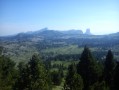
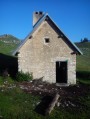
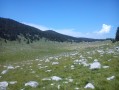
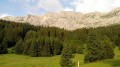
Stages of the route
This route needs several days, find the details below:
Notes
This route passes through multiple protected areas, which may be subject to special regulations:
Reviews and comments
4.7 / 5
Based on 5 reviews
Reliability of the description
4.6 / 5
4.6 / 5
Ease of following the route
5 / 5
5 / 5
Route interest
4.4 / 5
4.4 / 5

Tim
Hello Joachim,
As you can see above, it is only possible to stock up on supplies at the start of the route. That is to say, in the Quatre Montagnes area: the towns of Lans-en-Vercors, Villard-de-Lans and Corrençon have shops.
However, a significant part of the route passes through uninhabited areas, where self-sufficiency is required. You should therefore set off on this section fully aware of the situation. Once past Corrençon, you gradually enter the high plateaus. Water is very scarce there, so you must carry sufficient supplies and be able to manage them effectively.
Food is virtually non-existent. To avoid carrying too much weight, freeze-dried food is a good option for lightening your pack. However, if, like some people, you prefer proper food, bear in mind that you will have no opportunity to restock on solid food once past Corrençon until you reach the Diois.
I’d also add that this is a very remote area with no mobile phone coverage, so excellent navigation skills and map-reading ability are essential. As you’re travelling out of season, you’re unlikely to meet many people on the high plateaus, at least as far as the Veymont area.
I hope I’ve answered your question and wish you a great trip 😉
Best regards
Machine-translated
JoaDel
Hello,
I’d like to go on this hike very soon, at the end of September.
Are there any places where we can buy food, so we don’t have to carry all our food at the start of the hike?
Thanks,
Joachim
Machine-translated
Cammm
Overall rating : 4.7 / 5
Date of your route : Aug 14, 2023
Reliability of the description : ★★★★☆ Good
Ease of following the route : ★★★★★ Very good
Route interest : ★★★★★ Very good
Very busy route : No
A lovely hike, which essentially takes you across the Vercors from north to south. The scenery is varied and the climate changes, with plenty of panoramic views of the mountains. We saw ibex, marmots, griffon vultures and young goats! The mountain huts are very charming and cosy. It really is a superb route but a demanding one (lots of elevation gain and long days are unavoidable as you have to stop at water sources).
We are three 23-year-old women, one of whom is fairly new to hiking. Our rucksacks weighed about fifteen kilos including the tents. We did this route in mid-August 2023. A very, very lovely route.
However:
- the first day from Grenoble to Saint Nizier can be skipped. It isn’t particularly interesting and can easily be replaced by a bus (which we found out afterwards)
- the comments about how isolated the hike was had put us off. We’d downloaded the route onto Visorando and Komoot (which helps you track the terrain and weather better) on our three phones, using a portable power bank. It was brilliant for finding our way! The GPS never let us down. A paper IGN map wouldn’t have gone amiss, though, to help locate water sources, villages and alternative routes.
- As for water, there are plenty of places to refill your bottles during the first two days (up to Corrençon). In summer, there are several restaurants and houses along the route where we could fill our water bottles. On the first day, we also found an unmonitored spring and used water softening tablets (useful). From the third day onwards, always allow at least 2.5 litres of water per person.
- Be careful, however, as once inside the Vercors Nature Reserve, you can only rely on the springs mentioned. In our year, they were all flowing, but sometimes only a trickle (taking over 5 minutes to fill a litre). Apparently, in some years certain springs run dry: in that case, the hike is really difficult and dangerous! Check the Vercors website beforehand for information on their water points!!!
- At the time we were there, there were quite a few people on the trails (we came across hikers at least every 2–3 hours, depending on the day). It was handy and reassuring to get information about the condition of the springs and mountain huts. So in summer, you’re not on your own. In the evenings at the refuges, it was really nice because we shared the space with other hikers.
- For the end of the route, we wanted to return to Grenoble, so rather than finishing at Châtillon-en-Diois, we walked from the Jasse du Play shelter to Die (where there’s a train station for Grenoble).
- As for the weight, our rucksacks quickly reached 15kg as we were carrying food for several days, water and two two-person tents. If you start directly from Saint Nizier or stay in a lodge in Saint Nizier, you can spend every night in a refuge and thus avoid having to carry a tent! Recommended, as the heavy rucksacks were a bit of a struggle but somewhat unavoidable.
- As for food supplies, don’t overload yourself at the start. There’s plenty available in Saint Nizier and at Les Glovettes. The last supply point is in Corrençon, so make sure you stock up there for the following days.
- We didn’t have any problems with the pastures or the dogs, but we’d heard stories about them. Be careful and don’t get too close!
Machine-translated
Tim
Overall rating : 5 / 5
Date of your route : May 24, 2023
Reliability of the description : ★★★★★ Very good
Ease of following the route : ★★★★★ Very good
Route interest : ★★★★★ Very good
Very busy route : No
We only completed part of the route; as stormy weather was forecast from Veymont onwards, we altered our route to head down via Gresse, then Monestier-de-Clermont to catch the train.
A few variations on my part:
- we went via ‘Pic Saint Michel’ on the second day, rejoining the path after the Col de l’Arc. A breathtaking view above the clouds. We camped near Roybon as, from 8 pm onwards, it was a thick fog making progress difficult.
- On the third day, we took a wrong turn and climbed via Lac des Près, which leads to Cote 2000. This added to the elevation gain. The Corrençon–Jasse du Play section was therefore split in two as we took our time. You need to be vigilant on this long stretch; whilst the markings are clear, you must know how to navigate and, above all, not be daunted by the solitude. We pitched our tent at the “Pot du Play”: silence guaranteed, a timeless atmosphere with views of the ridges that seem far away. I was particularly impressed by the Darbounouses meadow and its vastness.
- Day 4: with a storm forecast for the evening, we went via the Pas de la Ville to reach Gresse-en-Vercors and sleep there under the trees. This slightly tougher section offers fantastic views and, once again, an otherworldly atmosphere.
Day 5 was an alternative route to link Gresse to Monestier and catch the train.
Crossing the Plateaux is obviously the most unique part of the journey, thanks to the solitude, the stunning landscapes and the abundance of wildlife (marmots, ibex, roe deer, foxes... and wolves if you’re very lucky). You need to know how to prepare yourself; no one will come to your rescue if you get into trouble, and water is almost non-existent before you reach the ridges.
Machine-translated
Thierryb26
Hello,
Rather than just a detour, I think it would be better to plan an alternative route, as the nature reserve begins just south of the Carette hut and ends at the edge of the Glandasse plateau, at the start of the descent to Chatillon-en-Diois – which is, at a rough guess, just under half of the proposed route. So, in my opinion, it is the entire southern half that needs to be rethought.
Please also bear in mind that outside the winter season, in addition to the restrictions associated with the reserve, you will regularly encounter flocks of sheep accompanied by guard dogs (Patous, Kangals).
Machine-translated
Mistlokis
Hello,
Does the route go through the nature reserve where dogs are not allowed? My dog comes with me everywhere, so we’ll need to plan a detour to avoid the restricted areas.
Thank you
Machine-translated
franck.t
Hello, at this time of year, temperatures can be very chilly at night, around 2 degrees or even below freezing in the coldest years. But apart from the temperatures, you should also bear in mind that the days are short. What’s more, it’s quite easy to get lost on the high plateaus in foggy weather.
On the other hand, snow is not very common at this time of year, though light snowfall is possible.
I hope this has been helpful.
Machine-translated
JChabb
Hello,
I’d like to go on this hike in early November. Do you know what the temperatures are like at night and during the day? Are there any particular difficulties at this time of year (snow, for example)?
Jérôme
Machine-translated
Thierryb26
Hello,
No problem at all; the first climb will just be a bit steeper, but you’ll be walking into the sun less often, which I think allows you to enjoy the scenery more.
Machine-translated
jeremieb
Hello, I was wondering if it’s also recommended to do this hike in the opposite direction, from south to north. Thank you for your time. Jeremie
Machine-translated
Maxsrine
Overall rating : 4.3 / 5
Date of your route : Aug 29, 2019
Reliability of the description : ★★★★☆ Good
Ease of following the route : ★★★★★ Very good
Route interest : ★★★★☆ Good
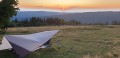
Thank you for this lovely walk!
Setting off from Grenoble station, it’s a 30-minute walk to Karl Marx Park.
I extended each stage a bit further to camp under a tarp.
At the end of August, some springs and/or fountains had run dry.
Bring Micropur or boil any water you can find here and there, but be careful to bring enough.
I had 3 litres to last me, and at times I had to make do with cold food in the evening and cut back on my consumption. 4 litres wouldn’t have gone amiss.
Machine-translated
trailtobecool
Overall rating : 4.7 / 5
Date of your route : Aug 07, 2017
Reliability of the description : ★★★★★ Very good
Ease of following the route : ★★★★★ Very good
Route interest : ★★★★☆ Good
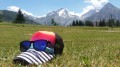
Completed in three and a half days instead of five, including the "Moucherotte" option at the northern tip of the Vercors and the Grand Veymont option. Instead of heading back down via Chatillon-en-Dios, we descended via Die, which shortened the route by a few kilometres (but at least there’s a train station to get home from!)
The route is perfect and the marked water points are all there.
Machine-translated
matgamer
Overall rating : 4.7 / 5
Date of your route : Jun 26, 2017
Reliability of the description : ★★★★★ Very good
Ease of following the route : ★★★★★ Very good
Route interest : ★★★★☆ Good
This week-long trek across the Vercors is absolutely perfect for those new to multi-day hikes, thanks to its relatively moderate difficulty and the numerous shelters on the plateau (as well as very affordable stopover lodges in Corrençon-en-Vercors and Châtillon-en-Diois). What’s more, the scenery is truly magnificent and the trails are absolutely stunning (except perhaps the first stage)
During my hike, I made a few changes to the route:
* Day two: climb up to Moucherotte to enjoy a superb view of Grenoble and its valley, as well as the Chartreuse Massif (adds 1 hour to the original route)
* Day four: climb up the Grand Veymont, which for me was a must-do in the Vercors to enjoy a sublime view of the high plateaus, the Alps and Mont Aiguille. It offers the chance to see ibex and plenty of marmots. The fourth stage is thus extended by 3 hours, making it a standard 7-hour stage including breaks, rather than 3½ hours.
* Addition of a final stage between Châtillon-en-Diois and Die: hiking to Die via mountain passes and picturesque landscapes, so as to arrive at Die station the proper way, rather than taking a shuttle from Châtillon. The stage took just over 6 hours, with 500 metres of total ascent and descent.
It was a superb hike that I will cherish as a precious memory! 
Machine-translated


Other walks in the area
Fountain - Saint-Nizier-du-Moucherotte
 Visorando Member
 6.11 mi
+3,196 ft
-49 ft
5h 35
6.11 mi
+3,196 ft
-49 ft
5h 35
 Moderate
Departure from Seyssinet-Pariset (Isère)
Moderate
Departure from Seyssinet-Pariset (Isère)
This first stage takes you on an assault on the Vercors, gradually leaving the urban environment behind you.
Le Coup de Sabre and La Tour Sans Venin: places of interest in Grenoble
 6.67 mi
+1,522 ft
-1,522 ft
4h 25
Moderate
Departure from Fontaine (Isère) (Isère)
6.67 mi
+1,522 ft
-1,522 ft
4h 25
Moderate
Departure from Fontaine (Isère) (Isère)
This walk takes you past a few local points of interest along a varied route with scenic views, without leaving the Grenoble urban area; the start is at the foot of the ‘La Poya’ terminus on Tram Line A.The varied sections through Les Vouillants are described in another walk on Visorando and can be added to the route for experienced walkers.
The Vouillands Circuit
 5.22 mi
+1,086 ft
-1,073 ft
3h 20
5.22 mi
+1,086 ft
-1,073 ft
3h 20
 Easy
Departure from Seyssinet-Pariset (Isère)
Easy
Departure from Seyssinet-Pariset (Isère)
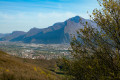
A walk just a few kilometres from Grenoble offering beautiful views over the Isère valley, the Chartreuse and Belledonne. Although some sections are very busy, this route allows you to walk at a leisurely pace whilst enjoying the views.
Walk in the Jean-Jacques Rousseau Desert - Les Vouillants
 3.04 mi
+472 ft
-453 ft
1h 50
Easy
Departure from Seyssinet-Pariset (Isère)
3.04 mi
+472 ft
-453 ft
1h 50
Easy
Departure from Seyssinet-Pariset (Isère)
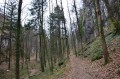
The perfect family walk: easy, fun, with trails that all lead to the same place, Pré Faure.
This circuit is unique in that it passes through the "Désert Jean-Jacques Rousseau", worthy of the greatest romantics, climbs up to the Ferme Froussard, a historic site linked to the Resistance, and returns via a viewpoint offering a superb view of Grenoble and its valley.
More challenging access from the town of Fontaine via the "Coup de Sabre"
La Ferme Durand from Beauregard
6.60 mi
+1,880 ft
-1,873 ft
4h 40
Moderate
Departure from Seyssinet-Pariset (Isère)
A lovely walk through the woods to reach a high point overlooking Grenoble and the Isère valley.
Les Vouillants, the tramway and the Tour sans Venin
 4.72 mi
+1,115 ft
-1,093 ft
3h 10
Moderate
Departure from Seyssinet-Pariset (Isère)
4.72 mi
+1,115 ft
-1,093 ft
3h 10
Moderate
Departure from Seyssinet-Pariset (Isère)
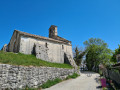
From the Promenade des Vouillants, treat yourself to a little adventure by climbing up to Saint-Nizier-du-Moucherotte on pleasant trails to Pariset. You will return via the tramway, which no longer exists but has been replaced by a very pleasant forest path. You will pass in front of Pariset station, then, after visiting the Tour sans Venin, you will descend to Les Vouillants. Along the way, you will enjoy beautiful views of Moucherotte and the Grenoble valley.
The Pariset to Saint-Nizier-du-Moucherotte tramway route
 11.07 mi
+2,648 ft
-2,648 ft
7h 25
Difficult
Departure from Seyssinet-Pariset (Isère)
11.07 mi
+2,648 ft
-2,648 ft
7h 25
Difficult
Departure from Seyssinet-Pariset (Isère)
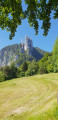
Climbing to Saint-Nizier-du-Moucherotte from Grenoble remains a challenge for most of us, given the distance and elevation gain. It is possible to follow part of the old tramway line at Pariset for a gentler ascent, then descend via theGR®9.
These three circular loops will allow you to discover a particularly overlooked area as you climb.
It is possible to shorten the route from the first circular loop, at the tunnel, or from the second, at a place known as "Blanche Neige"
For more walks, use our search engine .
The GPS track and description are the property of this route's author. Please do not copy them without permission.

