Pic de Madaméte circular winter loop

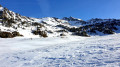
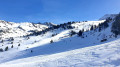
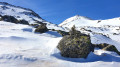
On the outskirts of the Néouvielle Massif, I’ll lead you along my route for a magnificent, challenging winter hike. We’ll ascend via the Aygues Cluses Valley and the Madaméte Lakes, climb Pic de Madaméte, and return via the Coubous Lakes.
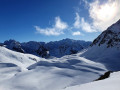
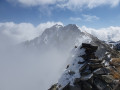
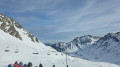
The scenery is spectacular, combining a very undulating landscape, forests of mountain pine, a string of snow-covered lakes and the magnificent viewpoint at Pic de Madaméte (which can be avoided if necessary).
I hope I’ve made you want to join me!

Details

6225190
Creation:
Last update:
Last review:
  • Snowshoeing
    Activity: Snowshoeing
  • ↔
    Distance: 16.08 km
  • ◔
    Duration according to the author: 8 hrs 
  • ▲
    Difficulty: Difficult

  • ⚐
    Back to start: Yes
  • ↗
    Ascent: + 1,201 m
  • ↘
    Descent: - 1,201 m

  • ▲
    Highest point: 2,651 m
  • ▼
    Lowest point: 1,450 m

Photos

Description of the walk

Head to the car park at the Tournaboup ski resort via Barèges (65). Arrive early (in both summer and winter) to secure a space!

(S/E) From the car park, cross the D918 and make your way through the resort buildings at the bottom of the slopes, taking care to walk alongside them rather than on them. Early in the morning, this isn’t a problem. Later in the morning, it’s best to go round the ski school’s nursery and follow the stream.
Head up towards the south-east, keeping the small wood on your right and staying on its edge.

(1) Leave the bend of the old Pont de la Gaubie car park (1528 m) below on your right.
Then generally follow the track (closed in winter) – which is more or less covered in snow – or theGR®10.
On the other side of the stream, you can see the Cabanes de la Gaubie, a group of dry-stone buildings (see § During the ‘Pastoralism’ hike below).

The path is overlooked by the magnificent Soum de la Piquette (2,324 m), which is usually the only peak bathed in sunshine early in the morning. Turning round, you can also admire, on the other side of the car park, the ridge running from left to right from the Pic d’Ourdégon (2,436 m) to the Pic Bédéra (2,513 m), passing via the Soum de Moutarra, the Col des Pêcheurs and the Pic de Barbe.

Head for the 1640 m mark where the two paths meet. Continue along the Ruisseau dets Coubous until you reach the Pountou footbridge.

(2) Cross the footbridge (1,740 m). You will soon reach the signpost (1,741 m). Turn left, heading due east, towards the Aygues Cluses hut and refuge. High up on the right in the distance, you can clearly see the pass that separates this long valley—which is fairly gentle in its lower reaches but very steep towards the end—from the plateau and the hollow in which Lac dets Coubous is nestled. You will return via this lake and valley at the end of the circular route.
Head up the valley of the Ruisseau d’Aygues Cluses. The path runs very close to the stream, on the left bank.

(3) Still on the left bank, at the 2041m mark, pass the reservoir and sluice gate which supplies Lac dets Coubous via a 2km underground penstock; we will pass by the lake on the way back.
Shortly afterwards, the track emerges from the wooded area onto a beautiful, vast and undulating plateau, with numerous paths leading to the Aygues-Cluses Hut.

To the right in the distance, beyond the scattered mountain pines amidst the snow cover, looking up one is struck by the Pic and Crête de la Touatère (2,530 m), an imposing rock mass, completely snow-covered in the depths of winter. You cannot see it, but at the end of this ridge lies the Col de Tracens, an alternative route into the Vallée des Coubous (see § During the hike: Variation below).

In the distance ahead, blocking the horizon, is the ridge stretching from the Pic d’Aygues Cluses to the Pic de Gourget, with the Col de Barèges, another route to the Néouvielle Nature Reserve.

(4) Stop at the hut (or refuge), or pass by, or take advantage of a rock jutting out of the sea of snow to take a break? It’s been an hour and a quarter since we left Tournaboup. It will take just as long to climb to the peak.
Most of the skiers’ tracks head south-east towards the Col de Barèges. You may find yourself breaking trail from here! Head due south across this plateau, which is somewhat flatter than the section after point 3, keeping well to the left of the hills at 2,274 m and 2,301 m. Cover a distance of approximately 6,000 m.

(5) Head south-east again, leaving theGR®10, the winter trail (shown in blue on the IGN map) and any ski or snowshoe tracks, heading towards the Lacs de Madaméte. You then zigzag along the thalweg of an invisible snow-covered stream, descending from the Lac d’Aygues Cluses. The slope is quite steep. You will skirt around rocky outcrops and mountain pines to forge a path without being able to see your destination, for about 400 m.
On a flat section, head south-west towards Lac d’Aygues Cluses, which you can make out in a hollow.

(6) Reach Lac d’Aygues Cluses (2,330 m). It has been nearly 3 hours since setting off. Cross the lake if ice and snow conditions permit. If in doubt, do not attempt it and go round it instead.
From here, you cannot see Lac de Madaméte at all, even though it is only 300 m away. This route does not include a visit there, but there is nothing to stop you from making the detour (allow an extra 20 minutes).

However, there is a magnificent view of the Pic de Tracens (2,551 m) to the right ahead and, above all, of the Col de Tracens (2,463 m) a little further to the right. To the right, the ever-present Pic d’Estibère and, straight ahead, the majestic Pic de Madaméte, our destination for the day!
Continue south-west and avoid the Clot d’Aygues Cluses lake by heading westwards, to get closer to theGR®10trail.

The ascent continues through a landscape of small valleys, with numerous steep sections and gentle slopes where you can catch your breath. You will thus reach the Estibère with ease, a vast rocky expanse, more or less snow-covered depending on the season, at the foot and to the south of the majestic and imposing Pic d’Estibère (2,663 m), where it becomes more difficult to make your way.

Leave the frozen Estibère lake to your right below the Col de Madaméte (2,430 m) and tackle the final ascent. When you catch sight of the sharp peak of the Ramougn (3,011 m) standing out against the pass’s gap… you’re almost there! There’s just one last little climb left – keep going!

(7) Reach the Col de Madaméte (2,508 m), a magnificent viewpoint over the Néouvielle Nature Reserve on its southern face. It has taken 3 hours and 45 minutes from the start.
From here, there is a superb view of the Aubert and Aumar lakes and the Reserve. The view is also already very beautiful, taking in the Pic de Néouvielle (3,091 m), the Ramougn (3,011 m), the Crête des Laquettes, the Pic de Hèche Castet (2,568 m; directly opposite the pass) and, in the distance, Pic Long (3,194 m), Pic Badet (3,162 m), Pic Campbieil (3,173 m), Pic Méchant (2,946 m), Pic de Bugatet (2,877 m), etc.

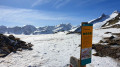
A signpost for the Néouvielle Nature Reserve outlines the area and the rules applicable within the reserve. In summer, this pass is a very busy thoroughfare, as it lies on theGR®10. But in winter, outside school holidays, even in glorious weather, you may find yourself all alone in the world!

After a well-deserved but not too long break, it’s time to tackle the final stretch!
If there are tracks, follow them; otherwise, head slightly further south than the dotted line on the IGN map, following the southern ridge. The slope is a little gentler there to start with. Make plenty of zigzags. Halfway up, move off to the right, towards the north of the eastern face. Be careful on this slope, which is close to 30% or even steeper in several places.

Reach the small pass just before the summit of the peak. The summit is close...

(8) Reach the Pic de Madaméte (2,657 m), between 1 hour and 1 hour 15 minutes after arriving at the Col de Madaméte, and between 4 hours 45 minutes and 5 hours 15 minutes after setting off, including breaks.
Generally, hikers are quite happy to reach this point and let their joy burst forth, sometimes silently, but more often than not loudly!
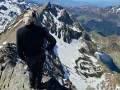
The view is spectacular! The 360° panorama is complete and magnificent. In addition to the peaks and lakes visible from the pass, to the north you can see the Col de Tracens and, in the distance to the north, the Pic du Midi de Bigorre. A cairn about 1.5 metres high rises above the summit. It provides shelter in the event of a cool breeze.
If you set off early enough, it’s time for a midday snack.

With a hearty meal and refreshing drinks, hot or cold, consumed, photos taken and the landscape etched into your eyes and mind, it’s time to make a pleasant return journey!

Follow the small ridge westwards for about ten metres and begin the descent. Even in the depths of winter, the north face is often completely or almost completely bare; you’ll then have to navigate between the rocks here. It’s very uncomfortable.

(9) Descend almost due north to reach the unnamed pass at 2,515 m north of the Pic de Madaméte and join the summer path "PR®". You may need to put your snowshoes back on here.
Then head north-north-west into a small valley bordered to the north and east by the ridge of an unnamed peak at 2,577 m.

On the northern edge of this valley, at 2,450 m, below the Col de Tracens, you can see in the distance ahead and to the left the Cirque des Sept Lacs, including Lac des Coubous, bordered by the majestic ridges of La Mourèle and Lurtet. It’s magical! Head west; the slope becomes steeper, sometimes requiring you to avoid going straight down the slope.

(10) At an elevation of 2,325 m, on a flat section, you can either take the track on the“PR®” path to the north-west (the route chosen here) into a new small snow-covered valley, or the Blue winter track via Lac Nère, to the west.
Reach Lac de Tracens (2,190 m).

Depending on the snow and ice conditions, cross right in the middle of the lake or go round it to the north, between the lake and its small offshoot. If in doubt, go round it! At the lake’s spillway, make your way north of Lac Blanc (it really is white!) and south of Lac Dera Yunco. Watch out for snow bridges in this area; it is very hilly and the route is not obvious if there are no tracks!

(12) At Lac Blanc, continue north-north-west to go round Lac dets Coubous to the west; the lake comes into view quite late as it lies in a deep hollow.

(13) When you spot it, you’ll also see its dam and, at its north-western end, a hut, the Cabane dets Coubous. Right by the lake, the slope is quite steep. If you’re not feeling confident, opt to abandon this shortest route and go round the lake to the east by crossing the dam. Reach the dam pass at 2045 m.

(14) The final descent is down a very steep, north-facing slope, which is likely to be in the shade for much of the day.
Start the descent from the pass. On the right, pass right by the entrance to the underground tunnel and its SHEM gate (not shown on the map).
Head straight down the slope, avoiding all the hairpin bends of the summer path, which are completely invisible if there is a substantial amount of snow in the middle of winter. Cross the Ruisseau dets Coubous via a footbridge. Return to the signpost from the morning at Pountou, then cross the footbridge over the Ruisseau d’Aygues Cluses (1,740 m).

(2) Return to the morning’s path and head back to the car park, noting how much busier the winter sports resort is on the way back compared to the morning! (S/E)


Waypoints

  1. S/E : km 0 - alt. 1,450 m - Car park (1,448m) - Tournaboup - Bastan (cours d'eau) - Affluent du Gave de Gavarnie
  2. 1 : km 1.1 - alt. 1,549 m - Parking Pont de la Gaubie
  3. 2 : km 2.59 - alt. 1,742 m - Rau d'Aygues Cluses footbridge (1740m)
  4. 3 : km 5.2 - alt. 2,038 m - Reservoir (2041m)
  5. 4 : km 6.14 - alt. 2,147 m - Keep to the right - Cabane d'Aygues Cluses (2150m)
  6. 5 : km 6.67 - alt. 2,209 m - Leave the due south and head south-east (2200m)
  7. 6 : km 7.29 - alt. 2,316 m - Lac d'Aygue Cluses
  8. 7 : km 8.78 - alt. 2,506 m - Col de Madamète (2508m)
  9. 8 : km 9.16 - alt. 2,632 m - Pic de Madamète (2657m)
  10. 9 : km 9.51 - alt. 2,563 m - Unnamed Pass (2515m) – Turn left
  11. 10 : km 10.44 - alt. 2,324 m - Plateau (2325m) – Turn right into the valley
  12. 11 : km 11.08 - alt. 2,189 m - Lac de Tracens
  13. 12 : km 11.67 - alt. 2,126 m - Lac Blanc (Pyrénées)
  14. 13 : km 12.26 - alt. 2,054 m - Lac Dets Coubous
  15. 14 : km 12.49 - alt. 2,038 m - Col de la Cabane des Coubous (2045m)
  16. S/E : km 16.08 - alt. 1,450 m - Car park (1448m) - Tournaboup

Notes

This description relates to a solo winter hike (Feb. 2021) in substantial, long-standing snow. Obviously, no path or markings are visible! Most of the route will follow either tracks left by previous skiers or snowshoers, or a GPS track.

Only attempt this route if you are fully proficient in snowshoeing or ski touring.
This hike can be undertaken in summer, following roughly the same route, and staying – as far as possible – on the paths, which are then clearly visible throughout.

Estimated time
I completed this snowshoe route in 7 hours 40 minutes, including breaks and a picnic. This is a fairly tight estimate. Allow between 8 and 9½ hours. In summer, allow 7 hours.

Difficulty
I have rated this as Difficult in winter due to the length and elevation gain of the route, the steep sections between (7) and (8) and between (14) and (2), and the fact that the route is unmarked. It is a somewhat challenging route where you need to maintain a good sense of direction and keep your cool.
In summer, the difficulty rating is Moderate.
The Potential Biodiversity Index (PBI) is 134HKG, which corresponds to a route rated Very Difficult for a hiker with Average physical fitness.

Water sources
- in winter when there is snow, streams can be used as water sources without too much danger. However, allow for 1 litre of cold water per person and 1 litre of hot water in a thermos flask per person.
- In summer, there is a known spring at Lake Coueyla Gran (4). The potability of other springs or runoff water cannot be guaranteed due to grazing livestock. Allow 2.5 litres per person.

Shelters
Only the huts at Aygues Cluses (4) and Les Coubous (14) can serve as permanent shelters along the route.
Please note that in summer, they are very busy at night. A new Aygues Cluses Refuge is now open.

Equipment
- In summer, bring standard mid-mountain hiking gear: hiking boots, suitable clothing, rainwear, water, food, a survival blanket, a knife, a compass, a map and a whistle.
- In winter when there is snow, you must also bring snowshoes, a pair of poles, gaiters, sun cream, lip balm, a GPS or the Visorando app on your smartphone, gloves, suitable warm clothing, a flask with a hot drink, a hat, and sunglasses suitable for glare on the snow. Some will also add an avalanche transceiver (AV), a shovel and a probe.

Traffic
- in winter when there is snow, you can see numerous tracks from ski tourers or snowshoers along practically the entire route. However, you can remain on your own all day, depending on the day chosen and the weather.
- In summer, the route is very busy, in all its variations.
Whatever the season, don’t forget to tell your friends and family your exact route and let them know of any changes by text or phone.

Météo-France Mountain Report and Avalanche Risk Assessment Bulletin (BRA or BERA)
Check the weather forecasts, particularly the Météo-France snow and avalanche bulletin for the Haute-Bigorre massif in the Hautes-Pyrénées. A call to the Haute-Montagne Gendarmerie unit may also put your mind at ease.

Avalanche risk areas
From the WP (6) onwards, and even more so from the WP (7) onwards, you must start to be vigilant about the risk of snow slides or even avalanches. The slopes face north or north-east, and depending on the BERA risk assessment checked before setting off and the depth of snow present, you must keep a watch out for any cracks, which may be precursors to an avalanche or snow slide. If there are several of you, you must maintain safe distances.

TheGR® andPR® trail markings are the intellectual property of the French Hiking Federation.

This route passes through a protected area, which may be subject to special regulations:

Worth a visit

Pastoralism
In the summer pastures of the high Béarn-Bigourdan valleys, shepherds built dry-stone huts, known as capane, with a rectangular layout. Situated in the middle of a dry-stone enclosure where the sheep spent the night and known as coueilas, cuyalas or courtaous, they are often in ruins today. Source: Wikipedia.
The huts at La Gaubie are in fairly good condition and are still in use.

Place names
Source: La mule et l'intello blog. Many thanks to him!
Translations with the help of Pierre Salles, an excellent columnist on France-Bleu Béarn.
Barèges: ßa’RƐdjə The little (?) valley. Etymology (Latin) is somewhat disputed, but seems nevertheless unavoidable. The root comes from the Latin ‘vallem’ and the suffix most likely comes from the Latin ‘-eticam’,…perhaps a diminutive (?)
‘Barège’ (actually ‘Varètge’) is the name of the valley. The commune bearing this name only came into being in the 20th century: at the instigation of Urbain Cazaux, general councillor for the valley and president of the French Ski Federation, the entire eastern section of the land previously belonging to the commune of Betpouey was separated from it to create the new commune.
The place had already been given this name due to the great renown of its thermal baths (cf. their imperial clientele): it was originally referred to as ‘the baths of (the valley of) Barège’, then (in Paris!) it was shortened to ‘Barèges’ to refer, in fact, only to these thermal baths. This name has stuck.
Aygues-Cluses ’aigəs ’clusəs Most certainly ‘closed waters’, ‘hidden waters’ (Latin etymology). The torrent that flows down the upper part of the valley then disappears into ground composed of piled-up granite boulders, so that the lower part of this valley has no stream. Medieval troubadours called ‘trobar clus’ a genre of poetry whose deeper meaning could only be revealed to those who had been given the keys to understand it, and which remained hidden from others. Reconstructed spelling: aigas clusas.
Ets Coubous e(t)s ku’bus. Most likely: the sinkholes and resurgences. Etymology probably pre-Latin. We are very close to Aygues-Cluses and in the same type of terrain. Only this time, it is a place where water disappears in some spots and resurfaces in others. Reconstructed spelling: Eths cobós.
Madaméte mada’metə Probably ‘little Madame’. No doubt some long-forgotten anecdote was behind this name. Reconstructed spelling: Madameta.
Tournaboup: other places in the valley bear this name. The only possibility: a compound word made up of ‘torna’ (‘he returns’, ‘he turns’) and ‘vo(l)p’, the fox. Literally, therefore: ‘Turn fox’. But again, why? This (Latin) etymology is ultimately rather uncertain, and distortions may have occurred over the centuries. Reconstructed spelling: Tornavop.
Néouvielle Massif: Gascon: nèu, snow, and vielha, old, ancient.

Variants
1- Between the waypoints (3) and (5), you can bypass the section to the Aygues Cluses hut by cutting the bend completely and starting the ascent in the Aygues Cluses stream from 2080m. Although the climb is steeper, the elevation gain is the same; this variant shortens the route by several hundred metres. However, it means you miss out on some of the beauty of the Cirque d’Aygues Cluses.
2- At WP (5), you can choose to follow the ‘normal’ route, especially if you don’t fancy breaking trail through the pristine white wilderness. You should then head south-south-west to climb the steep slope directly up the steep section passing by the spillway and the Lacs de Madaméte themselves.
3- At WP (10), you can choose to head east-northeast to pass between the Nère and Tracens lakes, then cross (if possible) the Lac Blanc. This adds about 10 minutes to the journey.

Always be cautious and plan ahead when you're outdoors. Visorando and the author of this route cannot be held responsible for any accidents occurring on this route.

The GR® and PR® markings are the intellectual property of the Fédération Française de Randonnée Pédestre.

Reviews and comments

4.5 / 5
Based on 4 reviews

Reliability of the description
4.3 / 5
Ease of following the route
4.5 / 5
Route interest
4.8 / 5
MCTOUL
MCTOUL

Thank you Netheb, CMO, JLBonnevie and Danielson for your feedback!

Glad you enjoyed the route.
As for the direction of travel, there’s no requirement to go one way or the other on a summer hike.
However, in winter, the ascent to Lac des Coubouts is known as the ‘Mur des Coubouts’, which aptly describes the slope (always icy, as it gets no sun) you’ll encounter there. It’s very tricky going up.

Best regards

Machine-translated

Danielson
Danielson

Overall rating : 4.3 / 5

Date of your route : Sep 28, 2024
Reliability of the description : ★★★★☆ Good
Ease of following the route : ★★★★☆ Good
Route interest : ★★★★★ Very good
Very busy route : Yes

A route best tackled outside the winter season, offering stunning views of a series of lakes high up in the mountains. Starting from the Barèges car park and finishing at the Col de Madamète, it offers superb views of the Néouvielle. With an elevation gain of almost 1,000 metres, it’s a real treat. It’s best to do the circular route in an anti-clockwise direction, as this makes it easier to follow the contour lines, particularly when descending via the GR10.

Machine-translated

JLBonevie
JLBonevie
• Edited:

Overall rating : 4.3 / 5

Date of your route : Aug 12, 2024
Reliability of the description : ★★★★☆ Good
Ease of following the route : ★★★★☆ Good
Route interest : ★★★★★ Very good
Very busy route : Yes

A lovely walk that takes you past the Aygues Cluses mountain hut. The hut is magnificent; it has just been refurbished. You can stop here for a bite to eat and, more importantly, to fill your water bottles for the rest of the route.
The climb to Lake Madamète doesn’t require any particular effort, nor does the climb to the Col de Madamète.
From the pass, there is a magnificent view of both the Madamète Lakes and the Pic du Midi, as well as the Aubert Lakes on the other side.
To complete the circular route, we take a gentle climb that leads us to a summit with a breathtaking view to the east.
The return journey and descent take you past numerous lakes, each as beautiful as the next.

Machine-translated

CMO
CMO

Overall rating : 4.3 / 5

Date of your route : Jul 20, 2023
Reliability of the description : ★★★★☆ Good
Ease of following the route : ★★★★★ Very good
Route interest : ★★★★☆ Good
Very busy route : Yes

I did it in the summer – a lovely route, beautiful lakes, and the GR10 is well signposted 👍. As for the descent, if you have a good sense of direction, you’ll be fine 👌

Machine-translated

Netheb
Netheb

Overall rating : 5 / 5

Date of your route : Aug 03, 2021
Reliability of the description : ★★★★★ Very good
Ease of following the route : ★★★★★ Very good
Route interest : ★★★★★ Very good
Very busy route : No

We did this hike in early August; it was lovely and offered a great variety of scenery (clearings, woodland, scree slopes, lakes, etc.). It wasn’t too busy when we set off early ;-) Thanks to the author for adding some helpful comments to the description . The only downside was that the last few hundred metres from point 13 felt really long on our feet!! But we’d definitely recommend it!

Machine-translated

Other walks in the area

For more walks, use our search engine .

The GPS track and description are the property of this route's author. Please do not copy them without permission.