Country:

 City:
City:


Car park at Place de l'Église in Frasnoy
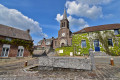
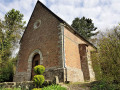
Saint-Clément Church was built in 1857 by the Baron de l’Épine. The bell tower, destroyed during the Great War, was rebuilt in 1923.
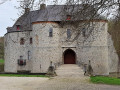
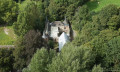
(S/E) Walk down Rue du Château, then, just after the bend, turn right onto the Sentier des Warennes, also known as the ‘paradise of horses’. The château is an old estate, built two centuries ago on the site of a former feudal castle opposite the Aunelle, which rises in the Mormal Forest at a place called ‘La fontaine Pierrette’.
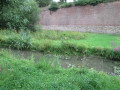
(1) Once you reach the RD942 at the hamlet known as “Le Marais”, follow the road to the right, crossing the bridge. The Aunelle is home to trout, minnow, sculpin and roach. You may spot grey herons, kingfishers or grey wagtails here.
(2) At the hamlet known as "Le Capitaine", leave the RD942 and turn right towards the village centre.
“Le Capitaine” takes its name from an officer in Napoleon’s army who lost a leg in battle. The emperor had granted him a licence to run a café-tobacconist’s.
(3) At the former town hall, turn left onto Ruelle des Ablancs and then, after 50m, right onto “Les Caches”. Note the restored public weighbridge in front of the former town hall.
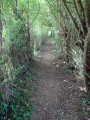
‘Les Caches’ is lined with hedges comprising numerous species, including: black elder, hazel, dog rose, blackthorn, dogwood, hornbeam, ash, elm, as well as privet and spindle trees. A
number of climbing plants also entwine within the hedges: hedge clematis, bindweed and ivy.
The path joins Rue Doignon, at the entrance to the village.
(4) Opposite, take Chemin de l’Épinette towards the cemetery. After 250m, turn right onto Ruelle des Religieuses. Ruelle des Religieuses was created in the past to shorten the journey for children attending the school run by nuns, located at the junction of the path and the lane (a place known as Madagascar).
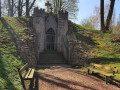
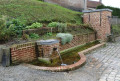
At the end of the alley, turn right onto the path that joins Rue Mottin, which you follow to the left. You will pass the Saint-Clément Fountain, also known as ‘le Buseau’.
In the past, pilgrimages were organised because the spring was believed to cure sore throats and earaches. Saint-Clément is the patron saint of springs. 50 metres further on, you will find the church. (S/E).

 AONB
AONB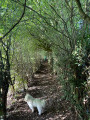
 Moderate