


Refine your search for walks in Ourthe orientale (rivière) - Affluent de l'Ourthe
Ourthe orientale (rivière) - Affluent de l'Ourthe walks


 Between two Ourthes
 Visorando Member
 8.59 mi
 +1,191 ft
 -1,191 ft
 5h 00
5h 00
 Moderate
 Departure from Houffalize (Province de Luxembourg)
A waterside route passing several viewpoints, notably the confluence of the two Ourthes. The Nisramont Dam and two footbridges are essential for crossing from one bank to the other.Please note: this is a challenging walk (see practical information)
The two Ourthes rivers and the Nisramont Dam
4.71 mi
+850 ft
-846 ft
2h 55
Moderate
Departure from La Roche-en-Ardenne (Province de Luxembourg)
Superb walk, relatively difficult in its first part
Around the eastern Ourthe and a few of its tributaries from Sommerain onwards
 13.55 mi
+1,152 ft
-1,165 ft
7h 15
13.55 mi
+1,152 ft
-1,165 ft
7h 15
 Difficult
Departure from Houffalize (Province de Luxembourg)
Difficult
Departure from Houffalize (Province de Luxembourg)
Running through woodland on both the northern and southern sides, this long walk on the heights of the eastern Ourthe is predominantly rural and offers lovely views of the surrounding countryside as well as, in the distance, the villages of the Gouvy area.
Circular Ardennes route between Brisy, Taverneux, Alhoumont and Cetturu
 10.85 mi
+1,227 ft
-1,257 ft
6h 05
Moderate
Departure from Gouvy (Province de Luxembourg)
10.85 mi
+1,227 ft
-1,257 ft
6h 05
Moderate
Departure from Gouvy (Province de Luxembourg)
Typical of the Ardennes, alternating between countryside (fields and pastures) and woodland (deciduous and coniferous), this circular walk through the valley and across the hills of the eastern Ourthe, to the east of Houffalize, is a wonderful experience to be enjoyed in all seasons.
Nature getaway in Sterpigny
 14.68 mi
+1,214 ft
-1,227 ft
7h 50
Difficult
Departure from Gouvy (Province de Luxembourg)
14.68 mi
+1,214 ft
-1,227 ft
7h 50
Difficult
Departure from Gouvy (Province de Luxembourg)
Crossed by the Ourthe Orientale, Gouvy boasts magnificent landscapes to discover as you follow the river, with countryside and forests alternating between deciduous and coniferous trees. In autumn, it is of course the deciduous trees that leave the greatest impression!
Walk around Houffalize
 11.24 mi
+1,079 ft
-1,070 ft
6h 05
Moderate
Departure from Houffalize (Province de Luxembourg)
11.24 mi
+1,079 ft
-1,070 ft
6h 05
Moderate
Departure from Houffalize (Province de Luxembourg)
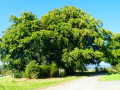
The countryside around Houffalize town centre is open and hilly, offering beautiful views of this lush green region.The eastern Ourthe and its tributaries are (still) fairly wild streams with sometimes rushing waters. The forests are mainly fir forests... there are not many deciduous forests in this area.
Between the two Ourthes from Mabompré
 14.51 mi
+1,837 ft
-1,847 ft
8h 15
Difficult
Departure from Houffalize (Province de Luxembourg)
14.51 mi
+1,837 ft
-1,847 ft
8h 15
Difficult
Departure from Houffalize (Province de Luxembourg)
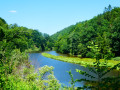
The two Ourthes – the Eastern Ourthe and the Western Ourthe – join at Engreux to form the Ourthe. Slightly downstream from their confluence, man has built the Nisramont dam to create Lake Nisramont.
The Eastern Ourthe between Taverneux and Cetturu
 10.10 mi
+1,079 ft
-1,066 ft
5h 35
Moderate
Departure from Houffalize (Province de Luxembourg)
10.10 mi
+1,079 ft
-1,066 ft
5h 35
Moderate
Departure from Houffalize (Province de Luxembourg)
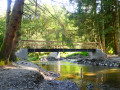
Starting from the viewpoint overlooking the village of Tarverneux, the route heads east at first, then north-east as far as the Sommerain stream.After crossing it, the route heads out into the countryside on the heights of Brisy. A long descent towards the Ourthe follows… here it is the river’s eastern branch; the western branch flows successively through the communes of Libramont-Chevigny, Sainte-Ode, Tenneville and Bertogne before joining the main river at the Nisramont dam. The long climb that follows reaches the outskirts of Cetturu before descending again towards the Tavigny Stream. The next highest point of the walk is at a place known as ‘Les Deux Hêtres’. From there, the route descends towards the Ourthe, passing the Blancs Bois picnic shelter and barbecue area. Near the confluence of the Eastern Ourthe and the Cowan Stream, a little further upstream along the latter, stands the Moulin de l’Ermitage, which gave its name to the locality known as l’Hermitage. All that remains is to head back up to the starting point.
Via Limerlé from Steinbach
 4.53 mi
+394 ft
-420 ft
2h 25
4.53 mi
+394 ft
-420 ft
2h 25
 Easy
Departure from Gouvy (Province de Luxembourg)
Easy
Departure from Gouvy (Province de Luxembourg)
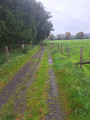
The route passes through the Ourthe Orientale nature reserve. Here, in particular, you can admire the typical flora and fauna.Steinbach is a charming Ardennes village with an agricultural heritage, featuring numerous farms and small farmhouses built of schist stone and roofed with slate (cherbins = local slate). Its historical past is evident in the presence of castle-like farms and enclosed farmsteads dating back to the 17th and 18th centuries, which have been carefully restored.
A few markers on the Ourthe side
 10.93 mi
+620 ft
-597 ft
5h 35
Moderate
Departure from Gouvy (Province de Luxembourg)
10.93 mi
+620 ft
-597 ft
5h 35
Moderate
Departure from Gouvy (Province de Luxembourg)
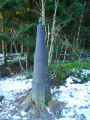
You’ll cover almost 18 kilometres and will also come across two other very different types of boundary markers: two stone ones marking the former Belgian-Prussian border and two metal ones, still very much in use, between Belgium and the Grand Duchy of Luxembourg.The Eastern Ourthe, meanwhile, is not very prominent, but towards the end of the route you’ll walk alongside a beautiful nature reserve on the banks of its tributary, known as the Fooschtbaach in the Grand Duchy and the Pihon in Belgium.