


Refine your search for walks in Ouffet
Ouffet walks


 The Néblon valley as seen from Himbe Castle
 Visorando Member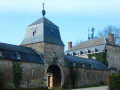
 12.51 mi
 +991 ft
 -988 ft
 6h 35
6h 35
 Difficult
 Departure from Ouffet (Province de Liège)
Set in the heart of the countryside, the hamlet of Himbe (and its castle) is a ‘pure nature’ spot, ideal for setting off on a lovely walk.This long walk presents no particular difficulties apart from a few rather muddy sections along the Néblon.Beavers are clearly present along the banks of the Néblon between kilometres 5 and 6.Shortly afterwards, the walk follows the Néblon leat (there is an old mill further on in Hamoir, off the route).The steepest climb of the walk takes you to the hamlet of Hermanne and its old water tower, converted into a residence and beacon overlooking the magnificent buildings.A stone’s throw further on, the walk passes through the village of Jenneret and its splendid buildings, not least the church and the castle-farm.
Exit to the Liège Condroz region from Ellemelle
 9.78 mi
+633 ft
-643 ft
5h 05
9.78 mi
+633 ft
-643 ft
5h 05
 Moderate
Departure from Tinlot (Province de Liège)
Moderate
Departure from Tinlot (Province de Liège)
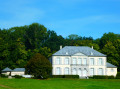
The Condroz region is full of (small) castles and (large) farms, most of which are built from local stone. Some examples can be found in Ellemelle, Houchenée (castle), Baugnée (farm slightly north-east of the route) and Fraiture. The castle of Baugnée, on the other hand, is of a completely different style.
ADEPS walk in Fraiture
12.40 mi
+981 ft
-971 ft
6h 35
Moderate
Departure from Tinlot (Province de Liège)
20 km route of the ADEPS walk organised in Fraiture in Condroz. A beautiful circular route in the Condroz region of Liège. The start is at the church in Fraiture. There are several options for shortening the route if necessary.
A section of the GR®57 from Hamoir to Palogne via Sy
 6.99 mi
+1,171 ft
-1,165 ft
4h 15
Moderate
Departure from Hamoir (Province de Liège)
6.99 mi
+1,171 ft
-1,165 ft
4h 15
Moderate
Departure from Hamoir (Province de Liège)
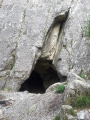
Come and discover the Vignobles cave and its climbing rock, the Sy chapel and the viewpoints from the rocks. Pass by the cross of the priest of Xhignesse, the shepherd's cross and the Saint-Donat chapel.
Around Hody via Limont and Tavier
 8.69 mi
+564 ft
-568 ft
4h 30
Moderate
Departure from Anthisnes (Province de Liège)
8.69 mi
+564 ft
-568 ft
4h 30
Moderate
Departure from Anthisnes (Province de Liège)
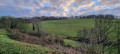
A pleasant, easy walk through woods and countryside in the Liège Ardennes.
Between Ourthe and Condroz
 10.06 mi
+1,227 ft
-1,224 ft
5h 40
Moderate
Departure from Anthisnes (Province de Liège)
10.06 mi
+1,227 ft
-1,224 ft
5h 40
Moderate
Departure from Anthisnes (Province de Liège)
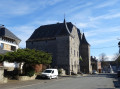
Venture into enchanting forests, walk alongside meadows and fields of wheat, flax and rye, take in superb landscapes, and pass through villages whose architectural character remains intact. As you wander along the paths and trails, discover farmhouses bearing coats of arms and humble dwellings to which sandstone or limestone lends its nobility and value; immersing yourself in the heart of the Condroz means discovering the sources of the elements: earth, stone and water.
Circular at Logne Castle
 11.41 mi
+991 ft
-968 ft
6h 05
Moderate
Departure from Ferrières (Belgique) (Province de Liège)
11.41 mi
+991 ft
-968 ft
6h 05
Moderate
Departure from Ferrières (Belgique) (Province de Liège)
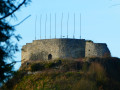
This fairly long circular loop starting from the Palogne estate (large car park) begins by following the course of the Ourthe for a few kilometres before entering a forest and then countryside setting with numerous panoramic views of the plateau overlooking the Ourthe and its tributaries. On the Ourthe: egrets, ducks, cormorants and herons await you.You will see the rocks and the "beach" of Sy, where you can read an information panel about the aborted Meuse-Moselle canal project. Further on, you will pass close to Lassus Castle, which can be glimpsed between the tall trees in its grounds. In Vieuxville, it is probably the resurgence of the Lembrée that will catch your eye, before you see the limestone grasslands further on and finally the fortified castle of Logne. With a bit of luck (in season), you can even visit (for a fee) the ruins of this fortified castle built on top of a rocky outcrop.
A circular starting from Tohogne
 8.61 mi
+699 ft
-712 ft
4h 35
Moderate
Departure from Durbuy (Province de Luxembourg)
8.61 mi
+699 ft
-712 ft
4h 35
Moderate
Departure from Durbuy (Province de Luxembourg)
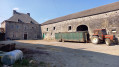
A varied hike, between quiet asphalt roads, paths, countryside, villages and crossing Durbuy. Lovely views.
Getaway to Houte-si-Plou
 11.95 mi
+1,273 ft
-1,289 ft
6h 35
Difficult
Departure from Anthisnes (Province de Liège)
11.95 mi
+1,273 ft
-1,289 ft
6h 35
Difficult
Departure from Anthisnes (Province de Liège)
This is a circular in the Liège Condroz region, mostly through forest, although the start and end are more rural.It is always a pure delight to walk in the woods of Esneux or Anthisnes, whatever the season.Houte-si-Plou has already been the subject of much discussion and, according to legend, much water, as it is said to be a miller asking his son to "listen for rain" when he went to bed and there was not enough water in the stream to run the mill.Nowadays, the expression Houte-si-Plou refers more to an imaginary place, unknown, non-existent or simply located at the end of the world, far from civilisation.
Tradition and customs of Condroz from Nandrin
 9.24 mi
+689 ft
-699 ft
4h 50
Moderate
Departure from Nandrin (Province de Liège)
9.24 mi
+689 ft
-699 ft
4h 50
Moderate
Departure from Nandrin (Province de Liège)
A pleasant and varied walk through woods and fields starting from the village of Nandrin. The route is fairly easy (apart from a slightly rough descent at km 6), offering some lovely views of the rolling Condroz countryside.
Walk in Filot
9.21 mi
+850 ft
-869 ft
5h 00
Moderate
Departure from Hamoir (Province de Liège)
This walk takes you through the countryside and forests on either side of the Tige de Xhoris to discover, on the north side, the undulating landscape of the Ourthe valley and, on the south side, once you leave the woods, that of the Lembrée valley.
From Bomal-sur-Ourthe Castle to the ruins of Logne Castle
 10.47 mi
+1,526 ft
-1,529 ft
6h 10
Moderate
Departure from Durbuy (Province de Luxembourg)
10.47 mi
+1,526 ft
-1,529 ft
6h 10
Moderate
Departure from Durbuy (Province de Luxembourg)
At the intersection of the Condroz, Ardennes and Famenne regions, walk through limestone grasslands, forests and country lanes to reach Logne Castle and back.
The bridges over the Aisne (5) and the Lembrée, after the (13), have temporarily disappeared. If you start this hike, please bear in mind that you may have to wade across the river (5) as there is no other alternative.
On the edge of the Condroz region around Borlon
11.10 mi
+833 ft
-863 ft
5h 50
Moderate
Departure from Durbuy (Province de Luxembourg)
This variation of our Three Provinces Walk in Bonsin is a little shorter but, it should be noted, involves a little more tarmac on fairly quiet country roads.
Villers-le-Temple, streams and forests
10.93 mi
+1,030 ft
-1,037 ft
5h 55
Moderate
Departure from Nandrin (Province de Liège)
Villers-le-Temple, an ancient village marked by the Middle Ages, is set in a landscape of streams, bridges and paths connecting woods and farmland. Houripont and the Chessaine bridge bear witness to these historical passages. The Wetai and Fond d'Oxhe rivers have carved out cool, shady valleys that accompany the walk.
Around the village, the Bois de Bourgogne recalls its seigneurial history, the Bois des Dames feeds local legends, and the Bellegrange and Chaumont woods alternate between dense forests and bright clearings. Schist and limestone, discreet fauna and forest flora make this hike a peaceful and immersive experience, perfect for observing nature and enjoying the peace and quiet.
Along the Ourthe between Bohon and Bomal
 11.31 mi
+1,289 ft
-1,266 ft
6h 20
Difficult
Departure from Durbuy (Province de Luxembourg)
11.31 mi
+1,289 ft
-1,266 ft
6h 20
Difficult
Departure from Durbuy (Province de Luxembourg)
No, the walk doesn’t follow the banks of the Ourthe for 18 km… that would probably be very pretty but too monotonous over such a distance.Starting from the centre of Barvaux, the route begins by climbing the hill on the western side towards Durbuy (which you can visit off the trail) and reaches the Ourthe at the new relief car park.From there, the walk follows the river for just over 3 km before leaving it to reach the plateau between Tohogne and Herbet.After descending to the Ourthe and passing through Bomal, the walk climbs up the other side of the Ourthe and follows the lovely ridge path through the Mont des Pins and Mont Pelé Nature Reserve.
Rotheux and Oie Enceinte circular
5.73 mi
+449 ft
-449 ft
3h 00
 Easy
Departure from Neupré (Province de Liège)
Easy
Departure from Neupré (Province de Liège)
This is a lovely route starting from Rotheux, very pleasant and without any notable difficulties, which will take you along the woods and meadows of Bonsgnée, up to Berleur and back to the starting point through pleasant countryside with some lovely views of both sides of the valley.
You may even spot some of the local wildlife, including Highland cattle, geese, horses and other inhabitants of the region.
Esneux: a circular loop passing beneath the Rocher aux Faucons and returning over the top.
5.40 mi
+653 ft
-663 ft
3h 05
Moderate
Departure from Esneux (Province de Liège)
A magnificent walk with superb views. I recommend it in late autumn or early spring when there are no leaves on the trees so you can fully enjoy the scenery. Do not attempt this walk when it is raining, when there is snow, or when the Ourthe is in flood.
Circular Ourthe and Roche aux Faucons in Esneux
 6.74 mi
+860 ft
-850 ft
3h 50
Moderate
Departure from Esneux (Province de Liège)
6.74 mi
+860 ft
-850 ft
3h 50
Moderate
Departure from Esneux (Province de Liège)
This walk allows you to discover one of the most beautiful circular loops of the Ourthe, starting from the small town of Esneux. The highlight is the panoramic view that greets walkers from the Roche aux Faucons.
Circular Ourthe in Esneux
4.09 mi
+436 ft
-430 ft
2h 15
Easy
Departure from Esneux (Province de Liège)
A lovely walk for those who enjoy nature and peace and quiet. Starting from the Esneux bridge, this route begins with an uphill walk through a small wood, then continues downhill towards the pretty little hamlets of Ham and Lhonneux. You then follow the circular route of the Ourthe via the Ravel, with views of La Roche-aux-Faucons. Return via the Athénée area to the Esneux bridge.
The heights of the Ourthe Valley from Esneux
7.07 mi
+1,122 ft
-1,145 ft
4h 15
Difficult
Departure from Esneux (Province de Liège)
A very strenuous walk along the heights on either side of the Ourthe Valley, starting from Esneux. The route heads to the small village of Fontin via a steep path, before descending to the hamlet of Méry. It then climbs towards the village of Frêchereux, cutting across the circular bend in the river, before finally following the river and returning to the starting point via the hills.