Refine your search for walks in Nortkerque
Nortkerque walks


 Marais Trail in Nortkerque
 Tourist office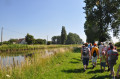
 5.74 mi
 +26 ft
 -26 ft
 2h 40
2h 40
 Easy
Easy
 Departure from Nortkerque (Pas-de-Calais)
This path takes you to one of the four villages of the Pays du Brédenarde, Nortkerque, which can be translated as ‘church of the North’. Geologically, the former Pays du Brédenarde consists of a layer of clay resting on chalk that overlooks the coastal plain. It is a landscape of hedgerows, fruit trees and livestock farming. In the past, the Brédenarde also included the municipalities of Audruicq, Zutkerque and Polincove.
(4) Please note: the footbridge no longer exists; access is impossible until further notice (see practical information).
The Lady of the Wolves Trail
 8.56 mi
+98 ft
-102 ft
4h 00
8.56 mi
+98 ft
-102 ft
4h 00
 Moderate
Departure from Zutkerque (Pas-de-Calais)
Moderate
Departure from Zutkerque (Pas-de-Calais)
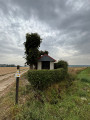
South of Audruicq, discover the Brédenarde, a landscape of hedgerows, fruit trees and wooded countryside.Starting from Zutkerque or Polincove, take the ‘Dame aux Loups’ trail, named in honour of the Baronessde Draëck; you can admire her château, the first hills of Artois and follow the winding course of the Hem: the river of mills.
Around the Meulestroom
 Visorando Member
 4.18 mi
+10 ft
-10 ft
1h 55
Easy
Departure from Polincove (Pas-de-Calais)
4.18 mi
+10 ft
-10 ft
1h 55
Easy
Departure from Polincove (Pas-de-Calais)
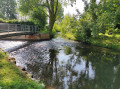
A glimpse into Polincove’s history, exploring its ancient water-related heritage. This route is designed as a walk punctuated by information panels about these iconic sites in our town: do take the time to read them. Ideal for families.
Around Hennuin
 3.82 mi
+7 ft
-7 ft
1h 45
Easy
Departure from Audruicq (Pas-de-Calais)
3.82 mi
+7 ft
-7 ft
1h 45
Easy
Departure from Audruicq (Pas-de-Calais)
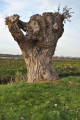
This path, where land and water merge, is a walking trail that takes you alongside the watergangs (drainage structures designed to drain low-lying marshes and wetlands) and allows you to observe, with your family, the animal and plant species native to wetland habitats.
Circular route through the land of the wateringues
 1.78 mi
+3 ft
-3 ft
0h 50
Easy
Departure from Audruicq (Pas-de-Calais)
1.78 mi
+3 ft
-3 ft
0h 50
Easy
Departure from Audruicq (Pas-de-Calais)
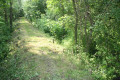
Here in Hennuin, you are at the heart of the Aa Delta – in the land of the wateringues, to be precise.
A five-stage interpretive trail is on offer to help you understand the importance of water management in this land reclaimed from the sea.
Around Muncq-Nieurlet
 7.40 mi
+505 ft
-476 ft
3h 50
Moderate
Departure from Muncq-Nieurlet (Pas-de-Calais)
7.40 mi
+505 ft
-476 ft
3h 50
Moderate
Departure from Muncq-Nieurlet (Pas-de-Calais)
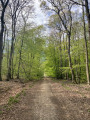
This trail takes you through a wooded landscape at the edge of the Artois hills, interspersed with canals and watergangs. The varied relief offers a unique panorama, a superb walk with a breathtaking view.
The Bois d'Elloo
 Local authority9.57 mi
+597 ft
-597 ft
4h 55
Local authority9.57 mi
+597 ft
-597 ft
4h 55
 Difficult
Departure from Tournehem-sur-la-Hem (Pas-de-Calais)
Difficult
Departure from Tournehem-sur-la-Hem (Pas-de-Calais)
During this route, walkers will pass through the Tournehem National Forest, which covers 988 hectares. They will see old windmills and the Hem valley.This is a signposted trail maintained by the Pays de Saint-Omer Urban Community.
The Saint-Louis Chapel from Tournehem-sur-la-Hem
 5.64 mi
+413 ft
-397 ft
2h 55
Easy
Departure from Tournehem-sur-la-Hem (Pas-de-Calais)
5.64 mi
+413 ft
-397 ft
2h 55
Easy
Departure from Tournehem-sur-la-Hem (Pas-de-Calais)
A lovely walk through woods and hedged farmland to the pretty Chapelle Saint-Louis. It's a signposted trail run by the Communauté d'Agglomération du Pays de Saint-Omer.
La Dame Blanche des Clochers, along the River Oye
 2.73 mi
+7 ft
-10 ft
1h 15
Easy
Departure from Offekerque (Pas-de-Calais)
2.73 mi
+7 ft
-10 ft
1h 15
Easy
Departure from Offekerque (Pas-de-Calais)
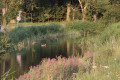
Just a few kilometres from the coast, this walking trail, which runs partly alongside the River Oye, is ideal for families. It invites you to explore a countryside still dominated by mills and traditional farmhouses, bearing witness
to the intensity of agricultural life in these lands criss-crossed by numerous watercourses known as ‘wartergangs’.
The Ghost of the Aa Trail in Ruminghen
 10.40 mi
+33 ft
-33 ft
4h 50
Moderate
Departure from Ruminghem (Pas-de-Calais)
10.40 mi
+33 ft
-33 ft
4h 50
Moderate
Departure from Ruminghem (Pas-de-Calais)
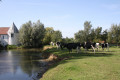
Stroll along the hedgerows surrounding the orchards, discover the Chinese cemetery and the typical farms built of yellow or red brick or stone, a reminder that we are indeed at the confluence of Flanders and Artois. Then, let yourself be haunted by the ghost of the Aa, which lurks along the waterways…
The Ansérienne Trail
 10.29 mi
+10 ft
-10 ft
4h 45
Moderate
Departure from Oye-Plage (Pas-de-Calais)
10.29 mi
+10 ft
-10 ft
4h 45
Moderate
Departure from Oye-Plage (Pas-de-Calais)
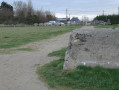
This trail takes you across the coastal plain, which stretches as far as the eye can see, and allows you to explore, within the dune system, a preserved natural area: the Platier d’Oye National Nature Reserve.
 Chicory mills and drying houses around the River Oye
 26.03 mi
+20 ft
-20 ft
3 hrs
Moderate
Departure from Oye-Plage (Pas-de-Calais)
26.03 mi
+20 ft
-20 ft
3 hrs
Moderate
Departure from Oye-Plage (Pas-de-Calais)
A very long time ago, the sea covered this area at high tide, but the ingenuity of the Benedictine monks inthe 10th century led to the construction of a network of drainage channels: the watergangs. This area, with its light, sandy soil, is ideal for growing chicory.
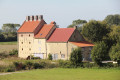
Large buildings made of yellow or red brick were once used to dry chicory roots. The people made the most of this gift from Mother Nature by building mills.
The Platier d'Oye Observatory
 5.81 mi
+26 ft
-26 ft
2h 40
Easy
Departure from Oye-Plage (Pas-de-Calais)
5.81 mi
+26 ft
-26 ft
2h 40
Easy
Departure from Oye-Plage (Pas-de-Calais)
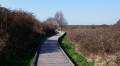
The trails are well-marked. All through the year, they're accessible, and this walk allows you to discover our beautiful northern beaches. Itinerary to be adapted, some areas may be off-limits, see notices .
In the footsteps of Vauban in Gravelines
 5.63 mi
+20 ft
-20 ft
2h 35
Easy
Departure from Gravelines (Nord)
5.63 mi
+20 ft
-20 ft
2h 35
Easy
Departure from Gravelines (Nord)
This is a beautiful walk that highlights all the attractions of a small fortified town crossed by the River Aa, with a beautiful seafront and well-maintained green spaces ideal for walking. You will quickly forget that Gravelines is best known for its nuclear power station.
From Moringhem to Quelmes
 11.18 mi
+449 ft
-436 ft
5h 30
Moderate
Departure from Moringhem (Pas-de-Calais)
11.18 mi
+449 ft
-436 ft
5h 30
Moderate
Departure from Moringhem (Pas-de-Calais)
A pleasant route, with the chance to enjoy a nice break at the lovely café in Quelmes.
Route amended in August 2026 to take Dominoe’s comments into account. I hope it will be better, but I haven’t been in the area for quite some time.
 Circular route starting from Calais via Cap Blanc Nez
24.01 mi
+1,198 ft
-1,211 ft
2 hrs
Moderate
Departure from Calais (Pas-de-Calais)
A superb circular mountain bike route starting from Calais, ideal for exploring the Opal Coast. The route alternates between urban sections, coastal paths and undulating trails with magnificent views of the sea and Cap Blanc-Nez. A few good climbs (464 m of elevation gain) provide a decent challenge without being too technical, making the route accessible to moderate-level mountain bikers. The section towards Wissant offers exceptional views. Varied terrain: fast-flowing sections, grassy paths and stony tracks. A well-balanced circular route, perfect for a lively ride lasting around 2 hours.