


Refine your search for walks in Maslianico
Maslianico walks
 Route from Muggio to Rifugio Prabello via Erbonne
 Visorando Member
 8.68 mi
 +3,051 ft
 -3,035 ft
 6h 40
6h 40
 Moderate
 Departure from Cabbio (Ticino)
An ideal walk on a hot day, mostly through woodland, with some lovely views of the surrounding countryside. This route starts and ends in Muggio (easily accessible by post bus). Refreshments are available at Rifugio Prabello (Italy).
Rifugio Murelli - Cernobbio
 6.54 mi
+715 ft
-3,960 ft
3h 40
Moderate
Departure from Carate Urio (Como)
6.54 mi
+715 ft
-3,960 ft
3h 40
Moderate
Departure from Carate Urio (Como)
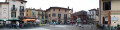
This last stage will take you to the shores of Lake Como, the final destination of this tour. A pleasant, almost flat path will take you from the Binate refuge to the magnificent viewpoint of Monte Bisbino. The descent offers several panoramic views of Lake Como.
Lanzo d'Intelvi - Rifugio Murelli
 11.79 mi
+3,750 ft
-2,799 ft
8h 40
11.79 mi
+3,750 ft
-2,799 ft
8h 40
 Difficult
Departure from Alta Valle Intelvi (Como)
Difficult
Departure from Alta Valle Intelvi (Como)
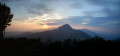
This stage is entirely in Italy but very close to Switzerland, particularly at Erbonne. You will walk along the Sentiero delle Trincee, a historic trench trail dating back to the First World War. This will also be your last opportunity to look out over Lake Lugano.
Claino - Lanzo d'Intelvi
 5.44 mi
+2,119 ft
-66 ft
4h 20
Moderate
Departure from Claino con Osteno (Como)
5.44 mi
+2,119 ft
-66 ft
4h 20
Moderate
Departure from Claino con Osteno (Como)
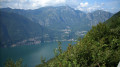
After a bus transfer to the other side of Lake Lugano, you will gradually enter the Val d'Intelvi, which is very popular with Italians. In Lanzo d'Intelvi, you can enjoy a magnificent view of the lake, the city of Lugano and Monte Salvator.
Aldesago and Monte Bré
3.64 mi
+1,378 ft
-1,385 ft
2h 50
Moderate
Departure from Lugano (Ticino)
Hike starting from Aldesago, near the Airbnb apartments, towards and around Monte Bré with several breathtaking views of Lugano and its lakes. Short hike with a nice elevation gain.
Anello Bellagio and Brogno Nuvolone Brogno
4.91 mi
+1,742 ft
-1,729 ft
3h 45
Moderate
Departure from Bellagio (Como)
A truly unique and breathtaking panorama, embracing the three arms of Lake Como. On the left, the Como arm with the island of Comacina and Dosso di Lavedo with Villa Balbianello; opposite, the tip of the Lario Triangle with Bellagio; and on the right, the Lecco arm at the foot of the Grigne mountains.
Capanna Pairolo - San Mamete
 6.19 mi
+942 ft
-4,416 ft
3h 40
Moderate
Departure from Sonvico (Ticino)
6.19 mi
+942 ft
-4,416 ft
3h 40
Moderate
Departure from Sonvico (Ticino)
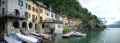
This fifth stage will take you to the shores of Lake Lugano in Italy, to the small village of San Mamete. You can even swim in the lake at the Albergo Stella del Italia. This route offers several panoramic viewpoints, particularly from the "Denti della Vecchia" massif, where the lake plays hide and seek with the teeth. In Castello, from the Oratory of San Martino, you can enjoy a splendid view of the lake.
From Orino to Forte di Orino
 Association / Club / Walk leader5.45 mi
+2,306 ft
-2,293 ft
4h 30
Difficult
Departure from Orino (Varese)
Association / Club / Walk leader5.45 mi
+2,306 ft
-2,293 ft
4h 30
Difficult
Departure from Orino (Varese)
A very beautiful hike in the forest, but the path is very steep from the starting point to the finish. Follow the path marked 302. The route starts at the car park of the cemetery and the Chiesa San Lorenzo and crosses the village to the church in the centre. Turn left as you pass the Locanda di Matt bar. From there, go straight up towards the mountain. Continue to follow the path marked 302 Forte di Orino. The path is initially paved with round stones, then turns into a forest path for a distance of 1 km. It then becomes steeper and narrower. There are no flat sections until you reach the top, but once you get there, you will be rewarded with a magnificent 360-degree view. To the north, you can see the Alps with the main massif of Monte Rosa. In the foreground are the lakes of Varese and Maggiore. There are two panoramic tables where you can sit and enjoy the view.This route is ideal in spring and summer when the leaves on the trees provide shade.Return to the starting point via the same route. The descent takes less time.
Capanna Monte Bar - Capanna Pairolo
 10.39 mi
+2,490 ft
-3,327 ft
6h 55
Difficult
Departure from Capriasca (Ticino)
10.39 mi
+2,490 ft
-3,327 ft
6h 55
Difficult
Departure from Capriasca (Ticino)
During this fourth stage, Lake Lugano will only be visible from a distance. From Monte Gazzirola to Bocchetta di San Bernardo, you will follow the ridge and border between Ticino, Switzerland, and Italy.
At lunchtime, you will probably be in San Lucio, a great place to take a break. You can choose between the Italian refuge and the Swiss hut. You will also have a cultural moment with the San Lucio Chapel, a former 15th-century Romanesque oratory.
Rivera - Capanna Monte Bar
 8.28 mi
+4,196 ft
-502 ft
7h 30
Difficult
Departure from Rivera (Ticino)
8.28 mi
+4,196 ft
-502 ft
7h 30
Difficult
Departure from Rivera (Ticino)
This third stage offers several more viewpoints over the lakes. On this route, you move away from Lake Maggiore and closer to Lake Lugano. At Davrosio, you will recognise Monte Tamaro and Menéra with its antenna. At the Motto della Croce viewpoint, looking south, Lake Lugano is clearly recognisable by the peak that towers above it: Monte San Salvator. A glance to the west allows you to catch a last glimpse of Lake Maggiore.
Monte Muggio circular
4.23 mi
+531 ft
-541 ft
2h 25
Moderate
Departure from Casargo (Lecco)
This route takes you all around Monte Muggio, in an anti-clockwise direction. All the track is on gravel/dirt. A large part of the path is in the forest, with a wonderful view of Monte Legnone and the Swiss and Valtellina Alps.
Alpe di Neggia - Rivera
 7.44 mi
+2,031 ft
-5,039 ft
5h 10
Difficult
Departure from Indemini (Ticino)
7.44 mi
+2,031 ft
-5,039 ft
5h 10
Difficult
Departure from Indemini (Ticino)
During this second stage, you will climb the majestic Monte Tamaro. From the summit, heading west to north, you will discover the Monte Rosa massif in the distance, as well as both ends of Lake Maggiore. To the south, Lake Lugano comes into view. At Capanna Tamaro, you can admire the magnificent ridge stretching from Monte Tamaro to Menèra, topped by a huge antenna.
From Alpe Di Paglio to the Ombrega refuge
4.69 mi
+1,417 ft
-686 ft
3h 25
Moderate
Departure from Casargo (Lecco)
Easy (although long) route to the Refuge Ombrega from the Alpe di Paglio, which also includes the Cima di Olino (1781 m).
During the walk, you will have a stunning panorama of the Valsassina valley, and also of Monte Rosa and the Pennine Alps. You can also spot the Como Lake.
From Lake Maggiore to Lake Como
62.64 mi
+20,725 ft
-20,751 ft
8 days
Difficult
Departure from Vira (Gambarogno) (Ticino)
A magnificent route through the Swiss canton of Ticino and the Italian province of Lombardy. Over the course of eight days, you will discover three lakes and three different atmospheres. You will climb several peaks overlooking these lakes. The ridges you will walk along often form the geographical border between Switzerland and Italy.
Vira Gambarogno - Alpe di Neggia
 4.56 mi
+4,462 ft
-584 ft
6h 00
Difficult
Departure from Vira (Gambarogno) (Ticino)
4.56 mi
+4,462 ft
-584 ft
6h 00
Difficult
Departure from Vira (Gambarogno) (Ticino)
This first stage begins on the left bank of Lake Maggiore, shortly after the Ticino River flows into the lake.
From Vira to Alpe di Neggia, gradually gaining altitude, you will discover the towns of Locarno and Ascona, separated by the Maggia River delta. In the distance, you will see the imposing dam on the Verzasca River, made famous by the James Bond film "Goldeneye". At Alpe di Neggia, far from the hustle and bustle of the lake, you will appreciate this very relaxing place.
Monte Legnone
 6.77 mi
+4,239 ft
-4,193 ft
6h 50
Difficult
Departure from Valvarrone (Lecco)
6.77 mi
+4,239 ft
-4,193 ft
6h 50
Difficult
Departure from Valvarrone (Lecco)
A beautiful round trip hike above Lake Como. There are magnificent views throughout the route and at the summit.
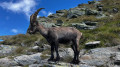
There are lots of ibex and a few chamois, all of which are quite tame.
The hike is quite physically demanding, with a steep climb all the way! But the trails are well marked, with a few sections where you need to use your hands, but no major difficulties and no exposed sections.
This hike should be done in dry weather (and on dry ground). The access roads to the starting point are very narrow.