


Refine your search for walks in La Chaise-Dieu
La Chaise-Dieu walks


 All around La Chaise Dieu or Casa Dei
 Visorando Member
 6.53 mi
 +722 ft
 -722 ft
 3h 40
3h 40
 Moderate
 Departure from La Chaise-Dieu (Haute-Loire)
In the heart of the Livradois-Forez Regional Park, a beautiful walk from hamlet to hamlet, through forests and fields, and an opportunity to discover or rediscover La Chaise-Dieu and its rich heritage.
Écho at the Étang du Breuil in La Chaise-Dieu
 Tourism professional
 0.54 mi
+7 ft
-7 ft
0h 15
0.54 mi
+7 ft
-7 ft
0h 15
 Easy
Departure from La Chaise-Dieu (Haute-Loire)
Easy
Departure from La Chaise-Dieu (Haute-Loire)
Enjoy a short walk around the Étang du Breuil to discover the artwork “Les racines du ciel” by the artist Fiona Paterson, installed as part of the “Écho, Street & Land Art en Velay” project.
Circular route to the south-west of Connangles via Pissis and Intranges
5.83 mi
+709 ft
-682 ft
3h 20
Easy
Departure from Connangles (Haute-Loire)
The route passes through beautiful, shaded forest tracks and crosses seven villages surrounded by areas dedicated to livestock farming. The route is dotted with remarkable trees and magnificent high forests. The thick-walled houses, built of granite, are a reminder of the harsh climate of the Cassadean plateau.
The Reyrolles circular route
4.22 mi
+554 ft
-545 ft
2h 25
Easy
Departure from Connangles (Haute-Loire)
Near La Chaise-Dieu, amongst woodland, forest tracks, scenic countryside and typical hamlets, this short circular route crosses the Fourniau Forest, starting from Reyrolles and passing through Montestudier, Le Mas and Monthiol.
Forest and hamlets at the start of Cistrières
6.16 mi
+787 ft
-814 ft
3h 30
Moderate
Departure from Cistrières (Haute-Loire)
Leaving the village of Cistrières, you will mainly be walking through the forest. These woods are dotted with hamlets that were once home to agricultural activity. Most of the farms have been renovated and are now inhabited. The paths are well maintained and easy to walk on. You will find peace and quiet here, and cool shade from the trees in summer.
The Cistrières forest and its isolated hamlets
 4.68 mi
+315 ft
-325 ft
2h 25
Easy
Departure from Cistrières (Haute-Loire)
4.68 mi
+315 ft
-325 ft
2h 25
Easy
Departure from Cistrières (Haute-Loire)
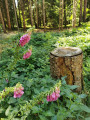
This route crosses part of the forest in the municipality of Cistrières, starting from the village of Condat. The hamlets, which are now sparsely populated or uninhabited, were once lively, as evidenced by an old school in Condat and the houses of Béates au Faud and Les Montilles. But during mushroom season, you will encounter many mushroom pickers there.
Around Lake Malaguet
 7.17 mi
+509 ft
-525 ft
3h 45
Moderate
Departure from Monlet (Haute-Loire)
7.17 mi
+509 ft
-525 ft
3h 45
Moderate
Departure from Monlet (Haute-Loire)
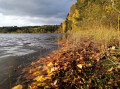
A half-day hike in the heart of the Livradois-Forez Regional Nature Park, offering the chance to explore the Lac de Malaguet Regional Nature Reserve and its surroundings; alternating between woodland and meadows...
Circular route on the heights of the Doulon valley starting from Vintz via l'Air
3.98 mi
+673 ft
-702 ft
2h 25
Easy
Departure from Saint-Didier-sur-Doulon (Haute-Loire)
The route passes through coniferous woods and magnificent beech forests, offering welcome shade if you walk it in summer. Recent logging has opened up the view to the right bank of the Doulon valley, revealing superb panoramic views.
Between Dore and Dolore
 7.29 mi
+689 ft
-676 ft
3h 55
Easy
Departure from Arlanc (Puy-de-Dôme)
7.29 mi
+689 ft
-676 ft
3h 55
Easy
Departure from Arlanc (Puy-de-Dôme)
Heading upstream along the River Dolore, you’ll reach a viewpoint overlooking the Forez Mountains and the town of Arlanc.
Issandolanges and the Clavelier Tower via the Chalas Dam
 13.48 mi
+2,523 ft
-2,500 ft
8h 25
13.48 mi
+2,523 ft
-2,500 ft
8h 25
 Difficult
Departure from Arlanc (Puy-de-Dôme)
Difficult
Departure from Arlanc (Puy-de-Dôme)
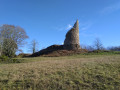
Following the course of the Dolore and then the Dore, this walk takes you past various historic sites around Arlanc: the Chalas dam, the abandoned village of Issandolanges and the ruins of the Clavelier Tower.
Circular route around Laval-sur-Doulon via Le Cros, La Chassagne and Le Vialard
 4.54 mi
+935 ft
-938 ft
2h 55
Moderate
Departure from Laval-sur-Doulon (Haute-Loire)
4.54 mi
+935 ft
-938 ft
2h 55
Moderate
Departure from Laval-sur-Doulon (Haute-Loire)
The trails on this route will take you on a journey of discovery through the villages on the outskirts of the market town of Laval-sur-Doulon. Most are permanently inhabited. The two mills at Diat and Le Vialard have ceased operations, but their ‘engine’, the River Doulon, still flows. The trails are often shaded, so you can hike here in summer.
Circular route starting from Collat through the Senouire valley
5.30 mi
+1,145 ft
-1,161 ft
3h 25
Moderate
Departure from Collat (Haute-Loire)
A circular route towards the Senouire valley starting from Collat.
Moissac Bas pond and bog
6.62 mi
+1,181 ft
-1,178 ft
4h 05
Moderate
Departure from Saint-Didier-sur-Doulon (Haute-Loire)
Following this route, you will pass successively through forest, fields and pastures. You will discover the volcanic activity of the village of Moissac Bas, its pond and its forming peat bog.
Discover Saint-Didier-sur-Doulon: water, forest, pastures
7.84 mi
+1,401 ft
-1,375 ft
4h 50
Moderate
Departure from Saint-Didier-sur-Doulon (Haute-Loire)
Discover Saint-Didier-sur-Doulon by following the course of the Doulon river, which once powered numerous mills. Pass through the undergrowth and villages where you will find chapels and wash houses.
Circular on the heights of Saint-Didier-sur-Doulon, Largnes, Tavernols
6.60 mi
+1,345 ft
-1,319 ft
4h 10
Moderate
Departure from Saint-Didier-sur-Doulon (Haute-Loire)
This route starts at the lowest point in the commune of Saint-Didier and leads to almost the highest point. You will discover a castle, a remarkable sequoia tree, the ruins of a mill and splendid views.
Circular through the hills above Saint-Didier-sur-Doulon via Cenat and Celhac.
6.82 mi
+1,240 ft
-1,240 ft
4h 15
Moderate
Departure from Saint-Didier-sur-Doulon (Haute-Loire)
The commune of Saint-Didier-sur-Doulon covers a large area of around 35 hectares and comprises around 30 villages and hamlets. During this route, you will discover some of them, all bearing witness to a rural past where agriculture was the main activity. You will discover a chapel, an old school and some splendid views.
Walk along the Chemin de César in Chomélix
 6.47 mi
+315 ft
-331 ft
3h 15
Moderate
Departure from Chomelix (Haute-Loire)
6.47 mi
+315 ft
-331 ft
3h 15
Moderate
Departure from Chomelix (Haute-Loire)
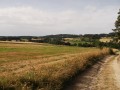
Easy walk on small roads and gravel paths, through the meadows and woods around Chomélix.
From the Mont Bar bog to the Potence d'Allègre
 4.45 mi
+814 ft
-801 ft
2h 45
Moderate
Departure from Monlet (Haute-Loire)
4.45 mi
+814 ft
-801 ft
2h 45
Moderate
Departure from Monlet (Haute-Loire)
A fairly short walk but one offering two distinct worlds to discover: following in the footsteps of George Sand, the enchanting world of the peat bog nestled within the crater of a former Strombolian volcano (unique in Europe) and the medieval village of Allègre with its many historical remains, including the famous “Potence”. In both cases, there are numerous information boards to tell you more....
Sapinières de l'Armandon, miellerie de Grattepaille et villages isolés
 6.01 mi
+1,122 ft
-1,132 ft
3h 45
Moderate
Departure from Saint-Préjet-Armandon (Haute-Loire)
6.01 mi
+1,122 ft
-1,132 ft
3h 45
Moderate
Departure from Saint-Préjet-Armandon (Haute-Loire)
This route passes through fir forests and a few pastures, reminders of a bygone era of pastoral farming.The Grattepaille honey farm is breathing new life into this beautiful region.
From Beurières to Montravel
 12.07 mi
+1,742 ft
-1,742 ft
7h 05
Difficult
Departure from Beurières (Puy-de-Dôme)
12.07 mi
+1,742 ft
-1,742 ft
7h 05
Difficult
Departure from Beurières (Puy-de-Dôme)
It offers a magnificent view over the Dore Valley from the Montravel site on the eastern slope of the Forez.
The medieval bridge of Masselèbre
2.01 mi
+62 ft
-62 ft
1h 00
Easy
Departure from Marsac-en-Livradois (Puy-de-Dôme)
In the days of courtly love,A bridge embraced the beloved Dore with its arches.But the carefree beauty abandoned her bed.The inconsolable, built of heavy stones,frozen in the green grass, reaches out to the liberated beauty,To the lively and joyful waters, shimmering,So close and yet so inaccessible.
Circular Étang de Lavaux in Saint-Préjet-Armandon
5.18 mi
+614 ft
-607 ft
2h 55
Easy
Departure from Domeyrat (Haute-Loire)
Starting from the Lavaux Pond (the pond is a former clay quarry), the route crosses pastures and fields and then reaches the woods on the heights of Saint-Préjet-Armandon.This route passes through villages with houses built from basalt stones from a distant volcanic period. Take the time to wander through the villages and notice the old workshops of blacksmiths and carpenters, and the communal ovens. Listen carefully and you may hear the sound of a hammer on an anvil or a carpenter's saw... These villages, once bustling with activity, are now quiet.
From Chassagnes to Les Sauces via La Brousse
5.26 mi
+715 ft
-715 ft
3h 00
Easy
Departure from Chassagnes (Haute-Loire)
You will discover two landscapes. The walk starts in Chassagnes, crosses part of Chaliergues (the Paulhaguet basin), an area dedicated to agriculture, then climbs gradually through the woods, passing through hamlets that are mostly restored and inhabited.
Senouire Valley from Bacou to Le Rif via Sainte-Marguerite
5.56 mi
+604 ft
-604 ft
3h 05
Easy
Departure from Mazerat-Aurouze (Haute-Loire)
At the start of the route, the Senouire accompanies you to Sainte-Marguerite. After Barbason, the Ribeyrette greets you as it flows into the Senouire. Sainte-Marguerite welcomes you with its history and tranquillity. A superb panorama awaits you at Le Rif. Walk around the hamlet and see the rounded corners of some of the houses. Continue the route towards La Vizade and rejoin the Senouire at Barbanson.