


 Country:

 City:
City:


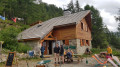
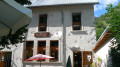
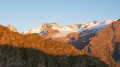
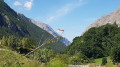
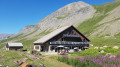
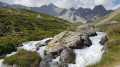

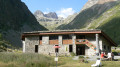
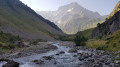
We completed theGR® 54, camping on nine stages and staying in lodges on four stages.
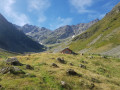
All the camping spots near the refuges are perfect, and some are exceptional: Refuge de la Muzelle, Les Mouterres (opposite La Meije) and Vallonpierre.
Water points all along the GR®.
Take clothing suitable for all weather conditions; we experienced temperatures above 25°C but also below freezing.
High-top walking boots are essential, given the very rocky terrain.
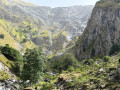
Please note that most of the passes are very rocky, with schist and slate, and feature steep, sloping gradients that require attention and caution both on the ascent and during the descents: La Muzelle, L’Aup Martin, Le Pas de la Cavale, Vallonpierre.
At the start of stage 11: Vallouise – Refuge de Le Pré de La Chaumette, take the shuttle bus to take you directly to the Entre les Aigues car park.
The shuttle departs from the town centre in front of the sports shop; enquire directly at the Aiglière Lodge. This will save you from having to walk 7 km on tarmac before tackling one of the most difficult stages ofthe GR® with the Aup Martin and Pas de la Cavale passes.
As with all mountain hikes, take binoculars, a camera, an IGN map and/or a guidebook.
On our mountain routes, I always take a 15-metre rope with me. Admittedly, it adds weight to the rucksack, but a rope in the mountains is like a life jacket at sea: you can never be too careful.
There have been a great many accidents and fatalities on mountain hikes this year.
Below, I’ve provided a list of what we packed in each of our rucksacks for our first trip; it might be helpful:
Equipment per person:
Hiking rucksack, two 70-litre ones – mine and my wife’s – Rucksack cover x1
Sleeping bag x1, self-inflating or foam mattress x1
Hiking boots x1, hiking socks x2, sandals or flip-flops x1
Underwear x2
Relaxation shorts x1, Relaxation T-shirts x1
Hiking trousers x1, long-sleeved hiking T-shirt(s) x1 and short-sleeved T-shirts x2
3-in-1 waterproof jacket x1, Pouch x1
Woolly hat x1, Gloves or mittens x1, Cap or hat x1
Head torch x1, Emergency blanket x2, Water bottles x1, Water pouches x1, Knife + spoon x1, Mobile phone x1, Phone charger x1, Trekking poles x1, Pole tips x1, Sunglasses
Personal toiletries: Toothbrush x1; Towel x1, Feminine hygiene wipes.
Shared equipment:
Hiking tent x1
Adhesive tape x1, Thread and needle x1, Sewing needles x4, Lighter x1, Bin bags or plastic bags x2, Spare batteries x1, IGN map x1, TOPO Guide, Map cover x1, Compass x1, First aid kit x1, Shoelaces x2, Portable power bank x3, Pens x2, Notebook or paper x1, Camera x1, Laundry detergent x1, Mountaineering rope x1, Carabiners x2.
Toothpaste x1, Toilet paper x2, Biodegradable soap x1, Sun cream, Lip balm x1, Comb x1, Nail clippers x1, Insect repellent x1.
Cash, Cheque book x1, Credit card x1.
However, before setting off into the mountains, excerpt from a hiking logbook:
– check the weather forecast the day before and confirm it on the day of the hike,
– set off well-equipped, in other words with proper footwear – if you need advice on this, reading this article may be helpful – and with gear to cope with the cold and/or rain should you be caught out by a sudden change in the weather,
– familiarise yourself thoroughly with the route beforehand and carry a map, guidebook or GPS track to confirm the markings on the ground,
– protect yourself from the sun (sunglasses, sun cream and a hat or cap) and from visible light, even if it’s cloudy,
– don’t forget water (1.5 litres per person is the minimum) and a snack in case you get peckish,
– don’t hesitate to turn back if things aren’t going well. No heroics.


 Visorando Member
 Average
 Easy
Easy 
 Difficult
