Exoudun, Bagnault and Brieuil, a major centre of Protestantism in the Poitou region

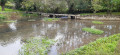
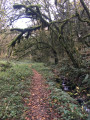
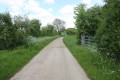
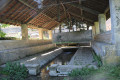
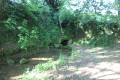
A pleasant walk through a key centre of Protestantism, taking in the pretty village of Brieuil and the charming market town of Exoudun with its bubbling fountain. Varied landscapes in peaceful countryside, both along the banks of the Sèvre Niortaise and on the surrounding plateau. Along the route, views of Brieuil Castle (private) and the Brieuil wash house.

Details

965480
Creation:
Last update:
Last review:
  • Walking
    Activity: Walking
  • ↔
    Distance: 11.15 km
  • ◔
    Average duration: 3h 25 
  • ▲
    Difficulty: Moderate

  • ⚐
    Back to start: Yes
  • ↗
    Ascent: + 88 m
  • ↘
    Descent: - 83 m

  • ▲
    Highest point: 174 m
  • ▼
    Lowest point: 89 m
  • ⚐ Country: France
  • ⚐ City: Exoudun (79800)
  • ⚑
    Start/End: N 46.344007° / W 0.080487°
  • ❏
    IGN map(s): Ref. 1628SB
  • Hour-by-hour weather

Photos

Description of the walk

Park in the car park opposite the town hall, along the Sèvre Niortaise.

(S/E) Cross the river via a small bridge. Cut diagonally to the right through a small green park with a playground. Join Impasse de la Grémille (mill at the end on the left) and follow it up to the right.

(1) At the crossroads, turn left onto Chemin de la Peyratte. Once past the last houses, the tarmac gives way to a well-maintained path climbing up towards the plateau overlooking the Sèvre.

(2) At the Y-junction, follow the path to the left which runs high above the course of the Sèvre Niortaise: this path is bordered by woodland on the left and a thin hedge of shrubs on the right. Continue to a small road at the corner of a cemetery.

(3) Cross the road carefully and continue along the path opposite. At the next junction, turn left onto the path that descends between two embankments. Cross the Sèvre via a pretty bridge made of flat stones and continue to a small road.

Cross the road with care and continue along the path almost opposite (first turn left then right). The path soon joins the D307 at a wide bend: continue straight on (east) and walk very carefully alongside the road for about 400m, using the wide verge.

(4) Turn onto the first path on the right. Walk across the plateau, heading south-southeast, and reach the Sèvre at one of its many bends at a place called Les Champs Bons.

(5) Turn right onto a grassy path that climbs gently. As you approach the village of Brieuil, you will see the towers of the Logis du Brieuil (private). On reaching the village, continue straight on along Rue du Lavoir, which descends to the banks of the Sèvre (wash house, picnic tables). Then turn left onto Route de la Sèvre Niortaise. Pass Rue du Logis on your left and arrive at a junction.

(6) Turn right and follow theGR®655(red and white markings). After about 50 metres, turn left (south). Follow the road with care (limited visibility). Take the first path on the right, before the Croix de la Chaussée. Continue along this track to the top of the plateau where the track joins a small road. Follow this road to the left.

(7) Cross the D45 road with great care (vehicles travelling at high speed) and continue straight ahead onto a path (west). After about 500m, continue straight on, slightly uphill, and let theGR®® branch off to the left. You will come out onto a small road; follow it to the right for about 100 metres

(8) Turn left onto an uphill path at the edge of a small wood. Continue straight on until you reach a junction with two other paths: then turn right onto the path, almost at a right angle.

(9) Shortly afterwards, just as the path meets a road ahead, turn right onto the small road leading to some houses. Immediately after the houses, the road turns into a path. At the T-junction, turn left and you will soon reach a crossroads. Cross with care, continue along the path opposite and follow the Bois du Souil on your left.

You’ll come to a small road; cross it carefully. Turn left and immediately take a path branching off to the right, still skirting the Bois de Souil. Head north until you reach a crossroads.

(10) Then follow a path to the right which soon climbs towards some large farm buildings. Pass between the buildings and veer right to join the D45. First turn right then left and take a path heading east.

(11) About 200m after the road, turn left onto a slightly uphill path. Reach the top of a small hill before descending a fairly steep slope on the other side. Come out onto a road and follow it to the right, still going downhill (lovely view of Exoudun). Walk past a housing estate on your left and follow Rue du Pied des Vignes.

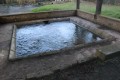
(12) Turn left into Rue des Coteaux. Take the small alleyway on the right which quickly joins a small path, Impasse de la Planche. Turn left again to reach the bubbling fountain (large basin under a canopy and a small basin with a water level gauge next to it). See the section “During the walk or nearby”.

Turn back and continue along Impasse de la Planche to its end, returning to the junction you passed at the very start of the walk.

(1) Continue straight ahead along Impasse de Gremille. Turn left, cross the small park, cross the Sèvre and return to the starting point (S/E).


Waypoints

  1. S/E : km 0 - alt. 91 m - Car park opposite the town hall - Sèvre Niortaise (fleuve)
  2. 1 : km 0.1 - alt. 90 m - Junction of Rue du Pont and Impasse de Grémille
  3. 2 : km 0.41 - alt. 92 m - Y-junction
  4. 3 : km 1.39 - alt. 102 m - Crossroads between path and road near Bagnault
  5. 4 : km 2.16 - alt. 111 m - Road-path junction
  6. 5 : km 3.06 - alt. 105 m - Paths near the Sèvre – Before the crossing - Fontaine de Brieuil (Exoudun)
  7. 6 : km 4.2 - alt. 107 m - Crossroads
  8. 7 : km 5.56 - alt. 151 m - D45 road
  9. 8 : km 6.42 - alt. 164 m - Road junction – Path
  10. 9 : km 7.09 - alt. 169 m - Crossroads – road
  11. 10 : km 8.72 - alt. 138 m - Crossroads
  12. 11 : km 9.57 - alt. 149 m - Crossroads
  13. 12 : km 10.82 - alt. 97 m - Rue du Pied des Vignes x Rue des Coteaux Towards the - Fontaine Bouillonnante (Exoudun)
  14. S/E : km 11.15 - alt. 91 m - Car park opposite the town hall

Notes

The car park is located on Rue du Stade, near a small green park opposite Exoudun Town Hall.

This walk across varied terrain requires suitable footwear.

This route, which presents no real difficulties, is unmarked, although some sections follow signposted paths. It is advisable to follow the directions in the description and on the map and to check them against the landscape. The choice of route is the result of a journey along as many paths of all kinds as possible and sections on quiet roads (where possible).

Picnic tables are dotted along the route: in the park at the start in Exoudun, and in the centre of Brieuil.

Walk completed by the author on 8 February 2018.

Worth a visit

Exoudun

Exoudun is a small French village, situated in the Deux-Sèvres department and the Poitou-Charentes region. Its inhabitants are known as Exoudunois and Exoudunoises.
The commune covers an area of 26 km² and had a population of 592 according to the latest census in 2007. With a population density of 22.8 inhabitants per km², Exoudun has seen a 4.4% decline in its population compared to 1999.
Situated at an altitude of 92 metres, the River Sèvre Niortaise is the main watercourse flowing through the commune of Exoudun.

Places and monuments

- Former feudal castle known as the "Tour Rasée";
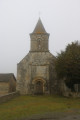
- Protestant church built in 1855
- Source of the Sèvre Niortaise known as Fontaine-Bouillante: The Fontaine Bouillonnante takes its name from the bubbling waters that feed it. Emerging from the Dive basin, these waters then flow into the nearby Sèvre Niortaise.
It is said that in the 4th century, Saint Martin used these waters to baptise new converts.
A long-standing local custom saw the young women of Exoudun come here to throw two pins into the water... If they fell in the shape of a cross, it was a sign of a future marriage.

Bagnault

Like its administrative centre Exoudun, Bagnault is a town of character and a key centre of Protestantism in the Poitou region
The village of Bagnault is situated to the east of the market town of Exoudun, at the confluence of the Accourants and Sèvre Niortaise valleys, at the foot of the Saint-Sauvant plateau, occupying part of its base and the riverside escarpments. Almost submerged in winter by the water from its fountains and numerous seasonal springs, in summer it rests beneath the cool, delightful shade of its poplars, ash trees and fruit trees.
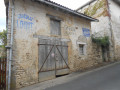
One is struck, whilst walking through this humble hamlet, to find all the hallmarks of a small town: neatly aligned houses, streets whose names date back several centuries (1), localities recalling some local event or a long-vanished ancient monument (2), tall and spacious houses with openings adorned with delicate carvings, grand gateways, wide chimneys, gables bearing coats of arms, old shops with broad stone sills (3); in short, a whole ensemble that evokes a wealth and prosperity dating back a very long time.
Apart from the houses lining the main streets, others stand set back, apart, in a garden or an enclosed courtyard, where their white façades stand out vividly against the green backdrop that frames them. All are occupied by farmers; the local industries that once employed many craftsmen no longer exist.
It is one of the few places which, along with Melle and Chizé, has retained its medieval character and the appearance of centuries past right up to the present day.
Extract from a very interesting presentation of Bagnault by F DUBREUIL (1935):

Numerous photos of this charming town, a major centre of the Knights Templar, can be found on André BIANCO’s page: Photos

The Brieuil wash house

The Brieuil wash house, situated in the commune of Exoudun, is located in an unusual spot, at the bottom of a hollow about 6 metres deep. The term ‘gouffre’ or ‘hole’ of Brieuil is also often used to refer to this wash house, situated below the Sèvre Niortaise.
Unusually, this hole, dug to a depth of 6 metres, revealed the presence of a spring. Subsequently, the local council decided to convert the bottom of the excavation into a wash house. A well was also dug at the surface’s edge of the gouffre, in order to reach the resurgence directly and gain direct access to the water flowing from the spring.
During periods of heavy rainfall, and when the water table and underground galleries are no longer sufficient to absorb the entire inflow of water, the chasm fills completely to the surface (6 metres high) and discharges its excess water directly into the Sèvre Niortaise.
The reverse is also true: during heavy rainfall, the Sèvre’s floodwaters frequently spill into the wash house.

25 July 1858: The parishes of Exoudun and Chenay (both owners of the pit) commissioned two local masons to build a retaining wall for the existing well and to construct a two-row wash house at the bottom of the pit after the debris had been cleared. The opening, approximately 1 metre by 1 metre, cut at the foot of the wash house and providing access to the shaft of the well, also dates from this period
Source:

In 1968, the Brieuil chasm was apparently partially filled in; the reasons for this are unknown.
26 July 1969: Marking of the Brieuil chasm (Exoudun) by B. COIRIER; reappearance at the bubbling spring (Exoudun) the following day.
Source: (Sous les Deux-Sèvres (CDS 79))

In 2006, the wash house was restored by volunteers from the ‘Avenir et Patrimoine de Brieuil’ association with the help of the municipality of Exoudun. This restoration work made it possible to uncover the wash house’s original threshold and the resurgence of the spring.
Source

The Manor House of Brieuil

The seigneury of Brieuil is first mentioned in the 12th century. In 1461 it is described as a fortified house. Defensive features of the north wing of the outbuildings, part of the main house and the dovecote—which has lost its upper storey—may date from this period. In the early 17th century, the Garnier family had the present-day main house built, featuring a return gallery to connect the main building to a circular tower, which was demolished in 1831. The family coat of arms is carved on the doors of the main residence and the dovecote. In the 18th and 19th centuries, the outbuildings and annexes were refurbished. Dates inscribed: 1708 on a door, 1836 on a roof structure. Long-pitched roofs with covered gables and hollow tiles on the main building and on the outbuildings and annexes. A hipped roof with slate tiles covers the main building of the gallery and the tower. Flattened domes cover the three superimposed rooms of the dovecote.

Always be cautious and plan ahead when you're outdoors. Visorando and the author of this route cannot be held responsible for any accidents occurring on this route.

The GR® and PR® markings are the intellectual property of the Fédération Française de Randonnée Pédestre.

Reviews and comments

4.2 / 5
Based on 5 reviews

Reliability of the description
4.2 / 5
Ease of following the route
4.2 / 5
Route interest
4.2 / 5
Vincen
Vincen

Overall rating : 4.3 / 5

Date of your route : Nov 30, 2025
Reliability of the description : ★★★★★ Very good
Ease of following the route : ★★★★★ Very good
Route interest : ★★★☆☆ Average
Very busy route : Yes

Easy hike. Beautiful views. Not always well marked, but no difficulty with GPS.

Machine-translated

MARTDomi
MARTDomi

Overall rating : 4 / 5

Date of your route : Jul 06, 2024
Reliability of the description : ★★★★☆ Good
Ease of following the route : ★★★★☆ Good
Route interest : ★★★★☆ Good
Very busy route : No

A very pleasant walk with no difficulties, except at the end, as the Impasse de la Planche is blocked off by a gate

Machine-translated

isabellebl
isabellebl

Overall rating : 5 / 5

Date of your route : Mar 24, 2024
Reliability of the description : ★★★★★ Very good
Ease of following the route : ★★★★★ Very good
Route interest : ★★★★★ Very good
Very busy route : No

A wonderful hike that was easy to manage, taking in a variety of landscapes. Well worth doing again

Machine-translated

alrandeaupyr
alrandeaupyr

Overall rating : 4.3 / 5

Date of your route : Oct 11, 2020
Reliability of the description : ★★★★☆ Good
Ease of following the route : ★★★★☆ Good
Route interest : ★★★★★ Very good
Very busy route : No

A lovely walk. There are picnic tables available.

Machine-translated

philouis
philouis

Overall rating : 3.3 / 5

Date of your route : Sep 01, 2019
Reliability of the description : ★★★☆☆ Average
Ease of following the route : ★★★☆☆ Average
Route interest : ★★★★☆ Good

A PLEASANT ROUTE TO FOLLOW.
IN THE DESCRIPTION BETWEEN POINTS 3 AND 4, THE PATH LEADING TO THE D307 IS IMPASSABLE; IT IS BETTER TO TAKE THE ROAD ON THE LEFT AND JOIN THE D307 ON THE RIGHT. YOU ALSO NEED TO BE CAREFUL WHEN LEAVING BRIEUL VIA THE GR HEADING SOUTH.
MY MAIN CRITICISM OF THIS HIKE IS THAT IT COMPLETELY IGNORES THE VILLAGE OF BAGNAULT, WITH ITS RICH HERITAGE, AND BARELY TOUCHES ON EXOUDUN, WHICH ALSO HAS MANY BUILDINGS WORTH SEEING.

Machine-translated

alicemer79
alicemer79

Hello,
I haven’t done that route yet.
Have a nice day.

Machine-translated

Other walks in the area

For more walks, use our search engine .

The GPS track and description are the property of this route's author. Please do not copy them without permission.