


Refine your search for walks in Château de Malmort
Château de Malmort walks


 Malmort Castle
 Visorando Member
 3.64 mi
 +2,060 ft
 -2,073 ft
 3h 30
 Moderate
 Departure from Saorge (Alpes-Maritimes)
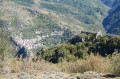
A former 14th-century stronghold on the right bank of the Roya, Malmort Castle formed part of a defensive system controlling the Roya Valley under the rule of the House of Savoy.
Malmort Castle as seen from Saorge, via the Paspus Chapel
 6.39 mi
+3,094 ft
-3,087 ft
5h 40
 Difficult
Departure from Saorge (Alpes-Maritimes)
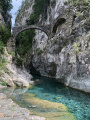
This village, clinging to the mountainside like an amphitheatre above the Gorges de la Roya, will reveal its many facets throughout the day. The scents of broom, lavender and thyme will accompany you. At the end of the walk, a stop at the Bains du Sémite will allow you to experience a form of ‘cryotherapy’ in a magnificent setting, which will help your body recover more quickly.
Walks near Château de Malmort
Saorge – Breil-sur-Roya
 5.75 mi
+2,343 ft
-3,009 ft
4h 40
Moderate
Departure from Saorge (Alpes-Maritimes)
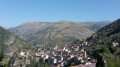
This is the Valléen trail, an easy route along the Roya.
Both towns are served by the ‘Train des Merveilles’. From Breil to Sospel: one stop (15 mins).
Breil – Sospel via La Baisse de Levens
 9.50 mi
+3,100 ft
-2,930 ft
7h 05
Difficult
Departure from Breil-sur-Roya (Alpes-Maritimes)
A lovely route linking the Bévéra Valley with the Roya Valley. Along the way, the Col de Brouis marks the boundary between these two valleys. If you set off early enough, you can have lunch on the terrace of one of the restaurants in this pretty village, where life flows as peacefully as the River Bévéra. The return journey is then by the Train des Merveilles, which connects the two stations in 15 minutes.
Ascent to the Merveilles refuge from Lac des Mesches
 4.74 mi
+2,487 ft
-46 ft
4h 20
Moderate
Departure from Tende (Alpes-Maritimes)
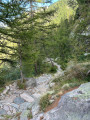
The Refuge des Merveilles can be a destination in itself or the starting point for a guided tour of the petroglyphs or other hikes. The climb to the refuge via Lac des Mesches takes 3 hours and 15 minutes (excluding breaks) and has the advantage of being accessible by car or public transport (see "Practical Information").
La Minière de Vallauria - Col de Turini
 12.49 mi
+4,009 ft
-3,635 ft
8 hrs
 Very difficult
Departure from Tende (Alpes-Maritimes)
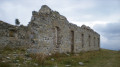
Thissecond stage is the most alpine of the three. At the Refuge des Merveilles, you’ll admire the beauty of the landscapes, from the Cime du Diable to the Vallon des Merveilles. You’ll pass several lakes before descending into a more Mediterranean-style valley at the Pas du Diable. With the Redoute des Trois Communes in sight for much of the way, you’ll walk along the old border ridge, dotted with defensive structures. Near the Authion, numerous ruins will remind you of the end of the last war.
From the Refuge des Merveilles to L'Authion via the Pas du Diable
 6.11 mi
+1,850 ft
-2,159 ft
4h 25
Moderate
Departure from Tende (Alpes-Maritimes)
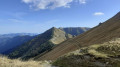
A beautiful classic route on theGR®®52. As you progress along this three-part itinerary, you will appreciate the beauty of the lakes up to the Pas du Diable, then the very chaotic landscape at the foot of the Cime du Diable and Mont Capelet Supérieur. Finally, after the Baisse Cavaline, you will enter a more Mediterranean setting to discover the Authion massif, a historic site during the end of the Second World War.
Refuge des Merveilles – Castérino
 8.31 mi
+2,703 ft
-4,058 ft
8 hrs
Very difficult
Departure from Tende (Alpes-Maritimes)
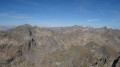
This final stage will take you back to Castérino via the ascent of Mont Bégo. From the summit, you’ll look out over the Vallée des Merveilles. You’ll catch sight of the neighbouring peak opposite, the Grand Capelet. You’ll enjoy a 360° panorama stretching from the Argentera to the Mediterranean.
You’ll need to be careful on the first part of the descent towards the Baisse de Valmasque (rated T3).
From the Baisse de Valmasque, the return journey follows the classic route that runs alongside the Lacs du Basto, Noir and Vert.
Refuge des Merveilles - Baisse de Camp
 8.26 mi
+1,946 ft
-3,150 ft
5h 30
Difficult
Departure from Tende (Alpes-Maritimes)
The fifth stage ofthe GR®52, where southern landscapes give way to mountain scenery. Challenging due to its elevation gain, this stage follows the old Italian border, where you’ll discover numerous military remains. Notably at Authion, where one of the last battles in France took place, resulting in the deaths of 273 French soldiers just a few weeks before the armistice of 8 May 1945. The views here are fabulous.
From the Refuge Merveilles to the Refuge Nice via the Baisses de Valmasque and the Basto
5.79 mi
+2,464 ft
-2,129 ft
4h 50
Difficult
Departure from Tende (Alpes-Maritimes)
Third stage of the five-day Vievola–Saint-Martin-Vesubie hike.
On the itinerary: a crossing of the Vallée des Merveilles and several lovely high-altitude lakes.
Refuge des Merveilles - Refuge de Nice
 5.43 mi
+2,543 ft
-2,201 ft
4h 45
Difficult
Departure from Tende (Alpes-Maritimes)
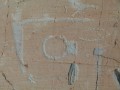
This itinerary allows you to discover the wonders of this valley. In particular, the famous engravings such as Christ, the Tribal Chief and the Altar Rock. But be careful, these areas are monitored!
La Baisse de Camp d'Argent – Sospel
 13.53 mi
+1,670 ft
-6,289 ft
10 hrs
Very difficult
Departure from La Bollène-Vésubie (Alpes-Maritimes)
The sixth stage ofthe GR®52, where the landscapes change dramatically. Due to its length and significant descent of nearly 2,000 metres, the stage is very difficult. The descent to Sospel, which makes up two-thirds of the route, puts a real strain on the knees and ankles. Please note, it gets very hot in summer on this section.