


Refine your search for walks in Brie-sous-Archiac
Brie-sous-Archiac walks


 Around Brie-sous-Archiac
 Visorando Member
 5.07 mi
 +203 ft
 -213 ft
 2h 30
2h 30
 Easy
Easy
 Departure from Brie-sous-Archiac (Charente-Maritime)
A pleasant walk through the vineyards and woods of Saintonge. The route takes you through beautiful vineyard landscapes and lovely estates, often featuring outdoor vats used for the production of Pineau and Cognac.
The mills at Meux in the Champagne region
 Tourist office7.89 mi
+190 ft
-184 ft
3h 50
Tourist office7.89 mi
+190 ft
-184 ft
3h 50
 Average
Departure from Meux (Charente-Maritime)
Average
Departure from Meux (Charente-Maritime)
A path through the woods and then across fields leads to a vineyard-covered hill. Beautiful panoramic views open up on either side over the Seugne and Trèfle valleys (former windmill). From dirt tracks to country roads, passing through a pretty oak and chestnut wood, large estates dot the landscape as far as the outskirts of Le Trèfle (visit and tasting at the Domaine des Brissons), grassy paths run alongside meadows and streams and cross poplar groves to the finish.
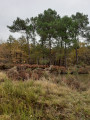
Saint-Maigrin Woods
 6.61 mi
+322 ft
-328 ft
3h 20
Average
Departure from Saint-Maigrin (Charente-Maritime)
6.61 mi
+322 ft
-328 ft
3h 20
Average
Departure from Saint-Maigrin (Charente-Maritime)
A beautiful hike through vineyards and woods. Pleasant in summer. A little damp in winter after the point (10) but passable.
Between Saint-Maigrin and Trotte-Dorne
 7.08 mi
+312 ft
-312 ft
3h 30
Average
Departure from Saint-Maigrin (Charente-Maritime)
7.08 mi
+312 ft
-312 ft
3h 30
Average
Departure from Saint-Maigrin (Charente-Maritime)
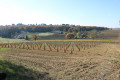
A pleasant walk through a fairly hilly and heavily wooded area. The route offers beautiful and varied scenery featuring vineyards, farmland, orchards and woodland. The route is only partially signposted, so you will need to be able to read the landscape and navigate effectively, taking the description below into account. The Visorando app on a smartphone may be useful.
The Bois de Saint-Eugène in Archiac, in the Champagne region
6.19 mi
+440 ft
-440 ft
3h 15
Average
Departure from Archiac (Charente-Maritime)
Hike down the vineyard-covered slopes of the Petite Champagne region, home to Cognac brandies, and venture into the woodland with its fabulous atmosphere. In Saint-Eugène, the hill, crowned by a beautiful church overlooking the Né valley, offers a magnificent panoramic view of the vineyards.
Circular route around Lamérac
6.13 mi
+243 ft
-253 ft
3h 00
Easy
Departure from Lamérac (Charente)
A walk in Lamérac, suitable for everyone, passing through a variety of landscapes, including vineyards, walnut groves, woodland and fields.
Tour of Saint-Maurice-de-Tavernole
 6.47 mi
+233 ft
-240 ft
3h 10
Average
Departure from Saint-Maurice-de-Tavernole (Charente-Maritime)
6.47 mi
+233 ft
-240 ft
3h 10
Average
Departure from Saint-Maurice-de-Tavernole (Charente-Maritime)
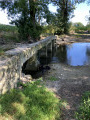
A very beautiful hike to do in April or May to enjoy the orchids (more than ten varieties), but the environment is beautiful all year round with very beautiful, unobstructed views. Be careful when crossing the Roman bridge, the only difficulty but important if you are afraid of heights. It is possible to avoid it.
The Charente vineyards around Sainte-Lheurine
6.66 mi
+1,391 ft
-1,247 ft
4h 15
Easy
Departure from Sainte-Lheurine (Charente-Maritime)
A beautiful walk through vineyards and small villages. Observation table at the foot of the Arthus mill. Pass very close to the village of Neuillac (4), with the church opposite. Between points (7) and (8), you can see the spire of Archiac church.
Around Montchaude
6.00 mi
+371 ft
-354 ft
3h 05
Easy
Departure from Montchaude (Charente)
This hike can be enjoyed in all seasons, with paths that are very passable in winter and shaded in summer. Discover the sites of Montchaude, the 16th-century castle, the church rebuilt between 1895 and 1898, the Chapel of Saint-Mathurin lost in the middle of the woods, and many viewpoints along the way.
The Roman road at Neuillac in the Terres de Champagne
6.24 mi
+43 ft
-43 ft
2h 55
Easy
Departure from Neuillac (Charente-Maritime)
As you set off, you’ll discover the Romanesque church of Neuillac and its modillions featuring a variety of subjects. You’ll then walk through the Cognac vineyards. At Les Fontagards, you’ll pass a beautiful manor house that bears witness to the boom in wine-growing in the 19th century. After crossing Le Noblat, you’ll reach a more wooded area where a section of the Roman road has been uncovered, before returning to Neuillac along paths lined with vineyards and copses.
Criteuil-la-Magdeleine loop
9.72 mi
+272 ft
-259 ft
4h 40
Average
Departure from Criteuil-la-Magdeleine (Charente)
Starting from the car park at the church in Criteuil-la-Magdeleine, the route runs alongside the Né and Collinaud rivers and crosses the vineyards of the Grande Champagne region. Points of interest along the route include: the Church of Saint-Macrin - Saint Jean Baptiste, the Chapel of La Magdeleine, beautiful wine estates, the wash house, the drinking water pumping station, the remains of a watermill and windmill, and various viewpoints.
Interpretive trail at La Magdeleine
 Local authority
 0.87 mi
+3 ft
-7 ft
0h 25
Easy
Departure from Criteuil-la-Magdeleine (Charente)
0.87 mi
+3 ft
-7 ft
0h 25
Easy
Departure from Criteuil-la-Magdeleine (Charente)
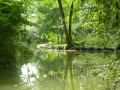
Discover the rich fauna and flora of the Né valley in this Natura 2000 classified area - a nature protected zone with many diverse and protected species and plants, such as the European Mink (a little known species near extinction) and wild orchids, as well as many other species naturally found in a preserved environment.
Ugni Blanc Route
 4.63 mi
+141 ft
-138 ft
2h 15
Easy
Departure from Criteuil-la-Magdeleine (Charente)
4.63 mi
+141 ft
-138 ft
2h 15
Easy
Departure from Criteuil-la-Magdeleine (Charente)
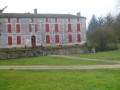
Set slightly apart from the main roads, the village seems to have fallen asleep… And yet, at the start of the last century, it was home to numerous shops and craftsmen who made it famous throughout the surrounding area. Criteuil-la-Magdeleine boasts a wealth of large houses, known as ‘logis’, and around ten mills (no longer in operation today) situated on the River Né. Some of these can be seen from the walking trail.
Route des Petaux
 6.71 mi
+361 ft
-384 ft
3h 25
Average
Departure from Ambleville (Charente)
6.71 mi
+361 ft
-384 ft
3h 25
Average
Departure from Ambleville (Charente)
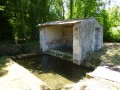
The village is crossed by the Collinaud, a tributary of the Né. Primarily focused on wine-growing, Ambleville also has fertile land for growing cereals.
The Petaux Route (short circular route)
 4.13 mi
+207 ft
-200 ft
2h 05
Easy
Departure from Ambleville (Charente)
4.13 mi
+207 ft
-200 ft
2h 05
Easy
Departure from Ambleville (Charente)
The Collinaud, a tributary of the Né, flows through the village. Whilst Ambleville is primarily focused on wine-growing, it also has fertile land suitable for growing cereals.
Fontaines d’Ozillac Castle and a variant of the GR®360
 4.93 mi
+72 ft
-72 ft
2h 20
Easy
Departure from Fontaines-d'Ozillac (Charente-Maritime)
4.93 mi
+72 ft
-72 ft
2h 20
Easy
Departure from Fontaines-d'Ozillac (Charente-Maritime)
A lovely walk through the countryside near Fontaines-d’Ozillac. The route allows you to discover the beautiful landscapes of this corner of Saintonge, as well as the Seugne and the river linking it to the Pharaon, and also the magnificent Château des Fontaines.
La Comté to Fontaine d’Ozillac in the Seugne Valley
5.60 mi
+112 ft
-112 ft
2h 40
Easy
Departure from Fontaines-d'Ozillac (Charente-Maritime)
The beautiful church at Fontaines-d’Ozillac features a Romanesque façade to which a nave was added during the Renaissance; take a closer look at the corbels adorned with various figures. After two kilometres across open fields, wooded areas lead to a former nature trail showcasing different tree species. Benches have been set up in a clearing; you will then climb towards a farm before descending through the pastures and taking the path back, on which you will pass a small chapel.
Circuit de la Motte
 1.24 mi
+102 ft
-105 ft
0h 40
Easy
Departure from Ambleville (Charente)
1.24 mi
+102 ft
-105 ft
0h 40
Easy
Departure from Ambleville (Charente)
The commune of Ambleville is crossed by the Collinaud, a stream tributary of the River Né, which includes wash-houses typically found in this area of Grande Champagne. During your walk you will have the chance to discover La Motte, a hamlet in this commune. Take the time to admire the rolling countryside and La Motte wash-house.
This walk can be enjoyed with all the family, because children will find it fun to cross the Collinaud by way of the stepping stones.
The Cossade and Charbonnière moors
 5.71 mi
+322 ft
-302 ft
2h 55
Average
Departure from Touvérac (Charente)
5.71 mi
+322 ft
-302 ft
2h 55
Average
Departure from Touvérac (Charente)
A lovely walk around the ponds in the Landes de la Cossade and de la Charbonnière. This site was mined for its clay of high mineralogical purity in the last century. After the site was abandoned, the four cavities, 30 to 50 metres deep, filled with water. This walk offers peace and a change of scenery. Some of the lakes are magnificent! It’s even more beautiful in the sunshine.
(!) Swimming strictly prohibited
Route between flax and vineyards (short circular route)
5.55 mi
+256 ft
-246 ft
2h 45
Easy
Departure from Lignières-Sonneville (Charente)
Lignière-Sonneville is a village with the rolling hills typical of the Grande Champagne region, formed by the merger of Lignières and Sonneville in 1845. Nestled in the heart of the Grande Champagne, it has a population of 613.
Route between Lin and Vigne
 12.70 mi
+843 ft
-820 ft
6h 35
12.70 mi
+843 ft
-820 ft
6h 35
 Difficult
Departure from Lignières-Sonneville (Charente)
Difficult
Departure from Lignières-Sonneville (Charente)
Lignière-Sonneville is a village with the rolling hills typical of the Grande Champagne region, formed by the merger of Lignières and Sonneville in 1845. Nestled in the heart of the Grande Champagne, it has a population of 613.