


Refine your search for walks in Bracieux
Bracieux walks


 Bois de Boulogne and heritage
 Visorando Member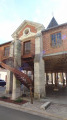
 8.56 mi
 +131 ft
 -131 ft
 4h 05
4h 05
 Moderate
 Departure from Bracieux (Loir-et-Cher)
Setting off from Bracieux, a pretty village torn between its typical Solognot heritage and its royal history directly linked to the Château de Chambord, nature offers some lovely surprises in the Forêt de Boulogne, where the flora and fauna are particularly rich.
In the Forest of Boulogne
 7.62 mi
+131 ft
-138 ft
3h 35
7.62 mi
+131 ft
-138 ft
3h 35
 Easy
Departure from Bracieux (Loir-et-Cher)
Easy
Departure from Bracieux (Loir-et-Cher)
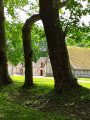
The walk leads into the heart of the Boulogne Forest. Separated from the Chambord estate in 1523 by order of François I, its main purpose is the production of high-quality oak. It is the perfect habitat for does, stags and wild boars, which can be spotted from the long, straight avenues. Best enjoyed in summer to make the most of the forest’s coolness.
Villesavin Route
 6.94 mi
+52 ft
-52 ft
3h 15
Moderate
Departure from Tour-en-Sologne (Loir-et-Cher)
6.94 mi
+52 ft
-52 ft
3h 15
Moderate
Departure from Tour-en-Sologne (Loir-et-Cher)
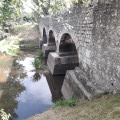
This route, starting from Tour-en-Sologne, is steeped in history, crossing the Ponts d’Arian, whose construction dates back to the Middle Ages but whose origins are Roman. You will also appreciate the dense vegetation of the Boulogne State Forest on the edge of the Chambord National Estate.
Via Les Ogonnières
 6.59 mi
+102 ft
-98 ft
3h 05
Easy
Departure from Fontaines-en-Sologne (Loir-et-Cher)
6.59 mi
+102 ft
-98 ft
3h 05
Easy
Departure from Fontaines-en-Sologne (Loir-et-Cher)
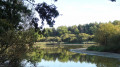
A ‘favourite’ hike that captures the authentic essence of Sologne, taking in the heritage treasures of the village of Fontaines-en-Sologne, the vast, shimmering ponds and the ancient, diverse forest, rich in flora and fauna.
Loop around the ponds of Fontaines-en-Sologne
 5.67 mi
+79 ft
-105 ft
2h 40
Easy
Departure from Fontaines-en-Sologne (Loir-et-Cher)
5.67 mi
+79 ft
-105 ft
2h 40
Easy
Departure from Fontaines-en-Sologne (Loir-et-Cher)
In the heart of the "wine-growing" region of Sologne, this route is mainly through forest, dotted with numerous ponds and offering some beautiful heritage sites.
Circular route in the Forest of Boulogne starting from Neuvy
 7.34 mi
+112 ft
-112 ft
3h 30
Moderate
Departure from Neuvy (Loir-et-Cher) (Loir-et-Cher)
7.34 mi
+112 ft
-112 ft
3h 30
Moderate
Departure from Neuvy (Loir-et-Cher) (Loir-et-Cher)
Starting from the village of Neuvy, the route heads deep into the magnificent Boulogne Forest, home to a wealth of wildlife.
The Montperché Pond from Neuvy
 6.39 mi
+151 ft
-151 ft
3h 05
Easy
Departure from Neuvy (Loir-et-Cher) (Loir-et-Cher)
6.39 mi
+151 ft
-151 ft
3h 05
Easy
Departure from Neuvy (Loir-et-Cher) (Loir-et-Cher)
Neuvy, at the gates of the Domaine de Chambord, lies in the heart of the Boulogne Forest.
This is a great walk for families to observe the large animals of the forest and the many birds on the Étang de Montperché lake.
Bauzy, land of heather
 6.02 mi
+66 ft
-66 ft
2h 50
Easy
Departure from Bauzy (Loir-et-Cher)
6.02 mi
+66 ft
-66 ft
2h 50
Easy
Departure from Bauzy (Loir-et-Cher)
Bauzy, a pretty village with Sologne characteristics, invites you to discover its paths and its secret heritage: manor houses, large stately homes and small châteaux.
From the vineyards to the Bois de Boulogne from Mont-Près-Chambord
 5.97 mi
+98 ft
-98 ft
2h 50
Easy
Departure from Mont-près-Chambord (Loir-et-Cher)
5.97 mi
+98 ft
-98 ft
2h 50
Easy
Departure from Mont-près-Chambord (Loir-et-Cher)
A varied route that begins near the natural swimming area, where the water is purified without the use of chemicals, then winds its way through the vineyards before crossing the Forêt Domaniale de Boulogne with its majestic trees and long, straight avenues, ideal for spotting large wild animals.
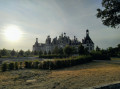
Chambord Castle and its lost paths
 5.68 mi
+79 ft
-79 ft
2h 40
Easy
Departure from Chambord (Loir-et-Cher) (Loir-et-Cher)
5.68 mi
+79 ft
-79 ft
2h 40
Easy
Departure from Chambord (Loir-et-Cher) (Loir-et-Cher)
This walk in the grounds of Chambord begins by approaching the château along the left bank of the Cosson, continues along a small path winding through the forest and finally returns to the starting point via the right bank of the Cosson and the Pont Saint-Michel, offering a final, unforgettable view of the château.
From Chambord to La Chaussée-le-Comte
 9.74 mi
+79 ft
-79 ft
4h 35
Moderate
Departure from Chambord (Loir-et-Cher) (Loir-et-Cher)
9.74 mi
+79 ft
-79 ft
4h 35
Moderate
Departure from Chambord (Loir-et-Cher) (Loir-et-Cher)
This beautiful hike begins with an approach to the Château de Chambord along the left bank of the Cosson, then leaves the Chambord park to join the Chaussée le Compte before returning to it. The route offers beautiful views of one of the most beautiful châteaux in the Loire Valley, while winding its way through cultivated fields, woods and the vegetation associated with the Cosson, known as "ripisylve".
From Huisseau-sur-Cosson to Nanteuil
 6.55 mi
+98 ft
-102 ft
3h 05
Easy
Departure from Huisseau-sur-Cosson (Loir-et-Cher)
6.55 mi
+98 ft
-102 ft
3h 05
Easy
Departure from Huisseau-sur-Cosson (Loir-et-Cher)
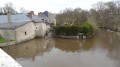
This walk through vineyards and cultivated fields offers beautiful views of the Cosson river and the Château des Grotteaux, which is in a stunning location. Suitable for all seasons.
From Huisseau-sur-Cosson to Saumery
 4.94 mi
+98 ft
-69 ft
2h 20
Easy
Departure from Huisseau-sur-Cosson (Loir-et-Cher)
4.94 mi
+98 ft
-69 ft
2h 20
Easy
Departure from Huisseau-sur-Cosson (Loir-et-Cher)
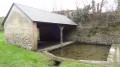
This circular route offers varied landscapes, sometimes crossing the "Cheverny" vineyard, sometimes following the banks of the Cosson. It provides a feeling of well-being along the high walls covered with vegetation that surround the grounds of the Château de Saumery.
 A royal day out in Chambord
17.79 mi
+141 ft
-141 ft
3 hrs
Easy
Departure from Chambord (Loir-et-Cher) (Loir-et-Cher)
A lovely walk through the Chambord and Boulogne forests in the heart of Sologne.
A grassy path around Courmemin
 5.87 mi
+46 ft
-46 ft
2h 45
Easy
Departure from Courmemin (Loir-et-Cher)
5.87 mi
+46 ft
-46 ft
2h 45
Easy
Departure from Courmemin (Loir-et-Cher)
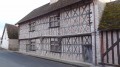
The route offers a glimpse of the architectural and natural riches of the commune of Courmemin, and more broadly of the Sologne region: half-timbered houses in the village, Sologne farms, deciduous and coniferous forests, and numerous ponds.
Via Vaulien from Courmemin
 6.25 mi
+33 ft
-33 ft
2h 55
Easy
Departure from Courmemin (Loir-et-Cher)
6.25 mi
+33 ft
-33 ft
2h 55
Easy
Departure from Courmemin (Loir-et-Cher)
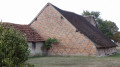
A lovely circular route rich in numerous buildings weathered by time—houses and farms from the Sologne of yesteryear—as well as landscapes typical of this region: sheep pastures, but also marshy areas, forests, hedgerows and ponds teeming with a wide variety of wildlife.