Bois des Naïdes and Forêt de l'Hermitain from Prailles

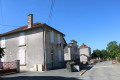
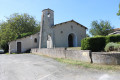
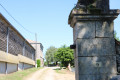
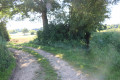
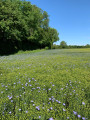
A pleasant hike to discover the Argentière and Hermitain streams. The route crosses the western part of the Hermitain Forest and allows you to enjoy the peaceful nature of this bocage area to the north and east of Prailles. This route offers a beautiful introduction to the local heritage with Protestant family cemeteries, wash houses, the Monastery of Piè Foulard, as well as old houses and farms.

Details

3193560
Creation:
Last update:
Last review:
  • Walking
    Activity: Walking
  • ↔
    Distance: 12.38 km
  • ◔
    Average duration: 3h 45 
  • ▲
    Difficulty: Moderate

  • ⚐
    Back to start: Yes
  • ↗
    Ascent: + 85 m
  • ↘
    Descent: - 87 m

  • ▲
    Highest point: 170 m
  • ▼
    Lowest point: 118 m
  • ⚐ Country: France
  • ⚐ District: Prailles (79370)
  • ⚑
    Start/End: N 46.322884° / W 0.21933°
  • ❏
    IGN map(s): Ref. 1628SB
  • Hour-by-hour weather

Photos

Description of the walk

The parking area is located north of the Prailles school (next to the cemetery).

(S/E) Leave this car park and head towards the cemetery and its access road. Go down this road to reach Impasse de la Planification and, immediately after, Route de Mailloche. Cross this road carefully and take Rue de la Bascule opposite. Before starting the climb, look out for the Lavoir du Royou on your left (see section "During the hike").
Rue de la Bascule soon leads to Route d'Argentière. Cross it carefully and continue straight ahead onto Chemin Borgne. Follow it uphill until it joins Route des Minées.

(1) Carefully first turn right then left to take a small road to the east of the village, which quickly turns into a path. On your right, in the middle of a large field, you will see a Protestant family cemetery surrounded by walls.
At the T-junction, take the path on the right. Continue straight on to the village of L'Argentière. When you arrive, the path known as Chemin des Prates turns into a small road. Continue to the junction with Rue du Maître Verrier.

(2) Turn right onto Rue du Maître Verrier and quickly turn left onto Rue du Terra, which is downhill and partly grassy. At the bottom of this street, turn right onto Chemin des Épinettes and follow it until you reach the road called Chemin du Pissot.
Take Chemin de Pissot to the right. At a group of houses on the right, take the path on the right just after a post supporting three green letterboxes in front of a recent two-storey house and go and see the Pissot wash house about thirty metres away (see section "During the hike").

(3) Return to Chemin du Pissot and follow it downhill to the right. Join the D103 road and follow it carefully to the left (northbound) until you reach the Douault crossroads.

(4) Carefully follow the D5 road to the right, cross the Ruisseau de l'Argentière stream and take the forest road on the left-hand side of the road shortly afterwards (before the right-hand bend).
The Grande Ligne forest road has a barrier (incorrectly positioned on the map) prohibiting motor vehicle traffic. Just after the barrier, it turns right. Take the forest path opposite (on the left-hand side of the forest road) which heads north-north-east. Follow this forest path which, after a short climb, descends and ends up at the edge of the Bois des Naïades on the right-hand side, leading to a small road.

(5) Turn right and carefully follow the road to the large open space next to the Folie farm.

(6) Turn left onto the small road that leads to a small campsite. A few metres before the entrance, take the path that runs along the fence at the edge of the forest. Pass the marker and continue to a path on the right that separates plots of woodland, including plot 32, which you have just walked along. Turn right onto the small path that leads into the woods towards the south and joins the Route Forestière de la Grande Allée. Cross it and continue straight ahead on a path that separates plots of the Bois de l'Hermitain (the one on the right has been cleared and the one on the left is plot 34). Continue to the D5 road. Cross it carefully and take the small road slightly to the left that leads to La Gravette, where there is a beautifully restored old house. Continue to the junction with a path on the right.

(7) Turn right onto the path that winds down towards the Ruisseau de l'Hermitain.
Cross it and climb up towards the hamlet of Barbin. When you get there, the path turns into a small road and comes to a T-junction.

(8) Take the road to the left heading south-west.
When the road turns right, take the path on the left that heads south and passes slightly away from the hamlet of La Baudouelle (on your right).
Further on, cross a small road and continue straight on until you reach the next small road, which you will join to the west of the hamlet of Le Maulay.
Carefully take the road to the left towards Le Maulay and, at the junction with the path leading to the locality, take the path on the right that runs flat towards the south. Follow it to a four-way junction.

(9) Take the path on the right, which descends very gently. When the path turns to the left, take the narrow path opposite, which leads under the vegetation and further on to the D103 road, east of Pié Foulard, where there is a monastery (see section "During the hike"). Take the D103 road to the right for twenty to thirty metres , taking care.

(10) Turn left onto a shaded path. Further on, you will see a spring on the left side of the path. A little further on, the path arrives at a crossroads just after a right-hand bend. Take the left-hand path, which leads to a small road slightly north of the hamlet of La Pelterie.

(11) Turn left onto the road for ten to twenty metres before turning right onto a path that heads west. Continue straight ahead until you reach a T-junction. Turn right and continue for about forty metres before turning left onto a path at the edge of the woods on your right. The path, known as Rue du Grand Logis, joins a small road near Le Breuil. Take this road and turn right onto the small road that passes in front of the entrance to Le Grand Logis on the right, next to a large modern livestock building.
Continue along the road, which turns left and leads to Route de Vilnant.

(12) Take this road to the right with caution (poor visibility) and head towards the village, following Rue des Écoles, which continues on from it. Pass in front of the school and start descending Route de Mailloche, turning left shortly afterwards to return to the car park (S/E).


Waypoints

  1. S/E : km 0 - alt. 144 m - Car park north of the school in Prailles.
  2. 1 : km 0.52 - alt. 151 m - Crossroads Route des Minées, Chemin Borgne on the right
  3. 2 : km 1.68 - alt. 145 m - Crossroads Chem. des Prates, Chem.du Maître Verrier
  4. 3 : km 2.3 - alt. 127 m - Lavoir du Pissot
  5. 4 : km 2.93 - alt. 118 m - Douault crossroads (D5 and D103 roads)
  6. 5 : km 4.23 - alt. 137 m - Crossroads between the path and the road before the Bois des Naïades
  7. 6 : km 4.52 - alt. 147 m - Crossroads at the Ferme de la Folie
  8. 7 : km 5.84 - alt. 155 m - Road junction, path after La Gravette
  9. 8 : km 6.83 - alt. 150 m - Crossroads south of Barbin
  10. 9 : km 8.88 - alt. 157 m - Crossroads
  11. 10 : km 9.55 - alt. 147 m - Crossroads, path to the north-east of Pié Foulard
  12. 11 : km 10.48 - alt. 156 m - Crossroads, road to the north-west of La Pelterie
  13. 12 : km 11.68 - alt. 152 m - Crossroads Rue du Gros Logis, path on the right
  14. S/E : km 12.38 - alt. 144 m - Car park north of the school in Prailles.

Notes

This hike covers varied terrain and requires sturdy footwear.

This hike is only partially marked as it crosses several marked routes. Consequently, it is advisable to follow the directions in the description and on the map, while also paying close attention to the landscape.
Hike completed by the author on 17 May 2020.

Worth a visit

Prailles
The name Prailles has varied over the centuries: Praelioe around 1095 (map of Saint-Cyprien), Praellae, Praheloe, Praelia, Praalle (110 map of Saint-Maixent), Prailles in 1260... The name is thought to come from the meadows or small prairies used to feed animals.
Claude-André Fougeyrollas' remarkable work "Prailles, histoire d'une commune des Deux-Sèvres" (Prailles, history of a commune in Deux-Sèvres), published by the author in 1996, can be consulted at the Prailles town hall office.
André Léculeur, a teacher in Prailles from 1947 to 1961, also left behind an exceptional work, which is currently being digitised.

The Temple in La Couarde
The Temple de La Couarde was built in 1904 according to plans and specifications drawn up by Georges Bourreau, road inspector of La Mothe Saint-Héray. It was the last temple to be built before the law of 9 December 1905 concerning the separation of Church and State.
On the façade, there is a carved rose window and a banner bearing the inscription "Église Réformée" (Reformed Church), referring to Calvinist Protestants.

Mule bridges, ponds and wash houses
The Lambon river rises in our commune of Goux, crosses 11 other communes and flows into the Sèvre Niortaise in Niort near the Source du Vivier. Its tributaries on the right bank are the Lussaudière, the Villebeurre, the Aigonnay and the Mayolle, and on the left bank the Fombelle.
As you wander along the paths, you will discover numerous wash houses. Ponds and pools are home to a diverse range of flora and fauna.
The flat stone bridges over the river are called "ponts muletiers" (mule bridges). They were used by mules to transport flour or minot extracted from the limestone plateaus of Exoudun and Pamproux, as well as salt and other products on the return journey from the port. "Chemin du Sel et de la Farine" (Salt and Flour Trail): Lambon, Sèvre Niortaise, La Rochelle.
According to legend, the Parabas Cave (near Vilfas de La Couarde) was home to brigands who charged a toll for each person crossing the mule bridge. It was also a place of Protestant gatherings.

Source: official website of the municipality.

Hermitain Forest
614-hectare national forest
Magnificent chestnut forest with a variety of other trees (oaks, birches, etc.) on plateau terrain, revealing a small river flowing over gneiss and schist in the valley.
Botanical interest:
Rich forest with a cool, humid bioclimate (Armorican type, to which the area is geologically linked) with several species rare in Poitou-Charentes: Opposite-leaved golden saxifrage (Chrysosplenium oppositifolium), Spring squill (Scilla verna), Eared willow (Salix aurita), Irish spurge (Euphorbia hyberna), etc.
Entomological interest:
Due to the number and quality of the fauna, some specimens of which are from the calcareous zone of the south or the Armorican massif.
Presence of northern species at the edge of their range - Leucodonta bicolor and Stegania cararia - which does not mean that these species are common in northern France.
Ornithological interest:
Nesting of rare/endangered birds of prey: honey buzzard, hen harrier, black kite.

Things to see:
- Oak and chestnut forest on 'red chestnut soil'.
- 2 km discovery trail (forestry, botany, ecology, etc.).
- Proximity to the legendary site of Chambrille (La Mothe-St-Héray).
- Highlighting of remarkable trees.

Source: ZNIEFF R. LEVESQUE, .- 540004417, FORET DE L'HERMITAIN. - INPN, SPN-MNHN Paris, 20P and Directory of places, sites and landscapes of regional interest for environmental education (excerpts)

Rayou wash house
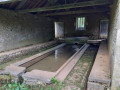
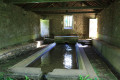
This wash house is located at the corner of municipal road no. 7 and the rural road of La Bascule. A stone staircase leads down to the uncovered basin, which is fed by a masonry spring covered by a semicircular arch. Along the edges of the two long sides, the cement slabs, sloped to form washboards, have been redone. The four upright stone supports for two poles used to hold up the sheets to be beaten are still in place. Note the water drainage channel. It is thought to have been built in 1822.
Source: website on the wash houses of Deux-Sèvres with numerous photos

Pissot wash house
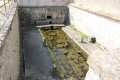
This wash house is located on the side and almost at the end of a small path that descends from the rural path known as Le Pissot to the stream of the same name. The uncovered basin is fed by a spring built into the slope. The water flows into the stream. The long sides of the basin are covered with sloping slabs to form washing boards. The site is pleasant. The wash house may date from the late 18th century.
Pissot wash house.

Monastery of the Annunciation of Pié Foulard (Prailles)
The first monastery of the Congregation of the Benedictines of Notre-Dame-du-Calvaire, which emerged from a reform of the Order of Fontevrault led by Madame d'Orléans, a Feuillantine, and Father Joseph du Tremblay, a Capuchin, the community was founded in Poitiers by Madame d'Orléans on 25 October 1617.
In 1962, the community left these cramped and noisy premises to settle in Saint-Julien-l'Ars, between Poitiers and Chauvigny. In 1996, following a reflection within the congregation, the community decided to move to a more neglected area of the diocese, the Pays Mellois, which had been severely affected by the Wars of Religion. In 1999, it moved into a small rural Huguenot property in a place called Pié-Foulard, which was well suited to a discreet monastic settlement that respected the memory of this land and its history. In 2002, five sisters from the community of Kerbénéat in Brittany joined the community of Saint-Julien l'Ars.

The community of a dozen sisters carries out its mission of prayerful vigilance in this place (Lauds at 6:45 a.m., Eucharist at 8:45/9:30 a.m. on Sundays and feast days, midday office at 12:15 p.m., Vespers at 5:45/5:00 p.m. on Sundays and feast days, Compline at 8:00 p.m., Vigils 8:45/8:30 p.m. on feast days), hospitality with a small guesthouse of a dozen rooms, and work.
After reflecting on the meaning of our work in line with our monastic vocation and our environment, we chose to focus on our typography workshop and develop our research into the creation of cards, announcements and objects inspired by popular tradition.

The concern for Christian unity, which has been very present since the congregation's origins, takes on a new dimension in the context of the Pays Mellois. It is an integral part of the monastic project of the new settlement, so there will be no bell tower or bells to ring out across the countryside and reawaken a still-sensitive memory. It was unthinkable to build a church in Prailles and the five surrounding villages, Aigonnay, Thorigné, La Couarde, Beaussais and Vitré, which do not have a Catholic church, a rare occurrence in France!
On 31 December, we enter the new year having read the entire Bible, and every year, at the dawn of Easter, Protestants and Catholics converge on the monastery to joyfully celebrate the Lord's resurrection and share breakfast!
We also come together on environmental issues. For the past two years, a Day of Creation has been organised on 4 October.
Source: website of the Monastery of the Annunciation of Pié Foulard (Prailles).

Reviews and comments

4.7 / 5
Based on 8 reviews

Reliability of the description
4.8 / 5
Ease of following the route
4.8 / 5
Route interest
4.5 / 5
Cmarsil
Cmarsil

Overall rating : 4.7 / 5

Date of your route : Oct 31, 2025
Reliability of the description : ★★★★★ Very good
Ease of following the route : ★★★★★ Very good
Route interest : ★★★★☆ Good
Very busy route : No

A lovely trail that allows you to discover a variety of landscapes.
Thank you.

Machine-translated

GILMIC79
GILMIC79

Overall rating : 5 / 5

Date of your route : Jul 27, 2025
Reliability of the description : ★★★★★ Very good
Ease of following the route : ★★★★★ Very good
Route interest : ★★★★★ Very good
Very busy route : No

A magnificent route with plenty of variety.
Regarding the start: we had trouble finding the cemetery, which is tiny and surrounded by walls. The easiest way is to stand with your back to the school and town hall buildings and go to the back and left of the car park.

Machine-translated

FloEtSyl
FloEtSyl

Overall rating : 5 / 5

Date of your route : Feb 01, 2025
Reliability of the description : ★★★★★ Very good
Ease of following the route : ★★★★★ Very good
Route interest : ★★★★★ Very good
Very busy route : No

Very pleasant route. Well described.
Highly recommended.

Machine-translated

MARTDomi
MARTDomi

Overall rating : 4 / 5

Date of your route : Jul 20, 2024
Reliability of the description : ★★★★☆ Good
Ease of following the route : ★★★★☆ Good
Route interest : ★★★★☆ Good
Very busy route : No

Pretty, very pleasant circular

Machine-translated

jlfaure
jlfaure

Overall rating : 4.7 / 5

Date of your route : Jul 19, 2022
Reliability of the description : ★★★★★ Very good
Ease of following the route : ★★★★★ Very good
Route interest : ★★★★☆ Good
Very busy route : No

A very pleasant route, which we chose to shorten by 2.5 km by taking the path on the right after the point (4). A very shady paved path (perhaps a Roman road?) that runs alongside the Hermitain forest and joins the proposed route a little further on, at elevation 126.

Machine-translated

2MC
2MC

Overall rating : 4.3 / 5

Date of your route : Apr 10, 2022
Reliability of the description : ★★★★☆ Good
Ease of following the route : ★★★★☆ Good
Route interest : ★★★★★ Very good
Very busy route : No

Lovely walk – Beautiful, varied landscapes –
Pleasant forest trail
A wonderful moment of calm and relaxation

Machine-translated

Jacques gomes
Jacques gomes

Overall rating : 5 / 5

Date of your route : Oct 11, 2021
Reliability of the description : ★★★★★ Very good
Ease of following the route : ★★★★★ Very good
Route interest : ★★★★★ Very good
Very busy route : No

Very beautiful hike.

Machine-translated

pgetrochon
pgetrochon

Thank you for your message.
Happy hiking!

Machine-translated

chardete
chardete

Overall rating : 4.7 / 5

Date of your route : Jun 01, 2020
Reliability of the description : ★★★★★ Very good
Ease of following the route : ★★★★★ Very good
Route interest : ★★★★☆ Good
Very busy route : No

Quite varied and pleasant route.

Machine-translated

Other walks in the area

For more walks, use our search engine .

The GPS track and description are the property of this route's author. Please do not copy them without permission.