Walk around Prailles and the Grand Ry wash house

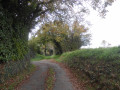
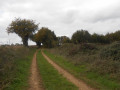
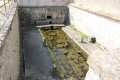
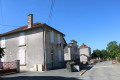
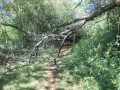
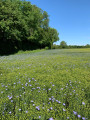
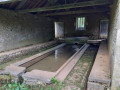
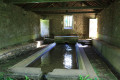
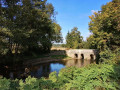
A lovely short hike starting from Prailles, a mainly rural village. This is a wooded area criss-crossed by numerous hiking trails, much to the delight of nature lovers. During the walk, the path passes close to the Grand Ry wash house.

This largely shaded route is therefore very pleasant even in hot weather. What's more, as it is on a plateau, hikers can regularly feel the effects of the wind.

Details

583110
Creation:
Last update:
Last review:
  • Walking
    Activity: Walking
  • ↔
    Distance: 8.40 km
  • ◔
    Average duration: 2h 30 
  • ▲
    Difficulty: Easy

  • ⚐
    Back to start: Yes
  • ↗
    Ascent: + 43 m
  • ↘
    Descent: - 44 m

  • ▲
    Highest point: 159 m
  • ▼
    Lowest point: 122 m
  • ⚐ Country: France
  • ⚐ District: Prailles (79370)
  • ⚑
    Start/End: N 46.322615° / W 0.219107°
  • ❏
    IGN map(s): Ref. 1628SB
  • Hour-by-hour weather

Photos

Description of the walk

(/A) Leave the car park and return to Route de Mailloche, which you take on the left (downhill).
After barely 100 metres, turn left towards the cemetery (at the household waste sorting point).
After passing the cemetery, turn right onto the downhill road that joins Route de Mailloche.

(1) Cross Route de Mailloche, admire the Royou wash house and fountain, and take the uphill street that turns right at the top of the hill.
Cross Route d'Argentière and continue along the lane opposite, which winds between the houses. This lane is called Chemin Borgne.

Towards the top of the hill, ignore a path on the right to reach a T-junction: turn left, and the road is now almost flat.
This road leads to Route des Minées (T-junction); turn right towards the edge of the village.

(2) Immediately turn left and take the street that runs alongside the last buildings. Leave Rue de la Tour on your left. Continue straight ahead; the street quickly turns into a farm track.
Further on, the track comes to a T-junction of farm tracks and turn right. The track quickly becomes shaded.
A little further on, leave a farm track on your left and a track on your right almost opposite and continue straight ahead.
At the next crossroads, follow the farm track on the right.

Continue along this track until you reach the road at a T-junction. Turn right onto the quiet road, but take care as it is quite narrow and lined with hedges, which limits visibility. You can just about make out the floodlights of the stadium on your left, which seems to be your destination.

(3) Take the first farm track on the left (towards La Pelterie). After a slight climb and then a slight descent, you will reach a T-junction and turn right.
The path quickly leads to the road from Prailles to La Pelterie and Le Coussat (fairly open crossroads). Cross the road and take the farm track opposite.

(4) Turn left onto the first road leading to the village of Gros Bois (the farm track is a little narrow at the start).
The farm track leads to Rue du Bois du Château at the entrance to Gros Bois.

Turn right onto the first street, which winds between the houses. After the first bend, leave the road opposite and turn left onto Rue du Puits.

(5) At the sharp bend along this street, take the farm track on the right, which winds between two embankments and is very shady.
Follow this path to the road that leads from Prailles to the Lambon Leisure Centre. Turn right onto the road.

(6) Immediately turn left onto the farm track between Champs Landré and Malaisé.
At the next crossroads of farm tracks, continue straight ahead, ignoring both the track on the right (towards Saint-Martin) and the track on the left (towards Le Vigneau).
A little further on, the farm track becomes very shaded due to the presence of a wood on the left-hand side.

At the end of the woods, the track curves into an S shape and immediately afterwards, you will need to ford a small intermittent stream coming from the Fontaine de Saint-Martin.
Shortly afterwards, the track arrives at a place called Le Grand Ry, where you can see a plaque commemorating a painful episode in the Huguenot resistance (see the section "During the hike or nearby").

(7) Turn right onto the slightly uphill farm track towards Le Breuil. Further on, ignore a track on the left.
At the crossroads with the road, continue straight ahead. Shortly afterwards, ignore a farm track on the right.

(8) Immediately turn left onto a fairly narrow path at the edge of the forest. This path leads towards Le Breuil.
When you reach the first buildings, turn left onto a tarmac road.

Almost immediately, turn right onto a road that slopes gently down towards the Grand Breuil farm.
Follow this road to Route de Vilnant, leaving Rue du Grand Breuil, which runs alongside the farm buildings, on your right.

(9) Turn right onto Route de Vilanant, which slopes gently down towards the village of Prailles.
Shortly afterwards, pass a road on your right leading to houses and, in the next right-hand bend, pass the dead-end road on your left. Then turn right onto Rue des Écoles, which slopes upwards.

Ignore the streets on your left and continue straight ahead past the Prailles schools. On your right, you will see an open area with picnic tables, a car park and a sports area for school children.
At the roundabout, turn left, leaving Rue du Petit Bourg on your right, and return to the car park that marks the end of this walk (S/E).

Waypoints

  1. S/E : km 0 - alt. 145 m - School car park (near the war memorial)
  2. 1 : km 0.21 - alt. 137 m - Crossing the Mailloche road (fountain)
  3. 2 : km 0.61 - alt. 152 m - Crossroads between Route des Minées and farm track
  4. 3 : km 2.01 - alt. 150 m - Road junction - farm track
  5. 4 : km 3.49 - alt. 148 m - Crossroads between farm track and path
  6. 5 : km 4.19 - alt. 155 m - Crossroads of Rue du Puits and farm track
  7. 6 : km 4.64 - alt. 144 m - Crossing the road from Prailles to Lambon
  8. 7 : km 6.17 - alt. 125 m - Crossroads at Grand Ry
  9. 8 : km 7.49 - alt. 156 m - Crossroads between farm track and forest path
  10. 9 : km 7.93 - alt. 145 m - Crossroads - Le Breuil
  11. S/E : km 8.4 - alt. 145 m - School car park (near the war memorial)

Notes

Parking is available in the car park next to the school (behind the war memorial).
If necessary, there is another car park near the village hall opposite the school and close to an area equipped with picnic tables.

Although this hike takes place mainly on good farm tracks, it is advisable to wear sturdy footwear, especially as the route is very shady and may be slightly muddy during rainy periods.

Worth a visit

Prailles
A small village of 700 inhabitants covering an area of 1,860 hectares.
Prailles, whose name comes from Praellis meaning "small meadow", is a mainly rural commune. It is a wooded area criss-crossed by numerous hiking trails, much to the delight of nature lovers. It is watered by two streams, the Hermitain and the Lambon, and lies on the edge of the Hermitain forest.
The inhabitants are spread across two centres: the village and Argentière, as well as hamlets and localities scattered throughout the area.

As you walk along the sunken paths, you will see numerous small family cemeteries nestled behind dry stone walls, evidence of the Protestant culture that has marked the history of Prailles. In the village, the temple is still used as a place of worship.
There is no church in the commune.

In recent years, a monastery of Benedictine nuns has been established on this Protestant land to prove that religions can coexist in harmony.

Since 1999, the Monastery of the Annunciation in Prailles has been home to a community of Benedictine nuns from the monastery in Poitiers, founded in 1617. It is one of three French monasteries belonging to the Congregation of the Benedictines of Our Lady of Calvary.

A little history:
When Antoinette d'Orléans left the priory of Lencloître with 24 of her sisters on 25 October 1617, she aspired to a simple monastic life, far from honours, like Saint Benedict who sought solitude in the cave of Subiaco. She then founded our community in Poitiers, the first monastery of a new congregation, the Benedictines of Our Lady of Calvary. Simplicity in relationships and the modest size of communities united by the same spirit characterise this small branch of the great Benedictine tree.

From Poitiers, our community moved in 1962 to Saint-Julien l'Ars, then in 1999 to the south of Deux-Sèvres, a land marked by religious wars, to live a simple and welcoming monastic life open to all. The "concern for Christian unity" that has been a part of the congregation since its inception, like that of peace in the Holy Land, is an integral part of our life project. In 2002, sisters from the community of Kerbénéat (Finistère) joined us after the closure of that monastery.
The community is located in a former Huguenot residence, in this Protestant land marked by religious wars.

Aigonnay
There are numerous sources, which may have given the commune its name: Aigues meaning water and O'nay meaning to be born.

The town first appears in historical records in 995 under the name Villa Aygonensis. It was marked by the Wars of Religion: from 1572 onwards, there was a pastor in Aigonnay named Novel, whose activities led to a strong Protestant presence in the Mellois region. On 20 February 1688, during a clandestine meeting at the Grand-Ry lodge, many Protestants were killed or imprisoned on the orders of Intendant Foucault, who had been alerted in Saint-Maixent. Most of the prisoners were sentenced to perpetual galley slavery, the others to life imprisonment. On Christmas Eve 1697, Protestants from the surrounding area gathered once again at the Logis de la Couture and the Grand-Ry. The latter was demolished in 1698 on Foucault's orders. On 22 May 1699, a peasant from Aigonnay was shot dead by dragoons from La Mothe-Saint-Héray. In 1698, there were 86 households in Aigonnay and 76 around 1750. In 1804, of the 602 inhabitants of Aigonnay, only two or three houses were Catholic. The last wolf in Deux-Sèvres was shot in Aigonnay, in the Raganes woods, on 6 December 1927.

The village has one historic monument: the Breuil-Malicorne residence, which dates from the second half of the 16th century.

Le Grand Ry
The Lambon Valley, a hub of Huguenot resistance. "Enclosed by a landscape of woods, hedges and sunken paths, this valley was a bastion of the Reformation. A Protestant church was established here in the 1540s and tolerated in 1598 after the Wars of Religion. In 1681, even before the revocation of the Edict of Nantes, dragoons were sent against recalcitrant Huguenots, such as Jean Migault, who took refuge in Holland. The mass of new converts, Catholic in appearance, and those who refused to recant kept their faith alive behind closed doors. Risking their lives (bloody repression of the clandestine assembly of Grand-Ry in 1688), they met at night in the Desert around preachers who exercised the ministry of the Word of God in the absence of pastors. Among these elusive preachers was the famous Marie Robin, who travelled throughout
For more information, please visit the following website

Reviews and comments

4.7 / 5
Based on 7 reviews

Reliability of the description
5 / 5
Ease of following the route
5 / 5
Route interest
4.1 / 5
Jacques gomes
Jacques gomes

Overall rating : 5 / 5

Date of your route : Oct 13, 2025
Reliability of the description : ★★★★★ Very good
Ease of following the route : ★★★★★ Very good
Route interest : ★★★★★ Very good
Very busy route : No

Beautiful hike

Machine-translated

Françoise Jam
Françoise Jam
• Edited:

Overall rating : 5 / 5

Date of your route : Aug 22, 2025
Reliability of the description : ★★★★★ Very good
Ease of following the route : ★★★★★ Very good
Route interest : ★★★★★ Very good
Very busy route : No

Very beautiful and pleasant hike. Well shaded.
The guidance on the phone is excellent.
The added bonus: the proximity to the Lambon lake allows you to extend the hike by about 3.5 km and enjoy a picnic.

Machine-translated

Hortial
Hortial

Overall rating : 4.7 / 5

Date of your route : Jan 08, 2023
Reliability of the description : ★★★★★ Very good
Ease of following the route : ★★★★★ Very good
Route interest : ★★★★☆ Good
Very busy route : No

a walk that we had to cut short because of the weather, but which we will happily do again

Machine-translated

Sneg
Sneg

Overall rating : 4.7 / 5

Date of your route : Oct 17, 2020
Reliability of the description : ★★★★★ Very good
Ease of following the route : ★★★★★ Very good
Route interest : ★★★★☆ Good
Very busy route : No

A very pleasant and peaceful walk (2-3 tractors, 2-3 cars): fields, woods, houses... and lots of autumn colours.
Small problem at the start: Route des Minées, then turn left onto Rue de la Tour, which you leave after 50-60 metres when this street turns left.
We didn't see the Grand Ry wash house, perhaps we needed to make a small detour.

Machine-translated

marichantal
marichantal

Overall rating : 4.7 / 5

Date of your route : Sep 18, 2018
Reliability of the description : ★★★★★ Very good
Ease of following the route : ★★★★★ Very good
Route interest : ★★★★☆ Good

The directions are precise and well-informed.

Machine-translated

pelerin23
pelerin23

Overall rating : 4.7 / 5

Date of your route : Jun 08, 2018
Reliability of the description : ★★★★★ Very good
Ease of following the route : ★★★★★ Very good
Route interest : ★★★★☆ Good

For us, this was our first "Visorando" walk and it was an excellent start.
A big thank you to whoever created and described this walk!
The "little apples" have everything you need: details, little notes, and it's impossible to go wrong.

This walk is perfect, easy but a little monotonous (although certainly well shaded for the height of summer), path after path, they all look a bit the same!
Well done anyway.

Machine-translated

catzzz
catzzz

I completely agree with you!
Even though the weather is gloomy, we still manage to really enjoy walks such as La carrière de Donia, which is just magnificent, or La vallée de Chambrille and the six fountains of Savrelle! I think it's just a matter of taste...

Machine-translated

pgetrochon
pgetrochon

Hello,

With the current grey weather, hikes often seem rather dull. All that remains are the historical elements... But the approaching spring should bring colour back to this hike. The shaded sections will only be appreciated in hot weather. Having done it in September in beautiful light, the group really enjoyed it.

Happy hiking.

Machine-translated

catzzz
catzzz

Overall rating : 4.3 / 5

Date of your route : Feb 28, 2018
Reliability of the description : ★★★★★ Very good
Ease of following the route : ★★★★★ Very good
Route interest : ★★★☆☆ Average

Hello,
This hike was nice, but nothing special... Personally, I found that everything looked the same: the paths, the fields...
It should be noted that we did this walk in winter, so the experience is not the same. It will inevitably be more enjoyable when the trees are in leaf!
Thank you for your work!

Machine-translated

Other walks in the area

For more walks, use our search engine .

The GPS track and description are the property of this route's author. Please do not copy them without permission.