Barre des Dourbes via the Pas de Labaud and Pas de la Faye

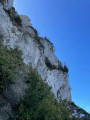
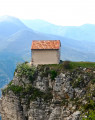
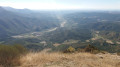
A magnificent ridge trail with superb views over the Bléone valley and Digne-les-Bains, as well as the Asse valley. Its long limestone cliff stretches from south to north for nearly seventeen kilometres, with the Pic de Couard (1,988 metres) at its northern end.

Details

81240824
Creation:
Last update:
Last review:
  • Walking
    Activity: Walking
  • ↔
    Distance: 13.01 km
  • ◔
    Average duration: 5h 50 
  • ▲
    Difficulty: Moderate

  • ⚐
    Back to start: Yes
  • ↗
    Ascent: + 745 m
  • ↘
    Descent: - 743 m

  • ▲
    Highest point: 1,727 m
  • ▼
    Lowest point: 1,024 m

Photos

Description of the walk

Park in the car park next to the church in Les Dourbes.

(S/E) Take the small road to the left of the church towards La Colle. Pass the Ravin du Vabret.

(1) Leave the road and take a small path that climbs up to the left.

(2) Take the track on the left: this track climbs steeply and straight ahead.

(3) At the end of the track, find a small path that branches off to the left and winds its way up through the woods. The slope remains fairly steep until you reach Pas de Labaud.
It is best to climb in the morning when the woods are cool.

(4) When you leave the woods at Pas de Labaud, climb up to the left towards the ridge, then stay on it.

(5) At Pas de Tartonne, stay on the ridge and continue straight ahead (you can descend if you need to shorten the hike; see the trails on the map).

(6) Stop briefly at Trou Saint-Martin, then continue along the ridge to Pas de la Faye.

(7) At Pas de la Faye, at a small platform, start descending on the western slope. At first, the trail may seem dangerous as it is on the edge of the cliff, so be careful. The descent is quite steep at the beginning, but as the trail moves away from the cliff, it becomes gentler.

(8) Leave the trail on the right to descend onto an unused forest path.

(9) Once on the track, follow it downhill to the left until you reach a Y-junction, which is not very visible.

(10) Descend to the right, once again onto a little-used forest track. Although there is a yellow marker, it is not very visible. Stay on this track until you reach black soil. The descent is quite steep. There are occasional red markers. Go around a small hill until you reach a sign for "Pierre Saint-Martin".

(11) Go back about 50 metres, turning left towards Pierre Saint-Martin. Retrace your steps.

(11) Continue along the path until you reach a large esplanade, staying on the left-hand side of this meadow and the next ones.
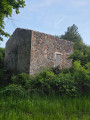
Join a path that leads to a farm. Just before the hairpin bend, take the tiny path that climbs up to the left, which goes around the houses and finally arrives at the old forest house.

(12) Follow the track on the right that descends to the hamlet of Dourbes (S/E).

Waypoints

  1. S/E : km 0 - alt. 1,030 m - Parking at the church and town hall
  2. 1 : km 0.92 - alt. 1,041 m - Fork in the trail
  3. 2 : km 1.19 - alt. 1,107 m - Track
  4. 3 : km 1.42 - alt. 1,136 m - Intersection
  5. 4 : km 3.34 - alt. 1,625 m - No Labaud
  6. 5 : km 4.55 - alt. 1,646 m - pas de tartonne
  7. 6 : km 5.22 - alt. 1,699 m - Trou Saint-Martin
  8. 7 : km 6.32 - alt. 1,675 m - Pas de la Faye
  9. 8 : km 7.72 - alt. 1,435 m - Exit from the trail
  10. 9 : km 7.92 - alt. 1,395 m - Track
  11. 10 : km 8.15 - alt. 1,381 m - Old track
  12. 11 : km 10.29 - alt. 1,148 m - Pierre Saint-Martin
  13. 12 : km 11.73 - alt. 1,101 m - maison forestière de Serre
  14. S/E : km 13.01 - alt. 1,030 m - Parking at the church and town hall

Notes

The hike can be done in both directions.
Having already done it in the other direction, this route allows for a more relaxed descent at the end of the hike, which your knees will appreciate.
Although the climb is tough, it is well shaded in the morning.

Drinking water is available at the car park.

From (10) to (12), the trail is much less used but easy to follow. There are yellow and red markings.

Caution: The entire section along the ridge is windy, so do not attempt it in bad weather. Naturally, caution should be exercised with children on the ridge in all weather conditions.
The start of the descent (7) is quite vertiginous but not dangerous. Some people may classify this hike as "difficult".

Worth a visit

Excerpts from the signposts on site:


Les Dourbes: A long history

This is the most beautiful Tithonian bar (marine limestone, approximately 147 million years old) in the Southern Pre-Alps, 17 km long and with an average altitude of approximately 1,600 m.
There are several passes (or cols) that allow you to cross it: Pas de la Faille, Pas de Tartonne and Pas de Labaud.
Once heavily used, they were a necessary passage for the inhabitants of the Asse valley to reach the markets and fairs of Digne and for transhumance.
From the top of the ridge, there is a vast panorama: the Cousson, the Thoard Valley, the Blayeul, the Trois Évêchés and the Tartonne Valley.
The Barre des Dourbes ends in the north at the Pic de Couard (1,988 m) and the Cucuyon (1,886 m). Between the Pas de la Faye and the Pas de Tartone, the ridge is pierced by a cavity called the Trou de Saint Martin.

The hole and the stone of Saint Martin
The Saint Martin's stone is part of the legend of the Trou Saint-Martin, which can be seen just opposite in the Dourbes ridge.
Legend has it that Saint Martin, pursued by bandits, passed through the rock and rested on this stone, where the imprints of his feet, his staff and the four hooves of his horse are still visible.

Beyond this legend, this place offers an unusual spectacle. The sun rises in line with the hole and a beam of light illuminates the stone and part of the Dourbes area.
This phenomenon, visible from 5 November to 7 February and more particularly around 11 November and 30 January, i.e. 41 days before and after the winter solstice, contributes, in our opinion, to the name of the hole and the Pierre de Saint-Martin.

The village of Les Dourbes
In 1837, there were up to 337 inhabitants. Today, the population of this district of Digne-les-Bains has fallen by more than three quarters.
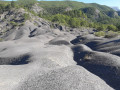
Historians are unsure about the origin of the name "Dourbes". Some believe that Dourbes was the name of a people, the Durbenses. Indeed, the parish was made up of 25 to 30 hamlets. Others believe that the name comes from a word meaning black earth (robine) that flowed. As this term was pejorative, the villagers named the village Les Dourbes.

From the feudal era, the hill (the tower) remains, described as the remains of a motte-and-bailey castle, behind which the village is nestled with its primitive castle and parish church.
There are other sites in the department with a similar layout. The territory of Les Dourbes is not limited to the village itself; there are many hamlets scattered at the foot of La Barre: La Colle, La Buja, Ville-Cris, Vaumet, Les Guesses and Le Villard.

Les Dourbes, a natural paradise
One of the characteristics of the Dourbes region is its forest.
It stretches across the slopes overlooking the sunny plateau where the village is built. However, it should be remembered that most of this forest is very young.
In the last century, after generations of overexploitation, it had almost disappeared and erosion was wreaking havoc. So foresters took action and planted thousands of hectares. They used Austrian black pine, chosen after numerous trials for its hardiness and ability to colonise eroded black marl.
Now centuries old, they regenerate perfectly after felling and provide shelter for a fairly diverse undergrowth on the soil they have helped to replenish.
You will also encounter another majestic natural plant formation: the beech forest. Its undergrowth is home to several remarkable species: the Austrian dragonhead, the peony and the European cyclamen, all of which are endangered and must not be picked.
In addition, the development of this forest has allowed large herbivores to settle here, in particular mouflons, which were introduced from Corsica and have found a habitat to their liking where they have multiplied abundantly.
In the limestone cliffs of the Upper Jurassic period (Tithonian, 147 million years ago) that dominate the landscape, vegetation adapted to the rocks has developed: bellflowers, saxifrages and tulips on the ridges add a touch of colour. Birds of prey nest on the ledges and take flight to enjoy the thermal breezes that develop there.

Other walks in the area

For more walks, use our search engine .

The GPS track and description are the property of this route's author. Please do not copy them without permission.